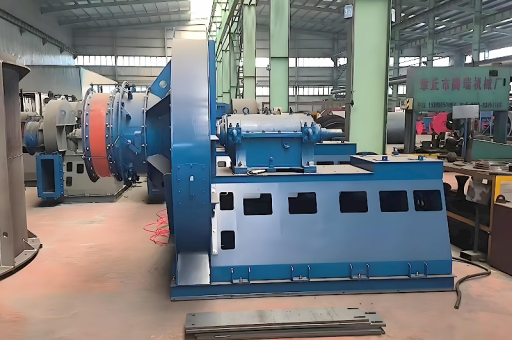
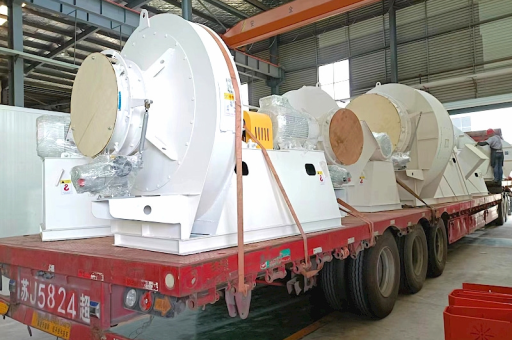
The Critical Role of Petroleum Explosion-Proof Fans in Hazardous Environments: Safety, Standards, and Best Practices
Table of Contents
- Introduction: Why Explosion-Proof Fans Are Non-Negotiable in Petroleum Industries
- Understanding the Hazard: The Science Behind Explosive Atmospheres
- What Makes a Fan "Explosion-Proof"? Key Design Features
- Global Standards and Certifications: ATEX, IECEx, and NEC Compliance
- Application Scenarios: Where Petroleum Explosion-Proof Fans Are Indispensable
- Selection Criteria: How to Choose the Right Fan for Your Facility
- Maintenance and Inspection: Ensuring Long-Term Reliability
- Frequently Asked Questions (FAQ)
- Conclusion: Future Trends and Safety Imperatives
Introduction: Why Explosion-Proof Fans Are Non-Negotiable in Petroleum Industries
In the petroleum sector—spanning upstream exploration, midstream transportation, and downstream refining—the presence of flammable gases, vapors, and dust is a daily reality. A single spark from an electrical motor, a static discharge, or a hot surface can trigger catastrophic explosions. This is where petroleum explosion-proof fans emerge as silent guardians.
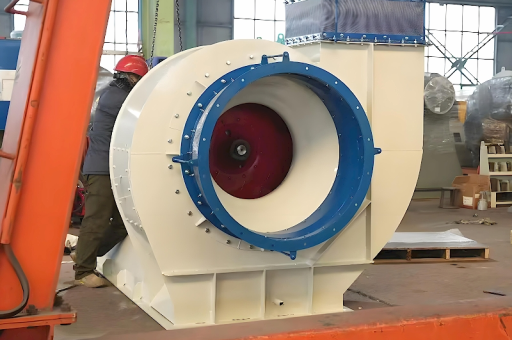
Unlike standard industrial fans, these specialized units are engineered to contain any internal ignition, prevent flame propagation, and operate safely within hazardous classified zones. Their role extends beyond ventilation: they control gas accumulation, reduce vapor cloud formation, and maintain safe oxygen levels in confined spaces such as storage tanks, pump rooms, and offshore platforms.
According to the U.S. Chemical Safety Board (CSB), inadequate ventilation is a leading contributor to petroleum-related explosions. A 2023 study by the National Fire Protection Association (NFPA) indicated that properly installed explosion-proof ventilation systems reduced incident rates by 47% in hydrocarbon processing facilities.
Key Insight: An explosion-proof fan is not just a compliance checkbox—it is an active layer of defense against one of the most volatile industrial environments on earth.
Understanding the Hazard: The Science Behind Explosive Atmospheres
To appreciate the engineering behind petroleum explosion-proof fans, one must first understand the "fire triangle": fuel, oxygen, and an ignition source. In petroleum facilities, the fuel comes from volatile hydrocarbons—methane, propane, hydrogen sulfide, or gasoline vapors.
1 Gas Group Classification
The International Electrotechnical Commission (IEC) classifies explosive gases into groups:
- Group I: Mining gases (methane)
- Group IIA: Propane, acetone
- Group IIB: Ethylene, coke oven gas
- Group IIC: Hydrogen, acetylene (most hazardous)
Petroleum facilities typically encounter Group IIA and IIB gases, although hydrogen is present in hydrocracking units.
2 Temperature Classes (T-Ratings)
Every explosive gas has an auto-ignition temperature. Explosion-proof fans are assigned T-ratings:
- T1: ≤450°C
- T2: ≤300°C
- T3: ≤200°C
- T4: ≤135°C
- T5: ≤100°C
- T6: ≤85°C
For petroleum applications, T3 to T4 ratings are common, meaning the fan's maximum surface temperature must never exceed the gas's ignition threshold.
3 Zone Classifications
- Zone 0: Continuous explosive atmosphere (>1000 hours/year)
- Zone 1: Occasional explosive atmosphere (10–1000 hours/year)
- Zone 2: Rare explosive atmosphere (<10 hours/year)
Petroleum explosion-proof fans are generally certified for Zone 1 or Zone 2, though some heavy-duty models can be adapted for Zone 0 with pressurized enclosures.
Real-World Example: In 2021, a refinery in Louisiana narrowly avoided a disaster when a Zone 1-certified explosion-proof fan in a crude oil tank farm self-extinguished an internal spark caused by a foreign particle. The fan's flame path design (long, narrow gaps) cooled escaping gases below ignition point.
What Makes a Fan "Explosion-Proof"? Key Design Features
Contrary to the term, explosion-proof equipment does not prevent an explosion from occurring inside the enclosure. Instead, it contains the explosion, prevents the escape of hot gases, and extinguishes flames before they reach the external atmosphere.
1 Flame Path
The gap between the motor housing and the shaft is engineered to microscopic tolerances (typically 0.1–0.3 mm). Any explosion inside the enclosure must traverse a long, spiraling "flame path" which dissipates heat and cools escaping gases below ignition temperature.
2 Enclosure Material
- Cast Iron: Cost-effective, high mechanical strength, but heavy.
- Aluminum Alloy: Lightweight, corrosion-resistant, but less impact-resistant.
- Stainless Steel (316L): Used in offshore and hydrogen environments due to superior corrosion and hydrogen embrittlement resistance.
3 Motor Protection
The motor is either:
- Totally Enclosed Fan-Cooled (TEFC): Standard for Zone 2.
- Explosion-Proof Enclosed (Ex d): Heavy-duty cast housing with bolted joints for Zone 1.
4 Thermal Protection
All explosion-proof fans include embedded thermal sensors (PTC thermistors or bimetal switches) that cut power if internal temperatures exceed the T-rating.
5 Spark-Resistant Construction
Impellers are made from non-ferrous materials (e.g., aluminum bronze) or coated with conductive polymers to prevent mechanical sparks from rotor-stator contact.
Innovation Note: Recent models from wind turbine manufacturers have adopted composite fan blades with carbon-fiber reinforcement, reducing weight by 40% while maintaining spark resistance. This cross-industry technology transfer has improved efficiency in offshore petroleum platforms.
Global Standards and Certifications: ATEX, IECEx, and NEC Compliance
Petroleum explosion-proof fans must meet stringent international standards. Non-compliance not only risks lives but also results in legal liability, insurance voidance, and regulatory shutdowns.
| Standard | Region | Scope |
|---|---|---|
| ATEX | European Union (2014/34/EU) | Covers equipment for explosive atmospheres |
| IECEx | International (IEC 60079 series) | Global certification scheme; accepted in 40+ countries |
| NEC/CEC | North America (NEC Article 500–503; CEC Section 18) | Class/Division system (Class I, Division 1/2) |
| GB 3836 | China | Mandatory for petroleum equipment sold in China |
1 ATEX vs. NEC: Key Differences
- ATEX uses Zone classification (0,1,2); NEC historically used Divisions (1,2), but now accepts Zones.
- ATEX requires CE marking and Notified Body assessment; NEC requires UL or CSA listing.
- Most modern petroleum explosion-proof fans are dual-certified (ATEX + IECEx) for global marketability.
2 Documentation Requirements
When purchasing for a petroleum facility, always request:
- Declaration of Conformity
- Test report including flame path measurements
- Temperature class verification
- Material certificates (especially for impeller and shaft)
Application Scenarios: Where Petroleum Explosion-Proof Fans Are Indispensable
1 Offshore Platforms and FPSOs
Offshore units face saltwater corrosion, high humidity, and volatile crude vapors. Fans here must be corrosion-proof (316L stainless steel) and capable of withstanding high wind loads. Case in point: The Johan Sverdrup field (Norway) uses 146 ATEX-certified explosion-proof fans for gas-freeing operations during maintenance.
2 Refinery Distillation Towers
Heat exchangers and column vents release hydrocarbon vapors. Explosion-proof fans are installed at multiple elevation points to create negative pressure, preventing vapor accumulation at grade level.
3 Crude Oil Tank Farms
Floating roof tanks require ventilation fans during filling and emptying to prevent vapor space formation. Explosion-proof fans with variable speed drives (VSD) optimize energy use while maintaining safe LFL (Lower Flammable Limit) levels.
4 Pipeline Pump Stations
Gas compressors and pump seals can leak small quantities of methane. Fans must operate continuously to dilute methane below 5% LFL.
5 Biogas and Landfill Gas Facilities
Increasingly, petroleum companies are investing in biogas recovery. Explosion-proof fans at these sites must handle methane with varying moisture and hydrogen sulfide content—a corrosion challenge that demands specialized coating systems.
Selection Criteria: How to Choose the Right Fan for Your Facility
Choosing the wrong explosion-proof fan can be as dangerous as having no fan at all. Here is a systematic checklist:
1 Define the Hazard
- Which gas or vapor is present? (e.g., methane, propane, hydrogen)
- What is its auto-ignition temperature? (Determines T-rating)
- What is the gas group? (IIA, IIB, IIC)
2 Determine Zone Classification
- Zone 0: Requires Ex ia (intrinsic safety) fans—rarely available as axial fans; usually small centrifugal.
- Zone 1: Ex d (flameproof) or Ex e (increased safety) motors.
- Zone 2: Ex nA (non-sparking) is sufficient.
3 Airflow and Pressure Requirements
Use the ventilation rate formula:
Q = (V × C) / tWhere Q = airflow (m³/h), V = room volume (m³), C = air changes per hour, t = time.
For petroleum storage rooms, NFPA 30 recommends 12–20 air changes per hour.
4 Environmental Factors
- Ambient temperature range
- Humidity level (coating selection)
- Salt spray (offshore vs. onshore)
5 Noise Regulations
Petroleum facilities often have strict noise limits (e.g., 85 dB(A) at 1 m). Explosion-proof fans with silencers or acoustic enclosures are available for sensitive areas.
6 Power Supply and VSD Compatibility
Many new petroleum plants use variable frequency drives (VFDs) for energy savings. Not all explosion-proof motors are VFD-rated—check for inverter-duty insulation.
Expert Tip: When sourcing from a wind turbine supplier (who now manufactures explosion-proof fans), verify that the fan's dynamic balancing meets ISO 1940 G2.5 or better. Poor balancing causes shaft stress and premature bearing failure in continuous-duty applications.
Maintenance and Inspection: Ensuring Long-Term Reliability
Even the best certified equipment fails without proper maintenance. The 2010 Deepwater Horizon investigation revealed that a ventilation fan misalignment contributed to gas accumulation on the rig.
1 Daily Visual Checks
- Listen for abnormal vibration or grinding.
- Check for oil leakage from bearing housings.
- Ensure guards and flame path seals are intact.
2 Quarterly Schedule
- Measure insulation resistance of motor windings (should be >1 MΩ).
- Inspect impeller for corrosion, pitting, or erosion.
- Verify thermal sensor continuity.
3 Annual Overhaul
- Disassemble flame path; clean and measure gap tolerance.
- Replace bearing grease (use only approved non-sparking lubricants).
- Conduct spark-resistance test on impeller.
4 Common Failure Modes
- Bearing failure due to grease contamination or high temperature.
- Impeller imbalance from particulate build-up, causing vibration.
- Flame path corrosion in offshore environments, compromising explosion containment.
Statistical Insight: A 2024 survey by the European Process Safety Centre found that 68% of explosion-proof fan failures in petroleum facilities were related to inadequate maintenance intervals—not design flaws. That means you can prevent the majority of failures with a robust maintenance plan.
Frequently Asked Questions (FAQ)
Q1: Can a standard industrial fan be used in a petroleum facility if it is installed outside the hazardous zone? No. Even outside the classified zone, explosive gases can migrate through ducts or open doors. Always use zone-appropriate equipment for any fan connected to a ventilation system serving a hazardous area.
Q2: What is the difference between explosion-proof and flameproof? "Explosion-proof" is the generic term used in North America (NEC). "Flameproof" (Ex d) is the equivalent IEC/ATEX term. Both refer to enclosures that contain internal explosions and quench flames.
Q3: How often should explosion-proof fans be recertified? There is no mandatory recertification schedule, but NFPA 70B recommends a full functional test every 3 years. Many petroleum companies perform a 5-year recertification as part of their process safety management (PSM) program.
Q4: Can explosion-proof fans be repaired in the field? Only if the repair technician is factory-trained and uses approved parts. The flame path is precision-engineered; unauthorized machining will void certification. In practice, most damaged fans are returned to the manufacturer for refurbishment.
Q5: Are explosion-proof fans from wind turbine manufacturers reliable for petroleum use? Yes, but only if they carry ATEX/IECEx certification specifically for gas groups IIC and IIB. Some wind turbine manufacturers have expanded into industrial ventilation—their fans often feature advanced composite materials and silent-flow design, but verify certifications before purchase.
Q6: Is it safe to use a variable frequency drive (VFD) with an explosion-proof fan? Yes, but the VFD must be located outside the hazardous zone or within a purged/pressurized enclosure. The fan motor must be VFD-compatible to prevent voltage spike damage to insulation.
Q7: What happens if an explosion-proof fan overheats beyond its T-rating? The thermal protection should cut power. If the protection fails, the hot surface could ignite the surrounding gas atmosphere. This is why redundant thermal sensors and regular calibration are mandatory in petroleum applications.
Q8: How do I calculate the correct fan size for vapor dispersion around a tank? Use API 2000 for venting requirements. As a rule of thumb: outflow fans should displace at least 0.5 m³/min per 10 m² of tank surface area for volatile liquids. Always consult a ventilation engineer for site-specific calculations.
Q9: Can an explosion-proof fan be used in both Zone 1 and Zone 2 environments? Only if it is certified for Zone 1. A Zone 2 certified fan must not be used in Zone 1, as it lacks the flame path containment capability for frequent exposure.
Q10: What is the expected lifespan of a petroleum explosion-proof fan? With proper maintenance: 10–15 years offshore, 20+ years onshore. Corrosion and mechanical wear are the primary limiters. Facilities with hydrogen or hydrogen sulfide may experience shorter lifespans due to material degradation.
Conclusion: Future Trends and Safety Imperatives
Petroleum explosion-proof fans are evolving rapidly, driven by digitalization, material science, and cross-industry technology transfer.
1 Smart Monitoring
IoT-enabled fans now transmit real-time vibration, temperature, and motor current data to centralized monitoring systems. This allows predictive maintenance—replacing bearings before failure rather than after—which can reduce unplanned downtime by 60%.
2 Composite Materials
Inspired by wind turbine blade technology, new fan impellers are made from carbon-fiber-reinforced polymers that are lighter, stronger, and entirely spark-free. These reduce energy consumption by 15–20% compared to metal impellers.
3 Energy Optimization
VFDs combined with gas sensors create demand-controlled ventilation: fans speed up only when gas levels rise, reducing energy costs by up to 40% in typical petroleum facilities.
4 Regulatory Convergence
The global petroleum industry is moving toward harmonized standards (IECEx) to simplify equipment procurement across jurisdictions. Expect fewer regional variations in certification requirements over the next decade.
Final Thought: A petroleum explosion-proof fan is not just a piece of hardware—it is a commitment to safety. Whether sourced from a traditional industrial manufacturer or a wind turbine company expanding into hazardous-duty ventilation, the critical factor is validation through rigorous certification, proper selection, and disciplined maintenance. In an industry where a single oversight can lead to disaster, the explosion-proof fan remains one of the most reliable sentinels standing between ordinary operations and catastrophic failure.
“The best explosion is the one that never happens.” — Process safety engineers’ axiom