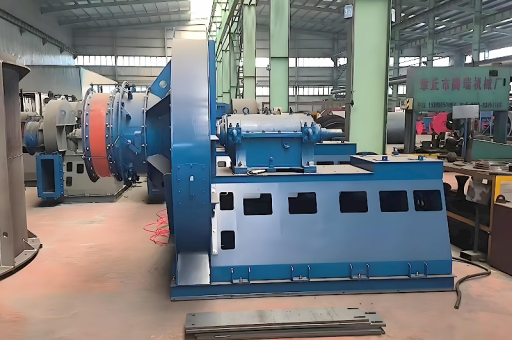
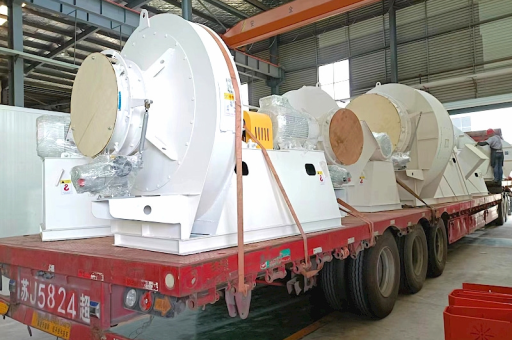
This article's table of contents introduction:
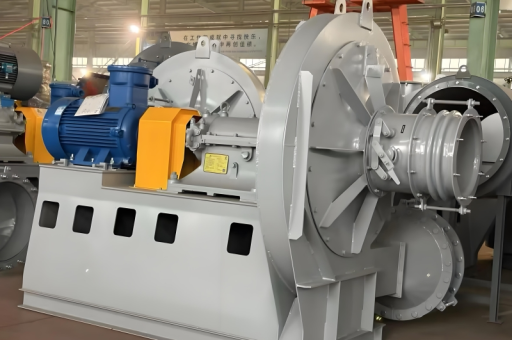
- Why are they needed in a Pharmaceutical Factory?
- Key Features of Explosion-Proof Fans for Pharma
- Critical Standards and Classifications (Simplified)
- How to Select the Right Fan
- Common Types of Fans Used
- Installation and Maintenance Must-Follows
- Summary: Critical Buying Checklist
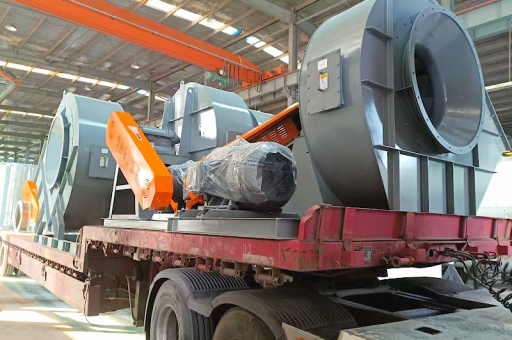
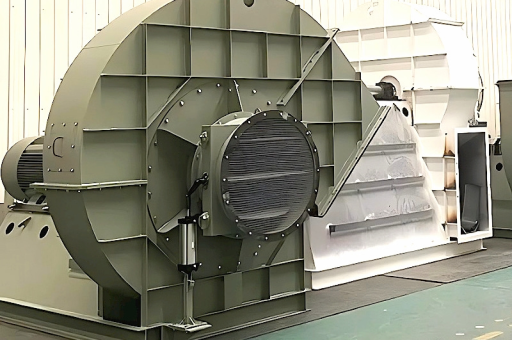
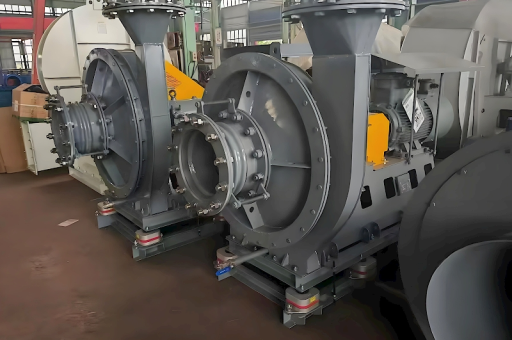
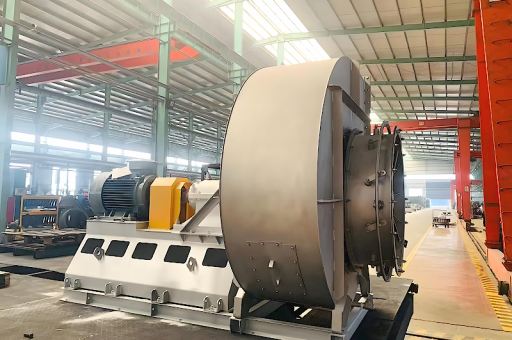
This is a highly specific and critical topic. Explosion-proof fans in a pharmaceutical factory are not just standard industrial fans; they are specialized safety equipment designed to prevent ignition in environments where flammable gases, vapors, or combustible dusts (common in pharmaceutical manufacturing) are present.
Here is a comprehensive breakdown of what you need to know about Pharmaceutical Factory Explosion-Proof Fans, covering why they are needed, their key features, relevant standards, selection criteria, and maintenance.
Why are they needed in a Pharmaceutical Factory?
Pharmaceutical factories often handle volatile substances that can create explosive atmospheres:
- Flammable Solvents: Ethanol, acetone, methanol, isopropyl alcohol, hexane, and ether are frequently used in extraction, synthesis, and cleaning processes.
- Combustible Dusts: Fine powders of active pharmaceutical ingredients (APIs), excipients (like lactose or starch), and excipients can form explosive dust clouds.
- Hazardous Zones: Areas like solvent storage rooms, reactor areas, granulation rooms, coating booths, and fume hoods are classified as hazardous locations.
A standard fan (with a standard electric motor) can create an ignition source through:
- Sparks: From a failing motor bearing or a blade hitting the housing.
- Hot Surfaces: An overheating motor.
- Electrical Arcs: From a motor's internal commutator, switch, or static build-up.
An explosion-proof fan contains any internal explosion and prevents it from igniting the surrounding atmosphere.
Key Features of Explosion-Proof Fans for Pharma
- Spark-Resistant Construction:
- Impeller (Blades): Often made of aluminum, stainless steel, or non-ferrous materials. Aluminum avoids ferrous sparking but can react with some chemicals. Stainless steel is more corrosion-resistant.
- Housing (Casing): Typically cast iron or fabricated steel. The housing is designed to be thick and strong enough to contain an internal explosion.
- Shaft & Hardware: Stainless steel or brass to prevent ferrous-to-ferrous contact.
- ATEX/IECEx or NEC 500/505 Certified Motor: The motor is the primary hazard. It must be certified for the specific gas or dust group and temperature class.
- Certification Markings: You will see labels like:
- ATEX:
Ex d IIB T4 Gb(Flameproof enclosure, gas group B, temp class T4) - NEC:
Class I, Division 1, Groups C, DorClass II, Division 1, Groups E, F, G
- ATEX:
- Certification Markings: You will see labels like:
- Earthing / Bonding Lugs: To dissipate static electricity, the fan must have a direct, low-resistance path to ground.
- Sealed Bearings: To prevent the ingress of flammable materials and reduce the risk of bearing failure causing sparks.
- Cable Glands & Conduit: All electrical connections must be made with explosion-proof cable glands and conduit systems.
- External Terminal Box: The motor's wiring connections are housed in an approved, sealed terminal box.
Critical Standards and Classifications (Simplified)
Understanding the classification of the hazardous area is the first step in selecting a fan.
| Standard System | Key Classifications for Pharma | What it Means |
|---|---|---|
| IEC/ATEX (Global/Europe) | Zone 1 (Gas/Vapor likely to occur) Zone 2 (Gas/Vapor unlikely, only for short periods) Zone 21 (Dust likely to occur) Zone 22 (Dust unlikely) |
Fan must be certified for the specific Zone. For solvents, Zone 1 is common. |
| NEC/CEC (North America) | Class I, Division 1 (Gas present under normal operation) Class I, Division 2 (Gas present only under abnormal conditions) Class II (Dust) |
Division 1 is the highest risk. Fan must be rated for it. |
| Gas Groups | IIA (Propane, etc.) IIB (Ethylene, Acetone, Ethanol) IIC (Hydrogen, Acetylene) |
Pharma solvents are almost always Group IIB (or lower). A fan certified for IIB is sufficient unless hydrogen is used (rare). |
| Temperature Class (T-Code) | T1 (450°C) T2 (300°C) T3 (200°C) T4 (135°C) T5 (100°C) T6 (85°C) |
T4 or lower (e.g., T4, T5, T6) is required for most solvents. The fan's maximum surface temperature must be lower than the auto-ignition temperature of the solvent. |
How to Select the Right Fan
When choosing a fan, an engineer must provide:
- Airflow (CFM/m³/h) & Static Pressure (in. wg/Pa): This determines the fan size and type (Centrifugal, Axial, Inline, etc.).
- Explosion-Proof Classification:
- Zone/Division: Zone 1, Zone 2, etc.
- Gas/Dust Group: IIB (for solvents).
- Temperature Class: T4 or lower.
- Example:
ATEX II 2G Ex d IIB T4 Gb
- Chemical Compatibility: The fan's materials (blades, housing, coatings) must be resistant to the specific solvents or dusts. For example, aluminum is not suitable for strong acids.
- Operating Temperature & Humidity: Affects motor and bearing selection.
- Mounting & Discharge Orientation: Horizontal, vertical, upblast, downblast, etc.
- Motor Type: AC (single-phase or three-phase), DC, or even an air-driven motor (which can be intrinsically safe without an electric motor).
Common Types of Fans Used
| Fan Type | Best For | Notes |
|---|---|---|
| Centrifugal (Radial) | High static pressure, ducted systems, fume hoods, solvent recovery. | Most common in pharma. Can handle light dust. |
| Axial (Vaneaxial, Tubeaxial) | High volume, low pressure, general ventilation of a large room. | Less common for direct ductwork. |
| Inline (Mixed Flow) | Medium pressure, space-saving ducted applications. | Good for general lab or cleanroom exhaust. |
| Motorless (Belt-Driven) | Extreme temperatures or corrosive atmospheres. | The motor is placed outside the airstream, further reducing risk. |
Installation and Maintenance Must-Follows
- Installation:
- Certified Electrician: Only a certified electrician should install and commission the fan.
- Proper Grounding: The fan and all metal parts must be bonded and grounded to a low-resistance earth.
- Conduit Seals: Explosion-proof conduit seals (EYS, EYD, etc.) must be installed at the fan's terminal box to prevent flame propagation through the wiring.
- Isolation Dampers: To prevent backflow of hazardous gases.
- Maintenance:
- Routine Visual Inspection: Check for corrosion, damage to the housing, loose bolts, and signs of overheating.
- Bearing Greasing: Use only non-conductive, explosion-proof rated grease.
- Belt Tension (if belt-driven): Incorrect tension can cause belt slippage and heat.
- Blade Cleanliness: Build-up of powder or solvent residue can unbalance the wheel and create heat or sparks.
- Electrical Check: Periodically check motor winding resistance, insulation resistance, and earth continuity. Always de-energize and lockout/tagout (LOTO) before any maintenance.
- Replace Filters: If the fan has intake or exhaust filters, they must be replaced per the manufacturer's schedule.
Summary: Critical Buying Checklist
- [ ] Is it certified? Look for ATEX, IECEx, or UL/CSA labels.
- [ ] Correct Zone/Division? (e.g., Zone 1, Div 1)
- [ ] Correct Gas Group? (e.g., IIB for ethanol)
- [ ] Correct Temperature Class? (e.g., T4)
- [ ] Spark-resistant materials? (Aluminum or SS impeller, CI housing)
- [ ] Proper grounding provisions? (External bonding lug)
- [ ] Corrosion-resistant? (Stainless steel for aggressive solvents)
- [ ] Correct CFM/Static Pressure? (Matched to your ductwork and process)
Final Advice: Never substitute a standard fan for an explosion-proof one. The cost of non-compliance is not just a fine; it can be a catastrophic loss of life and facility. Always work with a qualified engineering firm or reputable fan manufacturer who specializes in hazardous location ventilation.