This article's table of contents introduction:
- Table of Contents
- Introduction to High-Temperature Fans
- Key Design Challenges in High-Temperature Applications
- Critical Components and Materials
- Application Sectors
- Performance Metrics and Testing Standards
- Frequently Asked Questions (FAQ)
- Conclusion and Future Trends
High-Temperature Fans: Engineering Solutions for Extreme Thermal Environments
Table of Contents
- Introduction to High-Temperature Fans
- Key Design Challenges in High-Temperature Applications
- Critical Components and Materials
- Application Sectors
- Performance Metrics and Testing Standards
- Frequently Asked Questions (FAQ)
- Conclusion and Future Trends
Introduction to High-Temperature Fans
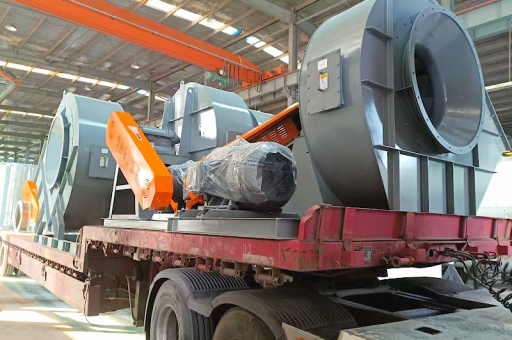
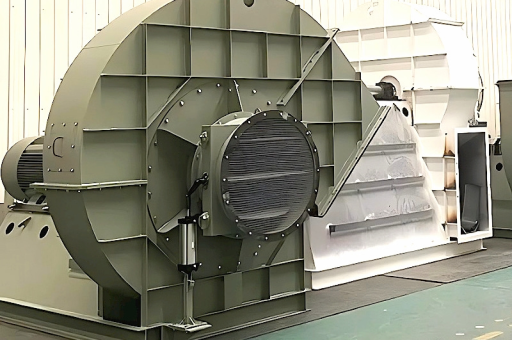
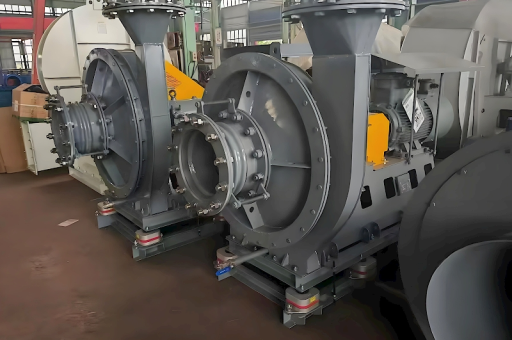
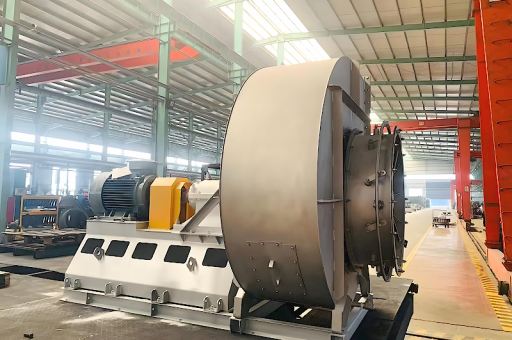
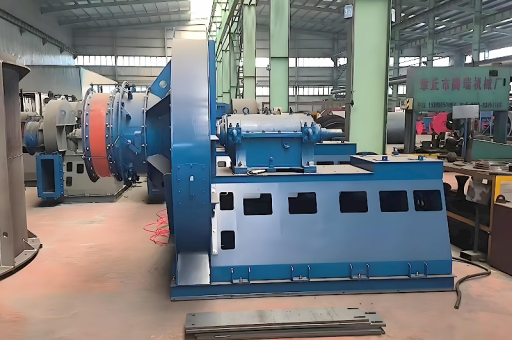
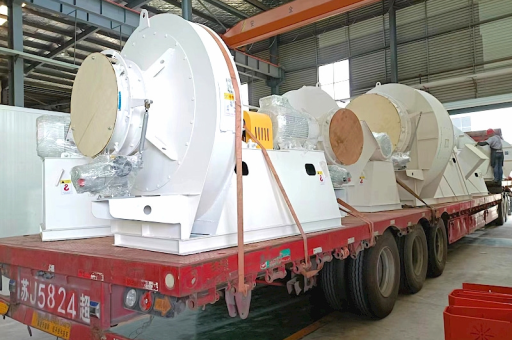
Modern industrial processes often generate extreme heat that must be managed through forced air circulation. High-temperature fans are specialized mechanical devices designed to move gas or air in environments where temperatures exceed 300°C (572°F), with some models capable of operating continuously at 1000°C or more. Unlike standard industrial fans, these units must withstand thermal expansion, oxidation, and structural fatigue without compromising performance.
According to industry data from the wind turbine sector, similar thermal management challenges exist in nacelle cooling systems, where power electronic components generate significant heat. While high-temperature fans are primarily used in manufacturing, they share engineering principles with wind turbine cooling—such as the need for corrosion-resistant bearings and variable speed controls. This article synthesizes technical knowledge from multiple fields to provide a comprehensive guide.
Key Design Challenges in High-Temperature Applications
1 Thermal Expansion and Material Selection
Materials expand differently at elevated temperatures. A fan impeller made of standard steel may grow 0.5–1.5% in diameter when heated from 20°C to 600°C, creating clearance issues with the housing. Engineers must calculate expansion coefficients precisely and design for controlled gaps.
Question: What happens if thermal expansion is not accounted for in high-temperature fan design? Answer: Uncontrolled expansion can cause impeller-to-housing contact, leading to catastrophic failure, increased vibration, bearing seizure, or fire risk. Proper clearance calculations and the use of materials with matching expansion rates are essential.
2 Oxidation and Corrosion Resistance
When air is heated to 500°C or beyond, oxygen becomes highly reactive. Standard carbon steel forms scale layers that flake off, reducing efficiency and contaminating the airstream. Stainless steel grades like 310S or Inconel alloys offer superior resistance by forming a protective chromium oxide layer.
3 Bearing and Lubrication Systems
Traditional grease-lubricated bearings fail above 150°C. High-temperature fans use:
- High-temperature grease: Synthetic oils with solid lubricants (e.g., molybdenum disulfide)
- Oil mist systems: For moderate temperatures
- Water-cooled or air-cooled bearing housings: For extreme conditions
- Remote-mounted bearings: Connected via flexible shafts to isolate heat
Critical Components and Materials
| Component | Material Options | Max Operating Temp |
|---|---|---|
| Impeller | Stainless steel 310S, Hastelloy X, ceramic-coated Inconel | 850–1050°C |
| Housing | Corten steel, duplex stainless steel | 500–800°C |
| Shaft | Alloy steel with heat treatment, Inconel 718 | 600–900°C |
| Bearings | Silicon nitride ceramic balls, hybrid bearings | 300–500°C (with cooling) |
| Motor | TEFC with forced ventilation, air-over-motor designs | 100–400°C ambient |
For reference, wind turbine yaw and pitch systems use similar bearing technologies to handle thermal cycling from solar radiation and power losses, though at lower absolute temperatures (typically below 70°C). The high-temperature fan industry often adopts these bearing sealing methods.
Application Sectors
1 Cement and Lime Kilns
Cement production requires fans that handle combustion gases at 250–400°C while resisting abrasive dust. Baghouse fans in this sector operate continuously for years.
2 Chemical and Petrochemical Processing
Reactors and dryers need fans that move corrosive gases at 300–600°C. Impellers are often coated with tetrafluoroethylene (TFE) or ceramic layers.
3 Glass and Ceramic Manufacturing
Glass melting furnaces produce exhaust at 500–700°C. Here, high-temperature fans must be placed downstream of heat recovery systems to reduce operating costs.
4 Power Generation and Wind Turbine Cooling
Modern wind turbine nacelles house inverters, transformers, and generators that generate substantial heat. While nacelle ambient temperatures rarely exceed 60–70°C, the internal components may require dedicated high-temperature fans for cooling during fault conditions or high-load operation.
Question: Are high-temperature fans used in renewable energy applications like solar thermal plants? Answer: Yes, solar thermal power plants use them to circulate heat transfer fluids or cool molten salt systems at 400–600°C. However, wind turbine applications typically use lower-temperature fans (up to 200°C) for generator cooling.
Performance Metrics and Testing Standards
1 Key Performance Indicators (KPIs)
- Airflow rate (m³/h): Must be measured at operating temperature and density
- Static pressure (Pa): Higher for systems with long duct runs
- Operating efficiency (%): Typically 65–85% for well-designed fans
- Vibration level (mm/s): Must stay below ISO 2372 limits
- Noise level (dB(A)): Often regulated to 85 dB at 1 meter
2 Testing Protocols
- Thermal soak test: Run at maximum temperature for 100 hours minimum
- Cold start test: Verify startup torque at -20°C after hot shutdown
- Overspeed test: Run at 110% rated speed for 2 minutes
- Balancing test: ISO 1940 G2.5 or stricter for high-speed impellers
Frequently Asked Questions (FAQ)
Q1: What is the maximum temperature a high-temperature fan can handle?
A: Industrial fans can operate up to 1000–1100°C using ceramic or superalloy components. For continuous service above 850°C, active cooling systems (water jackets or air curtains) are mandatory.
Q2: How do I select a high-temperature fan for a cement plant?
A: Consider gas composition (dust load, corrosives), maximum temperature curve (steady vs. peak), required airflow at that temperature, and available space for cooling. Request a thermal expansion analysis from the manufacturer.
Q3: Can a high-temperature fan be repaired, or should it be replaced?
A: Many components (impeller, bearings, seals) are replaceable. However, if the housing has warped beyond dimensional tolerances or the shaft is bent, replacement is more economical. Typical repair interval is 2–5 years depending on duty cycle.
Q4: Are high-temperature fans used in wind turbine nacelles?
A: Yes, but the temperatures are lower than in industrial processes. A wind turbine nacelle fan typically handles 40–70°C ambient air. However, gearbox oil coolers can reach 80–90°C, requiring special lubrication and seals.
Q5: What safety features are required for high-temperature fans?
A: Thermal cutout switches, vibration sensors, manual reset, heat-shielded motor cables, and explosion-proof ratings (if flammable gases are present). Always consult local fire codes.
Conclusion and Future Trends
High-temperature fans remain critical for heavy industries such as cement, chemicals, and power generation. The current trend is toward smart fan systems with real-time condition monitoring (temperature, vibration, flow) using IoT sensors. Predictive maintenance algorithms can detect bearing degradation or blade erosion before failure occurs.
In the wind turbine industry, high-temperature cooling solutions are advancing similarly. As turbines grow larger and nacelle power densities increase, fan designs originally developed for industrial furnaces are adapted for offshore wind platforms. Hybrid cooling systems that combine passive convection with high-temperature-rated forced fans are becoming standard.
Furthermore, the push toward decarbonization is driving innovation in high-temperature heat pumps and electric thermal storage systems. These technologies will require fans capable of operating at 200–800°C while handling fluids like molten salts or phase change materials. Expect to see increased use of additive manufacturing (3D-printed impellers) and ceramic matrix composites in the coming decade.
For engineers specifying high-temperature fans, the key takeaway is to never oversize the fan expecting safer operation—oversizing can reduce operating efficiency and increase thermal stress. Instead, always request a thermal simulation that models the exact operating cycle of your process.
By understanding the materials, design principles, and application-specific requirements outlined in this guide, you can select a high-temperature fan that offers long service life, low maintenance, and optimal energy performance—whether in a steel mill, a chemical plant, or inside the nacelle of a wind turbine.