This article's table of contents introduction:
- How They Differ from Standard Fans
- Key Design & Construction Features
- Types of High-Temperature Centrifugal Fans
- Common Applications
- Key Selection Criteria
- Example: Induced Draft (ID) Fan in a Boiler
- Cost & Maintenance
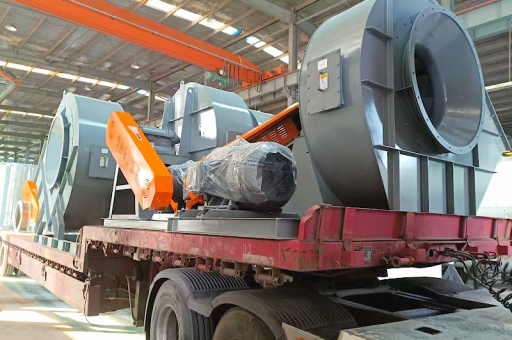
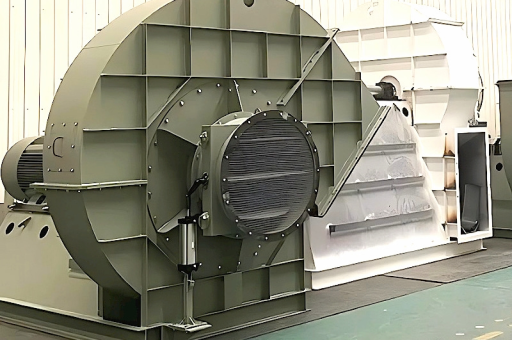
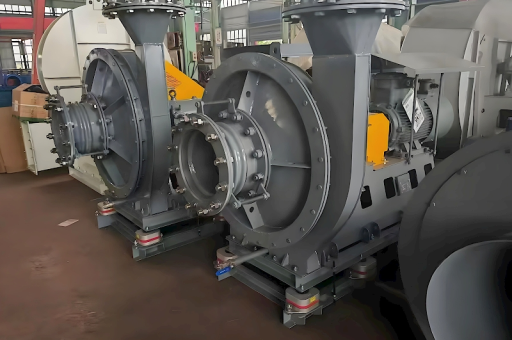
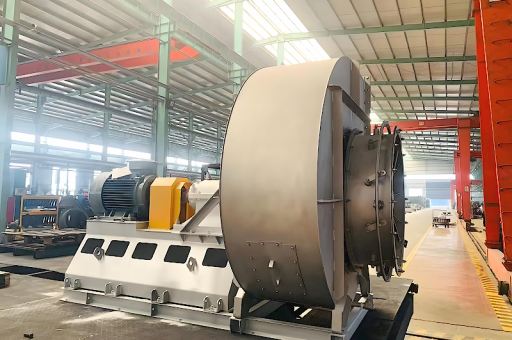
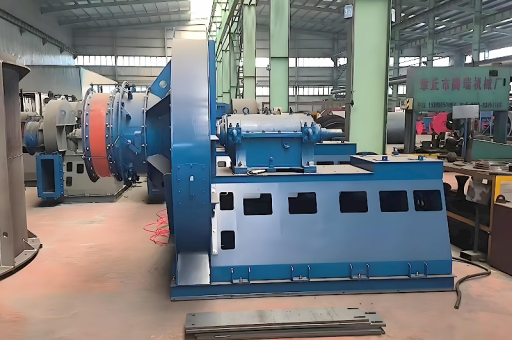
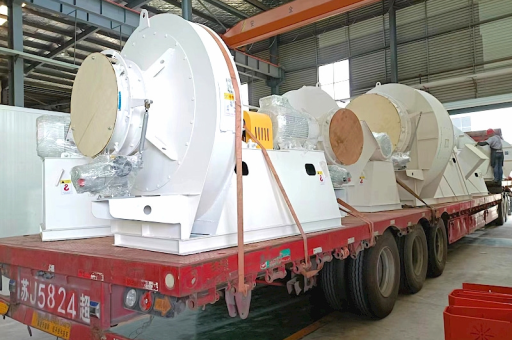
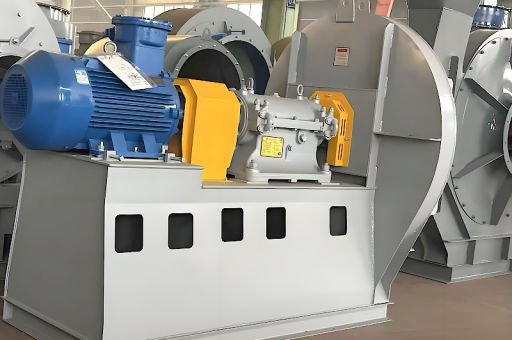
High-Temperature Centrifugal Fans (often referred to as industrial heat fans or process fans) are specialized mechanical devices designed to move air, fumes, or gases at elevated temperatures that would damage standard fans. They are critical components in industrial processes where heat, combustion, or drying is involved.
Here is a comprehensive breakdown of how they work, their key design features, applications, and selection criteria.
How They Differ from Standard Fans
The primary difference is thermal management. Standard fans use materials (like aluminum impellers, rubber seals, or standard electric motors) that fail or deform at high temperatures. High-temp fans are engineered to operate reliably in environments ranging from 200°F (93°C) to over 2000°F (1093°C).
Key Design & Construction Features
To survive and function under extreme heat, these fans incorporate specific design elements:
-
Impeller (Wheel) Material:
- Carbon Steel (A36/ mild steel): For lower temperatures ($\leq 400^\circ\text{F}$ / 204°C).
- High-Strength Alloy Steel: For intermediate temperatures ($\leq 800^\circ\text{F}$ / 427°C).
- Stainless Steel (304, 310, 316): For corrosion resistance and higher temps ($\leq 1500^\circ\text{F}$ / 816°C). 310 SS is a common choice for high heat.
- Inconel® or Hastelloy®: For extreme heat ($>1500^\circ\text{F}$ / 816°C) or highly corrosive exhaust gases.
-
Housing Construction:
- Made from heavy-gauge steel plate.
- Often includes expansion joints to allow the housing to expand and contract without warping or cracking.
- Insulation: The housing may be lined with ceramic fiber or mineral wool to reduce heat loss, protect the environment, and lower the surface temperature for safety.
-
Shaft & Bearings:
- Shaft: Typically oversized and made of steel alloy. A critical feature is the heat slinger (a disc) mounted on the shaft between the housing and the bearing to divert hot air away.
- Bearings:
- Must be located outside the hot gas stream.
- Use pillow block or flange bearings with high-temperature grease.
- For extreme temperatures, water-cooled bearings or a cooling fan mounted on the shaft is required to prevent bearing seizure.
-
Shaft Seal:
High-temperature labyrinth seals or carbon ring seals prevent hot gas from leaking along the shaft towards the bearings.
-
Motor & Drive System:
- Motor Placement: Ideally, the motor is mounted outside the airstream (belt-driven or direct drive with a long shaft).
- Direct Drive: The motor must have a special high-ambient rating or be placed in a cool air plenum.
- Belt Drive: More common. Allows the motor to be placed remotely from the hot housing. Belts must be heat-resistant (often notched or cogged).
- VFD (Variable Frequency Drive): Often used to control speed and airflow precisely.
Types of High-Temperature Centrifugal Fans
They are categorized by their impeller design, which dictates their airflow/pressure characteristics.
-
Forward Curved (Squirrel Cage / Sirocco):
- Pros: High volume, low noise, relatively compact.
- Cons: Lower pressure capability.
- Use Case: HVAC exhaust, drying ovens (if temperatures are moderate), material handling with low dust.
-
Backward Inclined (BI) / Backward Curved (BC):
- Most common for high-temp industrial use.
- Pros: High efficiency, non-overloading power curve (motor won't burn out if duct is blocked), handles high static pressure.
- Use Case: Boiler exhaust, industrial oven exhaust, furnace drafting, gas recirculation.
-
Radial / Paddle Wheel (High Pressure):
- Pros: Very rugged, handles high temperatures and abrasive dust well.
- Cons: Lower efficiency, noisy.
- Use Case: Cement kilns, steel mills, incinerators, pneumatic conveying of hot materials.
-
Airfoil (AF):
- Pros: Highest efficiency (similar to airplane wing).
- Cons: Expensive, blades are hollow (can crack in thermal shock).
- Use Case: Clean, constant temperature air streams where power savings are critical.
Common Applications
- Industrial Ovens & Dryers: Hot air circulation, exhaust (e.g., food drying, paint curing, textile drying).
- Boilers & Incinerators: Forced draft (FD) blowing air into the fire, Induced draft (ID) pulling hot exhaust gases out through the chimney or scrubber.
- Furnaces & Kilns: Glass manufacturing, cement production, metal heat treating, ceramics.
- Process Gas Recirculation: Moving hot gasses for heat recovery or chemical reactions.
- Fume Extraction: Removing hot fumes from welding, soldering, or chemical processes.
- Thermal Oxidizers: Handling exhaust from pollution control equipment.
Key Selection Criteria
When choosing a high-temp centrifugal fan, you must provide:
- Maximum Operating Temperature ($^\circ\text{F}$ or $^\circ\text{C}$): This is the most critical number. State the peak temperature, not just the average.
- Airflow (CFM / m³/h): Required volume of air/gas.
- Static Pressure (in. w.g. / Pa): The resistance the fan must overcome (ductwork, filters, dampers).
- Gas Composition: Is the air clean? Contains corrosive chemicals (acids)? Contains abrasive particles (dust, sand)? Is it explosive (requires explosion-proof design)?
- Ambient Conditions: Temperature around the motor and bearings.
- Material of Construction: Can be stainless steel, high-alloy steel, or with specialized coatings.
- Cooling Method: Air-cooled (via shaft fan), water-cooled (jacket or coils), or insulated.
Example: Induced Draft (ID) Fan in a Boiler
- Function: Pulls hot combustion gases ($\sim 350-400^\circ\text{F}$) from the boiler through the ductwork and chimney.
- Type: Backward Inclined or Airfoil (for efficiency).
- Material: Stainless steel or carbon steel with a heavy shaft and external water-cooled bearings.
- Challenges: The fan must handle corrosive condensate (sulfuric acid from flue gas) and maintain draft stability.
Cost & Maintenance
- Cost: Significantly higher than standard fans. A 50,000 CFM high-temp fan can cost \$20,000 - \$100,000+ depending on materials and size.
- Maintenance:
- Regular bearing greasing (with correct high-temp grease).
- Inspection for blade erosion (from dust) or thermal distortion.
- Checking for vibration (indicates bearing wear or imbalance).
- Monitoring motor current.
If you are looking for a specific fan for a project, you should consult with a manufacturer (e.g., Chicago Blower, New York Blower, Twin City Fan & Blower, Greenheck, Aerovent) and provide them the "Key Selection Criteria" listed above.