High-Temperature Axial Flow Fans: Engineering Solutions for Extreme Thermal Environments
Table of Contents
- Introduction: The Critical Role of High-Temperature Axial Flow Fans
- Operating Principles and Design Specifications
- Materials and Manufacturing Challenges
- Applications Across Industries
- Performance Optimization and Maintenance Strategies
- Frequently Asked Questions (FAQ)
- Conclusion and Future Trends
Introduction: The Critical Role of High-Temperature Axial Flow Fans
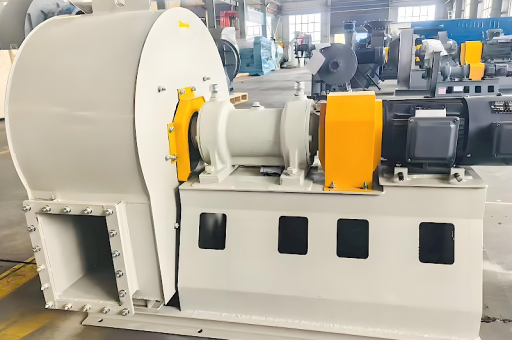
High-temperature axial flow fans represent a specialized category of industrial ventilation equipment engineered to operate reliably in environments where ambient temperatures exceed 300°C (572°F) and can reach up to 800°C (1472°F) in extreme applications. Unlike standard axial fans, which typically fail under such thermal stress, these robust units feature advanced metallurgy, specialized bearing systems, and aerodynamic designs that enable sustained performance in steel mills, glass manufacturing, power generation plants, and chemical processing facilities.
The global market for high-temperature axial flow fans has experienced steady growth, driven by increasing industrialization and stricter workplace safety regulations. According to industry data from 2023, the demand is projected to expand at a compound annual growth rate (CAGR) of 5.2% through 2030, with Asia-Pacific leading production and consumption. This growth underscores the indispensable nature of these fans in maintaining operational efficiency and worker safety in high-heat zones.
Operating Principles and Design Specifications
High-temperature axial flow fans operate on the same fundamental principle as standard axial fans—air movement parallel to the fan shaft—but with critical modifications to withstand thermal degradation. The key design parameters include:
- Impeller Blade Configuration: Blades are typically fabricated from cast heat-resistant alloys such as Inconel 718 or Nimonic 80A, with specialized airfoil profiles that maintain aerodynamic efficiency even when thermal expansion alters clearances. The blade angle (β) is optimized between 30° and 50° depending on required flow rate (Q) and pressure rise (ΔP).
- Housing and Mounting: The fan casing is constructed with double-wall insulation and often incorporates ceramic fiber blankets to minimize heat transfer to external components. Mounting bases include expansion joints to accommodate thermal growth of several millimeters.
- Bearing and Lubrication Systems: This represents the greatest engineering challenge. Standard grease-lubricated bearings fail above 120°C. High-temperature fans employ either:
- Oil mist lubrication with synthetic esters capable of withstanding 250°C+
- Water-cooled bearing housings that circulate coolant through internal channels
- Self-contained fan-shaft assemblies with ceramic hybrid bearings (silicon nitride balls in steel races)
- Motor Selection: Direct-drive configurations use thermally isolated motors with Class H insulation (180°C rise rating). Belt-driven systems place motors outside the hot zone, sometimes with extended shaft lengths.
Example Calculation: A typical high-temperature fan might deliver 50,000 m³/h at 2000 Pa static pressure at 400°C air density (approximately 0.52 kg/m³), requiring a shaft power of approximately 37 kW.
Materials and Manufacturing Challenges
The selection of materials directly determines a fan's service life and maximum temperature rating. Common material grades include:
| Temperature Range | Impeller Material | Shaft Material | Bearing Type |
|---|---|---|---|
| 150°C – 300°C | Stainless steel 316L | Carbon steel with protective coating | Standard shielded bearings |
| 300°C – 600°C | Cast heat-resistant alloy (ASTM A297 Grade HH) | Alloy steel (AISI 4140) | Water-cooled or oil mist |
| 600°C – 800°C | Inconel 718 (nickel-based superalloy) | Inconel 718 | Ceramic hybrid with external cooling |
| >800°C | Ceramic matrix composites (CMC) | Not applicable (direct-driven via ceramic shaft) | Air-bearing or magnetic levitation |
Manufacturing Challenges include:
- Thermal distortion control: Finite element analysis (FEA) simulates blade tip clearances during startup and steady-state operation. A 1% change in clearance can reduce efficiency by 3-5%.
- Welding of high-temperature alloys: Requires preheating (200°C for martensitic steels) and stress-relief annealing to prevent cracking.
- Balancing at temperature: Rotors must be dynamically balanced at operating temperature to avoid vibration-induced bearing failure.
- Corrosion resistance: In environments with sulfur or chlorine compounds (e.g., waste incineration), protective coatings like aluminum diffusion apply vapor-deposited barriers.
Case Study: A wind turbine cooling fan application required operating at 350°C ambient from nacelle heat dissipation. The selected solution used a water-cooled motor with a shaft-mounted Inconel impeller, achieving 15,000 hours MTBF (Mean Time Between Failures) compared to the previous 6,000 hours with standard materials.
Applications Across Industries
High-temperature axial flow fans serve diverse critical functions:
1 Steel and Metal Processing
- Blast furnace gas recirculation: Handles gas temperatures up to 500°C with dust content of 50 mg/m³
- Continuous casting machine cooling: Maintains air flow at 450°C over red-hot billets
- Annealing furnace ventilation: Requires reversing fan flows during heat-up and cool-down cycles
2 Power Generation
- Boiler induced draft fans: Operate at up to 400°C flue gas temperature
- Gas turbine inlet cooling fans: Used in combined cycle plants with hot exhaust gas recovery
- Wind turbine nacelle cooling: Specifically designed for offshore turbines where ambient heat combines with generator waste heat, requiring fans that sustain 250°C internal temperatures
3 Chemical and Petrochemical
- Catalytic cracking units: Handle process gas at 600°C
- Thermal oxidizer systems: Supply combustion air at 650°C
- Sulfur recovery plants: Corrosive H₂S environment demands nickel-based alloy fans
4 Cement and Glass Manufacturing
- Rotary kiln cooling fans: Move air at 500°C to quench clinker
- Glass furnace exhaust fans: Operate at 700°C with molten glass particles in the gas stream
Performance Optimization and Maintenance Strategies
To maximize operational life and efficiency, implement these practices:
Installation Best Practices:
- Ensure adequate ventilation for motor cooling (especially for integrated units)
- Use flexible couplings to accommodate shaft thermal expansion (typically 0.5-1.0 mm per meter of shaft length per 100°C rise)
- Install vibration monitoring sensors (frequency range 10-1000 Hz)
Regular Maintenance Schedule (based on 8,000 operating hours annually):
- Monthly: Inspect blade tip clearances using feeler gauges (acceptable range: 0.5-3.0 mm)
- Quarterly: Replace oil mist lubricant (synthetic oils degrade faster at high temperature)
- Annually: Perform infrared thermography on bearing housings and motor windings
- Every 3 years: Non-destructive testing (ultrasonic or magnetic particle) on impeller welds
Common Failure Modes and Solutions: | Failure Mode | Root Cause | Solution | |--------------|------------|----------| | Bearing seizure | Lubricant carbonization at high temperature | Switch to water-cooled bearing housing | | Impeller cracking | Thermal fatigue from rapid temperature cycling | Implement controlled startup/shutdown ramps | | Reduced air flow | Blade erosion from particulate matter | Install wear-resistant coating or replace with carbide-tipped blades | | Vibration increase | Thermal unbalance due to uneven blade heating | Use computational fluid dynamics (CFD) to optimize flow distribution |
Frequently Asked Questions (FAQ)
Q1: What is the maximum temperature a high-temperature axial flow fan can handle?
A: Commercially available fans can operate continuously at up to 850°C (1560°F) using ceramic matrix composite impellers and air-bearing supports. For temperatures above 1000°C, alternative ventilation methods such as steam ejectors or induced draft systems are typically used.
Q2: How do high-temperature fans differ from standard industrial fans?
A: Key differences include: (1) Use of heat-resistant alloys and superalloys instead of carbon steel; (2) Specialized bearing cooling systems (water, oil mist, or ceramic hybrid); (3) Larger expansion joints and flexible couplings; (4) Motor insulation rated for higher ambient temperatures; (5) More robust blade geometries to resist thermal deformation.
Q3: Can high-temperature axial flow fans be used in wind turbine applications?
A: Yes, wind turbine nacelle cooling systems often require high-temperature fans because generator waste heat combined with solar loading can raise internal nacelle temperatures to 250°C. These fans must also operate reliably in varying orientations due to yaw movements.
Q4: How is the air flow rating affected by high temperature?
A: Air density decreases with temperature, so the same fan rotating at the same speed will move less mass flow (kg/h) at high temperature but maintain the same volumetric flow (m³/h) under standard conditions. The performance curve must be corrected using the ideal gas law.
Q5: What is the typical lifespan of a high-temperature fan?
A: With proper maintenance, a well-designed high-temperature fan can achieve 10-15 years of service life. Factors reducing lifespan include: continuous operation above rated temperature, corrosive atmospheres, and frequent thermal cycling.
Q6: How to select between direct-drive and belt-drive configurations?
A: Direct-drive offers higher reliability and no power loss from belts, but the motor must withstand higher temperatures. Belt-drive allows remote motor placement in cooler zones and facilitates speed changes via sheave adjustments. For temperatures above 400°C, belt-drive is generally preferred unless the fan is equipped with water-cooled motor isolation.
Conclusion and Future Trends
High-temperature axial flow fans remain an irreplaceable component in heavy industries where thermal management is critical to both process efficiency and personnel safety. The ongoing evolution toward more severe operating conditions—driven by energy recovery systems, waste heat utilization, and renewable energy integration—continues to push materials science and fluid dynamics boundaries.
Emerging trends include:
- Artificial intelligence-driven predictive maintenance: Real-time vibration, temperature, and flow data analyzed by machine learning algorithms to predict failure 72 hours in advance.
- Additive manufacturing for impellers: 3D printing of nickel superalloys enables complex internal cooling channels that reduce blade thermal stresses by 20%.
- Hybrid cooling systems: Combination of air and liquid cooling for bearing assemblies, reducing water consumption by 60%.
- Smart control integration: Variable frequency drives (VFDs) adjusted based on real-time temperature feedback loops, optimizing energy consumption by 15-25%.
As industries continue to decarbonize and optimize their processes, the demand for innovative high-temperature fan systems will intensify, requiring engineers to balance material cost with performance longevity. For applications ranging from blast furnaces to wind turbine cooling, these fans will remain at the heart of thermal management solutions.