This article's table of contents introduction:
- Core Function & Purpose
- Critical Design Differences from Standard Fans
- Types of High-Temperature Smoke Exhaust Fans
- Key Performance & Certification Standards
- Typical Applications
- Installation & Control
- Common Troubleshooting & Maintenance
- Market & Manufacturers
- Key Specification Considerations (For Engineers)
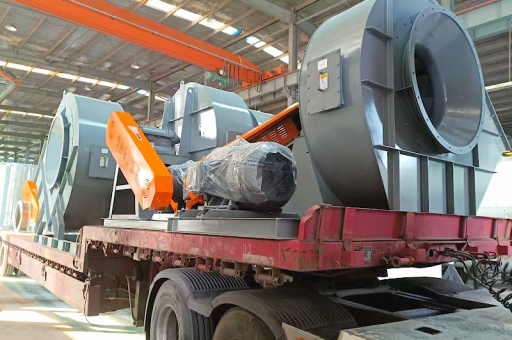
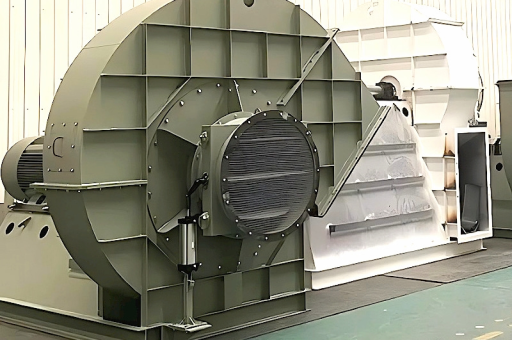
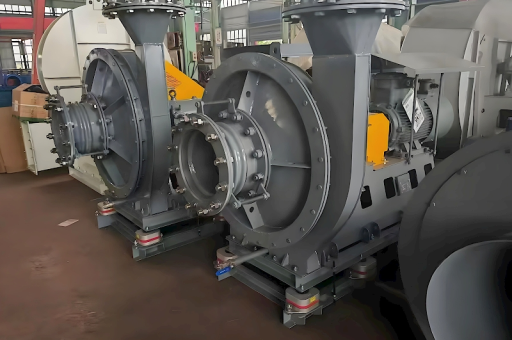
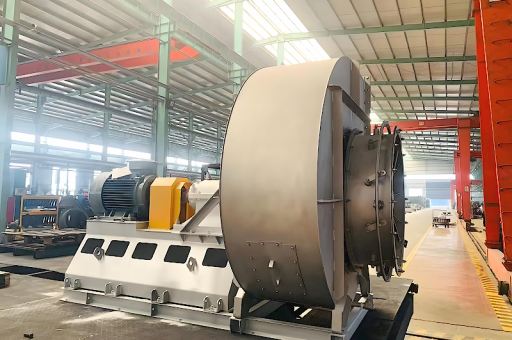
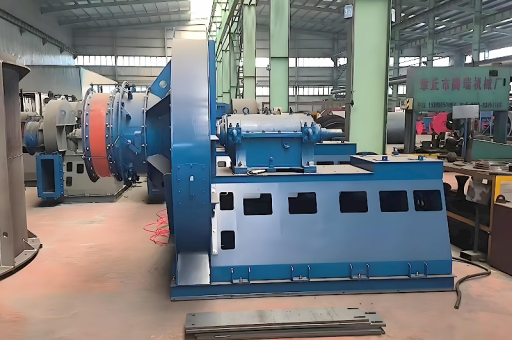
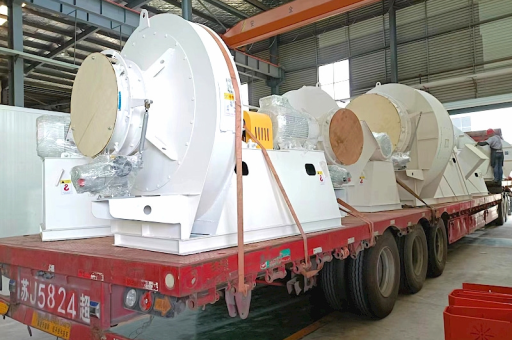
Here is a comprehensive overview of High-Temperature Smoke Exhaust Fans, often referred to as Fire Rated Fans, Smoke Spill Fans, or Emergency Smoke Exhaust Fans.
These are critical components in a building's Fire Safety and Smoke Management System. Their primary purpose is not just general ventilation, but to survive extreme heat and remove smoke and toxic gases during a fire, thereby maintaining clear escape routes for occupants and aiding firefighters.
Core Function & Purpose
- Life Safety: The primary goal is to keep escape routes (stairwells, corridors) clear of smoke, which is the leading cause of death in fires (inhalation of toxic gases).
- Firefighting Support: By exhausting smoke, these fans improve visibility for firefighters, allowing them to locate the fire source and extinguish it more effectively.
- Property Protection: Rapid smoke removal reduces smoke damage to building contents and structure.
- Pressurization: In some systems, they work in reverse or in conjunction with supply fans to create positive pressure in stairwells, preventing smoke ingress.
Critical Design Differences from Standard Fans
Standard ventilation fans are not designed to withstand fire conditions. High-temperature exhaust fans are built with specific features to survive for a defined period (typically 300°C / 572°F for 2 hours, or 400°C / 752°F for 30 minutes, or even 600°C / 1112°F for specific applications):
- Materials: Made of heavy-gauge steel or stainless steel to resist warping.
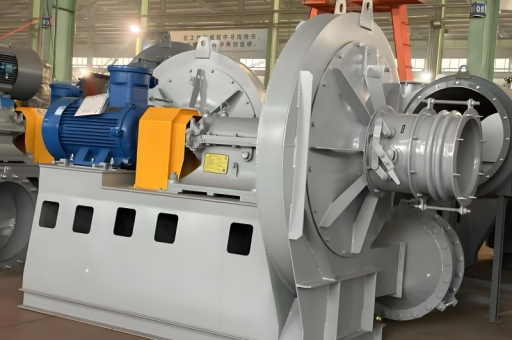
- Bearing & Shaft Design: High-temperature rated bearings often mounted outside the airstream to prevent lubricant failure. The motor shaft is typically longer to distance the motor from the heat. Air-cooled shafts are common.
- Motor: Motors must be rated for high ambient temperatures (e.g., Insulation Class H, rated up to 180°C / 356°F continuous). They are often mounted out of the airstream using a belt-drive configuration or a direct-drive with a heat shield.
- Belt Tensioner: In belt-driven models, a spring-loaded auto-tensioner is crucial because belts stretch when hot. A fixed pulley would fail.
- Cable & Wiring: High-temperature silicone rubber (SIR) or PTFE (Teflon) cabling to prevent melting.
- Thermal Cutouts: Some models include failsafes to protect the fan if temperatures exceed the rated threshold.
Types of High-Temperature Smoke Exhaust Fans
| Type | Configuration | Best Application |
|---|---|---|
| Axial (Propeller) | Air flows parallel to the shaft. | Roof exhaust, wall-mounted exhaust. Good for high volume, low pressure. |
| Centrifugal (Squirrel Cage) | Air is drawn into the center and expelled radially. | Ducted systems, stairwell pressurization. Handles higher static pressure (duct resistance). |
| Mixed Flow / Inline | Hybrid of axial and centrifugal. | Compact, duct-mounted applications. Good balance of pressure and volume. |
| Roof Upblast | Centrifugal wheel, exhausts vertically upward. | Standard for commercial roofs. Prevents re-entrainment of smoke into HVAC intakes. |
| Wall Mounted | Axial or centrifugal, mounted on exterior walls. | Parking garages, industrial halls. |
Key Performance & Certification Standards
Compliance with national/international standards is mandatory.
- ISO 21927 Series: International standard for smoke and heat control systems.
- EN 12101-3: European standard. Specifies classifications like F300 (300°C for 120 mins) , F400 (400°C for 90 mins) , F600 (600°C for 60 mins) .
- UL 705 (USA) / ULC-S121 (Canada): Standard for Power Ventilators; often combined with UL 793 for Smoke and Heat Vents.
- NFPA 92 (USA): Standard for Smoke Control Systems.
- BS 7346 (UK): Components for smoke and heat control systems.
- GB/T 1236 (China) / GB 15930 (China): Mandatory testing for fire resistance of smoke exhaust fans in China.
Key Performance Metrics:
- Airflow (CFM or m³/h): Volume of air moved.
- Static Pressure (in. w.g. or Pa): Resistance the fan must overcome.
- Temperature Rating: e.g., F300 (300°C for 2 hours).
- Fire Resistance Period: e.g., 90 minutes, 120 minutes.
Typical Applications
- Commercial Buildings: Atriums, shopping malls, office towers.
- Underground Car Parks: Critical for exhausting dense, toxic fumes from car fires.
- Tunnels (Road & Rail): Massive axial fans designed to withstand tunnel fire temperatures.
- Industrial Facilities: Warehouses, factories, chemical plants where flammable materials are present.
- High-Rise Residential: Stairwell pressurization and corridor exhaust.
- Hospitals & Hotels: Maintaining life safety in complex layouts.
Installation & Control
- Automatic Activation: Fans are triggered by Fire Alarm Systems (FAS) or Building Management Systems (BMS) through smoke detectors, heat detectors, or manual call points.
- Ductwork: Ducts leading to and from these fans must also be fire-rated (e.g., sheet metal with fire-resistant lining or intumescent wraps).
- Power Supply: Requires a dedicated fire-rated circuit (separate from normal building power) with a backup generator or emergency battery supply.
- Dampers: Fire dampers and smoke dampers are installed at duct penetrations through fire-rated walls to prevent flame spread.
Common Troubleshooting & Maintenance
- Problem: Motor tripping on thermal overload.
- Cause: Ambient temperature too high, restricted airflow, incorrect voltage.
- Solution: Check for duct blockages, verify motor rating, ensure proper cooling.
- Problem: Excessive vibration.
- Cause: Imbalanced impeller, worn bearings, debris buildup.
- Solution: Clean impeller, replace bearings, dynamically balance wheel.
- Problem: Belt squeal or slipping.
- Cause: Incorrect tension, worn belt, heat damage.
- Solution: Check auto-tensioner, replace with high-temperature rated belt.
- Problem: Fan fails to start during test.
- Cause: Faulty fire alarm signal, tripped breaker (GFCI or standard), damaged motor winding.
- Solution: Test fire alarm relay, reset breaker, meg-ohm test motor windings.
Market & Manufacturers
- Global Leaders: Greenheck, Systemair, FläktGroup, Soler & Palau, Woods Air Movement.
- Regional/Niche: Nicotra Gebhardt, Twin City Fan, Elta Fans, PennBarry.
Key Specification Considerations (For Engineers)
When specifying a high-temperature smoke exhaust fan, you must provide:
- Required airflow (CFM) and static pressure (in. w.g.) .
- Ambient operating temperature during fire (e.g., 200°C, 400°C).
- Required fire endurance period (e.g., 2 hours).
- Expected noise levels (Sones, dBA at 3m).
- Max impeller tip speed (limits overstressing).
- Certification standard (EN 12101-3, UL 705, etc.).
- Motor duty (e.g., Class H, outdoor enclosure, IP55).
Bottom Line: High-temperature smoke exhaust fans are safety-critical, life-saving equipment. They are not general-purpose fans. They require meticulous design, stringent certification, robust materials, and regular mandatory testing to ensure they can perform under extreme conditions when needed most.