This article's table of contents introduction:
- What is a High-Temperature Exhaust Fan?
- Typical Operating Temperature Ranges
- Common Applications
- Key Design & Material Features
- How to Select the Right Fan: Critical Factors
- Installation & Safety Considerations
- Example Specification (for a Furnace Exhaust)
- Popular Manufacturers (Examples)
- Summary: When Do You Need One?
Here is a comprehensive guide to High-Temperature Exhaust Fans, covering what they are, their applications, key specifications, and how to select the right one.
What is a High-Temperature Exhaust Fan?
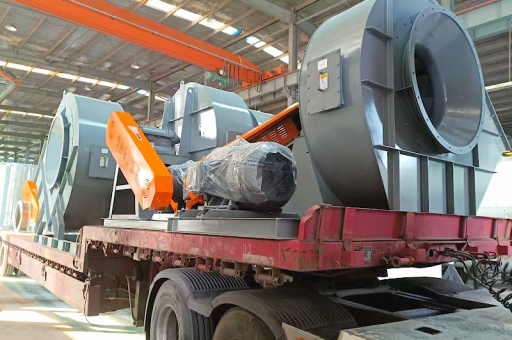
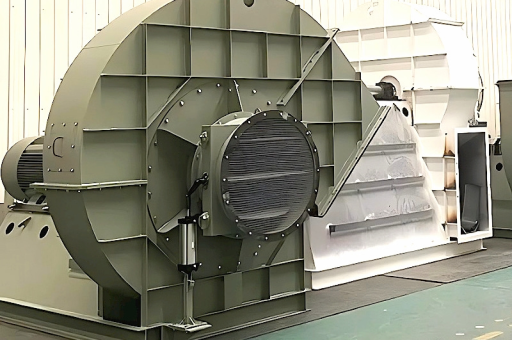
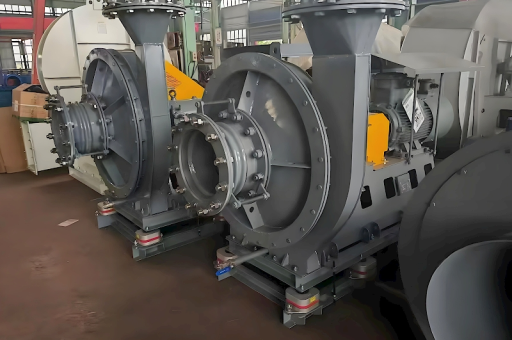
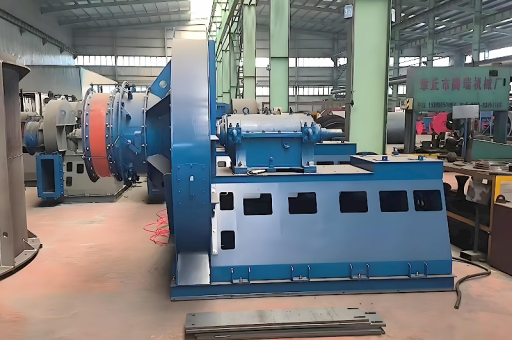
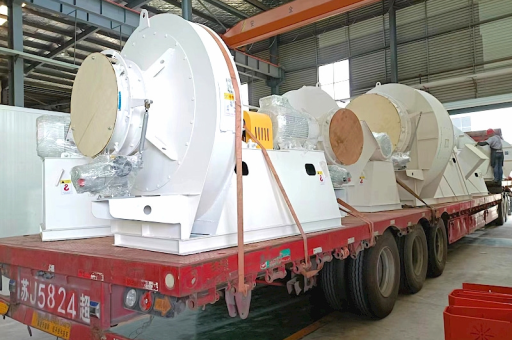
A high-temperature exhaust fan is a specialized industrial ventilation fan designed to move air, fumes, and heat in environments where the air temperature is significantly higher than standard conditions (typically above 100°C / 212°F). Unlike standard fans, they are engineered with materials and motor designs that can withstand continuous or intermittent exposure to extreme heat without failing.
Typical Operating Temperature Ranges
- Standard Fan: Up to 80°C (176°F)
- High-Temperature Fan: 100°C to 300°C (212°F to 572°F) – Most common range
- Extreme High-Temperature Fan: 300°C to 650°C (572°F to 1202°F) – Requires specialized alloys and air cooling
- Ultra-High (Specialized): Up to 1000°C+ (1832°F) – Rare, used in kilns and furnaces
Common Applications
These fans are critical in processes where heat must be extracted directly from the source.
- Industrial Ovens & Dryers: Removing hot air, steam, and volatile organic compounds (VOCs). (e.g., paint curing, food drying, textile drying).
- Foundries & Forges: Ventilating heat from furnaces, molten metal, and casting operations.
- Bakeries & Commercial Kitchens: Exhausting heat and grease-laden air from ovens, combi-ovens, and fryers.
- Boiler Rooms & Steam Plants: Removing hot combustion gases and ambient heat.
- Glass & Ceramic Manufacturing: Extracting heat from melting tanks and kilns.
- Heat Treatment Facilities: Ventilating quench tanks and tempering furnaces.
- Automotive (Test Cells): Removing exhaust fumes and heat from engine dynamometers.
Key Design & Material Features
To survive high temperatures, these fans differ significantly from standard models:
-
Motor Placement & Cooling:
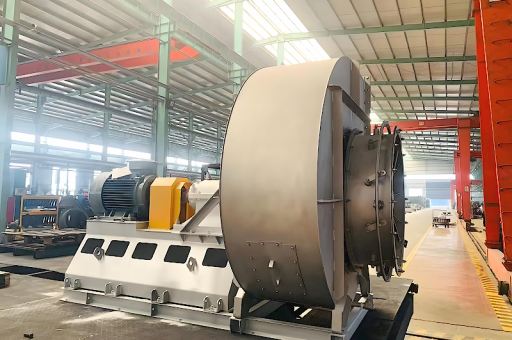
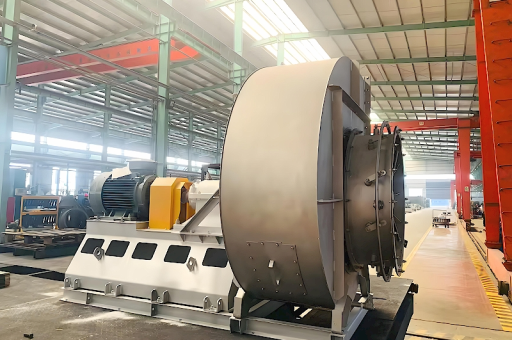
- Belt-Drive (Remote Motor): The motor is mounted outside the airstream (e.g., on a pedestal or roof). A shaft connects to the fan wheel. This is the most common method for high temperatures because the motor never touches the hot air.
- Direct-Drive (Heat-Rated Motor): The motor is in the airstream but is built with sealed bearings, high-temperature grease, and higher insulation class (Class H or C). A "cooling wheel" (a secondary fan on the motor shaft) may be used to blow ambient air over the motor housing.
- Airstream Cooling (Piggyback): A smaller, external fan blows ambient air over the main motor to keep it cool.
-
Impeller (Fan Wheel):
- Material: High-temperature steel (e.g., corten), stainless steel (304 or 316), or even Inconel for extreme heat. Aluminum alloys are generally not suitable.
- Design: Backward-Inclined (BI) or Airfoil (AF) blades are most common. They are less prone to heat distortion and handle static pressure well. Radial/Radial Tip wheels are used for very dirty or sticky fumes.
-
Housing & Shaft:
- Housing: Heavy-gauge steel or stainless steel with expansion joints to prevent warping.
- Shaft: Over-sized, often with a "heat slinger" (a disc that prevents heat from traveling along the shaft toward the bearings). Bearings are typically "pillow block" style, mounted remotely and cooled.
-
Seals & Bearings:
- Shaft Seals: High-temperature graphite or Teflon (PTFE) seals prevent air leakage.
- Bearings: High-temperature grease (up to 180°C) or, for extreme cases, synthetic oils. Remote-mounted bearings are often preferred.
How to Select the Right Fan: Critical Factors
Don't just look at the price. Choose based on your process:
- Maximum Temperature (Continuous vs. Spike): What is the peak temperature the fan will see? Will it get that hot every day, or just during a startup/shutdown cycle?
- Airflow (CFM / m³/h) & Static Pressure (SP - inches w.g. / Pa): How much air needs to be moved and against what resistance (ductwork, filters, dampers)? Use a fan curve.
- Air Composition: Is the air clean (just heat)? Or is it dirty (smoke, dust, grease, corrosive chemicals, moisture)?
- Greasy/VOC-laden: Needs clean-out doors and a non-sparking wheel (aluminum-bronze for fire safety).
- Corrosive: Needs stainless steel or fiberglass-reinforced plastic (FRP) – but FRP has a lower temperature limit (~100°C).
- Explosive/Flammable: Look for ATEX or IECEx certifications with spark-resistant construction.
- Motor Configuration:
- Duct Mount (Inline): Motor is usually outside the duct. Good for space.
- Roof Mount (Uphlast): Exhausts straight up.
- Wall Mount: Simple installation.
- Efficiency & Noise: High-temp fans are often less efficient than standard fans due to wider clearances (to accommodate thermal expansion). Noise is typically higher due to higher tip speeds.
Installation & Safety Considerations
- Thermal Expansion: Piping and ductwork to/from the fan must have expansion joints (bellows) to prevent stress on the fan housing.
- Disconnect Dampers: Install a gravity relief damper or motorized shut-off damper to prevent cold air from back-drafting into the hot process when the fan is off.
- Variable Frequency Drive (VFD): A VFD is highly recommended for soft-starting (reducing thermal shock to the wheel) and for precise airflow control.
- Heat Protection: Ensure the fan is mounted so that its discharge does not impinge on people, equipment, or flammable materials.
- Electrical: Use heat-resistant wiring (SJTOW, or teflon-coated wires) inside the fan junction box.
Example Specification (for a Furnace Exhaust)
"High-temperature belt-drive exhaust fan, 20,000 CFM @ 4" w.g. SP. Maximum operating temperature: 400°C (752°F). Inlet: 30" round, Outlet: 24" x 24". Housing: 10-gauge carbon steel with 1" shaft heat slinger. Impeller: Backward-inclined, high-temp steel (up to 400°C). Bearings: Heavy-duty, remote-mounted, with high-temp grease. Motor: 20HP, TEFC, premium efficiency, on an isolated base. Include a discharge rain hood and inlet bird screen."
Popular Manufacturers (Examples)
- Greenheck (USA) – Wide range of industrial and high-temp roof/wall fans.
- Cincinnati Fan (USA) – Known for rugged belt-drive and direct-drive heat fans.
- Howden (Global) – Large custom industrial fans (power, steel, cement).
- Robinson Fans (USA) – Heavy-duty, engineered fans for extreme applications.
- S&P / Soler & Palau (Global) – Good selection for commercial kitchen and moderate industrial heat.
- FläktGroup / Woods (Europe/Global) – High-quality industrial ventilation.
Summary: When Do You Need One?
- Yes: Oven exhaust, foundry fume control, boiler room makeup air.
- Maybe: Small pizza bakery (maybe a standard kitchen fan is fine), a garage workshop (unlikely needed).
- No: Living room, office, warehouse (no heat source).
Need a specific recommendation? Provide these details:
- Max Air Temperature at Fan:
- Airflow (CFM) and Static Pressure (SP):
- What is the gas/air made of? (Clean, grease, smoke, corrosive):
- Mounting location (Roof, wall, duct):
- Budget range: