This article's table of contents introduction:
- Core Definition
- Common Types of High-Temperature Fans
- Critical Design Features & Materials
- Key Applications
- Selection Criteria
- Maintenance & Common Problems
- Leading Manufacturers
- Summary Table: Temperature vs. Construction
This is a comprehensive overview of Industrial High-Temperature Fans.
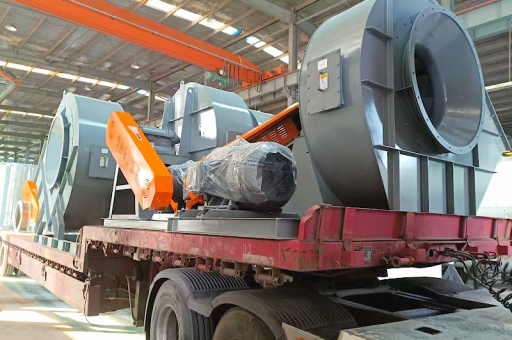
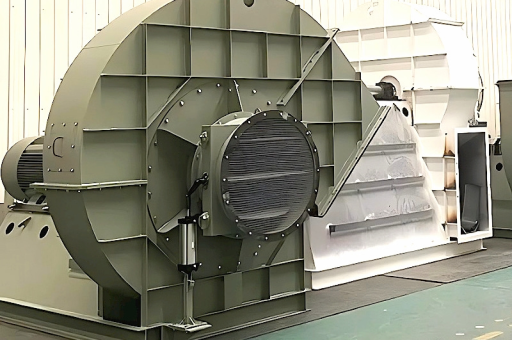
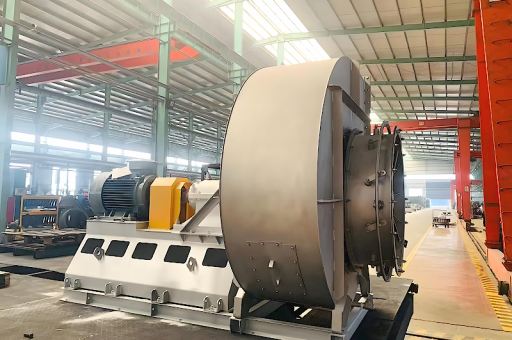
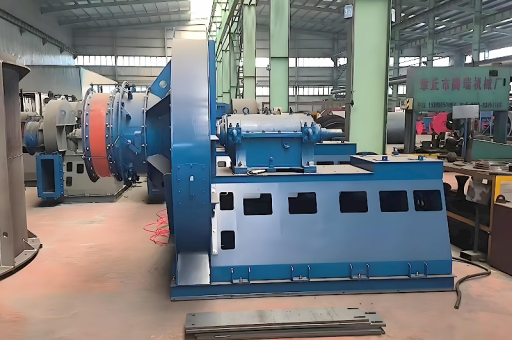
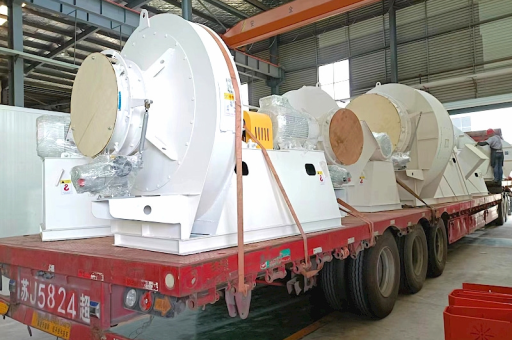
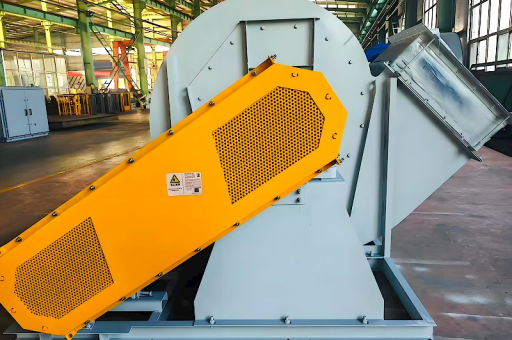
These are not standard ventilation fans. They are critical pieces of equipment designed to move air or gas in environments where temperatures exceed the capabilities of conventional fans (typically over 100°C / 212°F). They are used in process industries where heat, smoke, or corrosive gases are present.
Here is a breakdown of how they work, their types, key components, applications, and selection criteria.
Core Definition
An industrial high-temperature fan is a mechanical device designed to continuously handle air or gas streams with temperatures ranging from 150°C (300°F) to over 1000°C (1832°F) .
Key Distinction: Standard fans use aluminum impellers, rubber seals, and grease-packed bearings that fail at high temperatures. High-temp fans use specialized materials and cooling systems.
Common Types of High-Temperature Fans
The choice depends on pressure requirements, temperature, and gas composition.
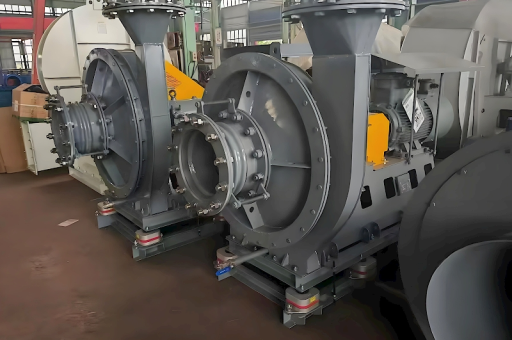
- Centrifugal (Radial) Fans: The most common type.
- Backward Curved (BC): High efficiency, non-clogging, good for clean, hot air (e.g., ovens, dryers).
- Radial (Paddle Wheel): Simple, robust design. Ideal for very high temperatures and dirty/gritty air (e.g., kilns, incinerators). The blades are straight, making them easy to clean.
- Forward Curved (Squirrel Cage): High volume, low pressure. Less common for high-temp due to blade stress, but used in some industrial furnaces.
- Axial Fans: High volume, low pressure. Propeller or tube-axial design. Used for ventilation, cooling towers, and exhaust systems where static pressure is low.
- Plug Fans: The motor and impeller are housed in a "plug" that mounts directly into a wall or duct. The motor is on the cool side; only the impeller enters the hot zone.
Critical Design Features & Materials
To survive extreme heat, these fans utilize specialized engineering:
- Housing Material:
- Carbon Steel: Up to ~400°C (752°F).
- Stainless Steel (304/316/310S): For corrosion resistance and temperatures up to ~800°C (1472°F). 310S is a common choice for high heat.
- Inconel / Hastelloy (Nickel Alloys): For extreme temperatures (1000°C+) and highly corrosive environments.
- Impeller (Wheel) Design:
- Welded Steel Construction: No rivets or bolted joints that can fail from thermal expansion.
- Stress Relief: The impeller is typically stress-relieved after welding to prevent warping.
- Bearing & Shaft Cooling: The most vulnerable parts.
- Shaft Cooling Disc (Slinger): A steel disc attached to the shaft between the fan housing and the bearing. It radiates heat away from the shaft.
- Insulating Plate: A thick plate between the fan housing and the bearing pedestal to prevent heat transfer.
- Forced Cooling (Quill Flange): A fan on the motor shaft or an external blower forces cool air over the shaft and bearings.
- Water Cooling: A water jacket around the bearing housing. Essential for temperatures >350°C (662°F).
- High-Temp Grease: Lithium complex or synthetic-based greases (e.g., Mobilith SHC 100).
- Shaft Seal: High-temperature packing (graphite, PTFE) to prevent hot gas leakage into the bearings.
- Motor Placement:
- Direct Drive: Motor is mounted off the main airstream, often with a cooling shroud.
- Belt Drive: The motor is physically separated from the hot air duct. A long shaft connects to the fan. Most common for high temps.
Key Applications
These fans are essential in processes where heat is a byproduct or requirement.
- Cement Industry: Exhaust from rotary kilns, preheaters, clinker coolers.
- Steel & Metal: Reheat furnaces, annealing furnaces, fume extraction, cupola exhaust.
- Power Generation: Boiler draft (ID fans for pulling combustion gases), flue gas desulfurization (FGD).
- Incinerators & Waste-to-Energy: Burning municipal waste, medical waste, or sludge.
- Glass Manufacturing: Melting furnaces, forming machines, tempering ovens.
- Chemical & Petrochemical: Reactors, reformers, crackers, dryers.
- HVAC & Process Drying: Ovens, industrial dryers, paint curing lines, spray booths.
- Heat Treatment: Quenching, tempering, and annealing furnaces.
Selection Criteria
Before choosing a high-temp fan, define these parameters:
- Maximum Operating Temperature: The highest continuous temperature the fan will see. Include a safety margin.
- Gas Composition: Is it clean, dirty, corrosive, explosive, or contains particulate (dust)?
- Air Volume (CFM / m³/h): Required flow rate.
- Static Pressure (inches WG / Pa): System resistance to overcome.
- Duty Cycle: Is it continuous (24/7) or intermittent?
- Startup Temperature: Is the fan starting cold or hot?
- Installation Environment: Indoor/outdoor, ambient temperature, space constraints.
- Regulatory Compliance: ATEX (explosive atmospheres), AMCA (air movement), ISO standards.
Maintenance & Common Problems
- Shaft Bearing Failure: The #1 cause of downtime. Check alignment, cooling, and lubrication.
- Impeller Imbalance: Caused by dust buildup, erosion, or warping. Leads to vibration.
- Thermal Expansion Issues: If not properly designed with sliding bases or expansion joints, the fan housing can warp or crack.
- Weld Cracking: Common at high temperatures if stress relief was inadequate.
- Motor Overheating: Due to heat transfer through the shaft or inadequate cooling.
- Vibration: From imbalance, misalignment, or resonance.
Leading Manufacturers
- Greenheck (North America)
- New York Blower
- Cincinnati Fan
- Howden (Global)
- FläktGroup (Europe/Global)
- Robinson Fans (Heavy Industry)
- TLT-Turbo (Power/Steel)
Summary Table: Temperature vs. Construction
| Temperature Range | Impeller Material | Housing Material | Bearing Cooling | Motor Type |
|---|---|---|---|---|
| Up to 200°C (392°F) | Aluminum / Steel | Steel | Standard Grease | Direct or Belt |
| 200°C - 400°C (752°F) | Mild Steel | Mild Steel + Insulation | Shaft Cooling Disc | Belt-driven preferred |
| 400°C - 700°C (1292°F) | Stainless Steel (310S) | Stainless Steel (310S) | Water Cooled / Forced Air | Belt-driven, motor remote |
| 700°C - 1000°C+ | Inconel / Hastelloy | Inconel / Hastelloy + Ceramic Lining | Water Cooled (closed loop) | Belt-driven, motor remote |
In short: An industrial high-temperature fan is a heavy-duty, specialized piece of equipment built with exotic alloys, cooling systems, and precise balancing to survive in environments that would destroy a standard fan. Choosing the wrong material or cooling method leads to rapid failure.