This article's table of contents introduction:
- Key Technical Requirements for 300°C Fans
- Types of 300°C Fans
- How to Source a 300°C Fan (Business/Engineering)
- Cost & Specification Example
- Critical Safety & Installation Notes
- Summary
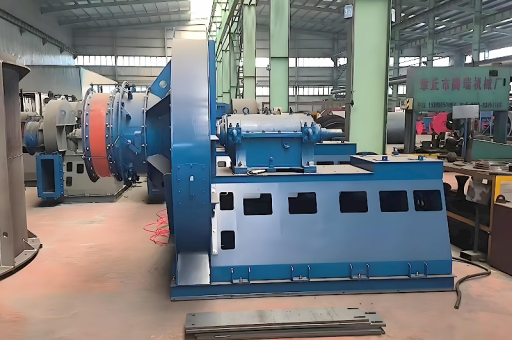
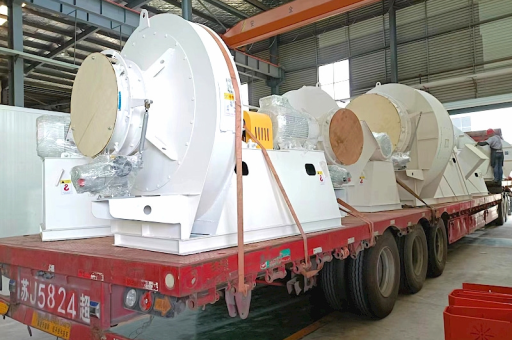
When searching for 300°C (572°F) high-temperature resistant fans, you are typically looking for industrial-grade equipment designed for ovens, kilns, furnaces, exhaust systems, or heat treatment processes.
Standard commercial fans will fail at these temperatures. At 300°C, you need specialized construction, motors, and materials.
Here is a comprehensive breakdown of what to look for, the different types, and how to specify them.
Key Technical Requirements for 300°C Fans
-
Motor Construction:
- Away from airstream: The motor must be mounted outside the duct or oven (via a shaft extension and heat shield). Standard motors cannot survive 300°C ambient air.
- High-Temp Insulation (Class H or C): If the motor is in a cooler zone, it needs Class H insulation (max 180°C) or special high-temp windings.
- Cooling: Look for "TEFC" (Totally Enclosed Fan Cooled) with a separate external cooling fan wheel, or "forced air cooling" using compressed air or a secondary fan.
- Bearing Grease: Special high-temperature grease (e.g., PTFE-based or silicone-based) is mandatory to prevent bearing failure.
-
Shaft and Impeller Material:
- The impeller (fan wheel) and exposed shaft cannot be standard steel or cast aluminum.
- Stainless Steel (AISI 304, 316, 310S): Required for corrosion resistance, thermal expansion, and structural integrity.
- Inconel® or Hastelloy®: For extreme environments (e.g., corrosive fumes at high temp) or maximum lifespan.
- Max Temp Limit: Aluminum alloys fail around 250-300°C. Cast iron can handle it but is heavy. Stainless steel is the standard.
-
Bearing Selection:
- High-Temp bearings with steel cages (not plastic) and special clearances.
- External bearing housings with cooling fins or water cooling jackets (for continuous >250°C operation).
- Regreaseable bearings are preferred for maintenance.
-
Shaft Seal & Housing:
- High-temperature gaskets (graphite, PTFE, or ceramic fiber) to prevent heat leakage into the motor shaft area.
- Housing must be robust (welded steel or cast iron) with thermal expansion joints.
Types of 300°C Fans
Plug Fans (most common for ovens)
- Use case: Directly mounted on the back or side of a process oven, with the motor outside.
- Design: The impeller is inside the hot zone, the motor is outside.
- Advantage: Easy to install; motor stays cool.
- Example: "100mm High-Temp Plug Fan (Impingement type)"
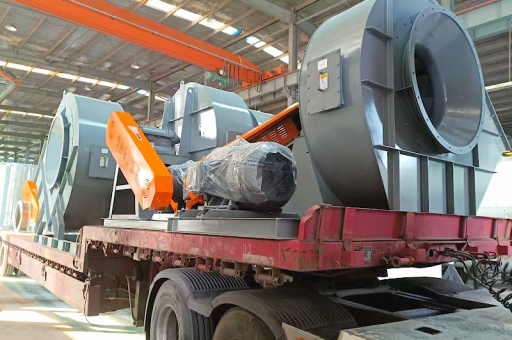
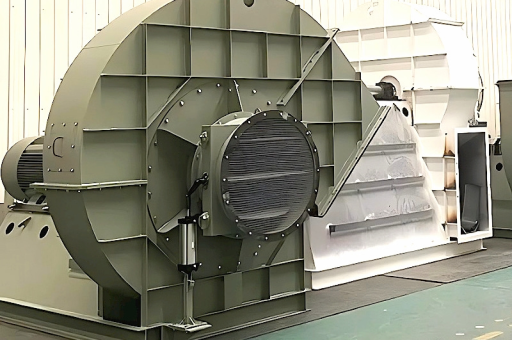
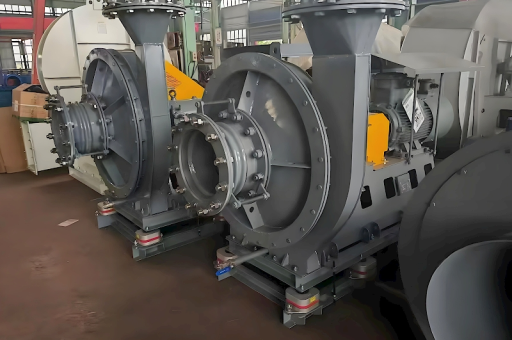
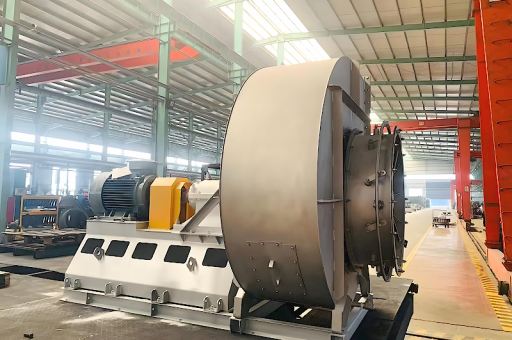
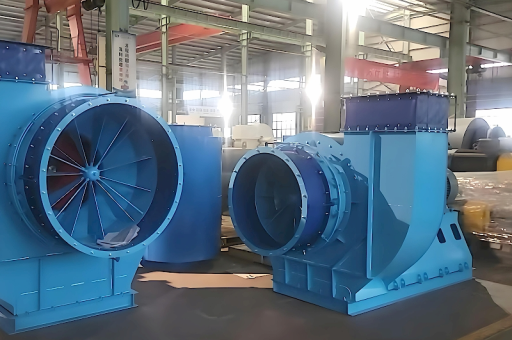
Centrifugal (Radial) Fans
- Use case: High static pressure for long duct runs or high resistance (e.g., exhaust from a furnace).
- Design: Backward curved or radial paddle (Paddlewheel) impellers are best for high temp and dirty air. Forward curved are less common.
- Material: Heavy-duty welded steel or stainless steel.
High-Temp Inline Duct Fans
- Use case: Exhausting hot air from a bake oven, industrial kitchen hoods, or paint drying booths.
- Design: Inline installation, motor mounted outside the duct (on a bracket).
- Temp limit: Some are rated up to 300°C, but verify motor cooling.
External Rotor Motors (Direct Drive)
- Use case: Compact installations.
- Design: Motor rotor is part of the fan wheel. For 300°C, special construction is needed to keep the motor windings cool (e.g., using a secondary cooling fan or water cooling).
- Note: Most standard external rotor motors (e.g., ebm-papst) max out at 100-150°C. For 300°C, they often require a separate cooling air supply.
How to Source a 300°C Fan (Business/Engineering)
You should NOT search for generic "fan" purchases. Use these specific search terms or contact industrial manufacturers.
Recommended Search Terms:
- "Industrial hot air circulation fan"
- "High temperature centrifugal fan 300°C"
- "Oven plug fan stainless steel 300°C"
- "Furnace exhaust fan 572°F"
- "High temp radial paddle wheel fan"
Leading Manufacturers (Specialized in High-Temp Fans):
- Sodeca - (Spain) - "Fumex" series for high temps.
- Systemair / Fantech - Industrial high-temp ranges (e.g., "K" series).
- Cincinnati Fan - (USA) - High-temp direct drive & heat fan packages.
- New York Blower - Industrial process fans for kilns/ovens.
- ebm-papst - Specialized "High Temp" series with cooling systems.
- Ventilair / DEKO - Commercial oven exhaust fans.
Cost & Specification Example
Typical 300°C Fan Specification (e.g., 250mm inlet / 400 CFM):
- Fan Type: Direct Drive Plug Fan
- Max Temp: 300°C continuous
- Motor: 0.75 kW (1 HP), 3-Phase, 3000 RPM, TEFC, Class H
- Impeller: Stainless Steel (SS304), Backward Curved
- Shaft: Stainless Steel, with high-temp bearing housing
- Max Static Pressure: ~1500 Pa (6 inches w.g.)
- Sound Level: ~75 dB(A)
- Weight: ~50 kg (110 lbs)
- Warranty: Typically 12-18 months.
Estimated Price (2024-2025): $2,500 - $8,000+ USD for a robust industrial unit. Cheaper "import" versions may be available for ~$800 but will likely fail sooner at 300°C.
Critical Safety & Installation Notes
- ⚠️ VFD Use: If using a Variable Frequency Drive (VFD), ensure the VFD is rated for high-temp motor parameters (some VFDs trip on overtemperature). Use a motor with an independent cooling fan if running at low speeds (<20 Hz) at high temp.
- 🔥 Fire Risk: Do NOT attempt to modify a standard fan. The impeller can warp, become unbalanced, and strike the housing, causing sparks and fire.
- 🧪 Fumes: If moving corrosive gases (e.g., from plastic curing), you need Hastelloy or Ceramic coated components.
- 🔗 Motor Lifespan: A correctly engineered 300°C fan should last 5-10+ years. A mis-specified one will fail in weeks.
Summary
For a 300°C fan, you absolutely need:
- Motor externally mounted (or with water cooling).
- Stainless steel impeller (SS304 or better).
- High-temp bearings (with regreasing capability).
- Class H motor (or equivalent insulation).
Best approach: Contact a specialist industrial fan supplier (like those listed above) with your specific CFM (airflow), Static Pressure (resistance), Gas composition (air or corrosive), and duty cycle (continuous or intermittent). Do not buy a standard "air circulator" for this application.