This article's table of contents introduction:
- Table of Contents (导读目录)
- Introduction to High-Temperature Cast Iron Fans
- Material Science: Why Cast Iron Excels Under Extreme Heat
- Core Design Features for Thermal Endurance
- Key Industrial Applications
- Common Operational Challenges and Solutions (Q&A Section)
- Maintenance Best Practices for Longevity
- Future Trends and Innovations
- Conclusion
** The Critical Role of High-Temperature Cast Iron Fans in Industrial Processes: Design, Applications, and Maintenance
Table of Contents (导读目录)
- Introduction to High-Temperature Cast Iron Fans
- Material Science: Why Cast Iron Excels Under Extreme Heat
- Core Design Features for Thermal Endurance
- Key Industrial Applications
- Common Operational Challenges and Solutions (Q&A Section)
- Maintenance Best Practices for Longevity
- Future Trends and Innovations
- Conclusion
Introduction to High-Temperature Cast Iron Fans
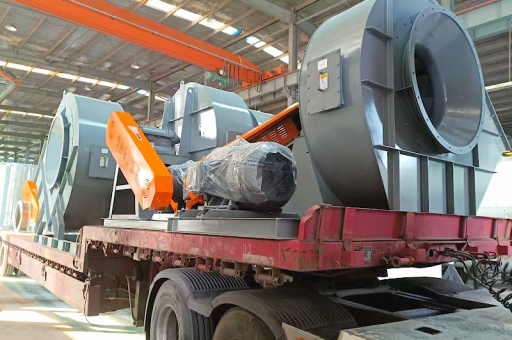
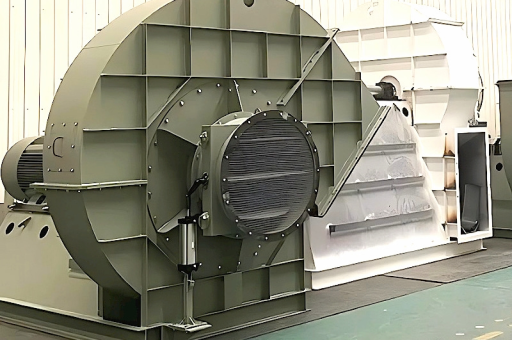
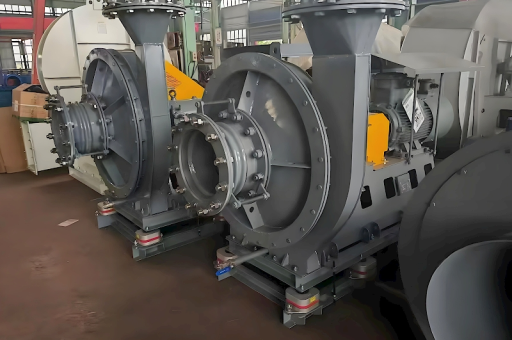
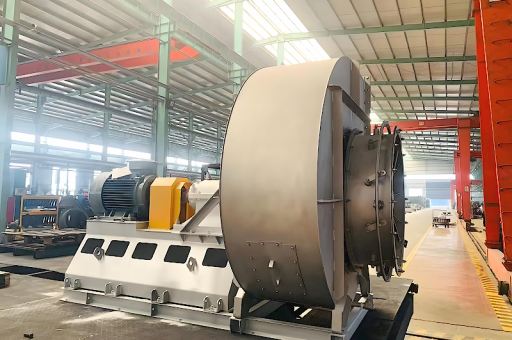
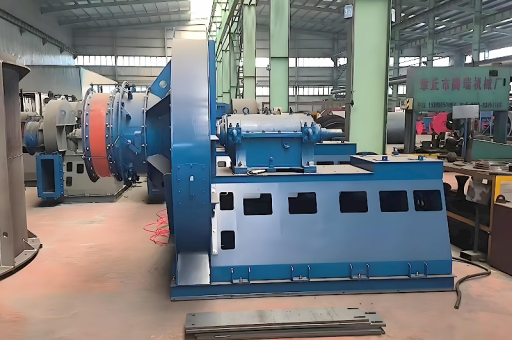
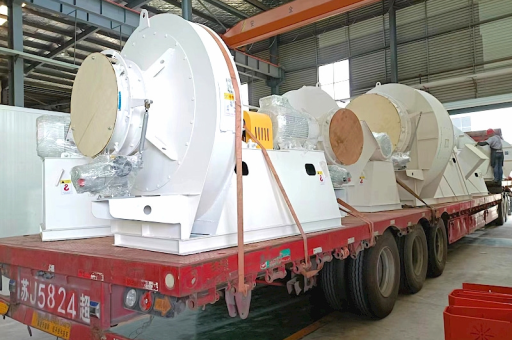
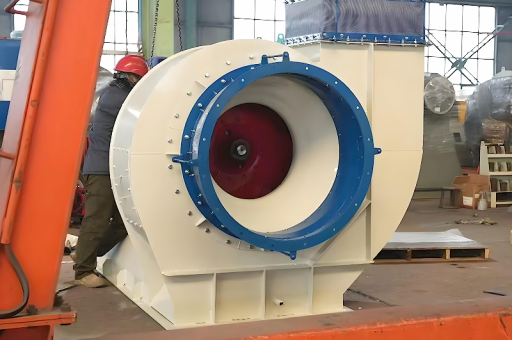
In the demanding environments of modern heavy industry, the ability to move large volumes of gas or air at sustained high temperatures is not a luxury—it is a necessity. High-temperature cast iron fans are engineered specifically to handle thermal loads that would cause standard steel or aluminum impellers to warp, creep, or fail catastrophically. These fans are the backbone of systems such as industrial ovens, kilns, boilers, exhaust gas treatment lines, and foundry ventilation.
Unlike standard fans, which begin to lose structural integrity above 150°C, high-temperature cast iron variants are designed to operate reliably in continuous service at temperatures exceeding 400°C, with specialized models capable of peak surges up to 650°C. This unique capability stems from the metallurgical properties of cast iron, particularly its ability to maintain dimensional stability and resist oxidation under extreme thermal cycling.
Material Science: Why Cast Iron Excels Under Extreme Heat
The selection of cast iron as the primary material for these heavy-duty fans is based on several well-documented physical and mechanical properties.
- Self-Damping Characteristics: Cast iron naturally absorbs vibrations better than fabricated steel. This reduces the risk of fatigue cracking caused by high-speed rotation at elevated temperatures.
- Thermal Conductivity: Cast iron has a relatively high thermal conductivity (around 40-45 W/m·K), which helps dissipate heat more evenly across the fan wheel and housing. This uniform temperature distribution prevents localized hot spots that can lead to deformation.
- Oxidation Resistance at Low Carbon Content: High-quality cast iron used in these fans typically contains added silicon (3-4%) to form a protective oxide layer at the surface, reducing scaling and material loss.
- Cost-Effectiveness for Complex Shapes: Casting allows for the creation of aerodynamically optimized blade profiles and thick reinforcing ribs that would be expensive to fabricate in stainless steel. This is crucial for maintaining structural integrity at high rotational speeds.
It is important to note that not all cast iron is suitable. Ductile (nodular) iron (ASTM A536) is often preferred over gray iron because it offers better impact resistance and elongation—properties vital for fans that start up and shut down in high-temperature atmospheres where thermal shock can occur.
Core Design Features for Thermal Endurance
A high-temperature cast iron fan is not simply a standard fan made of a different metal. Several specific design adaptations are required:
- Air-Cooled Shaft System: The fan shaft passes through the bearing housing. An external cooling disc (wind turbine) or a forced-air design is often integrated to prevent conductive heat transfer from the impeller to the bearings.
- Radial Blade Configuration: Most high-temperature service fans use robust radial or radial-tip blades. These are not as efficient as backward-curved airfoil blades, but they are far more resistant to heat, dust load, and erosion.
- Expansion Joints and Mounting Kits: The fan housing must accommodate thermal growth. Slotted bolt holes and spring-loaded base plates allow the fan to expand without putting stress on ductwork and support structures.
- Separate Drive Arrangement: To protect the motor, the fan is almost always belt-driven or coupled via a flexible coupling, with the motor mounted off the hot gas stream. The belting acts as a mechanical fuse.
Key Industrial Applications
High-temperature cast iron fans are found across multiple sectors:
- Heat Treatment and Forging: Recirculating hot gases in furnaces and quenching tanks.
- Cement and Lime Kilns: Inducing draft through preheaters and clinker coolers, where gas temperatures can fluctuate violently.
- Chemical Recovery Boilers: Moving corrosive, high-temperature flue gases in pulp and paper plants.
- Gas Turbine Inlet and Exhaust Systems: Handling turbine exhaust gases (400°C+), often in cogeneration power plants.
- Waste-to-Energy Plants: Operating on the hot gas side of boiler passes to maintain negative pressure.
One specific emerging application involves integration with wind turbine cooling and nacelle ventilation systems. While the main power generation comes from the turbine, industrial-scale wind farms often utilize ancillary high-temperature cast iron fans for brake resistor cooling or transformer ventilation when operating in high ambient heat conditions combined with peak loads.
Common Operational Challenges and Solutions (Q&A Section)
To provide a deeper insight, we address typical questions from plant engineers:
Q1: What is the maximum safe operating temperature for a standard cast iron fan?
Answer: Continuously, gray cast iron fans are typically rated to 370°C-400°C. Ductile iron fans can push to 450°C. Specialized high-alloy cast irons (such as Ni-Resist) can reach 650°C, but cost increases significantly.
Q2: My fan wheel cracks after two years. Is it material failure or system issue? (问答示例)
Answer: Crack-initiation near blade root welds (or cast joint transitions) is often not a material failure but a resonance fatigue or stress-corrosion issue. Check the natural frequency of the fan versus the operating speed and any variable frequency drive (VFD) sweep ranges. Also, verify if condensate or acidic chlorine species exist in the gas stream.
Q3: Why does the fan vibrate after a cold start-up?
Answer: This is caused by thermal imbalance. During shutdown, moisture or debris may settle unevenly. More commonly, the rotor deflects unevenly as one side heats faster due to residual gas flow. A "soaking" procedure (running at low speed for 15 minutes before ramping up) usually resolves the issue.
Q4: Can I replace a cast iron fan with a stainless steel fan for higher heat?
Answer: Only if you control the gas chemistry. Stainless steel (e.g., 304L or 310S) offers higher heat tolerance (up to 850°C), but it is prone to chloride stress-corrosion cracking in environments where cast iron would not suffer. Cast iron typically survives caustic environments better. Consult the application gas analysis.
Maintenance Best Practices for Longevity
To maximize service life, adhere to these operational controls:
- Pre-Heat Before Start-Up: Never introduce a cold fan body into a 400°C gas stream. Use purge dampers to allow gradual temperature equalization.
- Monitor Bearing Temperature: Bearing life halves with every 10°C rise above 70°C. Ensure that the cooling air system (wind turbine disc or fan) is unobstructed.
- Inspect for Bulging and Cracking: At every major overhaul, use dye-penetrant testing (PT) on the blade tips and hub-to-blade transition areas. Cast iron does not dent—it cracks.
- Check Balance Weight Integrity: Balance weights are often welded on. Heat can loosen them. Verify tightness after the first 500 hours of operation and then annually.
- Corrosion Allowance: Specify thicker casing walls (e.g., 6mm minimum) in the original purchase order to allow for long-term material loss from high-temperature oxidation (scaling).
Future Trends and Innovations
The field of high-temperature cast iron fan technology is evolving:
- Hybrid Materials: Manufacturers are developing cast iron wheels with plasma-sprayed ceramic coatings on the blade surfaces, offering the structural strength of cast iron with the surface heat resistance of ceramic.
- Smart Fan Systems: Integration of IoT sensors directly into the cast iron hub (using heat-resistant wireless transmitters) to report real-time impeller temperature, vibration signature, and speed.
- Optimized Blade Profiles: Computational fluid dynamics (CFD) is enabling radial-blade designs that rival backward-curved efficiency while maintaining mechanical durability.
- Sustainable Manufacturing: Foundries are increasingly using electric arc furnace melting with recycled scrap to reduce the carbon footprint of producing these heavy-duty components.
Conclusion
High-temperature cast iron fans are a cornerstone of reliable industrial thermal management. Their unique combination of vibration damping, thermal stability, and cost-effective manufacture makes them indispensable for any process that requires moving hot, dirty, or corrosive gases. Understanding the specific material limits, implementing proper thermal startup procedures, and maintaining the shaft cooling system—sometimes aided by an auxiliary wind turbine or air disc—are critical steps to ensuring these fans deliver decades of service.
For engineers specifying new equipment, the choice remains clear: when the temperature rises above what a fabricated steel fan can handle, high-temperature cast iron remains the proven, robust solution.