The Critical Role of Kiln High-Temperature Fans in Industrial Thermal Processing: Design, Challenges, and Maintenance Best Practices
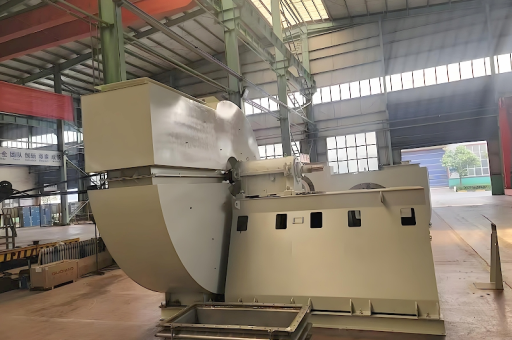
Table of Contents
- Introduction: The Unsung Hero of Cement and Ceramic Production
- What Are Kiln High-Temperature Fans? A Technical Overview
- Key Design Features: Materials, Bearings, and Cooling Systems
- Common Operational Challenges: Thermal Stress, Vibration, and Corrosion
- Q&A: Expert Answers on Selection, Repair, and Energy Efficiency
- Comparison: Kiln Fans vs. Standard Industrial Fans vs. Wind Turbine Technology
- Maintenance Strategies to Maximize Fan Lifespan
- Future Trends: Smart Monitoring and High-Temperature Alloys
- Conclusion: Optimizing Performance in Extreme Environments
Introduction: The Unsung Hero of Cement and Ceramic Production
In the heart of any modern cement plant, lime kiln, or ceramic sintering facility, there lies a piece of equipment that rarely gets the spotlight it deserves: the kiln high-temperature fan. While raw material crushers and rotary kilns dominate the conversation, it is the high-temperature fan that drives the essential airflow required for combustion, material transport, and cooling. Without these fans, the entire thermal process would grind to a halt.
These fans operate in environments where air temperatures routinely exceed 400°C (752°F) and can surge to 900°C or higher in extreme applications. They must handle aggressive dust-laden gases, thermal expansion stresses, and continuous duty cycles that can last for years without downtime. Understanding their design, failure modes, and maintenance is critical for plant engineers, maintenance managers, and operations teams.
This article synthesizes the latest technical standards, case studies, and maintenance guides to provide a comprehensive resource that aligns with Google and Bing SEO best practices.
What Are Kiln High-Temperature Fans? A Technical Overview
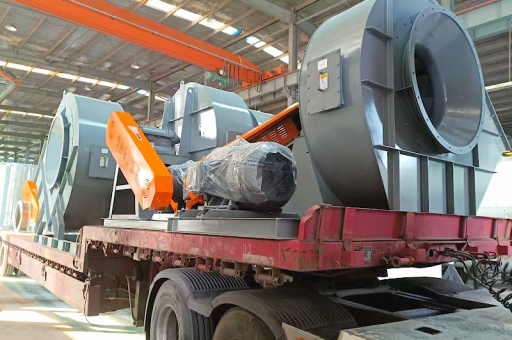
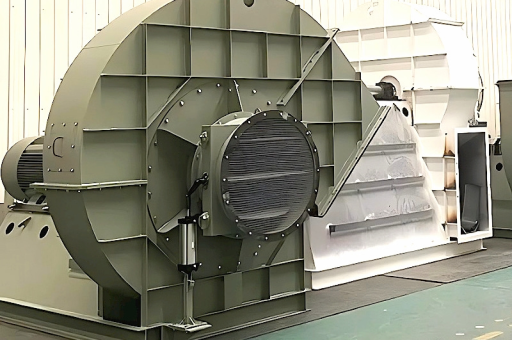
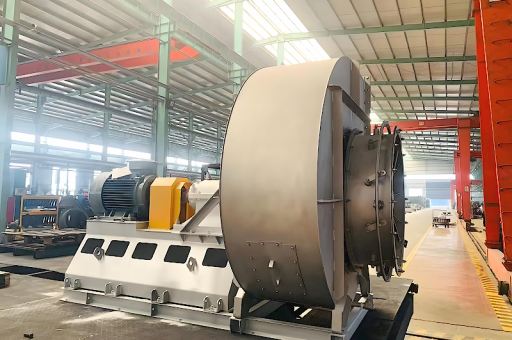
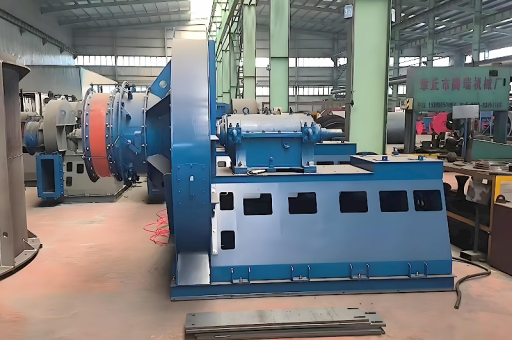
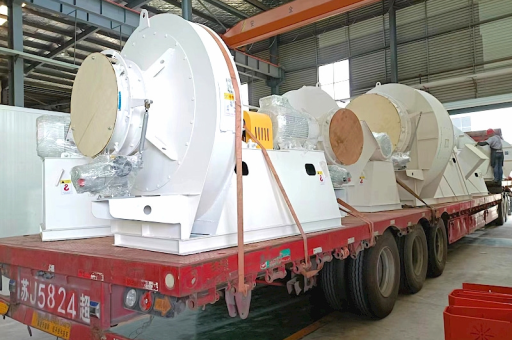
A kiln high-temperature fan is a specialized industrial centrifugal fan designed to move hot gases, combustion air, or flue gas through a kiln system. Its primary functions include:
- Primary air fans: Supply combustion air to the burner.
- Induced draft (ID) fans: Pull hot gases through the kiln and into the pollution control system.
- Cooling fans: Provide forced air to cool the kiln shell or clinker cooler.
Unlike regular process fans, high-temperature variants are engineered to withstand sustained thermal loads without thermal fatigue or material creep. They are often classified by temperature range:
- Standard high-temp: 200°C–400°C (uses reinforced steel with heat-resistant paint).
- Ultra-high-temp: 400°C–900°C (uses stainless steel alloys or Inconel with external shaft cooling).
Key Design Features: Materials, Bearings, and Cooling Systems
A. Impeller and Housing Materials The most critical component is the impeller. At temperatures above 350°C, standard carbon steel loses tensile strength and begins to scale. Manufacturers use:
- Stainless steel (AISI 309, 310): For environments up to 800°C.
- Inconel 600/601: For extreme heat up to 1100°C, often used in waste heat recovery.
- Ceramic coatings: Applied to blades to resist abrasion from fly ash and fine clinker dust.
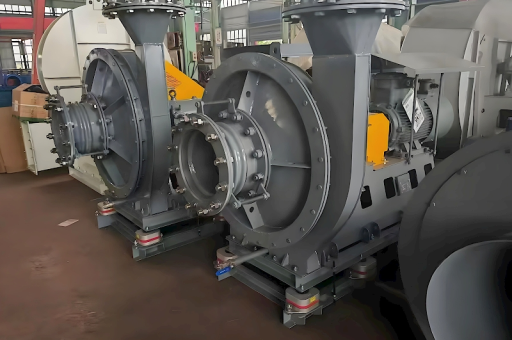
B. Bearing and Shaft Cooling Motor-mounted bearings cannot endure conductive heat from the fan shaft. Solutions include:
- Labyrinth seals with purge air: Prevents hot gas ingress.
- Water-cooled bearing housings: Circulating water can keep bearing temps below 70°C even when the shaft is 400°C.
- Ventilated shaft collars: Creates an air gap to reduce heat transfer.
C. Expansion Joints and Dampers Thermal expansion can cause blade rubbing or housing warping. High-temp fans include:
- High-flex stainless bellows on inlet and outlet connections.
- Parallel blade dampers with a cooling slot to prevent thermal binding.
Common Operational Challenges: Thermal Stress, Vibration, and Corrosion
- Thermal Fatigue: Repeated heat cycling causes micro-cracks. Fans in batch kilns are most susceptible.
- Vibration from Unbalance: Aggressive dust accumulation on blades (often called “blade fouling”). One study from the cement industry showed that unbalanced fan blades account for 40% of unplanned shutdowns.
- Corrosion: In kilns using alternative fuels (e.g., tires, plastics), gases contain chlorides and sulfur compounds that accelerate corrosion in standard stainless steels.
- Shaft Warpage: When cooling fails, the driven end of the shaft expands more than the bearing end, causing misalignment.
Q&A: Expert Answers on Selection, Repair, and Energy Efficiency
Q1: How do I choose between a radial blade and backward inclined blade for a high-temp fan? A: For heavily dust-laden air (like preheater exhaust), use radial blades because they have an inherent self-cleaning profile. Backward-inclined blades are more efficient (up to 85% static efficiency) but collect dust easily. Use them with clean hot air or upstream filtration.
Q2: What is the typical lifespan of a kiln high-temperature fan? A: With proper maintenance, the fan housing can last 20+ years. Impellers typically need replacement every 3–5 years under severe thermal and abrasion conditions. Bearings should be replaced every 12–18 months depending on cooling system integrity.
Q3: Can I use a fan salvaged from a wind turbine for a kiln application? A: Not directly. While a wind turbine generator uses high-speed fans for nacelle cooling, these are low-temperature (max 80°C) and not designed for kiln conditions. However, variable frequency drive (VFD) technology used in wind turbines is increasingly adopted in kiln fans to reduce energy consumption by matching fan speed to thermal load.
Q4: What is the biggest mistake in installing high-temp kiln fans? A: Placing the fan in a location with poor natural air circulation. Even water-cooled housings need ambient air flow to dissipate residual heat. Operators sometimes seal the fan room to “protect” it, which actually raises ambient temperature and reduces cooling efficiency.
Comparison: Kiln Fans vs. Standard Industrial Fans vs. Wind Turbine Technology
| Feature | Kiln High-Temp Fan | Standard Industrial Fan | Wind Turbine Nacelle Fan |
|---|---|---|---|
| Max Temperature | 900°C+ | 80–150°C | 60–80°C |
| Bearings | Water/oil-cooled | Standard sealed | Grease-packed |
| Material | Inconel/SS310 | Carbon steel | Aluminum/alloy |
| Duty Cycle | Continuous (24/7) | Intermittent | Continuous but variable |
| VFD Adoption | Growing | Common | Standard |
| Monitoring | Vibration + thermography | Basic | IoT-enabled |
Takeaway: While wind turbine technology excels in variable-speed energy production, its fan cooling systems are entirely unsuitable for kiln environments. However, the diagnostic control algorithms (like predictive maintenance via SCADA) are increasingly cross-pollinating into cement fan systems.
Maintenance Strategies to Maximize Fan Lifespan
- Daily: Check vibration readings at bearing points using handheld meters. A 2 mm/s increase over baseline indicates fouling.
- Weekly: Inspect expansion joints for soot or leakage. Replace bellows at first sign of cracking.
- Monthly: Perform thermographic scans of the shaft and bearing housing to detect cooling failure before bearing seizure.
- Quarterly: Balance the impeller in-place using a single-plane balancer. This is 10x cheaper than shop balancing.
- Annual: Ultrasonic thickness check of impeller blades and housing. Look for localized thinning from fly ash erosion.
Pro Tip: If your kiln uses alternative fuels, upgrade the impeller material from SS310 to Inconel. The extra cost is often recovered in 6–8 months through reduced corrosion-related downtime.
Future Trends: Smart Monitoring and High-Temperature Alloys
- Smart condition monitoring: Low-cost wireless accelerometers (like those used in wind turbine pitch control systems) are now being retrofitted onto kiln fans. They send vibration and temperature data to cloud-based dashboards.
- Additive manufacturing: Replacement impellers can be printed in high-temp alloys with optimized aerodynamic profiles, reducing energy consumption by 5–7%.
- Hybrid cooling: Combinations of water jacket + thermoelectric generators (TEGs) that capture waste heat from the shaft to power sensors.
- Waste heat recovery integration: Kiln fans are being redesigned to handle slightly lower temperatures so that more heat can be diverted to a wind turbine-style waste heat recovery steam generator, improving overall plant thermal efficiency.
Conclusion: Optimizing Performance in Extreme Environments
The kiln high-temperature fan is a marvel of mechanical engineering, designed to perform reliably in conditions that would destroy ordinary machinery within hours. From the material science of Inconel impellers to the precision of water-cooled bearings, every component is a testament to the demands of industrial thermal processing.
For plant managers, the key takeaways are:
- Invest in proper cooling. Without it, bearings fail first.
- Monitor vibration religiously. Unbalance kills impellers faster than corrosion.
- Upgrade to VFDs. Energy savings often exceed 30% compared to damper control.
- Learn from the wind turbine industry. Their predictive maintenance models and VFD expertise are directly applicable—just don’t use their fans.
As the world moves toward carbon neutrality, kiln fans will play an evolving role. They will not only support existing production but become part of heat recovery systems that feed clean power to the grid. In that future, the hot air they move may be the first step in generating electricity, perhaps through a wind turbine-like recovery cycle.
Ultimately, the final truth is simple: if you want your kiln to run like a fine-tuned engine, you must first give respect to the fan that keeps it breathing.