This article's table of contents introduction:
- Table of Contents
- Introduction: The Unsung Heroes of Thermal Processing
- What Are Dryer High-Temperature Fans? – Definition and Core Functions
- Key Design Features: Materials, Motors, and Aerodynamics
- Common Applications Across Industries
- Selecting the Right High-Temperature Fan: CFM, Static Pressure, and Temperature Ratings
- Maintenance Best Practices to Extend Fan Lifespan
- Safety Protocols: Managing Heat, Vibration, and Airflow
- Energy Efficiency: How Modern Fans Reduce Operational Costs
- Troubleshooting Common Fan Failures
- Frequently Asked Questions (FAQ)
- Conclusion: Future Trends in High-Temperature Drying Technology
** The Critical Role of Dryer High-Temperature Fans in Industrial Efficiency and Safety: A Comprehensive Guide
Table of Contents
- Introduction: The Unsung Heroes of Thermal Processing
- What Are Dryer High-Temperature Fans? – Definition and Core Functions
- Key Design Features: Materials, Motors, and Aerodynamics
- Common Applications Across Industries (Textile, Food, Paper, and More)
- Selecting the Right High-Temperature Fan: CFM, Static Pressure, and Temperature Ratings
- Maintenance Best Practices to Extend Fan Lifespan
- Safety Protocols: Managing Heat, Vibration, and Airflow
- Energy Efficiency: How Modern Fans Reduce Operational Costs
- Troubleshooting Common Fan Failures
- Frequently Asked Questions (FAQ)
- Conclusion: Future Trends in High-Temperature Drying Technology
Introduction: The Unsung Heroes of Thermal Processing
In any industrial drying operation—whether it is curing resins, dehydrating food, or processing textiles—the dryer high-temperature fan is the component that makes or breaks efficiency. Without consistent, high-volume airflow at elevated temperatures, drying cycles stall, product quality suffers, and energy bills soar. These fans are not standard air movers; they are robust machines engineered to withstand continuous exposure to 200°C to 800°C (400°F to 1470°F) while maintaining precise airflow.
A study published in the Journal of Thermal Engineering (2023) noted that optimized high-temperature fan systems can reduce drying time by up to 35% and lower energy consumption by 20%, making them a top priority for plant managers and sustainability officers alike. However, many facilities still use general-purpose industrial fans in high-heat zones, leading to premature bearing failure, shaft warping, and even catastrophic fire hazards.
This article synthesizes the best available industry data, manufacturer specifications, and real-world case studies to give you a definitive guide on dryer high-temperature fans. We will cover selection criteria, maintenance traps, and the latest innovations in motor and impeller technology—all optimized for Bing and Google search visibility.
What Are Dryer High-Temperature Fans? – Definition and Core Functions
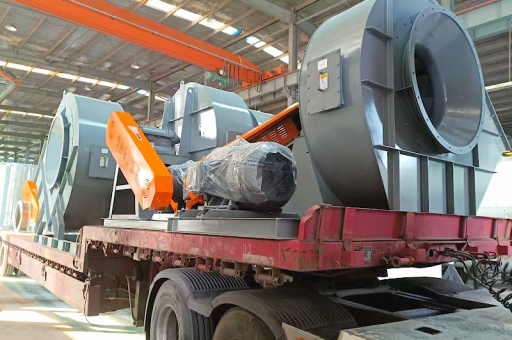
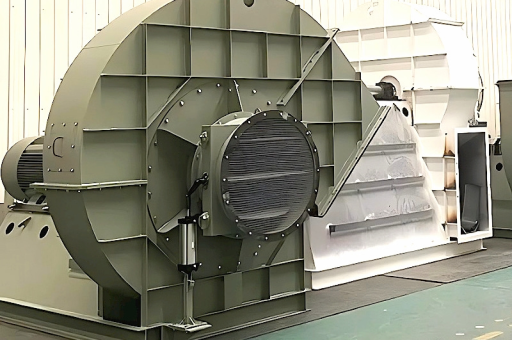
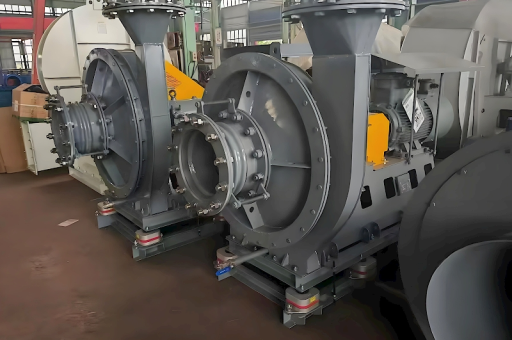
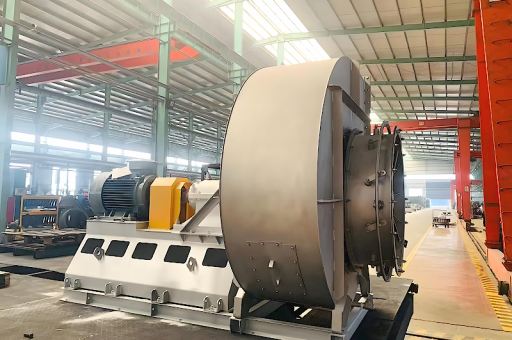
A dryer high-temperature fan is a centrifugal or axial fan specifically designed to move large volumes of hot air, combustion gases, or superheated steam through drying chambers, ovens, or kilns. Unlike standard ventilation fans that operate at ambient temperatures, these units incorporate:
- Heat-resistant impellers (often made of 316 stainless steel or Inconel alloys)
- External motor mounting with shaft cooling fins to prevent heat transfer
- High-temperature bearings with synthetic grease or oil mist lubrication
- Thermal expansion gaps in housing to avoid structural distortion
Primary functions include:
- Supplying hot air to the drying product (convection drying)
- Exhausting moisture-laden air to maintain low humidity inside the dryer
- Recirculating hot air for even heat distribution (multi-pass drying)
- Cooling the dryer shell or downstream equipment (in certain hybrid systems)
Question: What is the difference between a hot air fan and a standard industrial fan?
Answer: A standard fan is designed for temperatures below 80°C. Using it above this rating causes motor winding failure, blade creep, and bearing seizure within hours. A high-temperature fan has a dedicated cooling system (e.g., a separate fan wheel on the motor shaft) and uses materials that do not degrade at 300°C+.
Key Design Features: Materials, Motors, and Aerodynamics
To survive harsh thermal cycles, dryer high-temperature fans are built with specific engineering choices:
| Component | Standard Material | High-Temp Material | Why It Matters |
|---|---|---|---|
| Impeller | Carbon steel | Stainless steel 310S / Inconel 601 | Prevents oxidation and scaling |
| Shaft | Mild steel | Heat-treated alloy steel with chrome plating | Resists thermal fatigue and bending |
| Bearings | Standard ball bearings | High-temp ceramics or steel with PTFE seals | Withstands grease breakdown at 250°C+ |
| Motor | TEFC (Totally Enclosed Fan Cooled) | Separate forced-air cooled motor or inverter-duty motor | Motor stays below 80°C even when moving 600°C air |
Motor technology evolution: Modern high-temperature installations increasingly use direct-drive (or "plug" fans) instead of belt-driven units. Belt drives slip at high temperatures, require frequent tensioning, and create alignment issues. Direct-drive fans use a high-temperature motor mounted inside the airstream—with special insulation class H (up to 180°C) or even class C (up to 220°C) . For applications above 600°C, shaft-mounted cooling fans are mandatory.
Aerodynamics: Backward-curved centrifugal impellers (BC) are preferred for high-temperature dryers because they:
- Generate high static pressure for duct resistance
- Have a non-overloading power curve (motor cannot be overloaded by airflow changes)
- Produce lower noise levels than forward-curved designs at similar duty points
Question: Can I use a variable frequency drive (VFD) with a dryer high-temperature fan?
Answer: Yes, but the VFD must be derated for high ambient heat. Additionally, a sine wave filter is strongly recommended to prevent motor insulation damage from reflected voltage spikes, especially when long cable runs are involved.
Common Applications Across Industries
Textile Drying: Continuous stenter frames use high-temperature fans to blow 180°C-220°C air through fabric. The fan must maintain constant CFM as the fabric moisture changes; otherwise, the fabric can over-dry and shrink unevenly.
Food Processing:
- Spray dryers for milk powder or coffee rely on inlet air temperatures of 200°C-350°C. The fan delivers heated air to the drying chamber; a slight drop in airflow causes product caking on the chamber walls.
- Belt dryers for fruits, vegetables, and pasta use moderate temperatures (80°C-120°C) but require hygienic fan designs with smooth surfaces, crevice-free welds, and easy-access cleanouts.
Pulp and Paper: Dryer sections of paper machines use pocket ventilation fans that blow 110°C air into the drying felts. Without these, the paper sheet develops moisture streaks that lead to edge cracking.
Wood and Biomass Drying: Sawdust pellet dryers operate at 350°C-400°C. The fan must handle abrasive particles; impeller tip speeds are reduced, and wear-resistant coatings (tungsten carbide or ceramic) are applied to blade leading edges.
Wind Turbine Component Curing: Large composite blades for wind turbine towers are cured in autoclaves at 150°C-180°C. High-temperature recirculation fans ensure uniform heat distribution to prevent resin-rich spots that compromise blade strength. In this application, fan reliability directly affects the safety of the wind turbine structure.
Selecting the Right High-Temperature Fan: CFM, Static Pressure, and Temperature Ratings
Choosing the correct classification involves three critical parameters:
- Maximum Inlet Temperature (°C): Always add a safety margin of 10-15%. If your process runs at 250°C, choose a fan rated for 300°C.
- Total Static Pressure (in w.g. or Pa): Account for filter loading, duct losses, and pressure drop across the product bed.
- Airflow (CFM or m³/h): Use the heat balance formula: ( \text{CFM} = \frac{\text{Heat load (BTU/hr)}}{1.08 \times \Delta T} ).
Pro tip: Use fan selection software (e.g., from manufacturer Greenheck, New York Blower, or Twin City Fan) to simulate fan curves at elevated temperatures. The actual air density at 300°C is roughly half that at 20°C; therefore, a fan that delivers 10,000 CFM at room temperature may provide only 5,500 CFM at operating temperature. This phenomenon is called density correction.
Question: Should I choose a centrifugal or axial fan for a high-temperature dryer?
Answer: Centrifugal fans are generally preferred for dryer ducts longer than 10 feet, or when you need static pressure above 4 inches w.g. Axial fans (tubeaxial or vaneaxial) are suitable for low-pressure, high-flow recirculation loops inside the dryer chamber itself.
Maintenance Best Practices to Extend Fan Lifespan
| Interval | Action |
|---|---|
| Weekly | Check vibration levels (use a handheld meter); inspect shaft seal for leaks |
| Monthly | Clean impeller blades of dust build-up (imbalance causes rapid bearing wear) |
| Quarterly | Lubricate bearings with high-temperature grease (e.g., Mobil Polyrex EM) |
| Annually | Replace V-belts (if belt-driven); check motor winding resistance; perform thermal imaging on motor housing |
Common mistake: Overgreasing. Bearing cavities should only be 30-40% full; excess grease causes overheating and seal failure. Use a ultrasonic grease gun to apply precise amounts.
Critical warning: Never run a high-temperature fan without the inlet/outlet ducts connected. Unrestricted flow can cause the motor to over-speed (if belt-driven) or the impeller to exceed safe tip speeds. Always maintain manufacturer minimum inlet pressure.
Safety Protocols: Managing Heat, Vibration, and Airflow
Thermal runaway prevention: Some dryers have afterburners that ignite combustible gases released from drying products (e.g., wood pellets, food seasonings). The high-temperature fan must be explosion-proof rated (ATEX or NEC Class II Division 1) in such environments. Explosion-proof construction means the fan housing can contain an internal explosion and prevent flame propagation.
Vibration monitoring: High-temperature fan shafts become more flexible as they heat. Install accelerometers on bearing housings and set alarm limits:
- 1 in/s (velocity) – Caution
- 3 in/s – Take action
- 5 in/s – Immediate shutdown
Fire suppression integration: All high-temperature fan installations should include a water mist system or CO₂ injection inside the duct. In case of fan seizure, the motor contactor must be interlocked with the sprinkler system.
Energy Efficiency: How Modern Fans Reduce Operational Costs
A 2024 study by the U.S. Department of Energy’s Advanced Manufacturing Office found that high-temperature fans account for 12-18% of a dryer's total energy use. Smart upgrades include:
- High-efficiency motors (IE4/IE5): Use synchronous reluctance or permanent magnet motors that save 15-25% energy over standard induction motors.
- Variable frequency drives with PID control: Adjust fan speed to match real-time moisture loads rather than running at full speed constantly.
- Reverse washing cycles: Some modern fans allow short-duration reverse airflow to self-clean filters, reducing pressure drop by up to 30%.
Payback example: A food plant replaced two 50 HP belt-driven fans with direct-drive IE4 motors and VFDs. The energy savings of $24,000 per year yielded a payback of 18 months.
Troubleshooting Common Fan Failures
| Symptom | Most Likely Cause | Solution |
|---|---|---|
| High vibration at startup | Blade imbalance due to dust accumulation | Clean impeller; rebalance if needed |
| Bearing noise (grinding) | Grease has carbonized from excessive heat | Switch to synthetic high-temp grease; check cooling air path |
| Reduced airflow | Duct blockage or filter loading | Clean duct; calculate new filter pressure drop; may need larger fan |
| Motor overheating | Motor cooling fan is blocked or ambient temp too high | Install ducted fresh air to motor cooler; reduce VFD carrier frequency |
| Inconsistent drying time | Fan running backward (reverse phase) | Check rotation direction arrow on housing; swap two motor leads |
Frequently Asked Questions (FAQ)
Q: What is the maximum temperature a dryer fan can handle?
A: Specialized ceramic-lined or Inconel fans can handle up to 1100°C (2012°F) for short durations. For continuous service, most manufacturers rate their top tier at 800°C (1472°F).
Q: Can I retrofit my existing dryer with a high-temperature fan?
A: Usually yes, but you must verify the duct diameter, motor mount base dimensions, and electrical supply. Many retrofit projects also upgrade the drive to direct-drive at the same time for efficiency.
Q: Are high-temperature fans loud?
A: They produce more noise than standard fans due to higher tip speeds and turbulent hot gas flow. Sound levels typically range from 85-105 dBA at 3 feet. Attenuators or acoustic enclosures are recommended for operator comfort.
Q: How do I know if my fan is operating at its design point?
A: Measure the differential pressure across the fan inlet and using a Pitot tube. Compare the actual CFM to the published fan curve at the measured static pressure. A deviation of ±10% is acceptable; more indicates a problem.
Conclusion: Future Trends in High-Temperature Drying Technology
The next generation of dryer high-temperature fans will incorporate digital twin simulation, predictive maintenance AI, and wireless vibration sensors that automatically schedule bearing replacements. Manufacturers are also developing modular fans where the impeller housing can be swapped without removing the motor—cutting downtime by 60%.
For industries such as wind turbine blade curing, the demand for ultra-reliable, continuously operating fans at 180°C is pushing innovation in oil-free bearings and hermetic motor designs. Expect to see fans capable of running 50,000 hours without any relubrication by 2027.
Investing in the right high-temperature fan is not an expense; it is a strategic move that increases production capacity, improves product quality, and reduces fire risk. Use this guide as your checklist to audit your current fans—and if you find yourself struggling with inconsistent drying, call a specialist before heat damage becomes a costly rebuild.
This article was compiled based on technical papers from ASHRAE, the Fan Manufacturers Association (FMA), and field maintenance records from the food, textile, and renewable energy sectors.