This article's table of contents introduction:
- What are They?
- Core Functions in Heat Treatment
- Critical Design Challenges & Solutions
- Common Types of High-Temperature Furnace Fans
- Key Specifications to Consider
- Maintenance & Safety Considerations
- Leading Manufacturers (Examples)
- Example Application: Vacuum Furnace Quench Fan
Here is a comprehensive overview of Heat Treatment High-Temperature Fans, covering their critical role, design challenges, common types, and key specifications.
What are They?
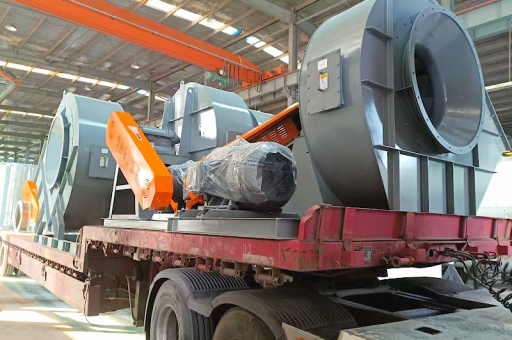
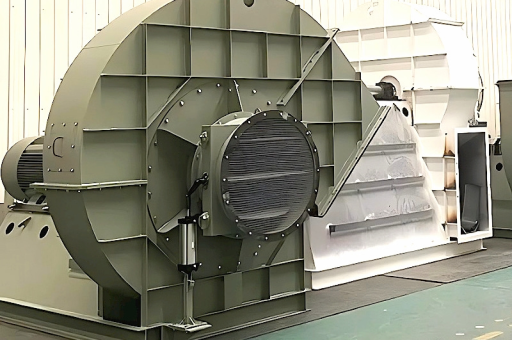
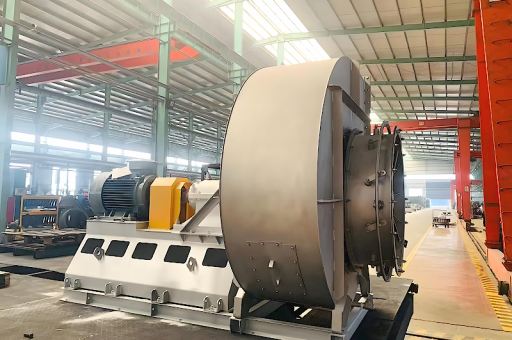
Heat treatment high-temperature fans are industrial fans specifically designed to circulate air or other gases within furnaces, ovens, kilns, and other thermal processing equipment. Their primary function is to ensure uniform temperature distribution across the load, accelerate heat transfer, and remove process gases or fumes.
Unlike standard ventilation fans, they must operate reliably while directly exposed to extreme internal temperatures, often exceeding 500°C (932°F) and up to 1000°C+ (1832°F) in specialized applications.
Core Functions in Heat Treatment
- Uniform Temperature Distribution: Eliminating hot and cold spots inside the furnace to ensure consistent material properties (e.g., hardness, temper).
- Accelerated Heat Transfer: Forced convection drastically reduces the time required to heat a load to a set temperature, improving cycle times and throughput.
- Atmosphere Circulation: In controlled atmosphere furnaces (e.g., using nitrogen, hydrogen, or endothermic gas), the fan ensures the gas mixture is evenly distributed around the workpieces.
- Quenching: After the heating cycle, some fans are used to rapidly cool the load by circulating a quench gas (e.g., high-pressure nitrogen or argon).
Critical Design Challenges & Solutions
The extreme environment creates unique challenges that dictate fan design:
| Challenge | Impact | Engineering Solution |
|---|---|---|
| Thermal Stress & Expansion | Metal parts expand unevenly, causing blades to crack or shafts to seize. | - Use of expansion joints in housings. - Radial blade designs that allow for radial expansion. - Shaft cooling (air or water) to maintain a temperature gradient. |
| Material Creep & Fatigue | At high temperatures, metal loses strength and deforms permanently under stress. | - High-Temperature Alloys: 310S/253MA Stainless Steel, Inconel® 600/601, Hastelloy® X, Nimonic alloys. - Precision casting of impellers for consistent grain structure. |
| Lubrication & Bearing Failure | Conventional grease or oil vaporizes or carbonizes. Heat travels down the shaft. | - External, Cooled Bearings: Bearings are mounted outside the hot zone, often with a cooling jacket (water or air). - Heat slingers: Discs on the shaft to deflect heat. - High-Temperature Grease (for moderate temps) or oil mist systems. |
| Shaft Alignment & Sag | Long, unsupported shafts in horizontal furnaces sag when heated. | - Center-hung (cantilevered) designs for vertical fans. - Thick, rigid shafts and dedicated shaft cooling. - Multiple bearing supports with flexible couplings. |
| Corrosion & Oxidation | Hot gases (e.g., combustion products, salt vapors) can rapidly corrode standard steel. | - Alloy selection (e.g., Inconel for carburizing atmospheres). - Ceramic coatings on blades. - Proper atmosphere control to avoid dew-point issues. |
Common Types of High-Temperature Furnace Fans
The specific design depends on furnace type and temperature range:
-
Recirculation Fans (Box & Car Bottom Furnaces)
- Design: Typically centrifugal. Impeller often made of high-alloy steel.
- Mounting: Top-mounted (vertical shaft down) or side-mounted (horizontal shaft).
- Temperature Range: Up to 870°C (1600°F).
- Use: General heat treating, annealing, normalizing.
-
Forced Draft & Induced Draft Fans (Combustion)
- Design: High-capacity, often with higher pressure ratings.
- Use: Supplying combustion air to burners or removing flue gases.
- Temperature: Rarely above ambient (FD) or up to 250°C (ID) for waste heat recovery.
-
Plug Fans (or Plug-Units)
- Design: A complete fan unit (impeller, motor, housing) that mounts directly onto the furnace wall.
- Key Feature: Motor and bearings are completely isolated from the hot gas by a "plug" plate and cooling system.
- Advantage: Compact, easy to maintain, no long ductwork.
-
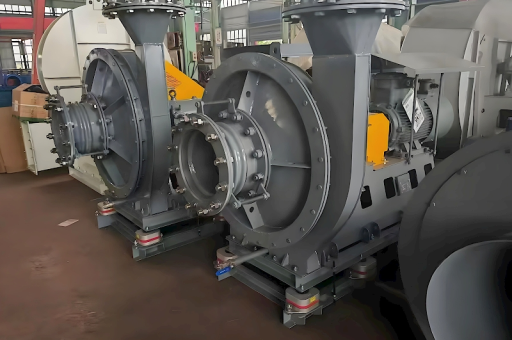
High-Temperature Pressure Blowers (Quench Fans)
- Design: High static pressure, rugged construction.
- Material: Inconel blades and housings to handle rapid gas velocity and temperature fluctuations.
- Use: Vacuum furnace gas quenching (up to 20+ bar pressure).
-
Specialty Alloy & Ceramic Fans
- Design: For extreme temperatures (1000°C+).
- Material: Ceramic blades (e.g., silicon carbide, alumina) or full Graphite fans for vacuum furnaces.
- Use: Sintering, ceramic firing, high-temp brazing.
Key Specifications to Consider
When specifying a heat treatment fan, you must define:
- Operating Temperature: Peak temperature and cyclic variation (how fast temp changes).
- Air/Gas Flow (CFM or m³/hr): Required for proper heat transfer and uniformity.
- Static Pressure (in.WG or Pa): Resistance from the furnace, load, ducts, and burner systems.
- Gas Composition: Air, inert (N2, Ar), hydrogen (H2), carburizing, or endothermic gas (corrosive).
- Fan Duty Cycle: Continuous operation at high temp vs. batch cycling (which causes thermal fatigue).
- Mounting Orientation: Vertical (shaft pointing down for top-mount) or horizontal.
- Bearing & Cooling Method: Air-cooled, water-cooled, or remote-mounted.
Maintenance & Safety Considerations
- Preventive Maintenance: Regular inspection for cracks (thermal fatigue), bearing clearance, and shaft runout. Vibration monitoring is critical.
- Cooling System: Water-cooled bearing housings require flow switches and temperature sensors to prevent bearing failure.
- Cold Start: Many high-temp fans must be started before or immediately after the furnace reaches high temperature to avoid thermal shock.
- Spare Parts: Keep a spare impeller and bearings in the same alloy material. Impellers are often dynamically balanced at operating temperature.
Leading Manufacturers (Examples)
- Robinson Fans (USA)
- Howden (Global)
- New York Blower (USA)
- Air Control Industries (UK)
- Cincinnati Fan (USA)
- Euroventilator (Europe)
- Sahil Fans (India / specific industrial segments)
Example Application: Vacuum Furnace Quench Fan
- Temp: 1300°C (2372°F) – Impeller is Inconel 718.
- Pressure: Up to 2 bar (29 psi) absolute.
- Speed: 2400 RPM (direct drive via high-speed motor outside vacuum tank).
- Cooling: Water-cooled motor housing and shaft seal.
Would you like details on calculating fan CFM for a specific furnace size, or do you need help troubleshooting common issues like vibration or high motor temperature?