This article's table of contents introduction:
- What They Are & Why They Are Critical
- Key Design & Material Requirements
- Types of Glass Kiln Fans
- Common Problems & Solutions (Maintenance)
- Key Specifications to Consider
- Top Manufacturers (Global)
- Summary Checklist for Selection
Here is a comprehensive overview of Glass Kiln High-Temperature Fans, covering their purpose, design, material requirements, types, and common challenges.
What They Are & Why They Are Critical
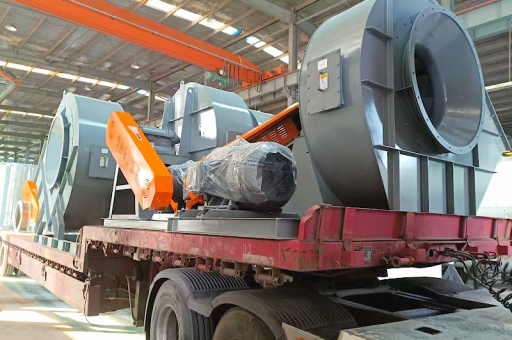
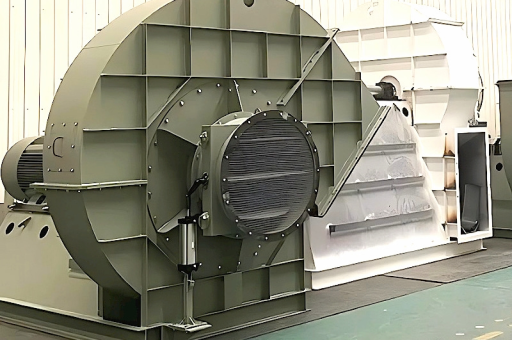
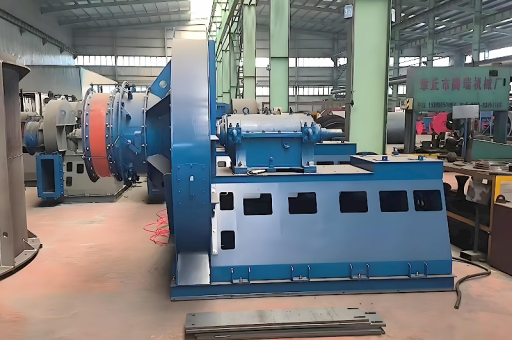
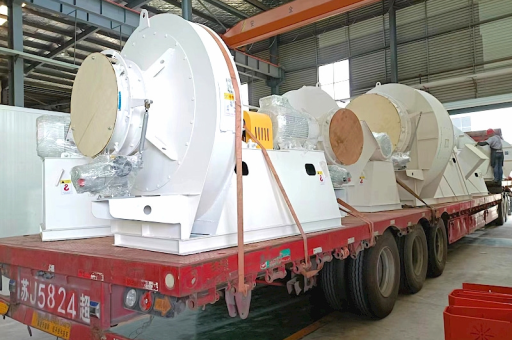
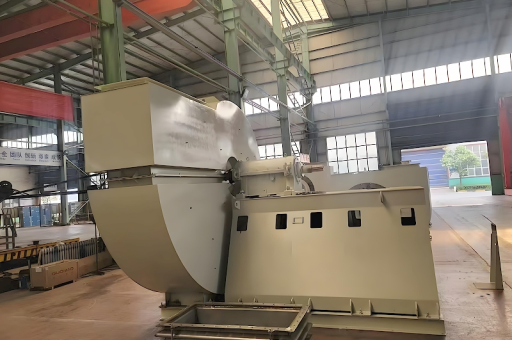
Glass kiln fans are specialized industrial fans designed to operate continuously in extreme heat environments (typically 400°C to 700°C+ / 750°F to 1300°F+). They are critical for:
- Combustion Air: Supplying oxygen for burners to melt raw materials (batch).
- Flue Gas Extraction: Removing hot, corrosive gases from the furnace to maintain negative pressure.
- Recuperation / Regeneration: Moving hot exhaust gases through heat recovery systems (regenerators or recuperators) to preheat combustion air.
- Cooling: Rapidly cooling the glass in the annealing lehr or tempering section.
Key Design & Material Requirements
Standard industrial fans cannot survive in a glass kiln environment. These fans must be specifically engineered for:
Material Selection (High-Temperature Alloys):
- Impeller (Wheel): Made from high-nickel, heat-resistant stainless steel (e.g., SS 310, SS 316, or Hastelloy for extreme corrosion).
- Shaft: Must have high creep resistance at temperature. Often hollow with cooling air or water circulation.
- Housing: Carbon steel with thick ceramic fiber or refractory brick lining to insulate the outer casing.
Bearing & Cooling Systems:
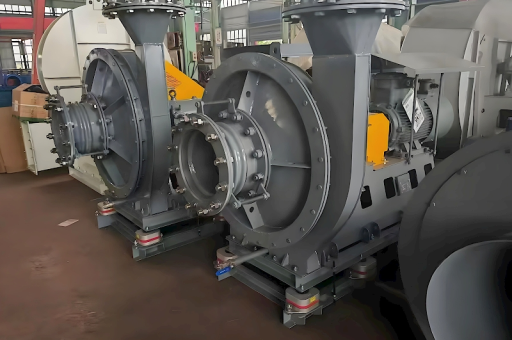
- Overhung Design: The fan wheel is mounted on a shaft that extends out from the bearing housing, keeping bearings far from the hot air stream.
- Cooling Methods:
- Shaft Cooling: A separate small fan blows ambient air onto the shaft.
- Water Cooling: Integral water jackets around the bearing housing or shaft seal.
- Insulated Bearing Pedestal: A long base plate with air gaps to prevent conductive heat transfer.
Connection & Layout:
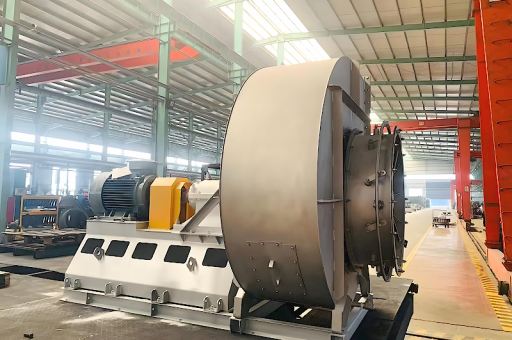
- Direct Drive (Preferred): Motor is coupled directly to the fan shaft on a separate, isolated base frame to prevent heat transfer.
- Belt Drive (Less Common): Used for variable speed but requires careful alignment and belt cooling.
Types of Glass Kiln Fans
| Fan Type | Application | Temperature Range | Key Feature |
|---|---|---|---|
| Forced Draft (FD) Fan | Primary combustion air to burners | Up to 400°C | High static pressure; often variable speed (VFD). |
| Induced Draft (ID) Fan | Pulling exhaust from the furnace | 350°C - 500°C (can spike) | Handles ash and corrosive gases; heavy-duty bearings. |
| Recuperator / Regenerator Fan | Air preheat system | 600°C - 800°C | High nickel content wheel; ceramic lining. |
| Lehr Cooling Fan | Annealing & tempering | 200°C - 300°C (air) | High volume, lower pressure; wide inlet. |
| Emergency Cooling Fan | Overheat / power loss scenarios | Ambient to 1000°C+ | Explosion-proof; automatic activation. |
Common Problems & Solutions (Maintenance)
- Thermal Fatigue (Cracking):
- Cause: Rapid heating/cooling cycles.
- Solution: Use thick, ductile alloys; controlled startup ramps; allow the fan to idle at low speed when hot.
- Bearing Failure:
- Cause: Heat migration, lubrication degradation.
- Solution: Water-cooling systems; high-temp grease (e.g., synthetic PFPE); vibration monitoring.
- Unbalance & Vibration:
- Cause: Ash/cullet build-up on the wheel; thermal bending.
- Solution: Regular cleaning cycles (e.g., compressed air or steam cleaning); dynamic balancing at operating temperature.
- Corrosion (Dew Point):
- Cause: Acid condensates (sulfuric, hydrofluoric) if gas temperature drops too low.
- Solution: Operate above acid dew point; use high-moisture-resistant materials (SS 317L or Hastelloy).
Key Specifications to Consider
- Maximum Operating Temperature (MOT): Don't just look at the ideal. What is the worst-case spike?
- Static Pressure: Glass kilns often have high draft losses (1500 - 3000 Pa+).
- Gas Composition: Is there sulfur, fluorine, chlorine, or silica dust? This dictates alloy selection.
- Speed & VFD: A Variable Frequency Drive (VFD) is mandatory for soft starts and temperature control.
- Insulation Thickness: 150mm of ceramic wool is typical for 600°C+ applications.
Top Manufacturers (Global)
- Robinson Fans (USA): Industry leader for custom high-temp process fans.
- Chicago Blower (USA): Heavy-duty industrial fans for glass.
- Howden (UK/Global): Large-scale ID and FD fans for float glass.
- Turbovent (Germany/Italy): European standard for glass industry air handling.
- Soler & Palau (Spain): Cost-effective options for lehr cooling.
Summary Checklist for Selection
- Define Temperature: Continuous vs. peak.
- Define Gas: Clean air, dirty exhaust, or corrosive fume.
- Define Space: Is the fan indoors (needs more cooling) or outdoors?
- Define Control: VFD required for temperature modulation?
- Define Drive: Direct drive (preferred for high temp) vs. belt.
Final Note: In a glass kiln, a fan failure is a catastrophic production stop. Always oversize the bearings, specify a high-quality cooling system, and keep a complete spare rotating assembly (wheel + shaft) on site.