This article's table of contents introduction:
- Core Function
- Key Design Features for High Temperatures
- Common Types (Configuration)
- Critical Performance Parameters
- Typical Applications
- Common Problems & Solutions
- Top Manufacturers (Suggestions)
- Crucial Safety & Maintenance Tip
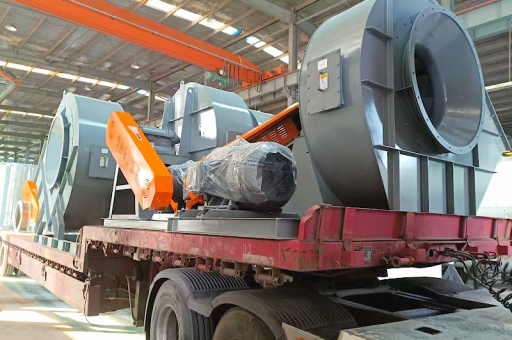
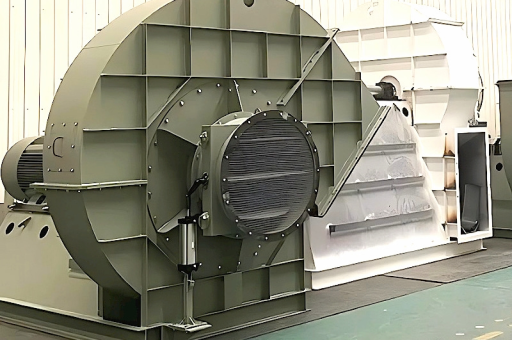
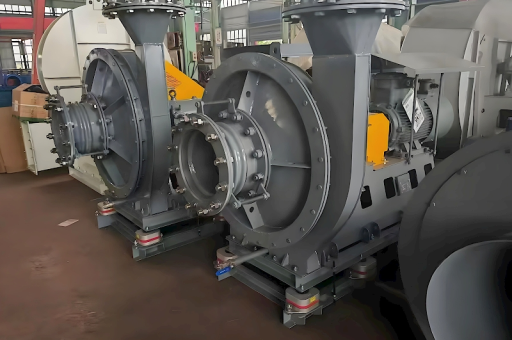
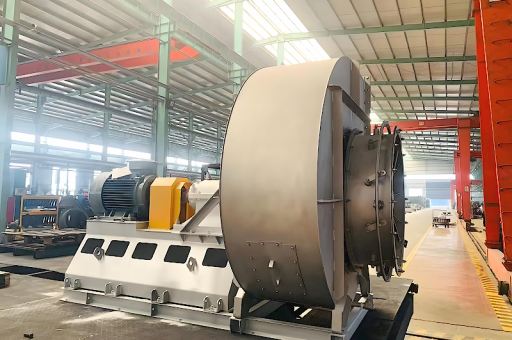
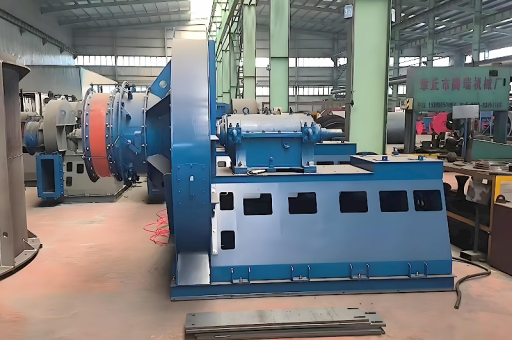
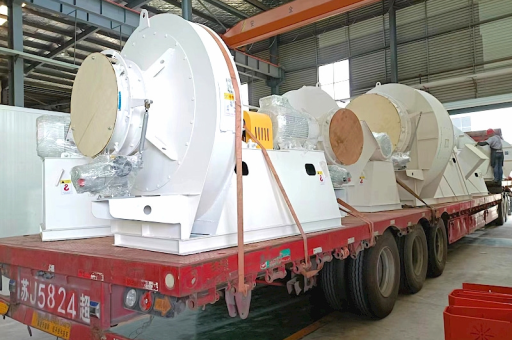
Your query "Hot air circulation high-temperature fans" refers to specialized industrial fans designed to circulate air in environments with elevated temperatures, typically ranging from 200°C to 600°C+ (392°F to 1112°F+) . These are critical components in ovens, furnaces, kilns, dryers, and thermal processing equipment.
Here is a breakdown of what you need to know:
Core Function
Unlike standard fans that cool electronics or people, high-temp circulation fans move heat . Their primary job is to:
- Eliminate hot spots and ensure uniform temperature distribution.
- Increase heat transfer rates to products (e.g., curing paint, baking bread, drying textiles).
- Reduce energy consumption by preventing thermal stratification (hot air rising).
Key Design Features for High Temperatures
Standard axial fans (like a desk fan) fail in these environments. High-temp fans require specific engineering:
| Component | Material | Reason |
|---|---|---|
| Impeller (Blades) | Stainless Steel (304, 310S, 321) or Inconel | Resists oxidation, creep, and strength loss at high heat. |
| Motor | Separated from airflow (remote motor) or TEFC (Totally Enclosed Fan Cooled) with high-temp bearings | Heat destroys standard motor windings. |
| Shaft | Extended, often hollow for cooling | Prevents heat conduction to motor bearings. |
| Housing | Welded steel or stainless steel | Maintains structural integrity. |
| Bearings | High-temp grease, often with cooling fins or water jackets | Prevents lubricant breakdown. |
Common Types (Configuration)
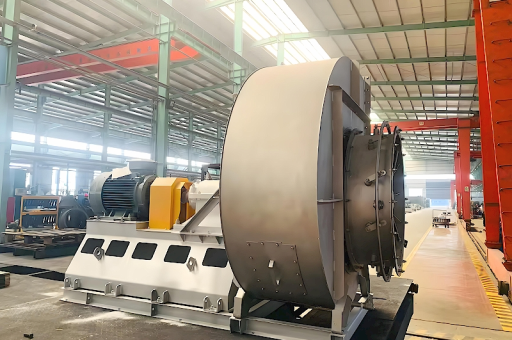
- Plug Fans: The motor is mounted on the back of the housing, outside the hot zone. The impeller "plugs" into the oven wall. Most common for batch ovens.
- Direct-Drive High-Temp: Motor is cooled via a shaft-mounted cooling wheel. Used for moderate temps (up to 250°C).
- Belt-Driven: Motor is fully remote, connected via a belt through a heat barrier. Good for extreme temps (500°C+).
- Backward Inclined (BI) vs. Radial: BI blades are quieter and more efficient; Radial blades are stronger for dirty or high-pressure applications.
Critical Performance Parameters
When selecting or specifying one, you need:
- Maximum Operating Temperature (e.g., 300°C continuous, 400°C peak).
- Airflow (CFM or m³/h) – How much air must move?
- Static Pressure (In. w.g. or Pa) – How much resistance (ductwork, filters, product) must it overcome?
- Motor Power (kW or HP) – Calculated from airflow and pressure, adjusted for hot air density (hot air is thinner, so motors draw less power at temp than at cold start).
Typical Applications
- Industrial Ovens: Paint curing, powder coating, annealing.
- Food Processing: Baking ovens, drying kilns, fryers.
- Heat Treatment: Furnaces for metals (tempering, normalizing).
- Pharmaceutical & Chemical: Fluid bed dryers, spray dryers.
- Glass & Ceramics: Tempering lehrs, kilns.
Common Problems & Solutions
| Problem | Likely Cause | Solution |
|---|---|---|
| Vibration / Noise | Bearing failure (grease cooked out) or impeller imbalance from thermal growth. | Upgrade to high-temp bearings; ensure shaft has proper thermal expansion clearance. |
| Motor Overheating | Heat is conducting down the shaft or motor is in the hot air stream. | Install a shaft cooling fan, move motor remotely, or add a heat slinger. |
| Reduced Airflow | Impeller blades have become coated or deformed. | Use self-cleaning blades or thicker stainless steel for rigidity. |
| Catastrophic Failure | Thermal fatigue (cracking) of impeller hub. | Use a high-alloy steel (310S) with stress-relieved welds. |
Top Manufacturers (Suggestions)
These are industry leaders for custom or standard high-temp fan solutions:
- Chicago Blower (USA)
- New York Blower (USA)
- Robinson Fans (USA)
- Howden (Global)
- Morfab (Canada – specialized in extreme temps)
- Euroventilatori (Italy)
- Sichuan Changjiang (China – for cost-effective options)
Crucial Safety & Maintenance Tip
NEVER run a high-temp fan at cold ambient temperature for extended periods. The motor will over-amp because cold air is dense. Always start the fan after the chamber has been preheated (or use a VFD to ramp up speed as temperature rises).
If you need a specific recommendation, please provide:
- Maximum temperature (in °C or °F)
- Desired CFM or m³/h
- Approximate static pressure (duct resistance)
- Application (e.g., oven drying textile, furnace heat treat)
- Budget range (e.g., $2k or $20k)