This article's table of contents introduction:
- Core Application Areas
- Key Technical Challenges
- Critical Design Features
- Material Selection Guide (by Temperature & Gas)
- Fan Types Used
- Performance Considerations
- Maintenance & Failure Prevention
- Standards & Certifications
- Selection Checklist
- Top Manufacturers (Global)
- Summary
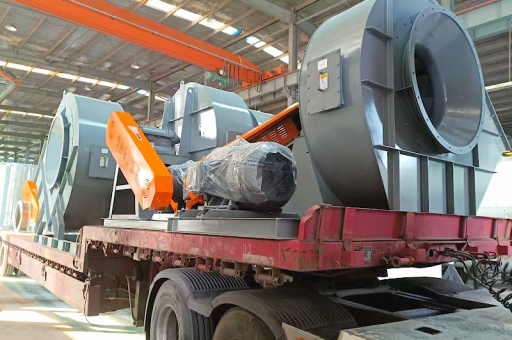
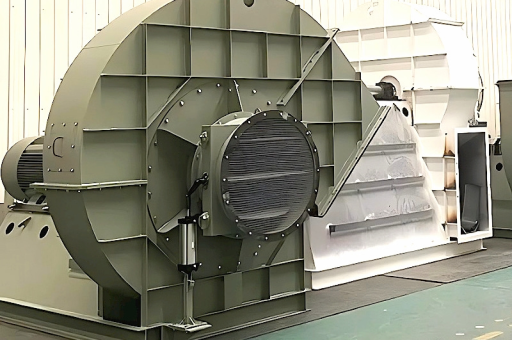
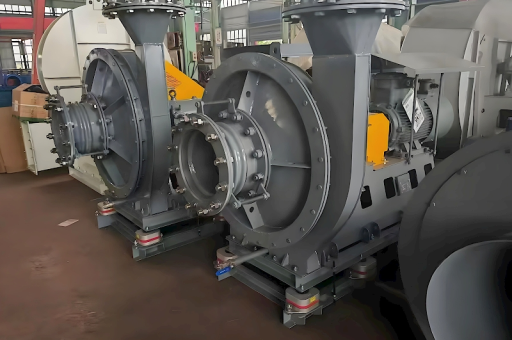
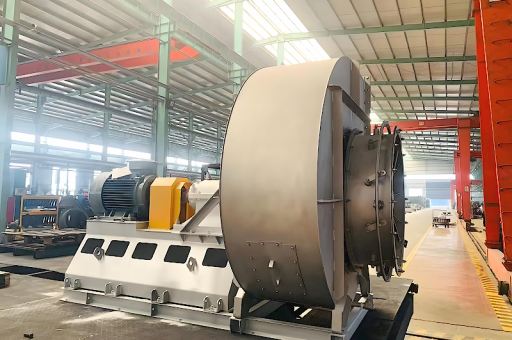
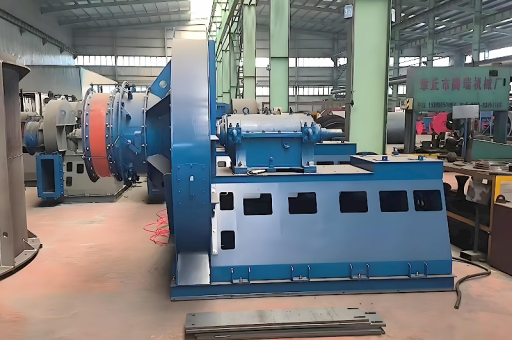
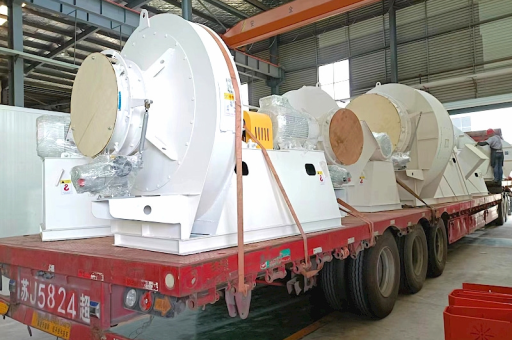
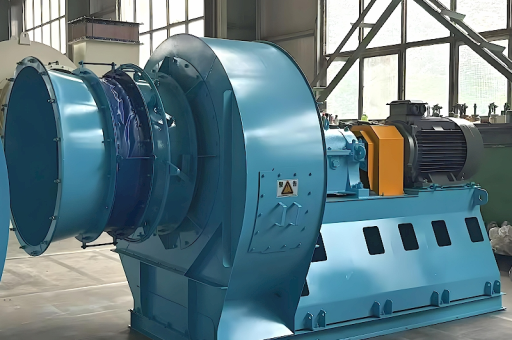
Here is a comprehensive overview of Chemical High-Temperature Fans (also known as High-Temperature Chemical Resistant Fans or Process Fans).
These are specialized industrial fans designed to handle corrosive, toxic, or volatile gases at elevated temperatures (typically 200°C / 392°F up to 750°C / 1382°F or more). They are critical for safety, environmental compliance, and process continuity in chemical plants, refineries, and power generation.
Core Application Areas
- Chemical Processing: Moving exhaust from reactors, dryers, distillation columns, and fume hoods containing acids (HCl, H₂SO₄), alkalis, solvents, or halogen gases.
- Petrochemical & Refining: Catalyst regeneration, flare gas recovery, fluidized bed drying, and thermal oxidizer systems.
- Power Generation: Exhausting flue gas from boilers burning corrosive fuels (high sulfur, waste, biomass).
- Waste Incineration: Handling hot, acidic combustion gases (containing SOx, NOx, HCl, dioxins) in scrubbers and stacks.
- Cement, Steel & Glass: Kiln off-gases, drying hot gases containing abrasive dust and corrosive vapors.
- Pharmaceuticals: Drying, granulation, and containment of hot, active chemical vapors.
Key Technical Challenges
These fans must overcome three simultaneous threats:
- Thermal Stress: High temperatures cause material expansion, reduced strength, and creep.
- Corrosion: Hot wet gases are extremely aggressive. Acid dew point corrosion (e.g., H₂SO₄ condensing at ~140°C) is a major failure mechanism.
- Wear & Fouling: Abrasive particles (catalyst dust, fly ash) erode blades. Sticky deposits cause imbalance.
Critical Design Features
| Feature | Standard Fan | Chemical High-Temp Fan | Why? |
|---|---|---|---|
| Materials | Carbon Steel (CS) | Stainless Steel (304, 316L), Duplex, Hastelloy, Inconel or Heat-Resistant Alloys (e.g., 309, 310S SS). | Resists corrosion & maintains strength at high T. |
| Shaft Sealing | Simple labyrinth | Mechanical seals, gas purged seals (air/nitrogen) or packed glands with cooling fins. | Prevents toxic/hot gas leakage to atmosphere. |
| Cooling System | None | Shaft cooling disc (radiator), water-cooled bearings, or forced air cooling of bearing housing. | Bearings (roll/ball) fail above ~95°C. |
| Impeller Design | Backward curved | Backward curved / radial tipped with thick, wear-resistant leading edges. Often replaceable wear plates. | Handles dust, G-forces, and thermal expansion. |
| Motor & Drive | Direct/standard belt | Motors outside hot zone. Belt drives often used to isolate motor from heat. VFD for precise control. | Motor lifespan drastically reduced in hot environments. |
| Expansion Joints | No | Metallic bellows or PTFE-lined joints at inlet/outlet. | Absorbs thermal expansion of ductwork. |
| Coating/Lining | Paint | Phenolic, PTFE (Teflon), rubber lining or ceramic coating (on cold case components). | Adds corrosion resistance where alloy is not used. |
Material Selection Guide (by Temperature & Gas)
| Operating Temp | Gas Composition | Recommended Material |
|---|---|---|
| Up to 150°C | Mildly corrosive (e.g., damp air) | SS 304 / 316L |
| 150°C – 300°C | Moderately corrosive (e.g., HCl, SO₂) | SS 310 / Duplex 2205 / Hastelloy C276 |
| 300°C – 500°C | Highly corrosive (e.g., H₂S, Chlorides) | Inconel 600/625 / Hastelloy X |
| >500°C | Hydrogen, CO, Halogens (reducing) | Ceramic / high-Ni alloys (e.g., Inconel 601, 230 W) |
| Any temp | Abrasive dust | Wear-resistant coatings (tungsten carbide, Stellite) or Ceramic-lined housing |
Critical Note: Never use carbon steel above 400°C as it loses structural strength. Always avoid dissimilar metal contact in hot wet gas to prevent galvanic corrosion.
Fan Types Used
- Centrifugal (Radial) Fans: Most common. High pressure, sturdy.
- Backward Curved: Non-clogging, good efficiency for clean gases.
- Radial Tipped / Paddle Wheel: Rugged, handles heavy dust, high temperature (e.g., for boiler ID fans).
- Forward Curved: Only for low pressure, clean hot air (rare in chemical service).
- Axial Fans: Rare due to poor corrosion resistance and lower pressure. Only for large volume, low pressure, clean hot air.
Performance Considerations
- Fan Laws: Power increases with cube of speed and cube of temperature (in absolute units). A 10°C rise in inlet temp can increase power demand by ~3%.
- Density Correction: Fans move volume (m³/h), not mass. Hot gas expands → lower density → lower mass flow for same volume.
- Vibration Monitoring: Essential. Bearing vibration probes (accelerometers) detect imbalance from corrosion/erosion or thermal distortion.
- Variable Speed Drive (VFD): Highly recommended. Reduces wear on bearings and seals, allows fine-tuned process matching.
Maintenance & Failure Prevention
- Preventative Checks:
- Shaft alignment (thermal growth must be accounted for).
- Bearing temperature (alarm at >85°C, trip at >95°C).
- Vibration analysis (FFT) to detect blade deterioration.
- Seal leak detection (visual inspection, gas sensors for toxic compounds).
- Common Failures:
- Bearing failure (most common → due to heat soak or seal failure).
- Blade erosion (leading edge thinning, balance loss).
- Shaft bending (from thermal shock or imbalance).
- Corrosion under deposit (especially at dew points).
- Life Extension:
- Install pressure taps near bearings for forced cool air.
- Use ceramic or Teflon-based anti-fouling coatings on blades.
- Isolate fan during warm-up/shutdown to avoid moisture condensation.
Standards & Certifications
- ISO 1940: Balance grade (G-6.3 or G-2.5 recommended).
- ISO 14694: Fan vibration standards.
- API 673: Special purpose fans (for refinery/petrochemical).
- ATEX / IECEx: Explosion-proof designs for flammable gas atmospheres (must meet zone 1/2 requirements).
- NEMA / IEC: Motor enclosures (TEFC or explosion-proof).
Selection Checklist
To specify the correct fan, you must provide:
- Gas Composition: Complete chemical analysis (including moisture, acid gases, particulates).
- Flow Rate: Actual cubic meters per hour (m³/h or ACFM) at operating conditions.
- Temperature: Inlet and outlet (and possible surge conditions).
- Pressure: Total static pressure required (including duct losses, scrubber ΔP).
- Dew Points: Acid & water dew points (to avoid corrosion).
- Corrosion Class: (e.g., ISO 9223 C5, C4, etc.).
- Noise Limits: dBA at 1m.
- Mounting: Orientation, space constraints.
- Explosion Protection: Zone classification (0/1/2), gas group.
Top Manufacturers (Global)
- Howden (UK) – High-temp, large industrial fans.
- Greenheck (US) – Robust industrial process fans.
- Twin City Fan (US) – Custom engineered.
- Cincinnati Fan (US) – Good for corrosive environments.
- Fläkt Woods (Sweden) – Excellent for clean/dry hot air.
- Aerzen (Germany) – Often used for high-pressure applications.
- Robuschi (Italy) – Good for chemical & petrochemical.
- Ziehl-Abegg (Germany) – Axial fans for moderate temps.
Summary
| Aspect | Key Takeaway |
|---|---|
| Risk | Heat + Corrosion + Wear = Short life if poorly designed. |
| Win Strategy | Correct alloy + cooled bearings + VFD + monitoring. |
| Cost | High initial cost (alloys), low lifecycle cost if maintained. |
| Most Common Mistake | Using standard fan in chemical high-temp service → failure <1 year. |
Would you like a more detailed comparison of specific materials (e.g., Hastelloy vs Inconel for wet chloride gas) or a sample specification sheet for a chemical high-temperature fan?