Optimizing Industrial Processes: The Critical Role of Painting Line High-Temperature Fans
Table of Contents
- Introduction: The Intersection of Heat and Precision
- What Are Painting Line High-Temperature Fans?
- Key Technical Specifications and Design Features
- Why High-Temperature Fans Are Essential for Paint Curing
- Application Scenarios: From Automotive to Aerospace
- How to Select the Right Fan for Your Painting Line
- Common Operational Challenges and Maintenance Tips
- Energy Efficiency and Sustainability Considerations
- Q&A: Expert Answers to Frequently Asked Questions
- Conclusion: Future Trends in Ventilation and Curing Systems
Introduction: The Intersection of Heat and Precision
In any industrial painting operation—whether for automotive bodies, wind turbine components, or heavy machinery—the drying and curing process is as critical as the application of paint itself. Without proper airflow and temperature control, paint defects such as blistering, orange peel, or uneven gloss become inevitable. This is where painting line high-temperature fans enter the scene. These specialized fans are designed to operate continuously in environments where ambient air temperatures can exceed 200°C (392°F), all while maintaining consistent volumetric flow and static pressure. They are the unsung heroes of finishing lines, ensuring that coatings cure evenly and that solvent fumes are safely exhausted.
Modern manufacturing facilities rely on these fans not only for quality control but also for workplace safety. The combination of high heat, volatile organic compounds (VOCs), and flammable solvents demands equipment that is both robust and explosion-proof. This article provides a deep dive into the engineering, selection, and maintenance of high-temperature fans used in painting lines, with a special focus on applications involving large structures like wind turbine blades, where thermal uniformity is paramount.
What Are Painting Line High-Temperature Fans?
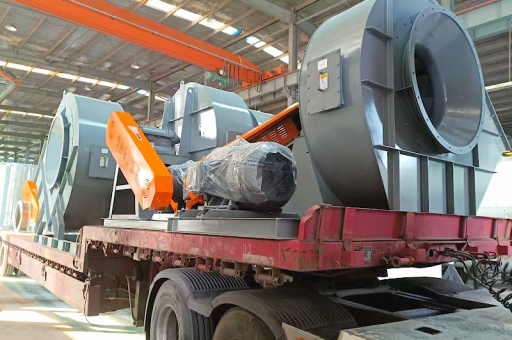
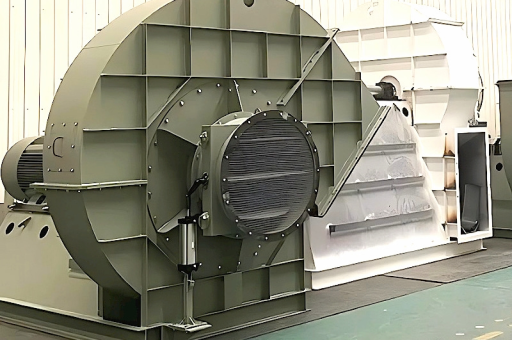
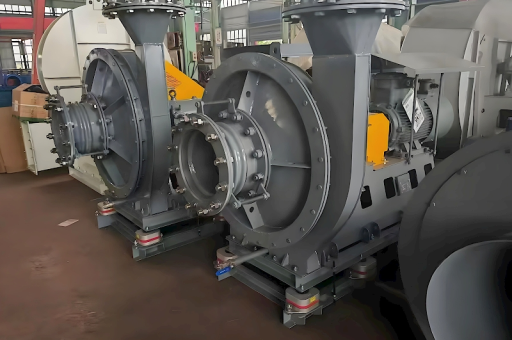
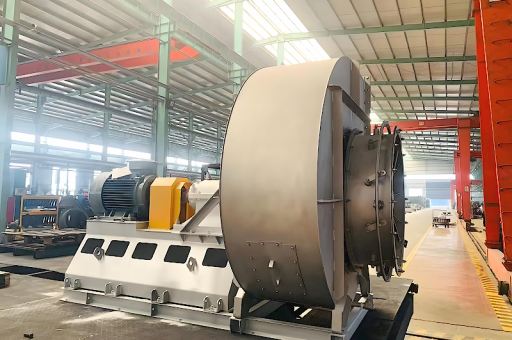
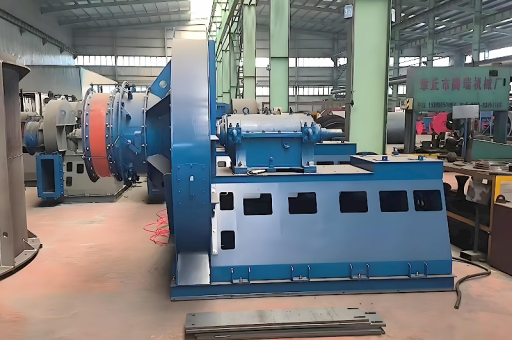
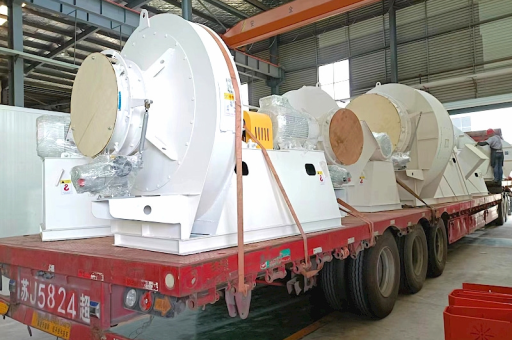
A painting line high-temperature fan is a mechanical device engineered to move large volumes of air through a paint curing oven or drying tunnel where the internal temperature is significantly elevated. Unlike standard industrial fans, these units feature:
- Heat-resistant materials: Impellers are typically made from cast aluminum, stainless steel (304 or 316L), or specially coated carbon steel.
- High-temperature bearings: Grease-lubricated or oil-lubricated bearings with cooling fins or remote lubrication lines.
- External motor mounting: The motor is positioned outside the airstream to prevent overheating, using a belt-drive or direct-drive shaft arrangement with a heat slinger.
- Thermal barrier seals: Shaft seals and gaskets are made from PTFE or silicone to withstand degradation.
These fans are often classified as either centrifugal (for high static pressure) or axial (for high airflow at lower pressure). In paint lines, centrifugal designs dominate because they can push hot air through long duct runs and against the resistance of filters, baffles, and the workpiece itself.
Key Technical Specifications and Design Features
When specifying a high-temperature fan for a paint curing oven, engineers must evaluate several critical parameters:
- Maximum operating temperature: Standard units handle up to 150°C, while custom designs can reach 400°C or more.
- Airflow capacity: Measured in cubic feet per minute (CFM) or cubic meters per hour (m³/h). For a large wind turbine blade curing oven, airflow may exceed 50,000 CFM.
- Static pressure: Determines how effectively the fan can overcome system resistance. Typical values range from 2 to 15 inches of water gauge (in. wg).
- Wheel diameter: Ranges from 300 mm to 2,500 mm for industrial applications.
- Explosion-proof rating: Essential for paint lines handling flammable solvents. Fans must meet ATEX or Class 1 Division 1 standards.
Design features that distinguish premium fans include backward-curved impellers (for higher efficiency and self-cleaning properties), variable frequency drives (VFDs) for speed control, and insulated housings to reduce heat loss. The housing itself is often made of thicker gauge metal with welded reinforcement to prevent warping under thermal stress.
Why High-Temperature Fans Are Essential for Paint Curing
Paint curing is not simply about making the paint dry. Modern coatings—such as two-part polyurethanes, epoxies, and powder coatings—require a specific time-at-temperature profile to achieve full cross-linking and hardness. High-temperature fans fulfill three distinct roles:
- Heat distribution: They circulate hot air throughout the oven to eliminate cold spots. Without sufficient air movement, the center of a large object (e.g., a wind turbine blade) may cure slower than its edges, leading to thickness variation.
- Solvent vapor removal: As paint solvents evaporate, they create a flammable, fume-laden atmosphere. Fans exhaust these fumes to keep the concentration below the lower explosive limit (LEL).
- Dwell time control: By precisely controlling airflow velocity, operators can adjust the rate at which heat is transferred to the workpiece, ensuring the coating reaches the required temperature without overcuring the surface.
In the context of wind turbine manufacturing, where blades can exceed 80 meters in length, the ability to maintain uniform temperature across the entire surface is a direct determinant of blade durability and aerodynamic performance. A malfunctioning fan can result in costly rework or even blade failure in the field.
Application Scenarios: From Automotive to Aerospace
High-temperature fans are deployed across many industries, but three sectors dominate:
- Automotive painting: Car bodies pass through a series of booths and ovens—primer, basecoat, and clearcoat—each requiring precise temperature control. Fans here are typically medium-sized (30,000–60,000 CFM) and operate at 180–220°C.
- Aerospace components: Aluminum and composite parts require lower curing temperatures (120–160°C) but demand extremely even airflow to avoid distortion. Fans often use variable-speed drives.
- Wind turbine manufacturing: This is the most demanding application because of the sheer size of the parts. Ovens for wind turbine blades may be 100 meters long, with multiple fans arrayed along the ceiling and walls to ensure laminar flow. The fans must run continuously for 8–12 hours per curing cycle.
Additionally, marine and heavy equipment painting lines also rely on these fans. In shipbuilding, for instance, fans must handle salt-laden air and high humidity in addition to heat.
How to Select the Right Fan for Your Painting Line
Selection involves a systematic process:
- Define process requirements: What is the maximum oven temperature? What is the required CFM? Is the paint solvent-based or water-based?
- Calculate system resistance: Include ductwork length, bends, filters, and the workpiece geometry. This determines static pressure.
- Choose fan type: For high static pressure, use a centrifugal fan with backward-curved blades. For high volume with low resistance, use an axial fan.
- Material selection: For temperatures above 250°C, opt for stainless steel impellers. For corrosive fumes, consider 316L or Hastelloy coatings.
- Motor and drive: External motors are mandatory. Belt drives allow speed changes, while direct drives offer lower maintenance.
- Explosion-proof compliance: Ensure the fan meets ATEX or NEC standards. This includes non-sparking impellers and grounding provisions.
A common mistake is oversizing the fan, which leads to higher energy consumption and potential over-curing of the paint. VFDs can mitigate this by allowing precise speed control.
Common Operational Challenges and Maintenance Tips
High-temperature fans experience unique stresses. The most frequent issues include:
- Bearing failure: Caused by heat migration from the shaft. Mitigation: Use high-temperature grease (e.g., synthetic lithium complex) and install external cooling fins.
- Impeller imbalance: Due to thermal expansion or material creep. Regular dynamic balancing is essential.
- Belt wear: In belt-driven fans, heat and ozone from the motor accelerate belt degradation. Use aramid-reinforced belts and replace annually.
- Vibration: Often a sign of bearing wear or misalignment. Implement a vibration monitoring program.
Recommended maintenance schedule:
- Monthly: Check belt tension, listen for abnormal noise, inspect shaft seals.
- Quarterly: Lubricate bearings (if not sealed), clean impeller blades.
- Annually: Perform dynamic balancing, replace belts, inspect housing for cracks.
In wind turbine facilities, where fan downtime can disrupt an entire production shift, many manufacturers install redundant fan arrays. If one fan fails, the others can maintain minimum airflow while maintenance is performed.
Energy Efficiency and Sustainability Considerations
Painting line fans account for a significant portion of an oven’s energy consumption—often 20–30% of total utility costs. Improving efficiency delivers both financial and environmental benefits:
- Variable Frequency Drives (VFDs): By matching fan speed to process demand, VFDs can reduce energy use by 40% or more.
- High-efficiency impellers: Backward-curved airfoil designs reduce turbulence and power consumption.
- Heat recovery: Some facilities use heat exchangers to capture exhaust heat for preheating incoming fresh air or for space heating.
- Insulation: Properly insulated ductwork and fan housings reduce thermal losses.
In new installations, consider using computational fluid dynamics (CFD) modeling to optimize fan placement and duct geometry. This is especially valuable in wind turbine blade ovens, where even small improvements in airflow uniformity can reduce cycle time by 10–15%.
Q&A: Expert Answers to Frequently Asked Questions
Q1: What temperature range is considered “high-temperature” for painting line fans? A: Typically, any fan designed to operate at ambient air temperatures above 100°C is classified as high-temperature. Most painting line fans operate between 150°C and 250°C, but specialized units can handle up to 400°C for powder coating or ceramic painting.
Q2: Can I use a standard industrial fan in a paint curing oven? A: No. Standard fans lack heat-resistant bearings, external motor mounts, and explosion-proof construction. Using them in a paint oven creates fire and safety hazards, and they will fail within weeks due to thermal degradation.
Q3: How does the fan affect paint quality? A: The fan is critical. Insufficient airflow causes uneven curing, leading to soft spots, gloss variation, and poor adhesion. Excessive airflow can cause surface defects like “solvent pop” or orange peel. Properly designed fans ensure uniform heat transfer and solvent evaporation.
Q4: What maintenance is specific to fans used for wind turbine blade curing? A: Because blades are large and the ovens are long, fans in these lines require more frequent impeller cleaning to remove dust and overspray residue. Also, blade curing often involves vacuum bagging and resin infusion, so fans must handle minor amounts of styrene vapor without corrosion.
Q5: Are there any new technologies emerging in this field? A: Yes. Recent developments include IoT-enabled fans with remote monitoring of bearing temperature and vibration, as well as “smart” VFDs that automatically adjust airflow based on real-time temperature feedback from the workpiece. Hybrid axial-centrifugal designs are also emerging for applications requiring both high flow and moderate pressure.
Conclusion: Future Trends in Ventilation and Curing Systems
As manufacturing moves toward greater automation and sustainability, painting line high-temperature fans will continue to evolve. The integration of digital twin technology allows engineers to simulate air movement before installation, reducing trial-and-error. Additionally, the shift toward low-VOC waterborne paints may allow for lower operating temperatures, but solvent-based paints remain prevalent in heavy industries like wind turbine and shipbuilding.
Energy efficiency will remain a top priority. Expect to see wider adoption of permanent magnet motors and electronically commutated (EC) fan drives, which offer higher efficiencies than traditional AC induction motors. Meanwhile, additive manufacturing (3D printing) is being explored for producing complex impeller geometries that improve airflow patterns and reduce noise.
For facility managers overseeing automotive, aerospace, or wind turbine painting lines, the message is clear: investing in high-quality, properly specified high-temperature fans is not an expense—it is a direct contributor to product quality, operational uptime, and energy cost reduction. Whether you are building a new line or upgrading an existing one, consult with a qualified fan engineer who understands the unique demands of your application. The right fan will pay for itself many times over in fewer rejects, lower energy bills, and safer working conditions.