This article's table of contents introduction:
- The Core Problem: Why Standard Fans Fail
- The Three Critical Design Requirements
- Common Fan Types for Paint Booths
- Key Specifications to Look For
- Common Maintenance & Failure Points
- How to Avoid Common Mistakes
- Summary Table: Recommended Fan Specs
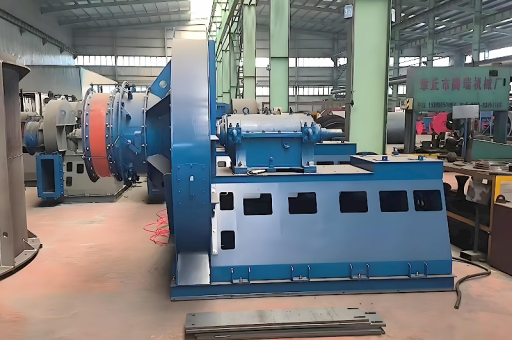
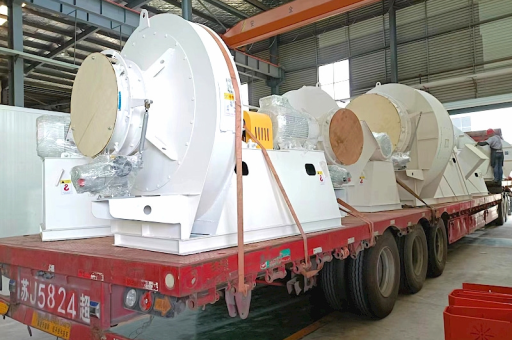
This is a detailed breakdown of paint booth high-temperature fans (often called "exhaust fans," "curing fans," or "bake fans"). These are critical components in industrial painting operations, specifically designed to handle the harsh environment of a paint booth during both the spray cycle and the high-temperature bake cycle.
Here is everything you need to know, from why standard fans fail to how to select the right one.
The Core Problem: Why Standard Fans Fail
A standard ventilation fan will fail quickly in a paint booth for two primary reasons:
- Heat: During the bake cycle (curing), temperatures can reach 150°F to 250°F (65°C to 120°C) and higher for powder coating. Standard motor insulation melts.
- Vapors & Particulate: Paint overspray is flammable and sticky. If the fan motor is in the airstream, the paint mist can ignite (explosion risk) or build up on the blades, causing imbalance and bearing failure.
The Three Critical Design Requirements
A. Explosion-Proof (ATEX / NEC Compliance)
- Why: Paint solvents (VOCs) are explosive. A spark from a fan motor or a static discharge can cause a catastrophic explosion.
- The Solution: The motor must be TEFC (Totally Enclosed Fan Cooled) and rated Explosion-Proof (Class I, Division 1 or 2, Groups C & D for solvents). The fan housing is often made of non-sparking materials (aluminum or stainless steel impeller) to prevent sparks if debris hits the blades.
B. High-Temperature Rated Motor
- Why: During the bake cycle, the fan must run to circulate hot air (or exhaust fumes) while the booth reaches curing temperatures.
- The Solution: Motors are rated with a "Temperature Class" (e.g., Class F or Class H insulation). The fan is either:
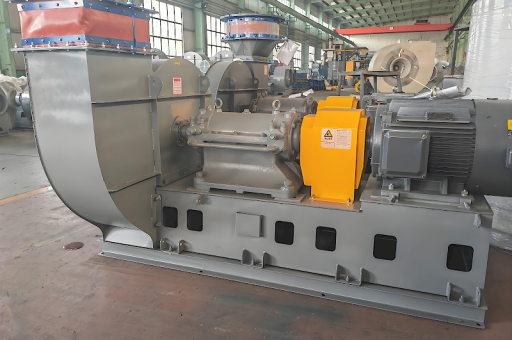
- Belt-Drive (Preferred): The motor is mounted outside the hot airstream (on the roof or side of the booth). Only the fan wheel and shaft are in the heat. The shaft is cooled by a separate cooling fan.
- Direct-Drive (Riskier): The motor is in the airstream. It requires a motor with high ambient temperature rating (often $200-300 extra cost).
C. Corrosion & Chemical Resistance
- Why: Paint solvents (MEK, Toluene, Xylene) and moisture eat standard carbon steel.
- The Solution:
- Impeller (Blades): Aluminum, 304 Stainless Steel, or coated steel.
- Housing: Heavy-gauge galvanized steel, stainless steel, or coated with a chemical-resistant epoxy.
- Shaft: Stainless steel (304 or 316) to prevent rust.
Common Fan Types for Paint Booths
| Fan Type | Best For | Key Features |
|---|---|---|
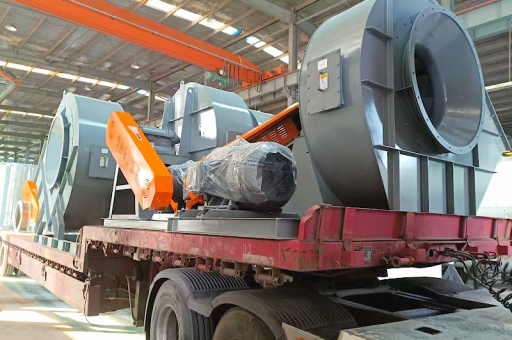
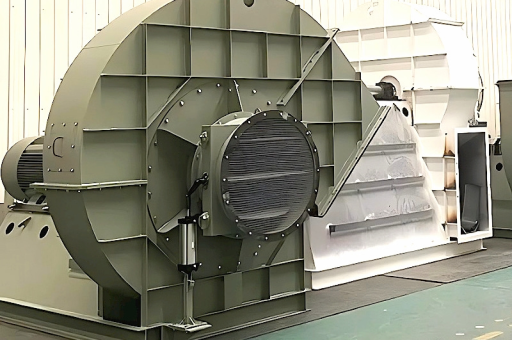
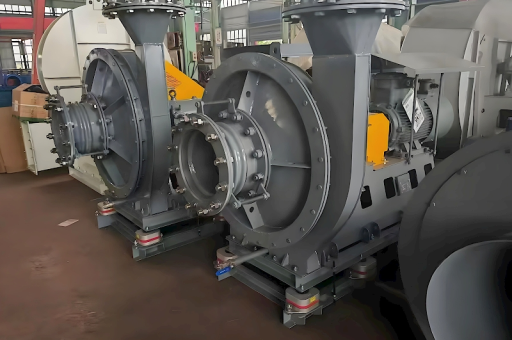
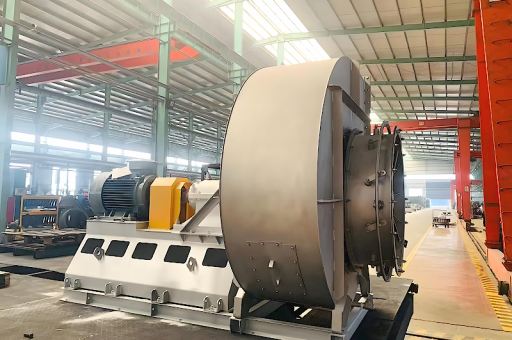
| Centrifugal (Squirrel Cage) | Most common for spray & bake booths | High static pressure (overcomes filter resistance). Usually belt-driven. Best for ducted systems. |
| Backward Inclined (BI) | High-efficiency, clean airstreams | Less prone to dirt buildup than forward-curved blades. Good for bake mode. |
| Radial/Heavy Duty | Powder coating or high-particulate booths | Straight radial blades. Handles heavy paint buildup without jamming. |
| In-Line Duct Fans | Small booths, confined spaces | Mounts directly in ductwork. Usually lower static pressure. Must be explosion-proof. |
Key Specifications to Look For
When specifying a paint booth fan, you need these numbers:
- CFM (Cubic Feet per Minute): Airflow volume. Determined by booth size (e.g., 100-125 FPM face velocity for cross-draft spray booths).
- Static Pressure (SP): Resistance from filters, ducts, and dampers. Usually 0" to 3.0" WG (Water Gauge) .
- Temperature Rating: "Maximum continuous operating temperature." Common ratings: 150°F, 180°F, 250°F. Powder coating ovens need 400°F+.
- Motor Type: Explosion-proof, TEFC, or ODP (Open Drip Proof - not recommended). Check the UL/CSA/ATEX listing.
Common Maintenance & Failure Points
- Belt Wear (Belt-Drive): Heat dries out belts. Check tension monthly.
- Bearing Lubrication: High temp cooks grease out. Use high-temperature grease (e.g., Mobil Polyrex EM or Kluber).
- Impeller Balance: Paint buildup on blades causes vibration, which destroys bearings and motors. A "non-stick" coating (like Teflon or PTFE) on the fan wheel is highly recommended.
- Motor Overload: If the bake cycle runs too long without the spray air makeup, the motor can overheat.
How to Avoid Common Mistakes
- Don't: Buy a standard HVAC fan. It will fail in one bake cycle and could start a fire.
- Do: Verify the fan is listed for use in a paint spray booth (NFPA 33 compliance).
- Don't: Mount the motor inside the hot airstream without a high-temp rating.
- Do: Use a Variable Frequency Drive (VFD) on a high-temp rated motor (not all VFDs are compatible). This allows you to slow the fan for spray mode and speed it up for bake mode.
Summary Table: Recommended Fan Specs
| Feature | Recommendation |
|---|---|
| Fan Type | Centrifugal, belt drive |
| Motor Location | Out of airstream (belt-drive) |
| Motor Type | Explosion-proof, TEFC, Class F insulation |
| Impeller Material | Aluminum or 304 Stainless Steel |
| Housing | Heavy-gauge galvanized or stainless steel |
| Max Temp | 250°F (standard) / 400°F+ (powder) |
| Coating | Non-stick (PTFE) on wheel |
Bottom Line: For a safe, long-lasting paint booth, invest in a belt-driven, explosion-proof centrifugal fan with the motor located outside the hot air stream. It costs more upfront but prevents fires, motor failure, and downtime.