This article's table of contents introduction:
- Introduction: Why High-Temperature Fans Are Indispensable for Vulcanizing Machines
- Technical Fundamentals: How Vulcanizing Machine High-Temperature Fans Operate
- Key Performance Parameters: Airflow, Temperature Resistance, and Material Durability
- Common Challenges and Troubleshooting in High-Heat Fan Systems
- Best Practices for Maintenance and Longevity of Vulcanizing Fans
- Frequently Asked Questions (FAQ)
- Conclusion: Future Trends and Efficiency Gains
** The Critical Role of Vulcanizing Machine High-Temperature Fans in Industrial Rubber Processing: Performance, Maintenance, and Optimization
Table of Contents
- Introduction: Why High-Temperature Fans Are Indispensable for Vulcanizing Machines
- Technical Fundamentals: How Vulcanizing Machine High-Temperature Fans Operate
- Key Performance Parameters: Airflow, Temperature Resistance, and Material Durability
- Common Challenges and Troubleshooting in High-Heat Fan Systems
- Best Practices for Maintenance and Longevity of Vulcanizing Fans
- Frequently Asked Questions (FAQ)
- Conclusion: Future Trends and Efficiency Gains
Introduction: Why High-Temperature Fans Are Indispensable for Vulcanizing Machines
In the industrial rubber and tire manufacturing sector, the vulcanizing machine is the heart of production—transforming raw rubber into durable, elastic finished goods. A critical, though often overlooked, component within this system is the high-temperature fan. These fans are not simple ventilation units; they are engineered to withstand extreme thermal stress while maintaining precise airflow to regulate curing temperatures and remove volatile organic compounds (VOCs). Without a properly functioning vulcanizing machine high-temperature fan, the entire curing process risks uneven heat distribution, leading to defective products, increased energy consumption, and potential safety hazards. This article delves into the technical specifics of these fans, offering actionable insights for plant engineers, maintenance managers, and procurement specialists seeking to optimize their rubber processing lines.
Technical Fundamentals: How Vulcanizing Machine High-Temperature Fans Operate
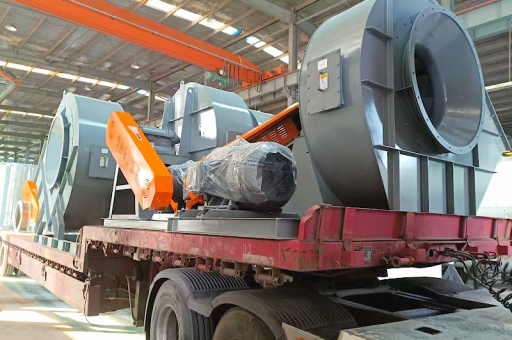
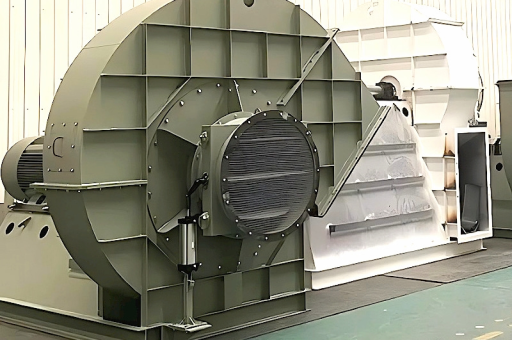
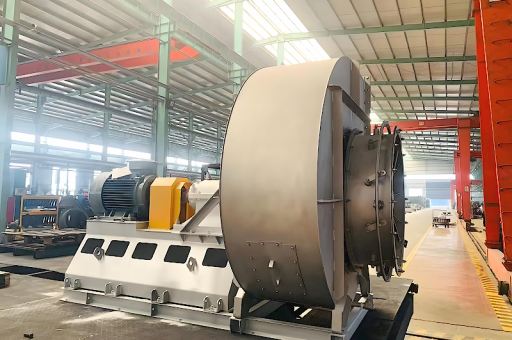
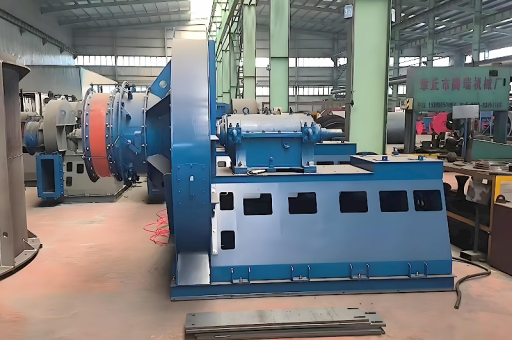
A typical vulcanizing machine high-temperature fan is a centrifugal or axial-flow device designed to circulate air at temperatures ranging from 150°C to over 350°C (302°F to 662°F). Unlike standard industrial fans, these units incorporate specialized materials to prevent thermal deformation and mechanical failure. The fan impeller is often constructed from high-grade stainless steel or heat-resistant aluminum alloys, while the housing is reinforced with insulation layers. The motor, located remotely from the airstream via a shaft cooling system or direct drive with extended shaft, uses high-temperature grease and ceramic bearings to maintain lubrication under continuous thermal load.
The fundamental operation involves drawing ambient or preheated air across the vulcanizing press’s heating platen or steam chambers. This forced convection ensures uniform heat transfer to the rubber compound. Many modern fans also integrate with variable frequency drives (VFDs) to modulate airflow based on real-time temperature sensors, reducing energy waste during idle phases or thinner product runs.
Key Performance Parameters: Airflow, Temperature Resistance, and Material Durability
To select or troubleshoot a vulcanizing machine high-temperature fan, engineers must evaluate three primary metrics:
- Airflow (CFM/m³/h): Insufficient airflow leads to hot spots and under-cured rubber; excessive airflow can cause rapid cooling and energy loss. Typical vulcanizing applications require 5,000 to 30,000 CFM, depending on press size.
- Temperature Resistance: The fan must withstand continuous operating temperatures with a safety margin of at least 20°C above the maximum process temperature. For example, if the vulcanizer runs at 180°C, the fan should be rated for 200°C continuous service.
- Material Durability:
- Impeller: Welded stainless steel (SS304 or SS316) resists corrosion from sulfur fumes. For extreme heat (above 300°C), Inconel or Hastelloy alloys are used.
- Bearings: Sealed, high-temperature bearings with synthetic grease (rated for >260°C).
- Shaft cooling: Finned shafts or water-cooled jackets prevent heat transfer to the motor.
A high-quality fan from a wind turbine manufacturer’s material science division might also offer specialized coating to reduce friction and wear from airborne particulate.
Common Challenges and Troubleshooting in High-Heat Fan Systems
Even robust fans encounter failures. The most frequent issues include:
- Bearing Seizure: Grease evaporation or carbonization at extreme temperatures. Solution: Switch to synthetic grease or upgrade to ceramic hybrid bearings.
- Impeller Imbalance: Caused by thermal warping or build-up of rubber residue. Solution: Schedule periodic cleaning with non-abrasive solvents and dynamic balancing checks.
- Motor Overload: When fan blades accumulate dirt, the motor draws higher current. Solution: Install differential pressure sensors across the fan to trigger cleaning alerts.
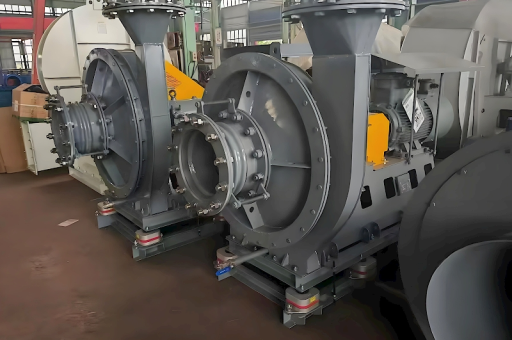
- Vibration: Misalignment due to thermal expansion of the shaft support structure. Solution: Use flexible couplings and ensure that the fan base is isolated from thermal conduction via expansion joints resembling those used in a wind turbine tower base.
Pro Tip: For plants running 24/7, consider a dual-fan configuration where one fan operates while the other is on standby, ensuring no downtime during cleaning or repair.
Best Practices for Maintenance and Longevity of Vulcanizing Fans
A preventive maintenance schedule extends fan life by 30-50%. Implement the following:
- Daily: Listen for unusual noise; check fan current draw.
- Weekly: Inspect seals and gaskets for heat degradation; clean external debris from motor cooling fins.
- Monthly: Grease bearings (use a grease gun with high-temp lithium complex grease); measure vibration levels using an accelerometer.
- Quarterly: Verify VFD parameters; check for belt tension if using a belt-driven model.
- Annually: Complete strip-down—replace bearings, inspect impeller for cracks, and wet balance the rotor.
Always document temperature, amp draw, and vibration trends. A sudden spike in amp draw often signals impending bearing failure far before audible noise begins.
Frequently Asked Questions (FAQ)
Q1: Can I use a standard industrial fan for my vulcanizing machine?
A: No. Standard fans are not designed for continuous high-temperature operation. The bearings will seize, and the impeller may warp at temperatures above 100°C. Always use a fan explicitly rated for vulcanizing machine high-temperature environments.
Q2: Why does my vulcanizing fan vibrate more during startup than at full speed?
A: This is likely due to thermal expansion lag. The fan shaft and housing expand at different rates during warm-up. As the metal reaches steady-state temperature, alignment improves. However, persistent vibration indicates a need for thermal expansion compensation via flexible mounts.
Q3: What is the lifespan of a high-temperature fan in a rubber plant?
A: With proper maintenance, 5–7 years is typical. Poor grease selection or abrasive airborne particles can reduce this to 2–3 years. Fans built with materials from a wind turbine supply chain—such as high-stress steels and precision bearings—often achieve 8+ years.
Q4: How do I know if my fan needs replacement vs. repair?
A: If the impeller shows cracks, the housing has deformation, or the motor is repeatedly failing, replacement is cost-effective. Repair is viable for minor bearing changes, balancing, or seal updates.
Conclusion: Future Trends and Efficiency Gains
The evolution of vulcanizing machine high-temperature fans is moving toward smart, self-monitoring systems. Sensors embedded in the fan housing now measure vibration, temperature, and airflow in real-time, feeding data to a plant’s SCADA or IoT platform. Predictive analytics algorithms, similar to those used in wind turbine condition monitoring, can forecast bearing wear weeks before failure. Additionally, energy-efficient EC (electronically commutated) motors are being adopted, offering 30% lower power consumption than traditional AC motors. For rubber manufacturers aiming to reduce carbon footprint and operating costs, upgrading to a modern, high-temperature fan is a high-ROI investment. Ultimately, this seemingly modest component ensures that every tire, gasket, or hose emerges from the press with consistent quality—making it a silent guardian of industrial productivity.