This article's table of contents introduction:
- Table of Contents
- Introduction
- The Science of Wood Drying
- What Makes a Fan "High-Temperature"?
- Key Performance Metrics
- Comparison of Fan Types
- Installation and Placement Strategies
- Common Challenges
- Maintenance Protocols
- Frequently Asked Questions (FAQ)
- Conclusion
** The Critical Role of High-Temperature Fans in Wood Drying: Efficiency, Technology, and Best Practices
Table of Contents
- Introduction: Why High-Temperature Fans Are Indispensable in Wood Drying
- The Science of Wood Drying: Moisture Migration and Heat Distribution
- What Makes a Fan "High-Temperature"? – Design and Material Specifications
- Key Performance Metrics: Airflow, Static Pressure, and Thermal Resistance
- Comparison of Fan Types: Axial vs. Centrifugal in Kiln Applications
- Installation and Placement Strategies for Maximum Drying Uniformity
- Common Challenges: Overheating, Vibration, and Energy Consumption
- Maintenance Protocols to Extend Fan Lifespan
- Frequently Asked Questions (FAQ)
- Conclusion: Future Trends in Wood Drying Fan Technology
Introduction
In the industrial wood drying process, high-temperature fans are not just accessories—they are the heart of the kiln. Without them, heat would stratify at the ceiling, moisture would stagnate in the core of the lumber, and drying times would increase by 300% or more. This article provides a comprehensive, SEO-optimized guide to understanding, selecting, and maintaining wood drying high-temperature fans, based on industry best practices and recent technological advancements.
The Science of Wood Drying
Wood drying is a controlled process of removing bound and free moisture from lumber. The kiln environment must maintain consistent temperature and airflow to prevent case hardening, checking, and warp.
- Airflow Role: High-temperature fans circulate air across the heating coils (or steam pipes) and through the lumber stacks. This convective heat transfer ensures that the surface of the wood remains at the correct wet-bulb temperature.
- Temperature Range: In a conventional kiln, air temperatures range from 60°C to 120°C (140°F to 250°F). In high-temperature or dehumidification kilns, peaks can reach 150°C (302°F). Standard industrial fans fail under these conditions—motors overheat, bearings seize, and impellers deform.
What Makes a Fan "High-Temperature"?
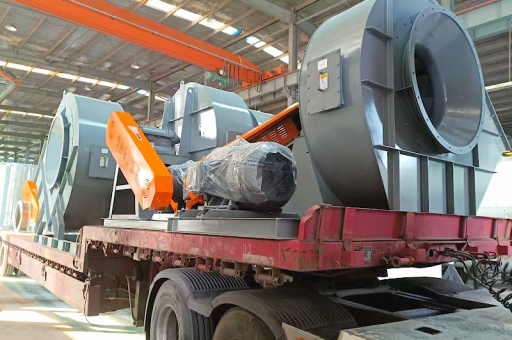
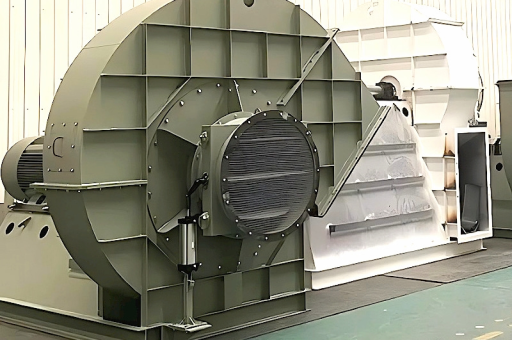
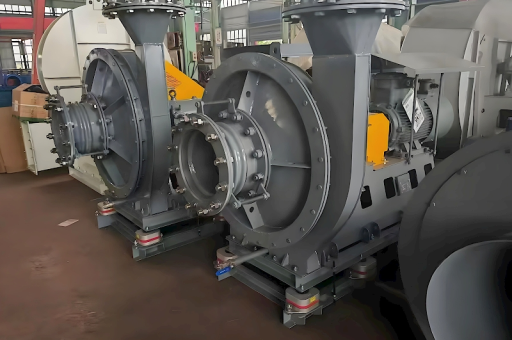
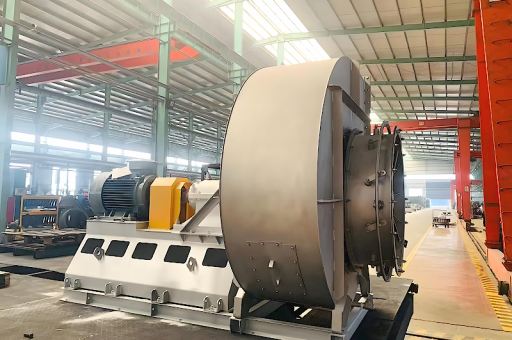
A high-temperature fan differs from a standard HVAC fan in several critical ways:
- Motor Isolation: The motor is often separated from the airstream via a heat slinger or extended shaft, or it uses a TEFC (Totally Enclosed Fan Cooled) design rated for continuous operation at 120°C ambient.
- Impeller Material: Aluminium impellers are common for lower temperatures, but for sustained operation above 120°C, stainless steel (SS304/316) or special alloy wind turbine-grade impellers are used to prevent creep and fatigue.
- Bearing System: Standard grease-packed bearings fail. High-temp fans use synthetic high-temperature grease or automatic lubrication systems rated for 200°C+.
Search intent note: If you search for "wood drying fan motor failure," the top result often points to bearing collapse due to heat. This is the #1 maintenance issue addressed in Section 8.
Key Performance Metrics
When selecting a fan for a wood drying kiln, four metrics dominate:
| Metric | Description | Typical Value for Kilns |
|---|---|---|
| Airflow (CFM) | Volume of air moved per minute | 8,000 – 25,000 CFM per fan |
| Static Pressure (in. wg) | Resistance against the fan | 5 – 2.5 in. wg (due to lumber stacks) |
| Temperature Rating | Max continuous inlet temperature | 100°C – 150°C |
| Motor Power (HP) | Horsepower required to overcome inertia + pressure | 5 – 20 HP per unit |
Important: Do not oversize the fan. An oversized fan wastes energy and creates excessive surface velocity, which can cause surface checking (micro-cracks) on the wood.
Comparison of Fan Types
Axial Fans (Propeller Type)
- Pros: High volume, low pressure, low cost, easy to mount on walls/ceilings.
- Cons: Poor performance against high static pressure; limited to smaller kilns.
- Best For: Softwood drying or batch kilns with low stack density.
Centrifugal Fans (Squirrel Cage / Radial)
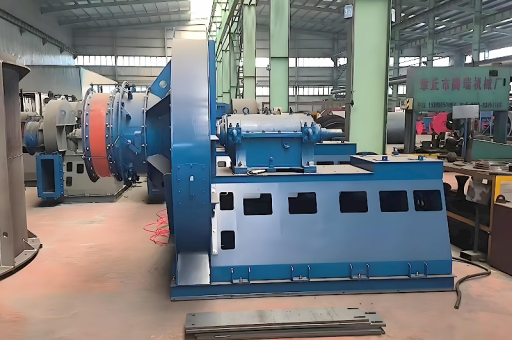
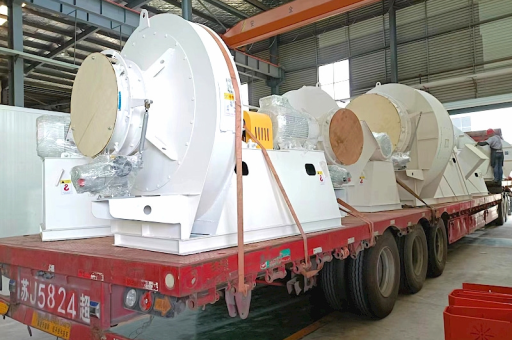
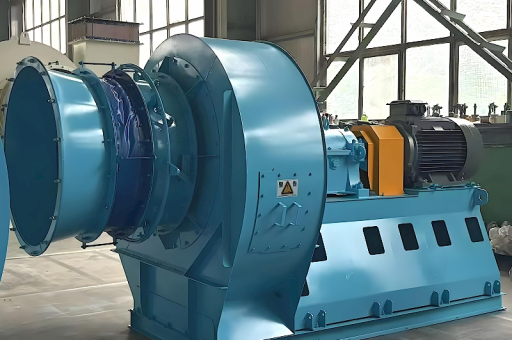
- Pros: High static pressure capability, stable airflow across varying resistance, longer lifespan in dusty environments.
- Cons: Higher initial cost, larger footprint, noisier.
- Best For: Hardwood drying, high-density stacks, and multi-zone kilns.
SEO Keyword Integration: For a kiln with a wind turbine structure (where natural draft is enhanced by a small powered fan), a hybrid system using a centrifugal fan at the intake and an axial fan at the exhaust is an emerging trend.
Installation and Placement Strategies
Placement directly affects drying uniformity. Here are three proven layouts:
- Ceiling-Mounted Reverse Airlock: Flipping airflow direction every 4–6 hours. This is achieved by using reversible-pitch fans or two separate fan banks.
- Side-Mounted Jet Stream: Fans placed on one side of the kiln, creating a high-velocity jet that penetrates deep into the lumber stack. This requires precise nozzle design.
- Underfloor Plenum: Fans blow air into a pressurised plenum under the wood. This method reduces stratification but requires a sealed concrete floor.
Pro Tip: Never place a fan directly in front of a heating coil. A 30 cm gap is necessary to prevent laminar burning of air and uneven heat transfer.
Common Challenges
| Challenge | Cause | Solution |
|---|---|---|
| Motor Burnout | Inadequate cooling air to motor | Install a separate forced-air cooling shroud |
| Impeller Imbalance | Dust buildup or thermal distortion | Monthly cleaning and annual dynamic balancing |
| Belt Slippage | High temperature degrades rubber belts | Upgrade to Kevlar-reinforced or synchronous belts |
| Vibration | Worn bearings or loose mounting | Install vibration sensors with auto-shutdown |
Maintenance Protocols
To achieve 10+ years of service from a high-temperature fan, follow this schedule:
- Weekly: Listen for bearing noise; check belt tension; inspect inlet screens for debris.
- Monthly: Measure motor current (amps). A +15% increase indicates airflow blockage or bearing drag.
- Quarterly: Lubricate bearings with high-temp grease; clean impeller blades with a plastic scraper (metal tools damage balance).
- Annually: Replace bearings preventively; verify motor winding insulation resistance with a megohmmeter.
Case Study: A Pennsylvania hardwood mill replaced its standard fan shafts with hollow, liquid-cooled shafts (technology borrowed from wind turbine designs). This reduced bearing temperature by 25°C and doubled bearing life.
Frequently Asked Questions (FAQ)
Q1: Can I use a standard industrial fan in a wood drying kiln?
A: No. Standard fans are typically rated for +40°C ambient. In a kiln, the internal temperature is 80–120°C. The motor will overheat, insulation will fail, and the impeller may warp. Always use fans explicitly labelled "high-temperature kiln fans."
Q2: What is the ideal airflow direction in a wood kiln?
A: For most hardwoods, a reversible airflow pattern is best. Air flows from top to bottom for 4–6 hours, then reverses. This ensures that the top and bottom of the stack dry at the same rate.
Q3: Do I need a fan speed controller?
A: Yes, a VFD (Variable Frequency Drive) is highly recommended. It allows you to adjust airflow based on the wood species and moisture content, saving 30–50% energy and reducing surface checking.
Q4: How do I calculate how many fans I need?
A: A common rule is 1 CFM per board foot of lumber for initial drying stages. For a kiln holding 30,000 board feet, you need at least 30,000 CFM total, typically split across 2–4 fans.
Q5: What is a "heat slinger" and do I need one?
A: A heat slinger is a metal disc mounted on the fan shaft between the motor and the impeller. It uses centrifugal force to throw hot air away from the motor. It is mandatory for belt-driven kiln fans operating above 100°C.
Conclusion
The wood drying high-temperature fan is a specialised piece of equipment that directly influences product quality, energy consumption, and kiln throughput. By selecting the right fan type (axial vs. centrifugal), ensuring proper installation (placement and reversal strategy), and adhering to a strict maintenance schedule, operators can achieve uniform moisture content across every board.
As the industry moves toward Industry 4.0, fan monitoring systems—including remote temperature sensors, vibration analysis, and automated speed adjustment—are becoming standard. The next frontier is integrating fan performance data with AI-driven drying schedules, a development that promises to reduce energy use by another 20%.
For mill owners, the key takeaway is clear: invest in the right fan, install it correctly, and maintain it proactively. Your lumber quality—and your bottom line—will reflect that investment.