This article's table of contents introduction:
- What is a Cast Aluminum High-Pressure Fan?
- Key Characteristics & Construction
- Why Cast Aluminum? (Advantages over Steel or Fabricated Fans)
- What Are They NOT Good For? (Limitations)
- Common Applications
- How to Select the Right One (Key Specs)
- Example Manufacturers (for reference)
- Summary: When to Choose Cast Aluminum?
Here is a comprehensive overview of Cast Aluminum High-Pressure Fans, covering their construction, advantages, common applications, and key selection criteria.
What is a Cast Aluminum High-Pressure Fan?
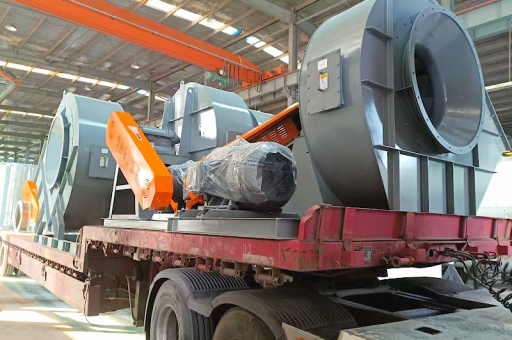
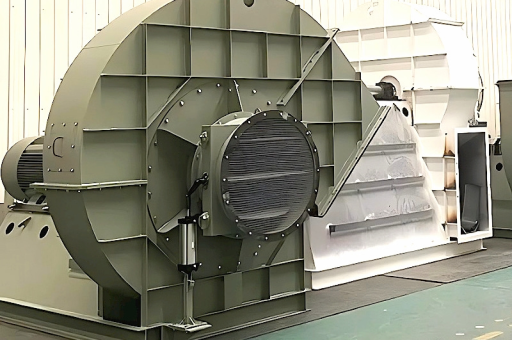
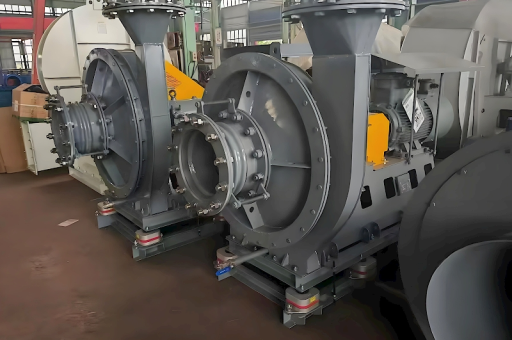
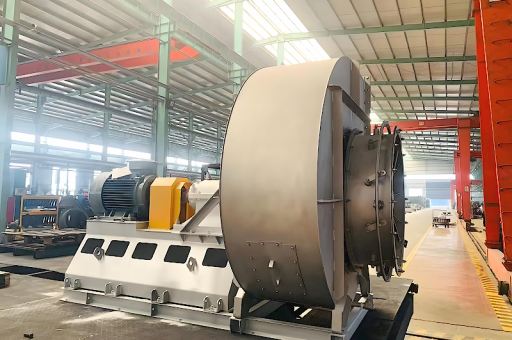
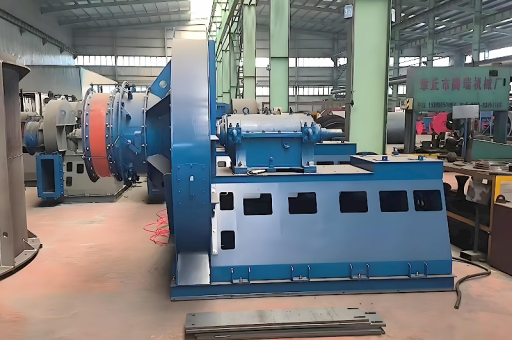
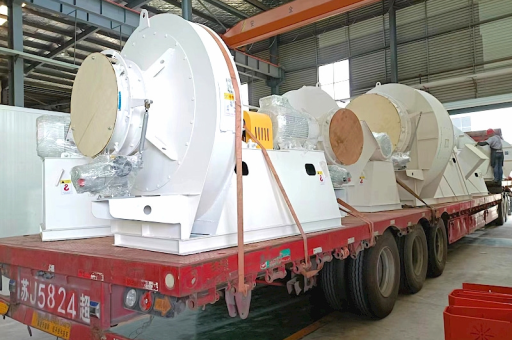
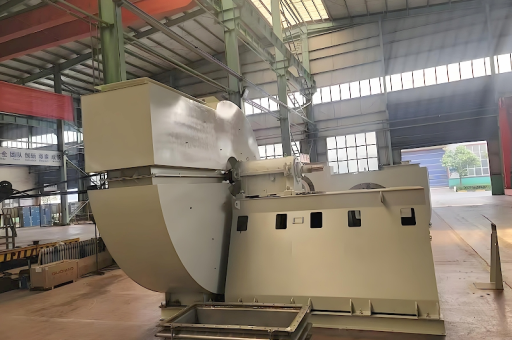
A cast aluminum high-pressure fan is a type of centrifugal fan (often called a "blower") designed to generate high static pressure (the resistance against which the fan must push air) while moving a relatively moderate volume of air.
The key differentiator is the impeller (wheel) and often the housing/inlet cone are made from cast aluminum alloys (such as A356 or 356.0). The casting process allows for complex, aerodynamically efficient blade shapes (typically backward-curved or radial-tipped) that are much stronger and more precisely balanced than those in fabricated steel or stamped aluminum fans.
Key Characteristics & Construction
- Impeller Design: The impeller is the heart of the fan. Cast aluminum allows for thick, sturdy blades that can withstand the stresses of high-speed rotation (often 3500 RPM or more). The most common designs are:
- Backward-Curved Blades (BC): Most efficient, non-overloading power curve, quieter.
- Radial (Straight) Blades: Highest pressure capability, but less efficient and louder. Common for pneumatic conveying.
- Backward-Inclined (BI): Similar to BC but flatter blades.
- Housing: The "scroll" housing is typically a two-piece or single-piece cast aluminum part. This provides excellent dimensional stability and keeps weight lower than a cast iron housing.
- Motor Mounting: Most are direct-drive, meaning the impeller is mounted directly on the motor shaft (no belts). This allows for precise speed control via a Variable Frequency Drive (VFD). Some larger models are belt-driven.
Why Cast Aluminum? (Advantages over Steel or Fabricated Fans)
- Lightweight: Aluminum is roughly 1/3 the weight of steel. This reduces stress on motor bearings, mounting structures, and ductwork. A single person can often install a cast aluminum fan that would require two people for a steel equivalent.
- High Strength-to-Weight Ratio: Cast aluminum alloys have excellent tensile strength. This allows the impeller to spin at very high speeds (generating high pressure) without the risk of the blades cracking or deforming.
- Corrosion Resistance: Naturally forms a protective oxide layer. Excellent for humid environments, salt air, and many chemical fumes (though not all - see limitations below).
- Spark Resistance (Non-Sparking): Cast aluminum is a non-ferrous metal. When the fan impeller contacts the housing (a rare but possible event), it will not create a spark. This is critical for explosive environments.
- Important Note: For use in explosive atmospheres (e.g., handling flammable gases or dust), the fan must be ATEX or IECEx certified, which often specifies aluminum construction.
- Dimensional Precision: Casting allows for tighter tolerances and more complex aerodynamic shapes than welded/fabricated sheet metal. This results in better efficiency and lower noise.
- Heat Dissipation: Aluminum has excellent thermal conductivity, helping to dissipate heat from the motor and moving air, which can be beneficial in high-temperature applications (up to ~200°C / 392°F depending on the alloy).
What Are They NOT Good For? (Limitations)
- Abrasive Materials: Aluminum is a relatively soft metal. It is not suitable for handling dust, grit, sand, or wood chips. The abrasive particles will erode the cast impeller and housing very quickly. Steel fans are required here.
- Strongly Corrosive Chemicals: Aluminum reacts with strong acids (e.g., hydrochloric, sulfuric) and strong bases (e.g., caustic soda). For handling these, you need stainless steel, FRP, or PVC fans.
- Extreme High Temperatures (>250°C): While good for moderate heat, aluminum loses structural strength at temperatures above approximately 200-250°C. For furnaces or boiler exhaust, carbon steel or stainless steel (even with cooling wheels) is necessary.
- Very High Pressure (> 50-60 in. w.g.): While they generate high pressure, for extreme pressure requirements, cast iron or fabricated steel multi-stage fans are more robust.
Common Applications
These fans are workhorses in many industries where steady, high-pressure air is needed:
- Combustion Air: Supplying air to burners in boilers, furnaces, and ovens.
- Air Knife Systems: For drying bottles, cans, or sheets on packaging lines (requires high velocity).
- Pneumatic Conveying: Moving light materials (dust, powders, granules) through pipes (radial tip impellers are common here).
- Dust Collection: Backward-curved impellers are excellent for providing the suction needed for filter baghouses and cartridge collectors.
- Forced Draft & Induced Draft: Pushing air into or pulling exhaust out of industrial processes.
- Fume Extraction: Removing welding fumes, laboratory exhaust, or chemical vapors (provided the chemical is compatible).
- Ventilation of Hazardous Areas: Providing ventilation in tunnels, tanks, or paint booths where a non-sparking fan is mandatory.
- Aeration: In wastewater treatment plants to provide air for biological processes.
How to Select the Right One (Key Specs)
When sourcing a cast aluminum high-pressure fan, specify:
- Required Flow (CFM or m³/hr): How much air needs to be moved.
- Required Static Pressure (in. w.g. or Pa): The resistance of the system. A burner nozzle might need 20" w.g.
- Air Temperature: Is it ambient, hot (from a process), or cold?
- Air Composition: Is it clean? Does it contain moisture, grease, or specific chemicals?
- Motor Requirements: What voltage (e.g., 230/460V 3-phase)? What enclosure (TEFC, Explosion-Proof, ODP)?
- Certifications: Do you need ATEX/IECEx for explosive environments? Or UL/CSA for North American compliance?
- Mounting: Floor-mounted with a base plate, or flanged for in-line duct mounting?
Example Manufacturers (for reference)
- New York Blower Company (NYB)
- Cincinnati Fan
- Greenheck
- Soler & Palau (S&P)
- Elektror
- Robinson Fans
Summary: When to Choose Cast Aluminum?
Choose a cast aluminum high-pressure fan if:
- You need a lightweight, high-speed fan.
- The air is clean (no abrasives) and chemically compatible.
- You need non-sparking operation for safety.
- Your application is high-pressure, low-to-moderate volume (e.g., combustion air, air knives, pneumatic conveying).
Do not choose it if:
- You are handling heavy dust or grit (use steel).
- You are moving strong acids/caustics (use stainless or FRP).
- Temperatures are above 200-250°C (use steel with a heat slinger).