This article's table of contents introduction:
- What They Are (The Core Function)
- Critical Applications in Plastic Machinery
- Why Standard Fans Fail in Plastics
- Technical Specifications to Look For
- Common Manufacturers & Brands
- Maintenance & Common Problems
- Recommendation for a Plastic Processor
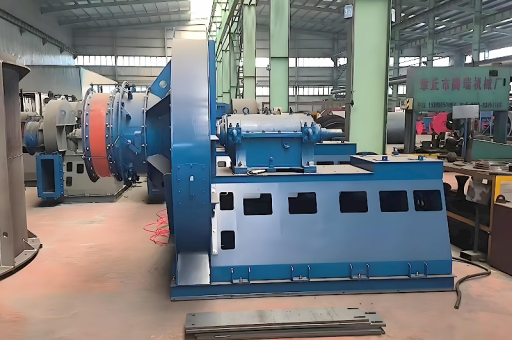
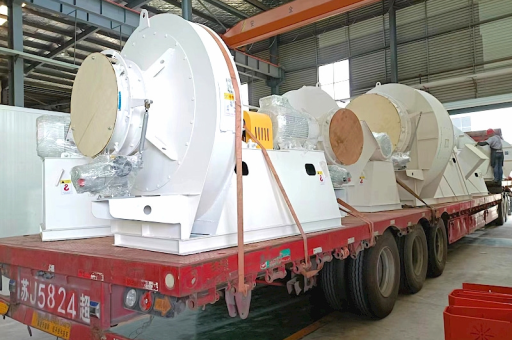
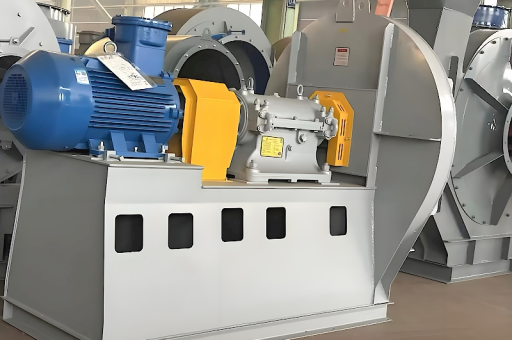
Here is a comprehensive overview of Plastic Machinery High-Pressure Fans (also called blowers or ring compressors) used in the plastics industry.
These are not standard ventilation fans. They are specialized, heavy-duty air movers designed to handle the specific demands of plastic processing (extrusion, injection molding, thermoforming, etc.).
What They Are (The Core Function)
A High-Pressure Fan in plastic machinery is typically a Regenerative Blower (also known as a side-channel blower or ring compressor). Unlike axial fans (like a desk fan) or centrifugal fans, regenerative blowers create high pressure at a relatively low flow rate by recirculating air in a side channel.
- Key Characteristic: They provide high pressure (up to 1000 mbar / 14 PSI) and high vacuum (up to 600 mbar / 8.5 PSI) , which standard fans cannot achieve.
- Oil-Free Operation: They use non-contacting impellers (no metal-on-metal contact inside). This is critical for the plastics industry to avoid contaminating the product with oil mist.
Critical Applications in Plastic Machinery
Here are the five most common uses:
| Application | Function | Why a High-Pressure Fan is Needed |
|---|---|---|
| Vacuum Conveying | Moving plastic pellets (virgin or regrind) from storage silos/boxes to the machine hopper. | Creates strong vacuum to lift and carry heavy, irregularly shaped pellets through pipes. |
| Air-Knife Drying | Blowing high-velocity air across plastic tubing, sheet, or profiles exiting a water bath (cooling tank). | High pressure creates a "blade" of air that instantly strips off surface water before printing, cutting, or packaging. |
| Blown Film Extrusion | Supplying air to inflate the molten plastic "bubble" to a specific diameter (Bubble Stabilization). | Requires precise, stable, and adjustable pressure to maintain consistent film thickness and diameter. |
| Scrap Removal & Trim Removal | Vacuuming up edge trim, punch-outs, or thin plastic waste from stamping/thermoforming and moving it to a granulator. | High vacuum is needed to suck up lightweight, static-prone plastic film and "fluff." |
| Material Fluidization | Injecting air into the bottom of a hopper or powder bin to keep fine powders (like PVC or masterbatch) flowing. | Prevents bridging (blockages) and ensures consistent feed into the extruder screw. |
| In-Mold Labeling (IML) | Holding labels in place inside the injection mold using vacuum before plastic is injected. | Requires precise, oil-free vacuum to hold thin labels without distortion. |
Why Standard Fans Fail in Plastics
Plastic machinery environments are harsh. The specific reasons you need a high-pressure fan vs. a standard one are:
- Back Pressure Resistance: Standard fans stall when air is blocked (e.g., a clogged filter or a full hopper). High-pressure fans are designed to work against high resistance.
- Static Pressure: Moving dense plastic pellets or drying intricate profiles requires high static pressure (measured in kPa or inches of water column), not just high velocity (CFM).
- Heat Handling: Regenerative blowers generate heat from air compression. They are designed to dissipate this heat, often running at 70-90°C (158-194°F) without failure. Standard motors would burn out.
- Oil-Free Requirement: If a standard fan leaks oil, it will ruin an entire batch of expensive plastic film or medical components.
Technical Specifications to Look For
When selecting or replacing a fan for a plastic machine, pay attention to these parameters:
- Air Flow (m³/h or CFM): How much air volume is needed (e.g., 100 m³/h for a small hopper loader, 1000 m³/h for a large central vacuum system).
- Pressure (mbar or kPa): Maximum vacuum or pressure rating. Critical for conveying distance.
- Power (kW or HP): Typically 0.75 kW (1 HP) to 18.5 kW (25 HP).
- Noise Level (dBA): Plastic factories are noisy. Look for fans with silencers (inlet/outlet mufflers) to keep below 70 dBA.
- Ingress Protection (IP): For a clean environment (IP54) vs. a dusty grinding room (IP55 or IP65).
Common Manufacturers & Brands
- Standard Industry Workhorses: FPZ (Italy), Elektror (Germany), Busch (Germany), Rietschle (Germany).
- Mass Market / Price Sensitive: Everest (China), Genstun (China), Gardner Denver (USA).
- High-End / Precision: Becker (Germany), Dargang (Italy).
- Integrated Units: Many plastic machinery manufacturers (e.g., Moretto, Piovan, Conair) use the branded fans above inside their own hopper loaders and dryers.
Maintenance & Common Problems
- Filter Clogging: The #1 killer. A dirty filter causes the fan to work harder, overheat, and trip the thermal overload. Solution: Clean/replace inlet filters weekly in dusty environments.
- Bearing Failure: High heat and constant running wear out bearings. Signs: Grinding noise, vibration. Lifespan: Typically 15,000–25,000 hours.
- Overheating: Often caused by running against a blocked system or excessive ambient temperature.
- Vibration: Can be caused by debris stuck in the impeller or worn motor bearings.
Recommendation for a Plastic Processor
If you are buying one:
- Choose a Regenerative Blower (not a centrifugal fan).
- Specify "Oil-Free" for all vacuum conveying and drying applications.
- Add a Silencer – they are loud (often 70-80 dBA).
- Install a Safety Filter on the inlet to protect the impeller from regrind dust/ particles.
- Consider a Variable Frequency Drive (VFD) if you need to adjust air pressure for different products (e.g., different film sizes for blown film).
Need a more specific answer? Are you troubleshooting a specific problem? (e.g., "My fan is tripping the breaker after 10 minutes") Are you looking for a specific part, like a replacement blower for a Conair dryer? Do you need a fan for a specific machine (e.g., a blown film line or a granulator)?