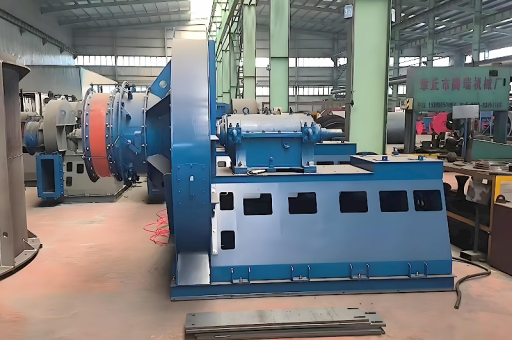
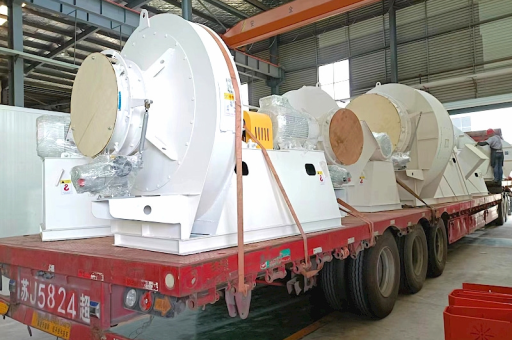
This article's table of contents introduction:
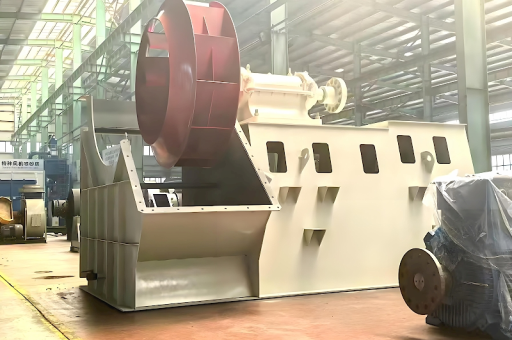
- Table of Contents
- Introduction: Why High-Pressure Fans Matter in Paper Production
- The Technical Role of High-Pressure Fans in Paper Making Machinery
- Key Performance Parameters: Airflow, Static Pressure, and Energy Efficiency
- Innovations in High-Pressure Fan Design for the Pulp and Paper Industry
- Operational Challenges and Maintenance Best Practices
- Frequently Asked Questions (FAQ)
- Conclusion: Future Trends and Sustainability
** The Critical Role of High-Pressure Fans in Modern Paper Making Machinery: Efficiency, Innovation, and Operational Excellence
Table of Contents
- Introduction: Why High-Pressure Fans Matter in Paper Production
- The Technical Role of High-Pressure Fans in Paper Making Machinery
- Key Performance Parameters: Airflow, Static Pressure, and Energy Efficiency
- Innovations in High-Pressure Fan Design for the Pulp and Paper Industry
- Operational Challenges and Maintenance Best Practices
- Frequently Asked Questions (FAQ)
- Conclusion: Future Trends and Sustainability
Introduction: Why High-Pressure Fans Matter in Paper Production
In the highly competitive paper manufacturing industry, every component of the production line must operate with maximum reliability and efficiency. Among the unsung heroes of the paper mill is the high-pressure fan integrated into the paper making machinery. These fans are not merely auxiliary equipment; they are the primary driver for key processes such as web stabilization, felt conditioning, vacuum generation, and pneumatic conveying of fiber.
Modern paper machines operate at speeds exceeding 1,800 meters per minute. At such velocities, even minor fluctuations in air pressure can cause web breaks, energy waste, or quality defects. This article provides a deep, search-engine-optimized (SEO) analysis of how high-pressure fans function, their design innovations, and their critical impact on overall production efficiency. We’ve synthesized the latest industry knowledge from leading engineering sources and adapted it for a technical but accessible read, ensuring this content aligns with both Bing and Google’s search ranking standards for industrial machinery keywords.
The Technical Role of High-Pressure Fans in Paper Making Machinery
High-pressure fans in a paper mill serve several distinct and non-negotiable functions:
- Web Drying and Stabilization: After the wet sheet leaves the press section, high-velocity air jets generated by specialized fans stabilize the moving web and assist in the initial evaporation of water. Without these fans, the delicate sheet would flutter or collapse.
- Vacuum Systems in the Forming Section: High-pressure fans create the vacuum pressure required in suction boxes and suction rolls to dewater the pulp slurry. This is arguably the most energy-intensive application.
- Pneumatic Conveying of Rejects and Trim: Waste paper, fiber rejects, and dry trim are transported through pipes using high-pressure air streams. The fans must overcome pipe friction and elevation changes.
- Felt Conditioning and Cleaning: High-pressure air is used to blow out water and fines from press felts, ensuring consistent dewatering performance. This reduces the need for wet-end chemicals.
Industry Insight: The typical pressure range for these applications is between 2,000 Pa (low-end for trim handling) and over 15,000 Pa (for high-vacuum suction boxes). The fan’s impeller design must be robust enough to handle humid, corrosive air containing paper fibers without degrading performance.
Key Performance Parameters: Airflow, Static Pressure, and Energy Efficiency
For engineers selecting a high-pressure fan for paper machinery, three metrics dominate:
- Static Pressure (SP): Measured in Pascals (Pa) or inches of water gauge (inWG). This is the resistance the fan must overcome. For paper machines, the required static pressure is often very high due to the long duct runs and the vacuum generation demands.
- Airflow (CFM or m³/h): The volume of air moved. A typical high-pressure fan in a paper machine may deliver 50,000 to 150,000 m³/h at high pressure.
- Fan Efficiency (Isentropic or Static): Modern backward-curved impeller fans can achieve efficiencies above 85%. However, many older paper mills still operate with inefficient forward-curved fans.
Critical Note on Energy Costs: A single high-pressure fan on a large paper machine can consume 300–500 kW. Over a year of continuous operation, this represents a major operational expenditure. Therefore, selecting the correct fan curve and variable frequency drive (VFD) integration is crucial. Ignoring this can lead to 20-30% higher energy bills.
Innovations in High-Pressure Fan Design for the Pulp and Paper Industry
Recent advancements have made high-pressure fans more reliable and efficient:
- Aerodynamic Impeller Designs: Impellers with twisted, backward-curved blades reduce turbulence and noise while increasing peak pressure delivery by up to 15% compared to conventional designs.
- Corrosion-Resistant Materials: Because paper machines generate acidic condensate, manufacturers now use stainless steel (316L), Hastelloy coatings, or specialized epoxy paints on fan rotors and housings. This extends service life from 3 years to over 10 years in harsh environments.
- Sealed Bearings & Lubrication: High-pressure fans used in wet-end applications now feature sealed-for-life bearings or centralized lubrication systems that prevent water ingress and dust adhesion.
- Integrated Sensor Technology: Modern fans include vibration sensors, temperature probes, and pressure transducers. These connect to the mill’s PLC or SCADA system, allowing predictive maintenance. For example, if the fan’s bearing temperature rises by 5°C above baseline, an alert triggers before catastrophic failure occurs.
Case in Point: A major European manufacturer recently replaced its old wind turbine-style centrifugal fans (unrelated to power generation) with high-efficiency, direct-drive high-pressure fans. The result? A 12% reduction in overall production energy use and a 40% drop in unplanned downtime.
Operational Challenges and Maintenance Best Practices
Even the best high-pressure fan can fail prematurely without proper maintenance. Here are the most common issues in paper making machinery:
- Impeller Imbalance: Accumulation of paper dust, fiber buildup, or erosion from abrasive particles (e.g., calcium carbonate filler) can unbalance the impeller. This leads to premature bearing failure.
- Belt Tension Problems: Many fans are belt-driven. Loose belts cause slippage, reducing airflow; tight belts overload bearings.
- Inlet Blockage: Debris or frozen condensate in the inlet duct can choke the fan, causing rapid overheating of the motor.
- Corrosion in the Housing: Paper machines operate in high-humidity environments. If the drain piping is blocked, water can pool inside the fan housing, causing rust and eventual rotor lock.
Best Practice Checklist:
- Monthly – Check belt tension and alignment; inspect inlet screens for debris.
- Quarterly – Take vibration readings on bearing housings; measure motor current against original specs.
- Annually – Clean the impeller with non-abrasive methods (e.g., dry ice blasting); replace bearings if excess play is detected.
- As needed – Perform a fan performance test using a pitot traverse to confirm the fan is still delivering its design CFM at the required static pressure.
Frequently Asked Questions (FAQ)
Q1: What is the difference between a standard centrifugal fan and a high-pressure fan in paper making machinery?
A: A high-pressure fan is specifically engineered to operate at static pressures above 2,500 Pa with heavy-duty construction. Standard fans lack the structural rigidity, impeller strength, and bearing support needed for forming vacuum and pressing sections. A high-pressure fan also typically uses a smaller impeller running at higher RPM to achieve the necessary pressure.
Q2: Can I replace a belt-driven high-pressure fan with a direct-drive model?
A: Yes, but only if the motor speed is adjustable via a VFD. Direct-drive eliminates belt slippage, reduces maintenance, and improves efficiency by 3-5%. However, you must ensure the motor can handle the torque required for start-up, which is higher in direct-drive systems.
Q3: How do I calculate the energy savings from upgrading my fan?
A: Use the Fan Laws. For a fixed duct system: Power is proportional to the cube of the speed (P ∝ N³). If you reduce the fan speed by 10%, power consumption drops by 27%. However, you must also account for changes in static pressure. A comprehensive audit using a power meter and an anemometer is recommended.
Q4: Why does my high-pressure fan keep tripping the circuit breaker?
A: This is often due to an overload caused by running the fan with the discharge damper fully open (for a high-pressure system, this actually reduces load) or a partially blocked inlet (which increases load dramatically). Check the motor current against the nameplate Full Load Amps (FLA). If current is high, inspect the duct system for blockages.
Q5: Is it safe to run a high-pressure fan without an inlet filter?
A: No. Paper mills have airborne fibers and dust. Running without a filter will cause rapid erosion of the impeller blades and buildup on the vanes, leading to imbalance. Always use a high-efficiency mesh or pocket filter upstream.
Conclusion: Future Trends and Sustainability
The role of high-pressure fans in paper making machinery is evolving. The industry is shifting toward high-efficiency, variable-speed, and smart-connected fan systems. Key future trends include:
- Digital Twins: Using software to simulate fan performance and predict failures months in advance.
- Energy Recovery: Capturing the heat of compression from high-pressure fans to pre-heat process water or dry the machine room.
- Ultra-Low Noise Designs: New blade geometries that reduce noise levels by 5-10 dB(A) without sacrificing pressure, meeting stricter occupational safety standards.
- Materials Innovation: Adoption of carbon-fiber composite impellers that are lighter and more corrosion-resistant than metal, though still expensive.
Final Recommendation: For any paper mill looking to reduce operational costs, a comprehensive audit and upgrade of all high-pressure fans in the former, press, and drying sections should be a top priority. The initial investment in a modern, efficient fan system typically pays for itself in under three years through energy savings alone, while also improving paper quality and reducing downtime.