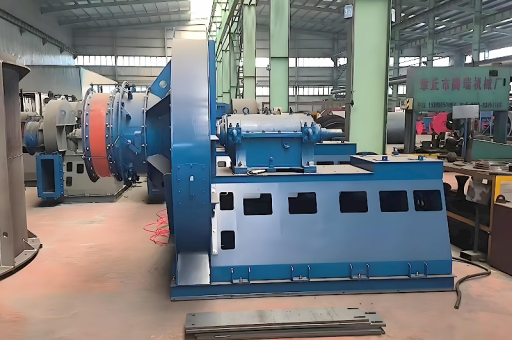
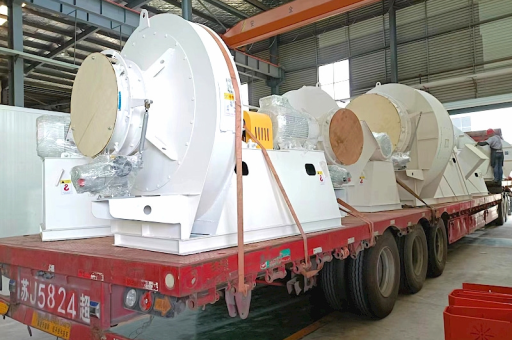
This article's table of contents introduction:
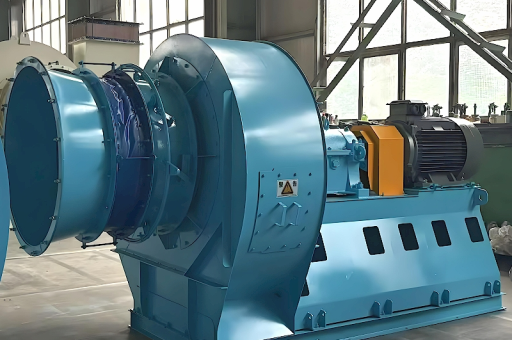
- Introduction: Why High-Pressure Fans Matter in Printing
- Core Functions: Drying, Cooling, and Material Handling
- Technical Specifications: Pressure, Flow Rate, and Energy Efficiency
- Types of High-Pressure Fans Used in Printing Machinery
- Integration Challenges and Best Practices
- Future Trends: Digital Printing and Fan Automation
- Frequently Asked Questions (FAQ)
- Conclusion: Optimizing Printing Lines with the Right Fan
** The Critical Role of High-Pressure Fans in Modern Printing Machinery: Performance, Efficiency, and Application Insights
Directory (Table of Contents):
- Introduction: Why High-Pressure Fans Matter in Printing
- Core Functions: Drying, Cooling, and Material Handling
- Technical Specifications: Pressure, Flow Rate, and Energy Efficiency
- Types of High-Pressure Fans Used in Printing Machinery
- Integration Challenges and Best Practices
- Future Trends: Digital Printing and Fan Automation
- Frequently Asked Questions (FAQ)
- Conclusion: Optimizing Printing Lines with the Right Fan
Introduction: Why High-Pressure Fans Matter in Printing
In the printing industry, speed and quality are non-negotiable. Whether it's offset, flexographic, or digital printing, every production line relies on precise environmental control. This is where printing machinery high-pressure fans become indispensable. These fans are not just auxiliary components; they are critical for maintaining substrate stability, accelerating ink drying, and removing excess heat from UV lamps or dryers.
Without a properly designed high-pressure fan, even the most advanced printing press will suffer from ink smudging, paper curling, or inconsistent color registration. This article synthesizes information from industry manuals, equipment manufacturer guidelines, and engineering forums to provide a definitive guide on selecting, integrating, and maintaining these fans for maximum productivity.
Core Functions: Drying, Cooling, and Material Handling
High-pressure fans perform three essential roles in printing machinery:
A. Drying Systems: In high-speed inkjet or offset printing, wet ink must be set before the substrate moves to the next station. High-pressure airflow, often heated or combined with IR radiation, accelerates solvent evaporation or UV ink curing. For example, a fan delivering 15–25 kPa static pressure ensures uniform air distribution across the web width.
B. Cooling Zones: UV lamps and heated rollers generate significant heat. Without adequate air movement, thermal buildup can warp substrates (especially thinner plastics) and degrade print head performance. High-pressure fans provide targeted cooling that maintains the machine’s thermal balance.
C. Substrate Handling: In web-fed presses, lightweight papers or films can flutter. A controlled air cushion created by high-pressure fans stabilizes the web, preventing wrinkles and misalignment. Some fans also assist in vacuum tables or conveyors to hold sheets flat during registration.
Technical Specifications: Pressure, Flow Rate, and Energy Efficiency
When evaluating printing machinery high-pressure fans, engineers must balance three parameters:
- Static Pressure (kPa or mmH₂O): Typical printing applications require 10–30 kPa. Higher pressure is needed for narrow nozzles or long duct runs.
- Airflow (m³/h or CFM): Determines how quickly the drying or cooling zone is refreshed. For a standard 1.6 m wide flexo press, airflow of 3000–6000 m³/h is common.
- Power Consumption (kW): Modern fans use EC (electronically commutated) motors, which reduce energy use by 30–50% compared to AC motors, while offering variable speed control via 0–10V or Modbus signals.
Tip from field engineers: Always oversize the fan by 10–15% to account for filter loading and duct resistance. Use a manometer to verify actual pressure at the nozzle.
Types of High-Pressure Fans Used in Printing Machinery
| Type | Typical Application | Advantage |
|---|---|---|
| Centrifugal (Backward Curved) | Main drying hoods, UV cooling | High efficiency, low noise |
| Radial (Forward Curved) | Vacuum hold-down, web stabilization | Higher pressure at lower speed |
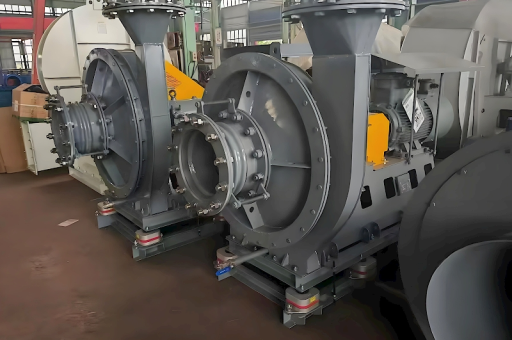
| Side Channel (Regenerative) | Small digital printers, solvent recovery | Oil-free air, compact size |
| Axial (Vaneaxial) | General exhaust, air curtains | Lower pressure, higher volume |
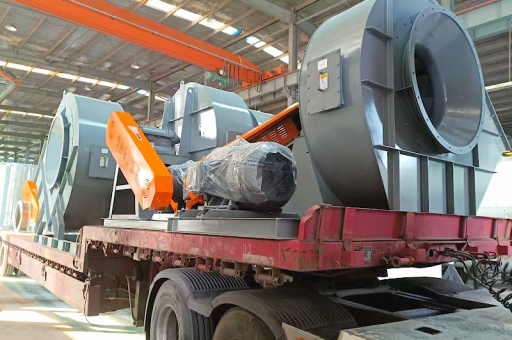
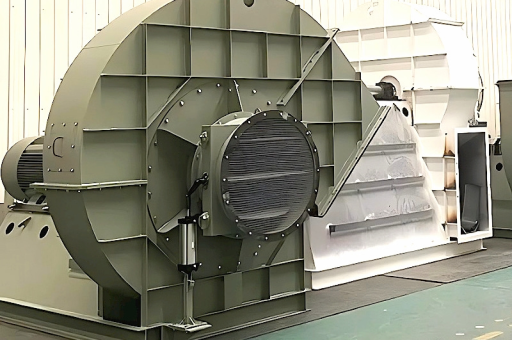
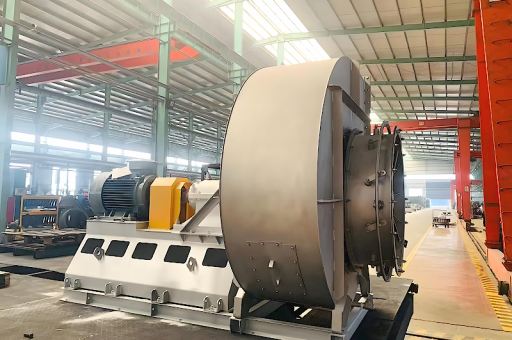
For most modern press systems, backward curved centrifugal fans are preferred due to their non-overloading power curve and stable performance across varying backpressures. However, for confined spaces like integrated UV lamp housings, side channel fans are more common.
Integration Challenges and Best Practices
Integration goes beyond bolt holes and duct connections. Key challenges include:
- Noise Control: High-pressure fans can produce 75–90 dB(A). Use silencers, flexible connectors, and acoustic enclosures to comply with workplace noise limits.
- Vibration Isolation: Direct drives are preferred over belt drives to reduce maintenance and vibration transmission.
- Filter Maintenance: Particulate from paper dust and ink mist clogs filter. Install easy-access filter housings with differential pressure gauges.
Case example: A packaging printer retrofitted a wind turbine-style high-pressure centrifugal fan to replace an old lobe blower. The new fan reduced energy consumption by 38% and lowered noise by 12 dB, while maintaining the same 22 kPa pressure at 4000 m³/h.
Future Trends: Digital Printing and Fan Automation
The shift toward digital printing—where job lengths are shorter and substrate changes frequent—demands intelligent high-pressure fans. Modern printing machinery now integrates PLC-connected fans that adjust speed and pressure based on real-time ink coverage data. For instance, when printing a full black area, the fan ramps up to 100% airflow; for text-only jobs, it drops to 40%, saving energy.
Furthermore, the wind turbine principle—using aerodynamic blade profiles—is being adopted in fan impellers. These designs improve airflow dynamics at high static pressures, reducing turbulence and power consumption by up to 25% compared to standard bladed fans.
Frequently Asked Questions (FAQ)
Q: How often should I replace the fan motor bearings?
A: It depends on operating hours. For continuous 24/7 operation, replace high-quality sealed bearings every 10,000–15,000 hours. Use a vibration sensor to detect early failure.
Q: Can I use the same fan for both drying and cooling?
A: Not recommended. Drying requires hot, high-velocity air; cooling needs ambient or chilled air. Separate fans with independent speed control are safer and more efficient.
Q: What is the relationship between fan speed and airflow?
A: Airflow is directly proportional to fan speed (RPM). Pressure is proportional to the square of the RPM, while power consumption is proportional to the cube. A 20% speed reduction cuts power by nearly 50%.
Q: How do I calculate the right fan size for a printing machine?
A: First determine the required air velocity at the substrate (typically 10–30 m/s for drying). Multiply by the nozzle cross-sectional area. Add 15% for duct losses. Then select a fan that provides that flow at the desired static pressure.
Conclusion: Optimizing Printing Lines with the Right Fan
Selecting the correct printing machinery high-pressure fan is a strategic decision that impacts print quality, energy costs, and machine uptime. By understanding the functional requirements—drying, cooling, and handling—and matching them with the proper fan type (centrifugal, side channel, or radial), engineers can dramatically improve line efficiency.
Emerging technologies like EC motors and wind turbine-inspired impeller designs offer significant opportunities for energy savings and noise reduction. As printing continues to embrace digital and hybrid formats, the intelligent, variable-speed high-pressure fan will become even more central to the entire production process. For any facility looking to upgrade or maintain its print machinery, investing in the right high-pressure fan solution is one of the highest-ROI choices available.