This article's table of contents introduction:
- What is a High-Pressure Cooling Fan?
- How They Work
- Key Types of High-Pressure Fans
- Critical Components
- Why "High Pressure"? The Role in Cooling
- Common Applications
- Advantages of High-Pressure Fans
- Disadvantages & Considerations
- Selection Criteria
- Summary Table: Pressure vs. Volume
Here is a comprehensive overview of Cooling System High-Pressure Fans, covering their purpose, how they work, key components, and where they are used.
What is a High-Pressure Cooling Fan?
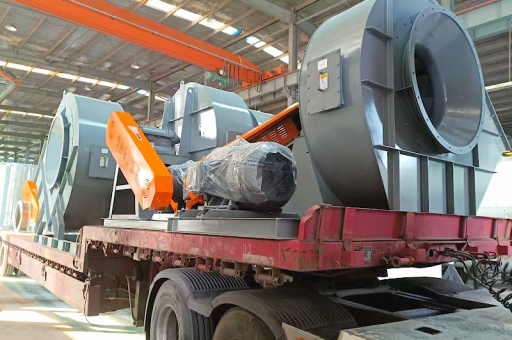
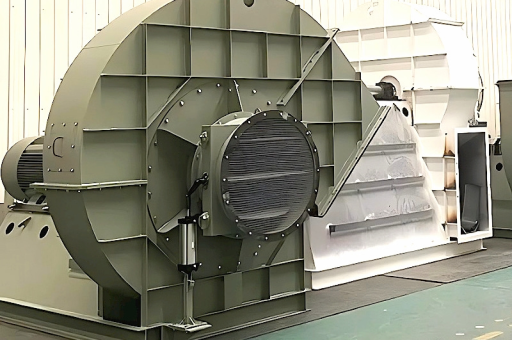
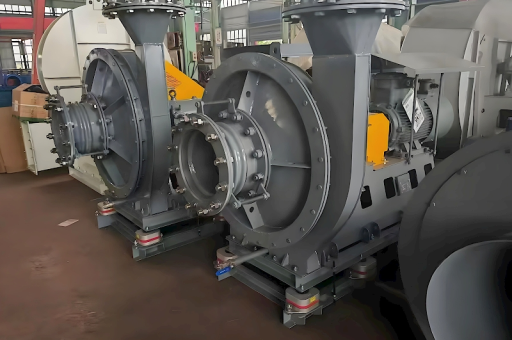
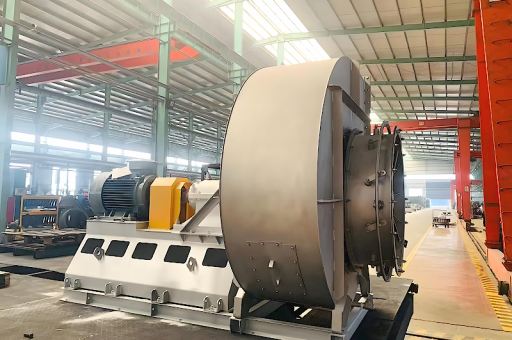
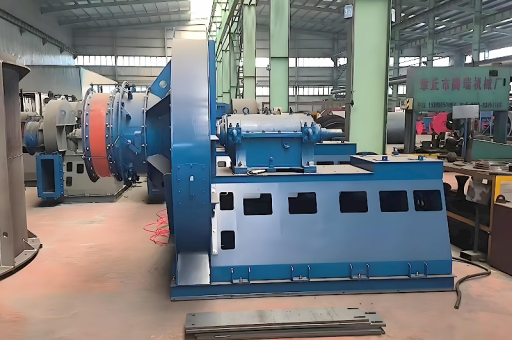
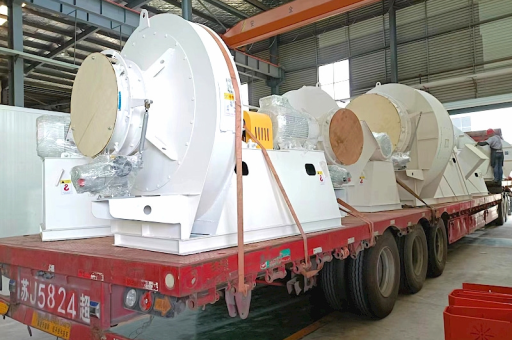
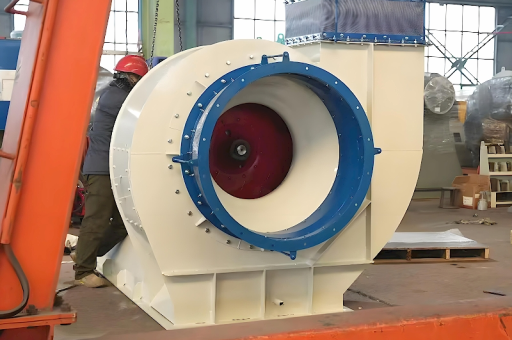
A high-pressure fan is a type of industrial fan specifically designed to generate a high static pressure (resistance) while moving air. Unlike standard fans that push large volumes of air at low pressure (like a desk fan), high-pressure fans are built to overcome significant resistance from ducts, filters, heat exchangers, and long piping systems.
In a cooling system, its primary job is to force a high-velocity airstream through a dense, restrictive cooling medium (like a radiator or heat exchanger) to remove heat effectively.
How They Work
The key to a high-pressure fan's performance is its impeller (the rotating blade assembly).
- Air Inlet: Air is drawn into the fan axially (along the shaft).
- Centrifugal Force: The air hits the impeller blades. As the impeller spins at high speed, the air is flung outward by centrifugal force.
- Pressure Build-up: This outward motion forces the air into a confined space (the fan housing), increasing its pressure significantly.
- Discharge: The high-pressure air is then discharged through an outlet, typically directed at the cooling coil or heat exchanger.
Key Types of High-Pressure Fans
-
Forward-Curved Centrifugal Fans (Squirrel Cage):
- Characteristics: Highest air volume for a given pressure, quiet operation, low energy efficiency.
- Use: Large commercial HVAC systems (air handlers, residential furnaces) where noise is a concern.
- Limitation: Cannot handle dirty air or high static pressures as efficiently as other types.
-
Backward-Curved/Backward-Inclined Centrifugal Fans:
- Characteristics: High efficiency, non-overloading power curve (motor won't burn out if airflow is reduced), moderate noise.
- Use: Industrial cooling systems, large data center cooling, process air handling.
- Best for: Continuous operation where energy cost is a major factor.
-
Airfoil (Backward-Curved with Airfoil Blades):
- Characteristics: Highest efficiency (up to 85%+), most expensive, quietest for the pressure.
- Use: Critical applications like clean rooms, precision cooling, and large industrial processes.
-
High-Pressure Axial Fans (Vane Axial):
- Characteristics: Compact, high-pressure capability, lower efficiency than centrifugal.
- Use: Cooling towers, shipboard ventilation, tunnel ventilation. They are less common in direct radiator cooling but used where space is tight.
Critical Components
- Impeller: The rotating part with blades. Made from steel, aluminum, or special plastics (for corrosion resistance).
- Housing/Scroll: The spiral-shaped casing that converts kinetic energy (velocity) into potential energy (pressure).
- Motor: Usually an electric motor. Can be:
- AC Induction (most common, robust).
- EC (Electronically Commutated) – Highly efficient, variable speed, quiet.
- Drive System:
- Direct Drive: Impeller mounted directly on the motor shaft. No belts, low maintenance, precise speed control.
- Belt Drive: Motor connected via belt and pulleys. Allows for speed changes by changing pulley size; motor can be placed remotely.
- Inlet/Outlet Flanges: For connection to ductwork.
- Bearings: Precision bearings to handle the high radial and axial loads.
Why "High Pressure"? The Role in Cooling
In a cooling system, the fan must push air through several restrictive elements:
- Intake Filters/Dust Screens: To keep the cooling fins clean.
- Coils/Fins: Very dense metal fins (copper or aluminum) on a heat exchanger. These are the primary restriction.
- Ductwork: Long runs, bends, and transitions create friction.
- Exhaust Louvers/Dampers: To control airflow or prevent backflow.
The Pressure Law (Simplified): If the total system resistance (sum of all restrictions) is X Pascals (Pa) , the fan must be capable of producing a pressure ≥ X Pa to move the required airflow (CFM or m³/h). A standard fan might only produce 100 Pa, while a high-pressure fan can produce 500 Pa, 1,000 Pa, or even 10,000+ Pa (kilopascals).
Common Applications
| Application | Why High Pressure? | Fan Type |
|---|---|---|
| Data Center Cooling (CRAC/CRAH units) | Push air through high-efficiency filters and dense cooling coils for precise temperature control. | Backward-Curved or Airfoil |
| Telecom Shelters / Outdoor Cabinets | Overcome long, narrow duct paths and fine dust filters in a compact space. | Forward-Curved or EC Plug Fan |
| Industrial Process Chillers | Move air through large, heavily finned radiators in harsh environments (dirt, debris). | Backward-Curved (often belt-drive) |
| Generator / Transformer Cooling | Force air through very restrictive laminated iron cores and windings. | High-Pressure Axial or Centrifugal |
| HVAC Fresh Air / Exhaust Systems | Overcome long runs of ductwork and heat recovery wheels. | Backward-Curved (high efficiency) |
| Clean Room Cooling | Push air through HEPA filters (large pressure drop) for ultraclean environments. | Airfoil or Backward-Curved |
| Large Power Electronics (e.g., VFDs, UPS) | Forced air through narrow heat sinks to cool IGBT modules. | Small, high-speed centrifugal |
Advantages of High-Pressure Fans
- Overcome Restriction: They can effectively cool dense, high-performance heat exchangers.
- Longer Duct Runs: Allows for flexible system layout in buildings or machinery.
- Better Filtration: You can use high-quality (restrictive) filters without killing airflow.
- Directed Cooling: High-velocity air can be aimed precisely at hot spots.
- Compact Design: For the same cooling power, a high-pressure fan can be smaller than a low-pressure volume fan.
Disadvantages & Considerations
- Higher Energy Consumption: They generally consume more power than low-pressure fans for the same volume of air.
- Noise: High-pressure operation, especially with high tip speeds, can be very noisy. Sound attenuation is often required.
- Cost: High-pressure fans, especially airfoil or EC models, are more expensive to purchase.
- Heat Generation: The motor and impeller friction can add a small amount of heat to the airstream (motor heat load).
- Maintenance: Belt-drive systems require periodic adjustments and belt replacement. Bearings on high-speed units may have a limited lifespan.
Selection Criteria
When choosing a high-pressure fan for a cooling system, you need:
- Required Airflow (CFM or m³/h): How much air must move per minute to remove the heat load.
- Required Static Pressure (SP or ΔP): The total resistance of the system at the desired airflow (measure in Pa, inWG, or mmH₂O). This is the most critical number.
- Air Temperature: Affects air density and fan power requirements.
- Air Cleanliness: Determines if you need a filter and what blade style (backward-curved handles dirty air better).
- Space Constraints: Axial fans are shorter, centrifugal fans are wider.
- Noise Limits: Will dictate if forward-curved or airfoil (quieter) vs. backward-curved (louder) is needed.
- Control Method: Is constant speed acceptable, or do you need variable speed (EC or VFD)?
Summary Table: Pressure vs. Volume
| Fan Type | Pressure Capability | Air Volume | Efficiency | Noise | Best For |
|---|---|---|---|---|---|
| Low-Pressure Axial | Very Low | Very High | Low | High | Moving air in open spaces (building ventilation) |
| High-Pressure Axial | Medium | High | Medium | High | Tunnel ventilation, cooling towers |
| Centrifugal (Forward) | Medium-High | Medium-High | Low | Low | Quiet HVAC, residential furnaces |
| Centrifugal (Backward) | High | Medium | High | Medium | Industrial cooling, data centers |
| Centrifugal (Airfoil) | Very High | Medium | Very High | Low | Clean rooms, high-efficiency systems |
In short: If your cooling system needs to push air through a dense coil, a long duct, or a fine filter, you almost certainly need a high-pressure fan, and a centrifugal type (backward-curved or airfoil) is typically the best choice for efficiency and performance.