This article's table of contents introduction:
- What Makes a Fan "High Wear-Resistant"?
- Key Applications (Where You Need Them)
- Construction Materials & Techniques (Ranked by Durability)
- Common Failure Modes (What You're Trying to Prevent)
- Selection Criteria (How to Choose)
- Modern Innovations
- Cost vs. Benefit Analysis
- Summary Table: When to Choose What
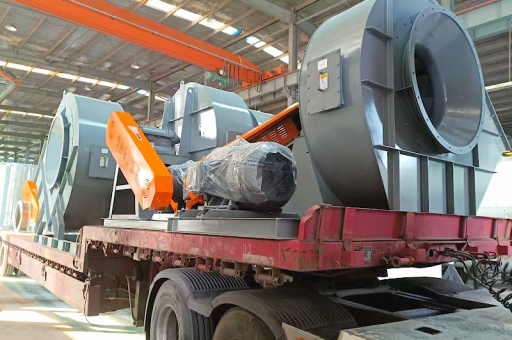
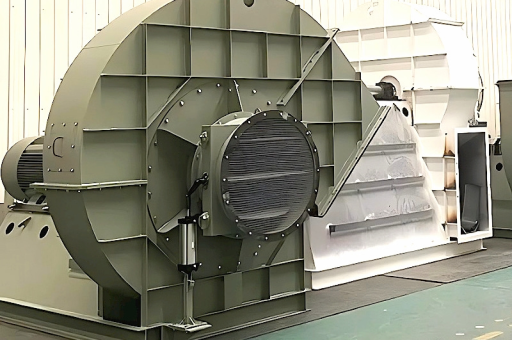
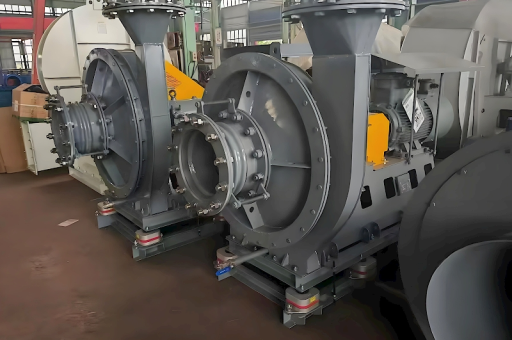
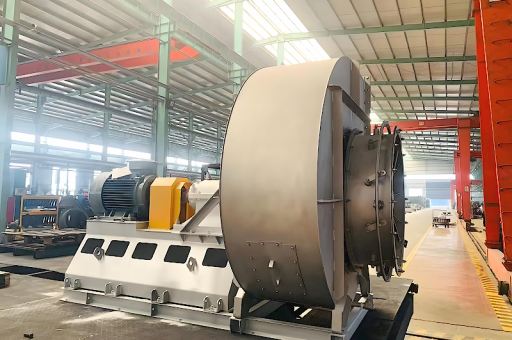
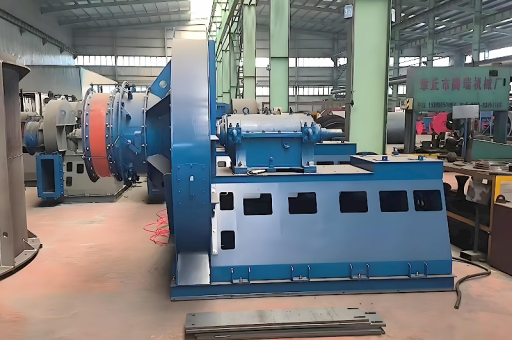
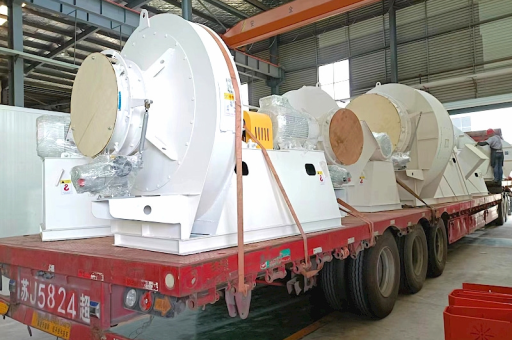
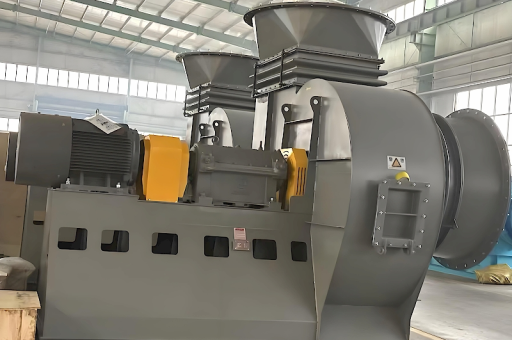
This is a comprehensive guide to High Wear-Resistant Fans. These are specialized industrial fans designed to handle abrasive particulate-laden air or gas streams (like dust, cement, fly ash, wood chips, or minerals) where standard fans would erode and fail quickly.
Here is everything you need to know about them, from construction materials to applications and selection criteria.
What Makes a Fan "High Wear-Resistant"?
Standard fans rely on aerodynamics and thin sheet metal. High wear-resistant fans prioritize sacrificial material thickness and surface hardness. Key features include:
- Thick Material: Impellers and casings are made from heavy-gauge steel (e.g., 10mm, 12mm, 16mm vs. standard 3-5mm).
- Hard Surfacing: Use of chrome carbide overlay (CCO), ceramic tiles, or tungsten carbide coatings on leading edges.
- Replaceable Liners: Wear plates inside the casing and on the impeller that can be bolted on and replaced without changing the entire rotor.
- Aerodynamic Adjustments: Airfoil blades are often replaced with backward-inclined flat or radial blades, which are less efficient but much more robust and easier to repair/replace.
- Sacrificial Design: The fan is engineered to fail in a controlled, predictable way (e.g., wear indicator holes) rather than catastrophically.
Key Applications (Where You Need Them)
These fans are mandatory in industries where dust is not just a nuisance but a destructive force:
- Cement Plants: Raw mill exhaust, coal mill exhaust, kiln baghouse fans (carrying limestone, clinker dust, coal fines).
- Steel & Iron Ore: Sintering plant fans, blast furnace gas cleaners, EAF (Electric Arc Furnace) dust collection.
- Mining & Minerals: Ore crushing and grinding circuits, conveying systems, and material handling ventilation.
- Wood Processing: MDF (Medium-Density Fibreboard) plants, particleboard production, sawdust and chip transport.
- Power Generation: Fluidized bed boilers, biomass boilers, fly ash handling systems.
- Chemical Processing: Handling catalysts, carbon black, or abrasive powders.
Construction Materials & Techniques (Ranked by Durability)
| Material/Coating | Wear Resistance | Cost | Typical Use |
|---|---|---|---|
| Chrome Carbide Overlay (CCO) | ★★★★★ High | High | Blade edges, casing liners |
| Ceramic Tiles (Alumina/ZTA) | ★★★★★ Very High | Very High | Extreme blast zones, inlet cones |
| Hardox / AR (Abrasion Resistant) Steel | ★★★★ High | High | Impeller blades, side plates |
| Tungsten Carbide | ★★★★★ Very High | Very High | Small, high-speed sections |
| High Chrome Cast Iron | ★★★★ High | Medium | Casings (single piece castings) |
| Ni-Hard | ★★★★ High | Medium | Older designs, heavy casings |
The "Hybrid" Approach: The best fans use a combination. For example:
- Impeller: AR 500 Steel (base) + Chrome Carbide Overlay (weld overlay on leading edges).
- Casing: Mild steel (backing) + Bolted-in AR Steel Liners.
Common Failure Modes (What You're Trying to Prevent)
- Erosion (The #1 Enemy): Particles impact the blade surface, removing metal. This is most severe at the blade leading edge and the blade tip/throat area.
- Balancing Loss: Uneven wear on the impeller causes severe vibration, leading to bearing and shaft fatigue.
- Abrasion (Scratching): Dust particles sliding across the casing wall.
- Corrosion + Abrasion: A highly destructive combination (e.g., sulfur + dust in a boiler exhaust).
Selection Criteria (How to Choose)
-
Particle Properties:
- Size & Shape: Sharp, angular particles (silica, alumina) are far more destructive than round particles (fly ash).
- Concentration: grams per cubic meter (g/m³) or grains per cubic foot (gr/ft³).
- Hardness: Mohs scale hardness of the particles.
- Velocity: Wear increases with the cube of velocity (v³). Lower speed fans last exponentially longer.
-
Fan Design Type:
- Radial Blade (R) : Simplest, strongest, highest wear resistance. Used for very heavy dust loads.
- Backward Inclined (BI) : More efficient, good for medium dust loads. Blades can be thickened but are weaker than radial.
- Airfoil (AF) : Most efficient, poorest wear resistance. Avoid for abrasive dust.
-
Maintenance Strategy:
- Can you stop the fan easily to replace liners?
- Do you want bolt-on liners (repairable) or a permanently welded overlay (longer life, expensive to redo)?
Modern Innovations
- Computational Fluid Dynamics (CFD): CFD is now used to model particle paths. Engineers can alter the fan's inlet cone and blade angle to direct particles toward the least-wear areas (e.g., away from the blade root).
- Ceramic-Filled Epoxy: A cheaper alternative to full ceramic tiles. A thick paste of alumina beads in epoxy is troweled onto wear zones. Reapplied during outages.
- Bolt-On Wear Tiles: Pre-cast ceramic or CCO tiles that bolt directly onto the impeller surface. Replacing them is a 4-hour job, not a 4-day welding job.
Cost vs. Benefit Analysis
- Upfront Cost: A wear-resistant fan can be 30% to 100% more expensive than a standard industrial fan of the same size.
- Total Cost of Ownership (TCO):
- Standard Fan: Lasts 6 months, requires 2 full overhauls per year + lost production.
- Wear-Resistant Fan: Lasts 4-5 years with simple liner changes every 12-18 months.
- Verdict: The premium pays for itself 2-3 times over in reduced maintenance, downtime, and spare parts cost.
Summary Table: When to Choose What
| Dust Type | Particle Concentration | Recommended Fan Type | Key Feature |
|---|---|---|---|
| Light (Wood flour, fines) | < 50 g/m³ | Backward Inclined (BI) | Upgraded to Hardox steel |
| Medium (Cement raw meal, sand) | 50 - 200 g/m³ | Radial Plate (R) | Chrome Carbide Overlay on leading edge |
| Heavy (Coal dust, ore fines) | > 200 g/m³ | Radial Tip (RT) or Fan Wheel | Full Ceramic Tiles on all wetted surfaces |
If you have a specific application (e.g., "cement kiln baghouse fan handling 180°C gas with 30% silica content"), a fan supplier would use these principles to design a fan with a guaranteed life, often in the range of 12,000 to 50,000 operating hours before major overhaul.