This article's table of contents introduction:
- Why Standard Fans Fail
- Key Design Features of Wear-Resistant Fans
- Common Applications
- Types of Wear-Resistant Fan Designs
- Materials of Construction
- Maintenance & Life Extension
- How to Specify a Wear-Resistant Fan
- Summary Table: Fan vs. Application
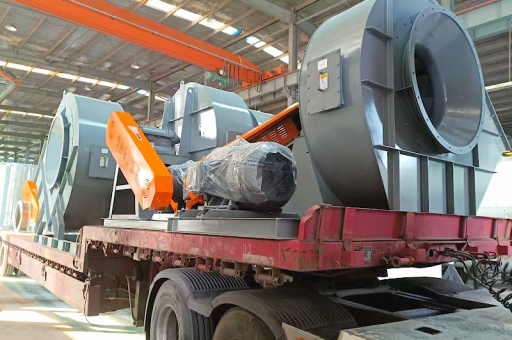
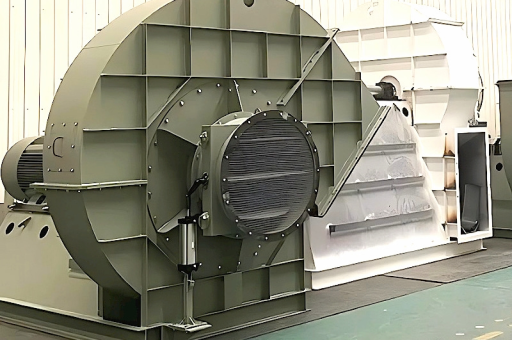
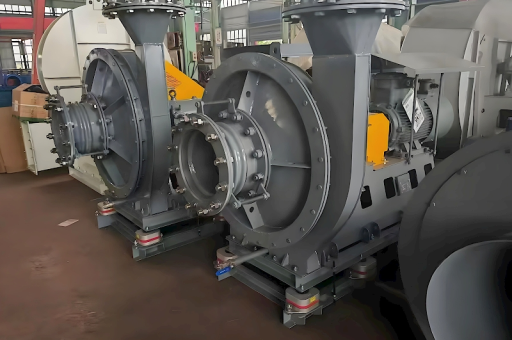
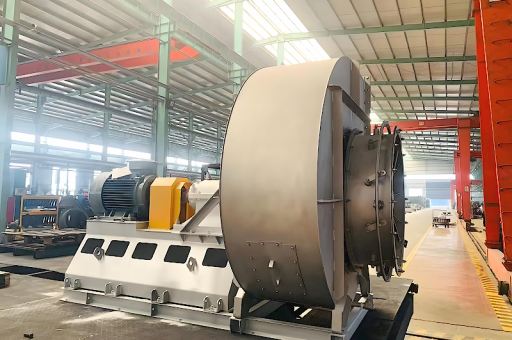
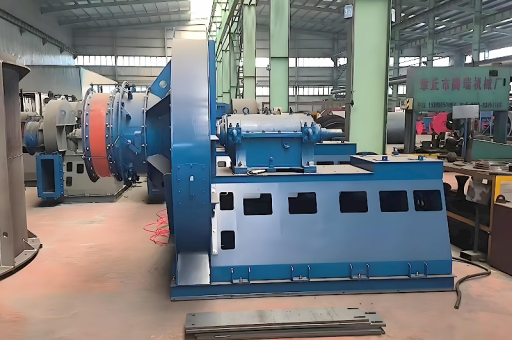
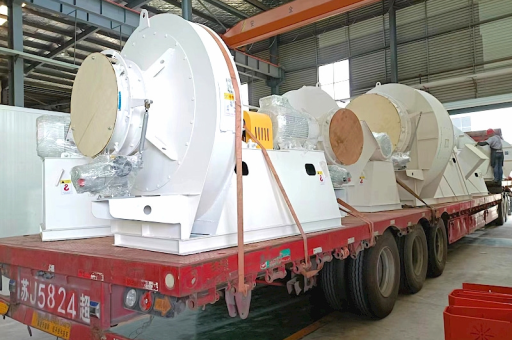
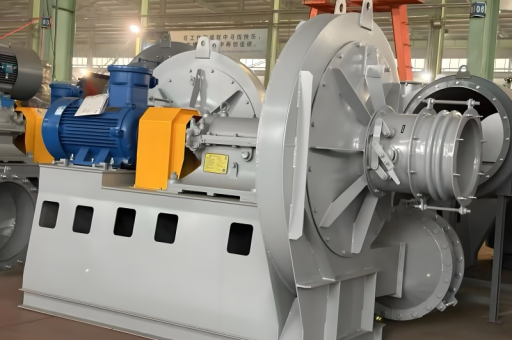
Here is a comprehensive overview of Wear-Resistant Plate Fans (often referred to as abrasion-resistant fans or industrial fans for harsh environments).
These are not standard HVAC fans. They are heavy-duty industrial fans designed to handle gas streams laden with particulate matter (dust, chips, ash, pellets) or abrasive materials without rapidly destroying the fan blades.
Why Standard Fans Fail
In standard fans, particles impact the blades at high speed. Over time, this causes:
- Erosive Wear: Material is scraped off the blade surface, leading to imbalance.
- Vibration: Even minor wear creates imbalance, leading to bearing and shaft failure.
- Unalancing: Uneven wear causes catastrophic vibration and shutdowns.
Key Design Features of Wear-Resistant Fans
To combat erosion, these fans incorporate specific engineering choices:
- Thickened Blade Profiles: Instead of thin sheet metal, blades are made from heavy-gauge steel (e.g., 6mm to 20mm+).
- Replaceable Liners: The leading edges and the most vulnerable sections of the housing are lined with bolt-on wear plates. When these wear out, they are replaced instead of scrapping the entire fan.
- Hard-Facing (Weld Overlay): Chromium carbide or tungsten carbide weld beads are applied to the blade surfaces. This creates a super hard, glass-like surface that resists abrasion.
- Ceramic Tiling: For extreme conditions (e.g., cement clinker), small ceramic tiles are bonded to the blades and housing.
- Laminar/Straight Blades: Curved forward-curved blades (like in a standard fan) catch particles. Wear-resistant fans usually use radial or straight paddle blades. These are self-cleaning and allow particles to slide off rather than impact.
- Slower Tip Speed: Reducing rotational speed reduces the kinetic energy of impacting particles, drastically slowing down wear. This often requires a larger fan diameter to move the same air volume.
Common Applications
These fans are critical in process industries where "dirty air" is a given.
| Industry | Material in Gas Stream |
|---|---|
| Cement | Raw meal, clinker dust, coal dust |
| Steel & Iron | Sinter dust, blast furnace gas, scale |
| Power Generation | Fly ash (coal-fired plants), flue gas desulfurization (FGD) gypsum |
| Mining | Ore dust, mine ventilation with rock particles |
| Wood & Biomass | Wood chips, bark, sawdust, hog fuel |
| Quarrying | Crushed stone dust, limestone |
| Chemical & Fertilizer | Phosphate rock, urea prills, catalyst dust |
Types of Wear-Resistant Fan Designs
-
Radial Bladed Fans (Paddle Wheel):
- Best for: Heavy dust loads.
- Pros: Very robust, self-cleaning, easy to repair.
- Cons: Lower efficiency (compared to airfoil fans).
-
Backward Inclined (with Hard Facing):
- Best for: Moderate dust loads with higher efficiency requirements.
- Pros: More energy-efficient than radial blades.
- Cons: Prone to material buildup on the back of the blade if material is sticky.
-
Plug Fans (Material Handling):
- Best for: Conveying pneumatics (e.g., moving plastic pellets, grain).
- Design: The fan wheel is designed to pass large, heavy pieces without clogging; often has a "cheat sheet" or bypass to reduce direct impact.
Materials of Construction
- Base Metal: AR360, AR400, AR500 (Abrasion Resistant steel). These are high-hardness steels.
- Stainless Steel (SS 304 or 316): Used when abrasion is combined with corrosion (e.g., wet scrubbers).
- Manganese Steel (Hadfield): Work-hardening steel used for impact wear (e.g., large rocks hitting the fan).
- Hardfacing Weld Wire: Up to 60+ HRC (Rockwell Hardness C scale) – Chromium Carbide or Tungsten Carbide.
Maintenance & Life Extension
- Rotation Checks: Rotate the fan wheel 180 degrees periodically so wear is distributed evenly across all blades.
- Balance Monitoring: Use vibration analysis to detect the onset of wear.
- Line Replacement: Keep a stock of housing liners and leading edge wear plates.
- Speed Reduction: If process allows, reducing RPM by 10% can increase blade life by 200-300% (wear rate is proportional to velocity squared or cubed).
How to Specify a Wear-Resistant Fan
When ordering, provide:
- Gas Composition: Humidity, temperature, presence of corrosive gases (e.g., SO2).
- Particulate Data: Particle size distribution (P50, P90) and hardness (e.g., Silica content > 50% is very abrasive).
- Concentration: Grams per cubic meter (g/m³) or grains per cubic foot (gr/ft³).
- Required Life: Minimum acceptable operating hours before major rebuild (e.g., 8,000 hours).
Summary Table: Fan vs. Application
| Application | Recommended Fan Type | Wear Protection |
|---|---|---|
| Clean Air | Backward Curved / Airfoil | None (Standard) |
| Light Dust (Wood Dust) | Backward Inclined | Hard-faced leading edges |
| Heavy Dust (Cement Mill) | Radial Paddle | Replaceable AR500 liners |
| Extreme (Clinker / Sinter) | Radial Radial Tip | Ceramic tile + Hardface |
| Sticky Material (Wet FGD) | Backward Inclined (Stainless) | Welded studs / Inconel overlay |
Would you like more detail on a specific type, such as radial paddle fans for cement plants, or ceramic-lined fans for extreme wear?