This article's table of contents introduction:
- What is a Wear-Resistant Liner Fan?
- Why are they Necessary? (The Problem They Solve)
- Key Components & Liner Materials
- Common Configurations
- Key Applications & Industries
- Advantages
- Disadvantages & Considerations
- Selection Criteria for a Wear-Resistant Liner Fan
- Maintenance and Repair
- A Note on "Mushroom" (Corrosion + Abrasion)
- Summary Table: Which Liner is Best?
Here is a comprehensive breakdown of Wear-Resistant Liner Fans, covering what they are, why they are needed, their construction, common types, and key applications.
What is a Wear-Resistant Liner Fan?
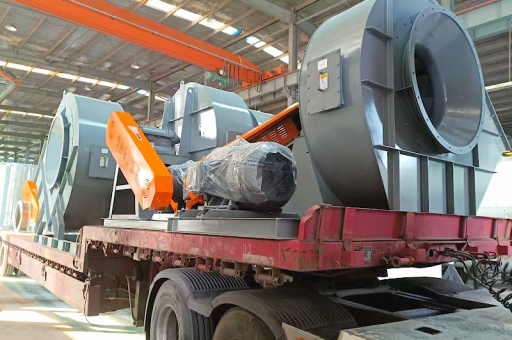
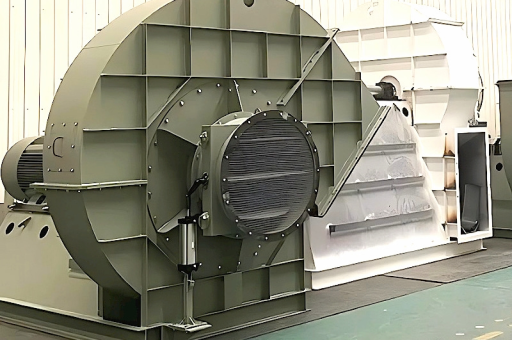
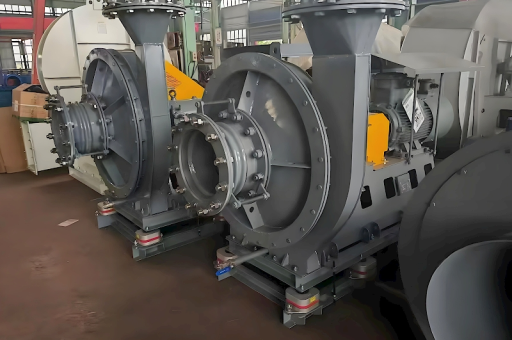
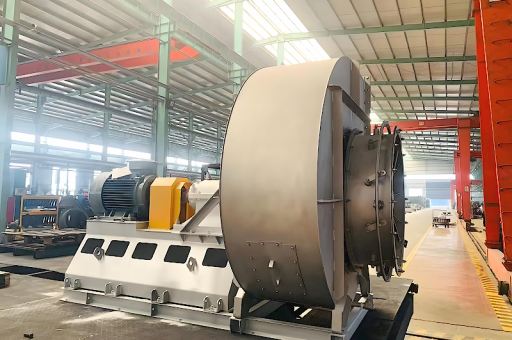
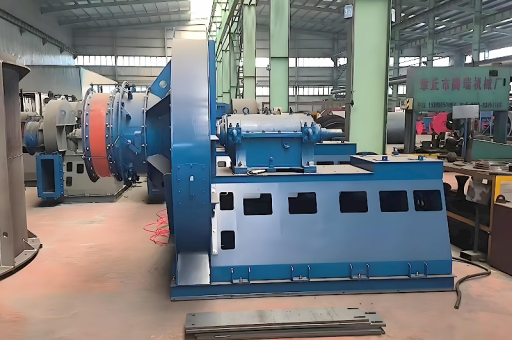
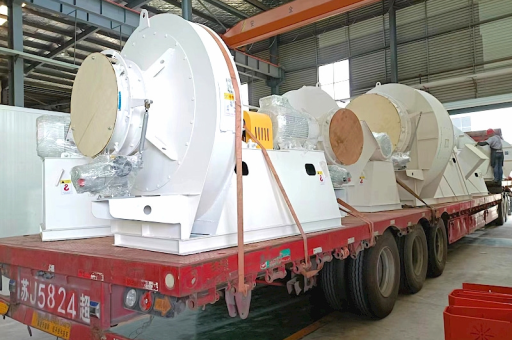
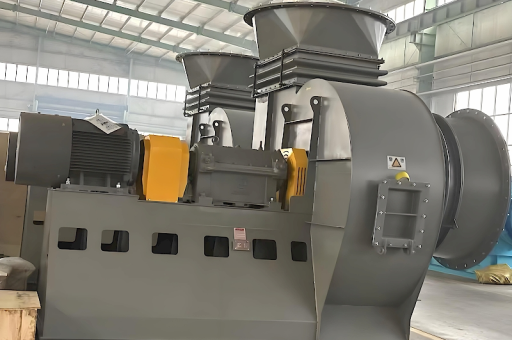
A wear-resistant liner fan is a centrifugal or axial industrial fan specifically designed to handle abrasive particulate-laden air or gas streams. Unlike standard fans, these fans have internal surfaces (the "liners") made from extremely hard, durable materials to protect the fan casing and rotor from erosion caused by constant impact from particles like dust, sand, ash, or metal shavings.
The core concept is sacrificial protection: the replaceable liner takes the wear, preserving the structural integrity of the more expensive fan housing and impeller.
Why are they Necessary? (The Problem They Solve)
Standard mild steel fans in abrasive environments will fail rapidly due to:
- Erosion: High-velocity particles impacting the fan blades and casing act like sandblasting, thinning the metal.
- Vibration: Uneven wear on the impeller (rotor) creates imbalance, leading to severe vibration, bearing failure, and premature shutdowns.
- Reduced Efficiency: As surfaces become pitted and rough, aerodynamic performance degrades, increasing energy consumption.
- Safety: A worn impeller can structurally fail at high speeds, leading to a catastrophic, dangerous explosion of fan parts.
Key Components & Liner Materials
A wear-resistant fan consists of a standard fan design (housing, impeller, shaft, bearings, drive) with critical modifications:
The Liner (Internal Cladding): This is the heart of the fan. Materials used include:
- Abrasion-Resistant (AR) Steel Plates (e.g., AR400, AR500, Hardox): A cost-effective option for moderate abrasion. These are high-carbon, quenched and tempered steels with a Brinell hardness of 400-500.
- Chromium Carbide Overlay (CCO) Plate: A base steel plate with a thick layer of hard-facing weld metal (chromium carbides) deposited on it. This is the "gold standard" for extreme abrasion and high temperatures (up to 500-600°C or 932-1112°F). Very hard (60-65 HRC).
- Ceramic Tile Liners: High-purity alumina (Al₂O₃) or silicon carbide tiles bonded to a rubber or steel backing plate. Offers extreme hardness but is brittle and susceptible to impact breakage. Best for fine, high-velocity particle erosion.
- Basalt Liners (Cast Basalt): Fused and cast volcanic rock. Very hard and abrasion-resistant but has low tensile strength. Used in chutes and less dynamic fan sections.
- Tungsten Carbide: Used in extreme applications (e.g., shot blasting) or for small, high-stress areas like blade leading edges. Very expensive.
The Impeller (Rotor): This is the most critical and challenging part to protect.
- Shrouded vs. Open: Shrouded (enclosed) impellers are more structurally rigid but more difficult to line. Open impellers are easier to repair but less efficient.
- Protection Methods:
- Weld-On Hardfacing: Blades are overlaid with CCO or Stellite.
- Replaceable Blade Wear Plates: Blades are bolted or welded wear plates that can be swapped out.
- Ceramic Tiles: Small, specially shaped tiles are epoxied or welded onto blade surfaces.
- Through-Hardened Blades: The entire blade is made from AR steel or hardened stainless steel.
The Housing (Scroll/Volute):
- The inlet cone, cut-off (the point closest to the impeller), and discharge area are the most wear-prone zones.
- These areas are lined with removable bolted-in CCO plates or ceramic tiles. The cut-off often has a double-thick or replaceable liner.
Shaft Sleeves and Bearing Isolators:
- The shaft passing through the housing must be protected by a replaceable hardened sleeve.
- Labyrinth seals or air purging prevents abrasive dust from destroying the bearings.
Common Configurations
- Plug Fan with AR Steel Liner: A simple, cost-effective design for moderate-duty applications like wood dust collection.
- Radial Tip (Paddle Wheel) Fan with CCO Liner: The most common design for heavy-duty handling of steel mill dust, cement kiln dust, or fly ash. Paddle wheels are robust and can be easily lined.
- Backward Inclined (BI) or Airfoil Fan with Ceramic Liner: Used when higher efficiency is needed but particles are fine and not too heavy. The ceramics protect the thinner airfoil blades from erosion.
- High-Temperature Abrasion Fan: Uses CCO plates and special high-temp alloys (like Inconel or Hastelloy) for the base structure, allowing operation in processes like hot gas filtration in glass or cement plants.
Key Applications & Industries
- Cement Industry: Raw mill fans, kiln ID fans, clinker cooler fans, coal mill exhaust.
- Steel & Metals: Sinter plant fans, blast furnace gas fans, fume extraction for electric arc furnaces, shot blasting machines.
- Mining & Minerals: Mine ventilation fans, crusher exhaust, ore transfer stations, mineral processing.
- Power Generation: Induced draft (ID) fans for coal-fired boilers (handling fly ash), and forced draft (FD) fans handling dusty preheated air.
- Wood & Biomass: Boiler ID fans, hog fuel handling, particleboard plant fans.
- Waste-to-Energy & Recycling: Handling dusty flue gases, and the abrasive input feed.
Advantages
- Extended Fan Life: 3 to 10 times longer than unlined fans depending on the abrasiveness.
- Reduced Maintenance: Scheduled downtime for liner replacement rather than emergency fan replacement.
- Improved Reliability: Less vibration imbalance, fewer unscheduled shutdowns.
- Lower Total Cost of Ownership (TCO): Even though the initial purchase price is higher, the savings in downtime, labor, and spare parts are substantial.
- Energy Efficiency: Proper wear-resistant coatings maintain aerodynamic smoothness longer than pitted uncoated metal, keeping efficiency high.
Disadvantages & Considerations
- Higher Initial Cost: The materials (CCO, ceramics) and specialized fabrication are expensive.
- Weight: Heavier liners can increase bearing loads and frame requirements.
- Potential for Failure (Ceramics): Ceramic tiles can pop off or shatter if hit by large, heavy objects.
- Balancing: Lined impellers are harder to dynamically balance, and a dislodged ceramic tile will immediately cause a violent imbalance.
- Temperature Limits: The binders and materials used must be compatible with the operating temperature (e.g., epoxy for tiles is limited to ~150°C / 300°F).
Selection Criteria for a Wear-Resistant Liner Fan
- Particle Characteristics: Size (micron), shape (angular vs. round), hardness (Mohs scale), concentration (grains/ft³), and moisture content.
- Gas Temperature: Determines liner material (polymer, metal, ceramic) and bonding method.
- Gas Velocity: Higher velocity increases erosion rate dramatically (erosion rate ≈ velocity^3).
- Particle Impact Angle: 90° impact is best for ceramics (cracking risk); glancing angles are best for rubbers/polymers (tearing risk); steel/ CCO handles mixed angles well.
- Required Lifespan: Design for the desired maintenance interval (e.g., 1 year vs. 1 month).
Maintenance and Repair
- Thickness Monitoring: Use ultrasonic thickness gauges to check liner wear.
- Visual Inspection: Look for pitting, grooves, or missing tiles, especially around the cut-off and discharge.
- Vibration Monitoring: An increase in vibration is the #1 indicator of uneven blade wear or a failed liner.
- Welding Repair: Damaged CCO liners can often be repaired by grinding out the damage and re-welding hardfacing wire.
- Replaceable Modules: Best practice is to design the fan with bolted, pre-assembled liner modules (e.g., a complete cut-off plate, a discharge half-shell) that can be swapped out quickly during a planned shutdown.
A Note on "Mushroom" (Corrosion + Abrasion)
Be aware of the combined effect of Mushroom. Some gases (like those in waste-to-energy or chemical plants) are both acidic and abrasive. The acid corrodes the metal matrix, allowing the abrasive particles to rapidly erode the weakened surface. In this case, you need a corrosion-abrasion resistant fan, often using high-chrome alloys (like CD4MCu or duplex stainless steel) combined with a hard- faced lining.
Summary Table: Which Liner is Best?
| Condition | Best Liner Material | Notes |
|---|---|---|
| Extreme Abrasion + Non-Impact | Ceramic Alumina Tiles | Very hard, but brittle. For high-velocity fine dust. |
| High Heat (300-600°C) + Abrasion | Chromium Carbide Overlay (CCO) | Excellent wear life at high temps. |
| High Impact + Heavy Particles | AR500 Steel (Thick) | Ductile, absorbs impact, wears evenly. |
| Moderate Abrasion + Lower Cost | AR400 Steel Plate | A good baseline for many industrial dusts. |
| Sticky/ Wet + Abrasion | Polyurethane or Rubber Lining | Resists build-up and sliding wear better than hard materials. |
If you are selecting a fan for a specific application, providing the gas temperature, particle material, particle size, and concentration will help narrow down the exact liner and fan design you need.