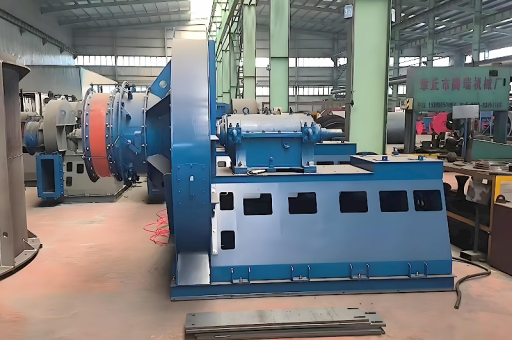
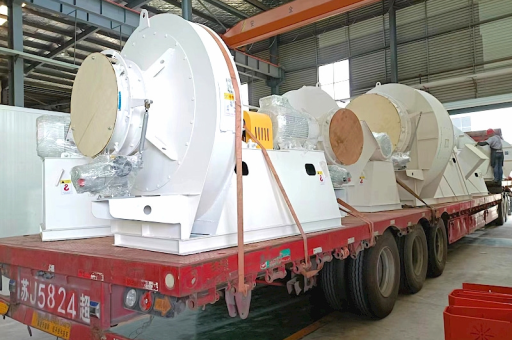
** The Critical Role of Welded Wear-Resistant Fans in Heavy-Duty Industrial Applications
Table of Contents
- Introduction: Why Wear Resistance Matters in Fan Systems
- What Are Welded Wear-Resistant Fans? A Technical Overview
- Key Design Features: Materials, Welding Techniques, and Coatings
- Common Failure Modes in Standard Fans and How Welded Fans Solve Them
- Industries That Rely on Welded Wear-Resistant Fans
- Q&A: Addressing Common Questions from Engineers and Operators
- Best Practices for Maintenance and Longevity
- Future Trends: Alloy Innovation and Additive Manufacturing
- Conclusion: Investing in Durability for Operational Excellence
Introduction: Why Wear Resistance Matters in Fan Systems
In any industrial process that involves the movement of particulate-laden air, gas, or abrasive materials, the fan is often the unsung hero—and the most vulnerable component. Standard carbon steel fans, while cost-effective, suffer rapid erosion when exposed to fly ash, cement dust, mineral powders, or metal shavings. This erosion leads to imbalance, vibration, reduced efficiency, and ultimately catastrophic failure.
The solution lies in welded wear-resistant fans. These are not merely fans with a hard coating applied after fabrication. They are engineered from the weld up—using abrasion-resistant base metals, specialized welding consumables, and advanced overlays to create a structure that can withstand years of erosive wear. This article examines the metallurgy, design logic, and real-world performance of these critical rotating machines, drawing on data from mining, power generation, and material handling operations worldwide.
What Are Welded Wear-Resistant Fans? A Technical Overview
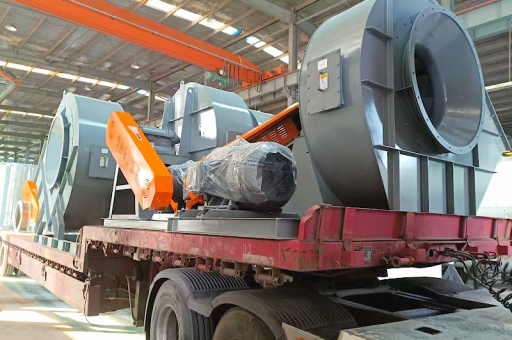
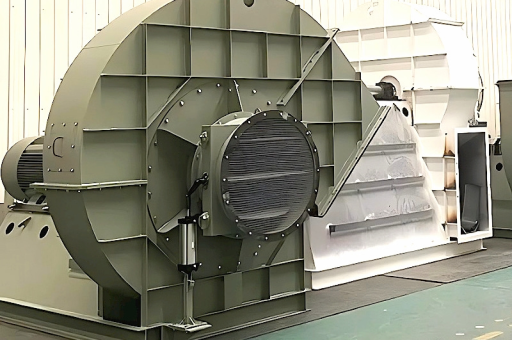
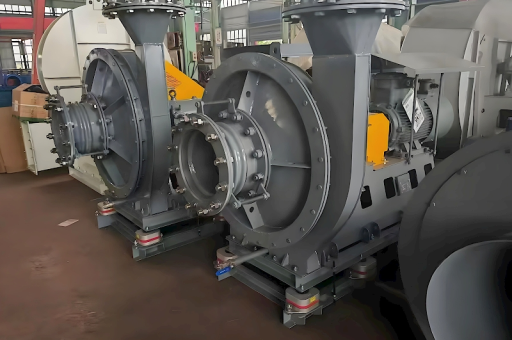
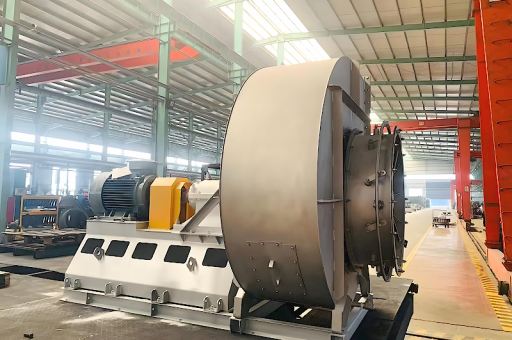
A welded wear-resistant fan is a centrifugal or axial impeller whose blades, shrouds, and backplates are fabricated using high-chromium alloys or dual-layer construction. Unlike cast wear parts, welded fabrication allows for precise aerodynamic profiling while maintaining superior toughness.
The core principle is hardfacing—a process where a wear-resistant alloy is deposited onto a base metal via arc welding (SMAW, GMAW, or submerged arc welding). Common cladding materials include:
- High-chromium iron (27-30% Cr) – Excellent for sliding abrasion.
- Tungsten carbide composites – For severe impact and erosion.
- Nickel-based alloys – When combined corrosion and wear resistance is required.
In a typical welded fan for a power plant induced draft system, the base impeller is made from Q235B or 16Mn steel. Then, a 3-8 mm overlay of Cr27 is welded onto the blade edges, leading edges, and the areas of maximum velocity. This creates a "hard shell, tough core" structure—resisting wear without becoming brittle.
Key Design Features: Materials, Welding Techniques, and Coatings
Base Material Selection:
- For temperatures below 250°C, standard carbon steel with cladding is sufficient.
- For inlet temperatures up to 450°C (e.g., hot waste gas fans), 15CrMoR or heat-resistant stainless steel is used as the substrate.
Welding Process:
- Automated submerged arc welding (SAW) is preferred for large fans due to high deposition rates and consistent dilution control.
- Manual or semi-automatic GMAW is used for complex geometries, such as backward-curved blades.
- Post-weld heat treatment (stress relief) is mandatory for assemblies thicker than 25 mm.
Hardness Targets:
- A typical wear-resistant cladding achieves 58-65 HRC (Rockwell C). For comparison, standard mild steel is approximately 15-25 HRC. This difference translates to 3-5x longer service life in erosive environments.
Optional Integration with wind turbine: While wind turbine fans encounter different stressors (fatigue, lightning, ice), the same welding principles—especially the use of corrosion-resistant overlays—can be adapted for offshore turbine cooling fan systems.
Common Failure Modes in Standard Fans and How Welded Fans Solve Them
| Failure Mode | Cause | Standard Fan | Welded Wear-Resistant Fan |
|---|---|---|---|
| Blade edge thinning | High-velocity particle impact | Erosion after 3-6 months | Life extended to 18-36 months |
| Backplate perforation | Recirculation of fines | Sudden structural failure | Sacrificial overlay protects parent metal |
| Shroud wear | Vortex-induced abrasion | Frequent patching required | Hardfacing zones reduce wear rates by 70% |
| Weld seam cracking | Fatigue + corrosion | Stress concentration points | Optimized weld schedule + preheating |
Industries That Rely on Welded Wear-Resistant Fans
Power Generation (Coal, Biomass, Waste-to-Energy): Induced draft (ID) fans handle corrosive flue gas laden with fly ash. Without wear protection, a 2000 kW ID fan can lose 45% of its blade thickness within 8000 hours of operation. Welded fans with Cr27 overlays routinely survive 30,000+ hours.
Cement Manufacturing: Raw mill fans and separator fans handle limestone dust with particle sizes of 5-50 microns. Wear rates can reach 0.5 mm per 1000 hours. Hardfacing with tungsten carbide extends life by 400-500%.
Mining and Mineral Processing: Ventilation fans in underground mines must withstand abrasive dust and occasional moisture. Welded fans with 15CrMo base material + nickel-based cladding offer a proven solution.
Steel Plants: Dust collector fans for sinter plants and blast furnaces operate at 200-300°C with iron oxide particles. Welded fans reduce unscheduled downtime by 80%.
Q&A: Addressing Common Questions from Engineers and Operators
Q: Is the cost of a welded wear-resistant fan justified compared to replacing standard fans more often? Yes. Although the upfront cost is 30-50% higher, the total cost of ownership (including labor for changeover, production downtime, and replacement part logistics) typically yields a payback period of 8-14 months.
Q: Can an existing standard fan be retrofitted with wear-resistant welding? Often, yes. In situ hardfacing is possible on fans with sufficient remaining base material. However, for heavily worn fans, the heat input can distort the impeller. It is generally recommended to replace with a pre-fabricated welded fan for optimal performance.
Q: How does the weight of a welded fan affect bearing life? It is a consideration. The added cladding increases impeller weight by 10-20%. Properly sized bearings, a heavier shaft, and a rebalanced rotor are essential. Most manufacturers account for this during the original design.
Q: Are welded fans compatible with variable frequency drives (VFDs)? Yes, but careful matching is needed. The increased mass of the impeller means a higher rotational inertia, which affects acceleration and deceleration times. The VFD should be programmed with longer ramp times to avoid overcurrent trips.
Q: Can welded fans be used in a wind turbine environment? With modifications. While wind turbine cooling fans benefit from corrosion-resistant overlays, the primary wear mechanism in a wind turbine is corrosion-fatigue, not abrasion. For nacelle ventilation fans offshore, a duplex stainless steel base with a nickel-based weld overlay provides the best balance of erosion and corrosion resistance.
Best Practices for Maintenance and Longevity
- Regular thickness measurements: Use ultrasonic gauges at six-month intervals at the 10 o'clock and 2 o'clock positions on blades.
- Be cautious with weld repairs: Do not overlay more than 3 mm on a worn blade in a single pass; excessive heat can cause distortion.
- Balance after any welding: Even a small deposition of 50 grams of hardfacing material can upset the dynamic balance of a large fan.
- Avoid over-hardening: A hardness exceeding 68 HRC can lead to brittle fracture under impact from large particles.
Future Trends: Alloy Innovation and Additive Manufacturing
The next generation of welded wear-resistant fans will incorporate wire-based additive manufacturing (DED) . This allows for:
- Gradient hardness profiles (soft core to hard surface).
- On-site repair of large impellers using robotic welding.
- Customized alloy formulations for specific particle types—for example, increasing chromium content for acidic ash.
Additionally, self-lubricating coatings containing solid lubricants such as molybdenum disulfide are being trialed for environments where both wear and material buildup (e.g., wet lime slurry) are issues.
Conclusion: Investing in Durability for Operational Excellence
For any heavy industry relying on continuous material movement, a fan failure is not a minor inconvenience—it is a production crisis. Welded wear-resistant fans, through advanced metallurgy and precision fabrication, offer a proven path to reducing unplanned downtime, lowering maintenance costs, and extending asset life.
While the initial engineering and welding investment is significant, the return is measured in years of reliable service. For engineers specifying fans in coal-fired power plants, cement mills, mining ventilation systems, or even in specialized wind turbine cooling applications, the choice is clear: a welded wear-resistant fan is not a luxury—it is a necessity for sustainable operation.