This article's table of contents introduction:
- Table of Contents
- Introduction: The Critical Role of Wear-Resistant Fans
- What Are High-Chromium Wear-Resistant Fans?
- Material Science: Why High-Chromium Alloy?
- Key Applications in Heavy Industry
- Manufacturing and Quality Control
- Common Issues and Solutions (Q&A)
- Maintenance Tips for Extended Service Life
- Conclusion: Why They Matter for Modern Industry
** High-Chromium Wear-Resistant Fans: Engineering Durability for Extreme Industrial Environments
Article Content:
Table of Contents
- Introduction: The Critical Role of Wear-Resistant Fans
- What Are High-Chromium Wear-Resistant Fans?
- Material Science: Why High-Chromium Alloy?
- Key Applications in Heavy Industry
- Manufacturing and Quality Control
- Common Issues and Solutions (Q&A)
- Maintenance Tips for Extended Service Life
- Conclusion: Why They Matter for Modern Industry
Introduction: The Critical Role of Wear-Resistant Fans
In heavy industries such as cement production, steelmaking, thermal power generation, and mining, fans are the unsung heroes of material handling and ventilation. However, these environments are notoriously abrasive. Dust, particulate matter, and high-temperature gases can erode standard fan blades within weeks. This is where high-chromium wear-resistant fans become indispensable. Designed to withstand severe mechanical and thermal stress, these fans significantly reduce downtime and maintenance costs. Their growing adoption is driven by the need for continuous, reliable operation in some of the harshest conditions on earth.
What Are High-Chromium Wear-Resistant Fans?
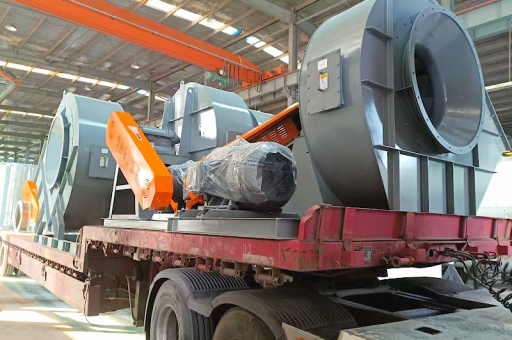
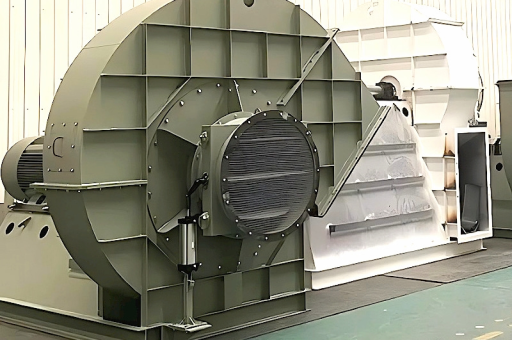
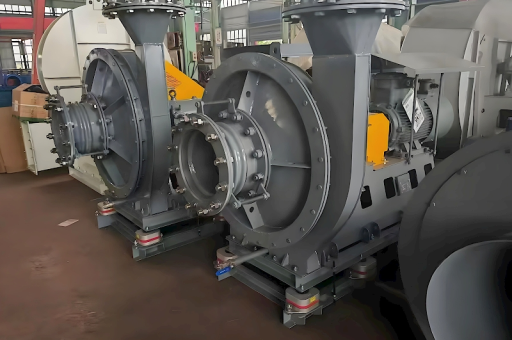
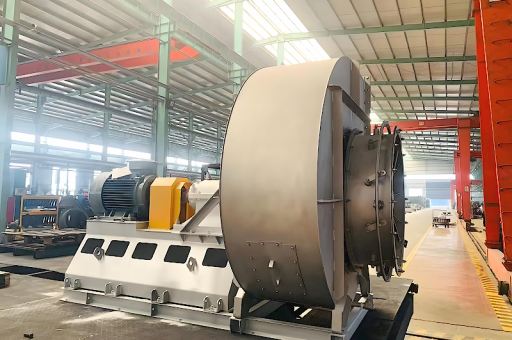
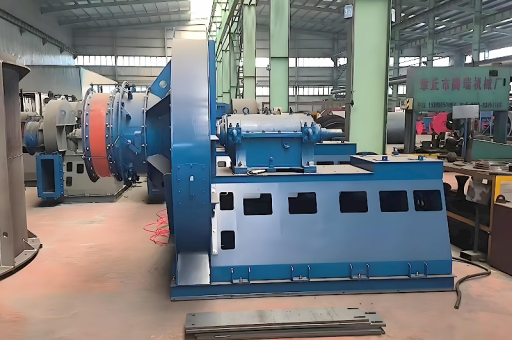
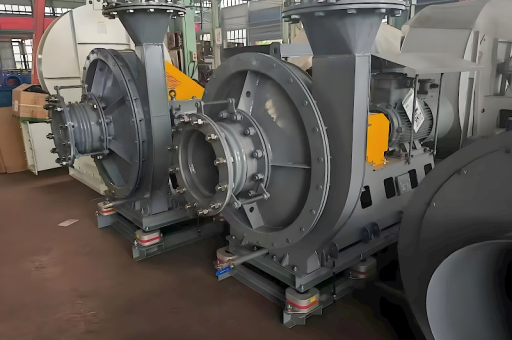
A high-chromium wear-resistant fan is a centrifugal or axial fan whose impeller and critical components are manufactured from a high-alloy white iron containing 12% to 30% chromium by weight. Unlike standard carbon steel fans, these components are not merely coated; they are cast from a material that inherently resists abrasive wear. Typically, the fan casing may also be lined with replaceable wear plates or hard-faced with the same chromium-rich alloy. This design ensures that the fan maintains its aerodynamic profile even after prolonged exposure to erosive particles.
Material Science: Why High-Chromium Alloy?
The secret behind these fans lies in the microstructure of high-chromium white iron. When the chromium content exceeds approximately 12%, the material forms hard, wear-resistant carbides—specifically (Cr,Fe)₇C₃—within a martensitic or austenitic matrix. These carbides have a hardness exceeding 1500 HV, making them far more effective at resisting gouging, high-stress abrasion, and erosion compared to traditional wear-resistant steels. Furthermore, the alloy exhibits excellent red hardness, retaining its mechanical properties at operating temperatures up to 500°C. This dual resistance to abrasive and thermal attack makes high-chromium alloys the preferred choice for wind turbine dust extraction systems, clinker coolers, and sintering plants.
Key Applications in Heavy Industry
- Cement Plants: High-chromium fans handle raw meal, clinker dust, and coal powder. They are critical in kiln exhaust and separator systems.
- Power Generation: Used for induced draft (ID) fans in coal-fired boilers and wind turbine cooling systems where fly ash causes rapid erosion.
- Steel Mills: Fans in sinter strand and converter gas cleaning systems face extreme particle loading.
- Mining & Quarrying: For ventilation and dust collection in highly abrasive underground environments.
Manufacturing and Quality Control
Producing a reliable high-chromium wear-resistant fan involves several meticulous steps: 1) Material Selection – precise control over chromium, carbon, and silicon content; 2) Casting – often using sand casting or investment casting to achieve complex blade geometries; 3) Heat Treatment – typically subcritical annealing or hardening and tempering to optimize the balance between hardness and toughness; 4) Dynamic Balancing – critical because an unbalanced impeller accelerates wear and bearing failure. Quality control includes hardness testing (typically 58–65 HRC), microstructure inspection via metallography, and final spin testing at overspeed.
Common Issues and Solutions (Q&A)
Question 1: Why do standard carbon steel fans fail so quickly in abrasive environments?
Answer: Carbon steel has low surface hardness (typically under 200 HB). When handling dust-laden gases, the high-velocity impact of silica or iron oxide particles erodes metal at an exponential rate. High-chromium alloys provide a hardness of 58-65 HRC, offering 5–10 times the service life in similar conditions.
Question 2: Can high-chromium fans be repaired if they wear out?
Answer: Yes, but with restrictions. Localized wear can be repaired using tungsten carbide welding rods or chromium carbide overlay. However, extensive damage usually requires replacement of the impeller. Repair welding must be performed with preheating and controlled cooling to prevent cracking.
Question 3: Are high-chromium fans resistant to corrosion?
Answer: While they offer much better corrosion resistance than carbon steel in mild acidic or alkaline conditions, they are not stainless steel. For wet, highly corrosive environments with low pH, a duplex stainless steel or coated fan is recommended instead.
Question 4: Do high-chromium fans require special handling during installation?
Answer: Absolutely. Due to their high hardness and brittleness, they are sensitive to impact. Never drop or hammer the impeller. Use proper lifting points. Additionally, ensure the rotor is dynamically balanced to 6.3 mm/s or better per ISO 1940.
Maintenance Tips for Extended Service Life
- Baseline Monitoring: Record vibration levels and amperage draw weekly. Sudden increases often indicate dust buildup or wear.
- Inspect Blade Tips: The leading edge near the tip experiences maximum velocity and thus highest wear. Replaceable sacrificial tips can be cost-effective.
- Balance After Repairs: Even minor welding deposits alter mass distribution. Always rebalance the rotor.
- Check Clearances: Increased wear at the blade-to-casing clearance reduces efficiency. Adjust or replace liners when gap exceeds 5% of impeller outer diameter.
- Dust Accumulation: Inspect for uneven deposits on blades, especially in wind turbine systems, which can cause severe imbalance.
Conclusion: Why They Matter for Modern Industry
High-chromium wear-resistant fans are not merely a premium upgrade; they are an operational necessity for any facility where abrasive dusts and high temperatures intersect. By investing in these robust fans, plant operators can dramatically reduce unplanned shutdowns, lower total cost of ownership, and improve safety. Their adoption continues to expand as industries push for higher throughput and more reliable equipment. Whether in a cement plant or a wind turbine exhaust system, the high-chromium fan remains a testament to the power of advanced materials engineering.