This article's table of contents introduction:
- Table of Contents
- Introduction: Why Wear Resistance Defines Mining Fan Performance
- The Harsh Reality: How Mining Environments Destroy Standard Fans
- Material Science: The Backbone of Mining Wear-Resistant Fans
- Design Innovations: Aerodynamics, Coatings, and Structural Integrity
- Economic Impact: Reducing Downtime with Wear-Resistant Technology
- Comparison: Standard Fans vs. Mining Wear-Resistant Fans
- Frequently Asked Questions (FAQ)
- Conclusion: The Future of Ventilation in Mining
Table of Contents
- Introduction: Why Wear Resistance Defines Mining Fan Performance
- The Harsh Reality: How Mining Environments Destroy Standard Fans
- Material Science: The Backbone of Mining Wear-Resistant Fans
- Design Innovations: Aerodynamics, Coatings, and Structural Integrity
- Economic Impact: Reducing Downtime with Wear-Resistant Technology
- Comparison: Standard Fans vs. Mining Wear-Resistant Fans
- Frequently Asked Questions (FAQ)
- Conclusion: The Future of Ventilation in Mining
Introduction: Why Wear Resistance Defines Mining Fan Performance
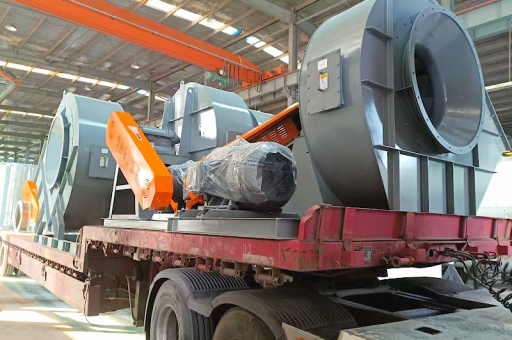
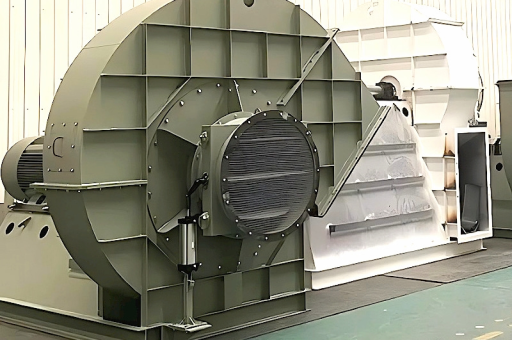
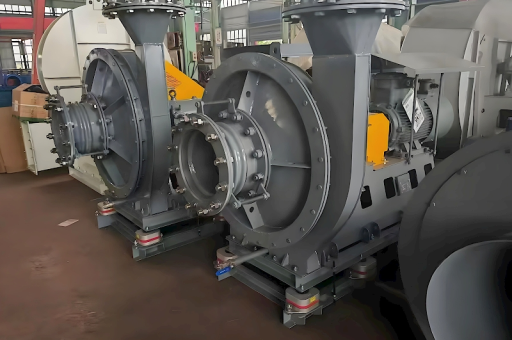
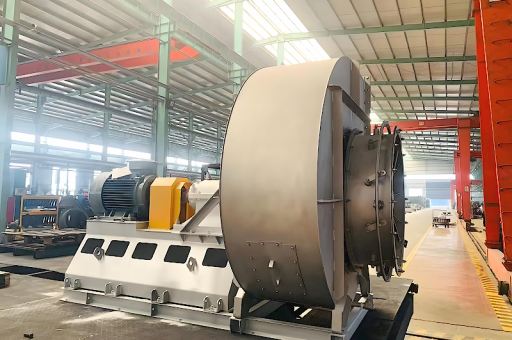
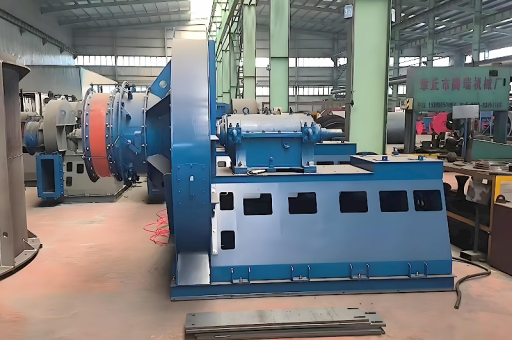
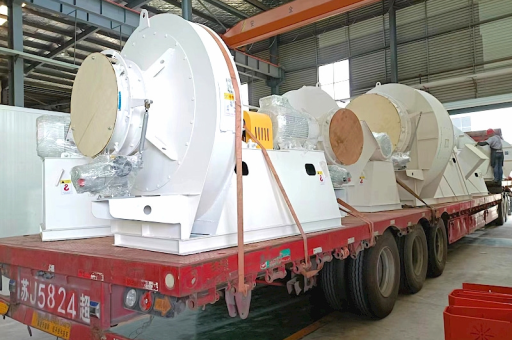
In underground mining, surface mineral processing, and aggregate handling, ventilation is not a luxury—it is a safety and operational necessity. The fans used in these environments are subjected to a unique form of stress: abrasion from solid particulate, corrosion from chemical agents, and impact from irregular debris. This is where mining wear-resistant fans have become indispensable. Unlike standard industrial fans, these specialized units are engineered with advanced materials and geometries to withstand the constant wear caused by rock dust, ore fragments, and slurry.
The central question for mining engineers and procurement managers is no longer “Will this fan last?” but “How long can it operate at peak efficiency before needing replacement?” This article will dissect the technical specifics, material choices, and economic justifications behind these heavy-duty systems.
The Harsh Reality: How Mining Environments Destroy Standard Fans
To fully appreciate the need for wear-resistant fans, one must first understand the destructive mechanics at play.
Q: What exactly destroys a standard fan in a mining application?
A: Three primary failure modes exist:
- Abrasive Wear: Fine quartz or silica particles, with a hardness of 7 on the Mohs scale, strike the blade surface at high velocity. Over weeks, this erodes the leading edge, causing imbalance.
- Erosive Impact: Larger, angular fragments (e.g., copper ore or coal) hit the fan housing and blades, creating micro-fractures and pits.
- Corrosive-Erosive Synergy: In sulfide ore mines, humidity combines with airborne sulfuric compounds. This weakens the surface, making it more vulnerable to mechanical erosion.
Standard carbon steel fans, even when painted, often fail within 3 to 6 months under these conditions. The result is catastrophic: blade failure, motor overload, and uncontrolled downtime.
Material Science: The Backbone of Mining Wear-Resistant Fans
The immediate difference between a conventional fan and a mining wear-resistant fan lies in material selection.
Modern wear-resistant fans utilize a multi-layered approach:
| Component | Material Used | Key Property |
|---|---|---|
| Blades | Hardox 500 or equivalent abrasion-resistant steel (400-500 HBW) | High hardness, retains toughness at low temperatures |
| Leading Edge | Tungsten carbide overlay or ceramic tile inserts | Extreme wear resistance (8.5+ Mohs) |
| Housing | AR400 steel with replaceable liner plates | Easy maintenance, sacrificial layers |
| Coating | Epoxy-ceramic hybrid or polyurethane spray | Corrosion barrier, erosion deflection |
Q: Why are ceramic inserts becoming the standard?
A: Ceramic materials, specifically alumina (Al₂O₃) or silicon carbide (SiC), offer a hardness just below diamond. When tiled onto the leading edge of a radial fan blade, they reduce wear rate by up to 10x compared to standard steel. However, they are brittle. Therefore, experienced manufacturers attach them to a flexible rubberized backing—allowing the blade to flex while the ceramic takes the abrasion.
Design Innovations: Aerodynamics, Coatings, and Structural Integrity
Beyond materials, the geometry of the fan determines whether it can maintain airflow under attack.
Key design features in top-tier mining wear-resistant fans:
-
Airfoil vs. Radial Blades:
Radial blades (paddlewheel style) are preferred in heavy dust applications because they are less prone to clogging than forward-curved or backward-inclined airfoils. Their flat face allows particulate to be “thrown” toward the discharge, reducing build-up. -
Variable Pitch Hubs:
Some advanced models allow on-site blade angle adjustment. This compensates for wear by increasing the angle slightly—maintaining air pressure even after months of erosion. -
Replaceable Wear Liners:
Instead of replacing the entire impeller, modern fans feature bolted-on liners made of cast basalt or ceramic. When one section wears out, maintenance crews swap only that segment. -
Balancing Chambers:
A cavity within the shaft housing can accommodate corrective weights. As blades wear asymmetrically, engineers can rebalance the rotor without welding—preventing vibration-induced bearing failure.
Economic Impact: Reducing Downtime with Wear-Resistant Technology
Is the premium price of a wear-resistant fan justified? The data from real mining operations suggests a clear “yes.”
Consider a medium-sized copper mine using standard centrifugal fans for its primary ventilation circuit.
| Cost Factor | Standard Fan | Wear-Resistant Fan |
|---|---|---|
| Purchase Price | $12,000 | $28,000 |
| Replacement Interval | 4 months | 24 months |
| Replacement Cost per Year | $36,000 (3 units) | $14,000 (0.5 unit) |
| Labor & Downtime per Year | $10,000 per event (lost production) | Minimal (planned changeout) |
| Total Annual Cost | ~$46,000+ | ~$14,000 |
Q: Aren’t wear-resistant fans over-engineered for some applications?
A: Only if the material being moved contains less than 10% solid particulates. In coal preparation plants, ore crushing circuits, and in-pit ventilation—where dust loading exceeds 100 mg/m³—a standard fan simply cannot compete. The payback period for a wear-resistant fan is often under 8 months.
Comparison: Standard Fans vs. Mining Wear-Resistant Fans
Understanding the contrast helps stakeholders make informed choices.
Standard Fans (Ideal for clean air, HVAC, or light industrial):
- Material: Galvanized steel, aluminum, or FRP.
- Blade Design: Airfoil or backward-inclined for efficiency.
- Lifespan in Mining: <6 months.
- Failure Mode: Abrasion leading to unbalance and motor burnout.
Mining Wear-Resistant Fans (designed for dirty, abrasive air):
- Material: AR400/500 steel, Hardox, or stainless steel with tungsten carbide inserts.
- Blade Design: Radial or paddlewheel with thick cross-sections.
- Lifespan in Mining: 2 to 5 years with proper liner maintenance.
- Failure Mode: Gradual liner wear (predictable, non-catastrophic).
Frequently Asked Questions (FAQ)
Q1: Can wear-resistant fans also handle explosive atmospheres?
A: Yes. Many are available with ATEX or IECEx certifications, using non-sparking aluminum bronze impellers or anti-static coatings on the wear liners. However, the wear-resistant material must be conductive to prevent static buildup.
Q2: How do I specify the correct pressure class for a wear-resistant fan in a mine?
A: You must calculate the total static pressure loss across the duct system plus a safety margin for dust accumulation. Most mining fans operate in the 2 to 5 kPa range. A higher pressure rating may require a slower rotational speed to keep wear under control.
Q3: Are there any operational changes required to extend fan life?
A: Yes. Use variable frequency drives (VFDs) to start the fan slowly—sudden full-speed starts can dislodge ceramic tiles. Also, install moisture traps or air dryers if the mine has high humidity; moisture accelerates corrosion beneath the coating.
Q4: What is the typical noise level of these fans?
A: Higher than standard fans due to thicker blades and radial flow. Sound levels can range from 95 to 115 dB(A) at 1 meter. Silencers or acoustic enclosures are recommended for personnel protection.
Conclusion: The Future of Ventilation in Mining
The shift toward mining wear-resistant fans represents a broader industry trend: moving from reactive maintenance to predictive reliability. As mines dig deeper and transport more abrasive material, the financial and safety stakes rise. A fan failure in a remote underground tunnel is not just a repair cost—it is a hazard to life.
Future developments will likely focus on smart liners—embedded sensors that can detect wear depth and trigger an alert when replacement is due. Additionally, hybrid composite designs (polymer-ceramic blends) may offer the impact resistance of steel with the abrasion resistance of ceramic, at a lower weight.
For now, the engineering consensus is clear: invest in a fan built for the abrasive battlefield of mining, or pay continually in downtime. The mining wear-resistant fan is not an accessory—it is the core of sustainable extraction.
For more technical insights on heavy-duty ventilation equipment, please refer to industry standards such as ISO 1940 for balancing or AMCA 210 for performance testing.