This article's table of contents introduction:
- Why Wear Resistance is Critical in Cement Fans
- Key Applications (Where These Fans are Used)
- Design & Construction Features (How they are made wear-resistant)
- Common Wear Patterns & Failure Modes
- Selection Criteria for Cement Plant Fans
- Modern Trends & Technologies
- Major OEMs & Suppliers
- Maintenance & Repair Best Practices
- Summary: Key Takeaway
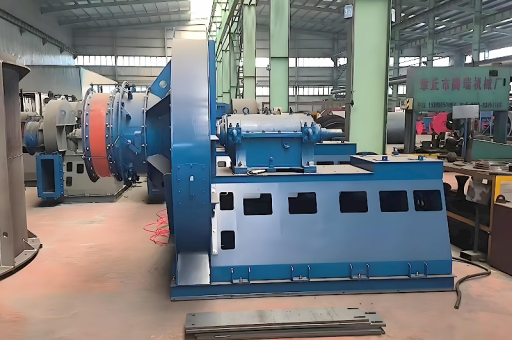
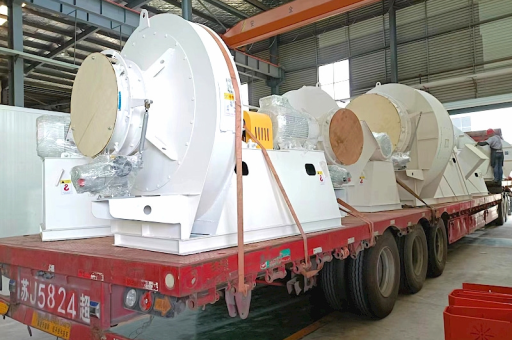
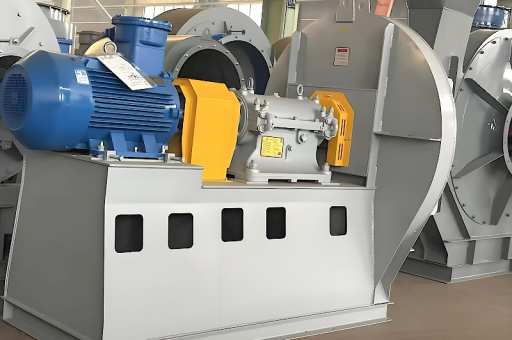
This is a comprehensive overview of wear-resistant fans used in cement plants. These are often the most maintenance-intensive and critical mechanical components in the process, as they handle hot, abrasive, and dust-laden gases.
Why Wear Resistance is Critical in Cement Fans
Cement production creates highly abrasive dust (silica, limestone, clinker) and corrosive gases (SOx, NOx, moisture). Standard carbon steel fans in these environments would erode rapidly (often in weeks or months), leading to:
- Imbalance: Uneven wear on blades causes vibration.
- Reduced Efficiency: Worn blades lose aerodynamic shape.
- Structural Failure: Premature cracking or breakage of blades or housings.
- Unplanned Downtime: A fan failure shuts down the kiln or mill, costing thousands per hour.
Therefore, wear-resistant fans are designed with hardened materials and protective coatings to extend service life (targeting 2-5 years between major rebuilds, depending on location).
Key Applications (Where These Fans are Used)
Each stage of the process has different wear mechanisms, requiring specific fan designs:
-
Raw Mill Fans (Vertical Roller Mill or Ball Mill):
- Environment: Dust laden with raw meal (limestone, clay, iron ore). Moderate temperatures (80-120°C).
- Wear Type: High abrasion.
- Fan Design: Radial blades with heavy liners, often with wear plates on inlet and housing.
-
Kiln Induced Draft (ID) Fans:
- Environment: Hot gases (300-400°C) with cement dust and corrosive alkaline compounds.
- Wear Type: High heat + abrasion + corrosion.
- Fan Design: High-temperature alloys (e.g., SA-240 309S/310S), thicker blades, and specialized hardfacing.
-
Cooler Vent Fans (Grate Cooler):
- Environment: Hot clinker dust (200-300°C), very abrasive.
- Wear Type: Severe erosion from clinker particles.
- Fan Design: Often use ceramic-tiled blades or chrome carbide overlays on the leading edges and impeller backplate.
-
Coal Mill Fans (Pulverizer Fans):
- Environment: Air with fine, abrasive coal dust and pyrites.
- Wear Type: Abrasion + explosion risk (requires spark-resistant construction).
- Fan Design: Typically radial-blade fans (RB or RBE type) with heavy wear liners. Anti-sparking materials (e.g., aluminum/copper tips) are required.
-
Baghouse / ESP Fans (Dust Collector Fans):
- Environment: Cleaner gas after filtration, but still contains fine dust.
- Wear Type: Low to moderate abrasion, but high volume.
- Fan Design: Backward-curved blades are common; wear resistance via hardfacing on blade edges.
Design & Construction Features (How they are made wear-resistant)
Modern cement plant fans use a combination of these techniques:
-
Base Material Selection:
- Mild Steel (MS): For low-wear areas (outlet cones).
- High Tensile Steel (e.g., Corten, Hardox, Monel): For medium wear.
- Stainless Steel (SS 304, 316L, 310S): For high temperature and corrosion resistance.
-
Protective Coatings & Linings:
- Hardfacing (Welding): Application of Tungsten Carbide or Chromium Carbide overlays (3-10 mm thick) on leading edges of blades and side plates. This is the most common method.
- Ceramic Tiles: Alumina (Al₂O₃) or Zirconia tiles (5-20 mm thick) are bonded to the blade surface. Offers extreme wear life but is brittle (susceptible to impact).
- Wear Plate/Liners: Replaceable bolted-in steel or rubber liners inside the housing and on the rotor.
-
Blade Geometry (The most critical part):
- Radial Blades (Paddle / Radial Tip): Simplest design, very thick, self-cleaning. Used for heavy dust loads (Kiln ID fans, Cooler fans).
- Backward-Curved Blades (Airfoil / Single-Thickness): More efficient (up to 85% efficiency) but thinner. Require better wear protection (hardfacing).
- Forward-Curved Blades: Rarely used in cement due to high wear and poor efficiency.
-
Rotor Design:
- Heavy Hub: Thick steel hub to withstand imbalance.
- Backplate Protection: Wear strips or ceramic tiles on the backplate (the side facing the incoming gas).
- Inlet Cone / Inlet Box: Often lined with replaceable wear plates.
Common Wear Patterns & Failure Modes
- Leading Edge Erosion: The "nose" of the blade erodes first.
- Blade Backplate Wear: Caused by particles bouncing off the housing.
- Scalloping (Fishmouthing): Uneven wear creating a scalloped pattern on the blade edge, causing severe imbalance.
- Housing Wear: "Washout" holes in the scroll casing where dust accumulates.
- Cracking: From high local stress + vibration + corrosion (stress corrosion cracking).
Selection Criteria for Cement Plant Fans
When specifying or purchasing a wear-resistant fan, engineers consider:
| Parameter | Why it Matters |
|---|---|
| Gas Temperature | Determines material (carbon steel vs. stainless steel vs. superalloy). |
| Dust Concentration (g/Nm³) | Directly correlates to erosion rate. High dust = thicker blades + liners. |
| Particle Size & Hardness | Fine, hard quartz dust is most damaging. |
| Gas Chemistry | Corrosive (Cl, F, S) requires stainless or high-nickel alloys. |
| Required Pressure & Flow | Defines fan size, RPM, and blade angle (efficiency vs. wear). |
| Vibration Monitoring | Critical for detecting imbalance from wear early. |
Modern Trends & Technologies
- Computational Fluid Dynamics (CFD): Used to design blade profiles that minimize dust impact velocity and change particle direction away from critical areas.
- Laser Cladding: A precise hardfacing technique that applies a thin, strong wear layer with minimal distortion (better than manual welding).
- Ceramic Composite Fans: Entire blades made of ceramic matrix composite (CMC) are emerging for extreme environments (e.g., top of kiln ID fans).
- Active Balancing Systems: Onboard sensors and automatic weight adjustment to compensate for erosion in real-time (still niche/expensive).
- Corrosion-Resistant Liners: Use of High-Nickel alloys (Hastelloy) in areas with high sulfur/chlorine (e.g., bypass fans for preheater towers).
Major OEMs & Suppliers
- Howden (Global leader, especially for kiln ID fans)
- F.L.Smidth (OEM for most Full-Line cement plant equipment)
- TLT-Turbo / Babcock & Wilcox (Large centrifugal fans)
- Cincinnati Fan / New York Blower (Standard & heavy-duty)
- Sonic (Specialized wear-resistant fans)
- Teral (Industrial fans)
- Local Indian/Chinese manufacturers (e.g., Kirloskar Brothers, Xian Woma) offer cost-effective solutions with limited wear life.
Maintenance & Repair Best Practices
- Regular Vibration Analysis: Monthly trend analysis to detect imbalance early.
- Borescope Inspection: Look at blade leading edges during short shutdowns.
- Rebuild Schedule: Based on wear life prediction (e.g., every 12-18 months for cooler fans).
- Hardfacing Reapplication: Weld-repair worn edges; do not wait until full erosion.
- Spare Rotor Strategy: Always have a fully balanced spare rotor ready for quick swap.
Summary: Key Takeaway
- Kiln ID Fans: High temperature + corrosion + abrasion = Stainless steel + hardfacing.
- Cooler Fans: Highest abrasion = Ceramic tiles or very thick chrome carbide.
- Raw Mill Fans: Moderate temp, high dust = Radial blades with replaceable liners.
- Coal Mill Fans: High abrasion + explosion risk = Radial blades with anti-spark features.
Bottom Line: A well-designed wear-resistant fan in a cement plant typically costs 30-50% more than a standard industrial fan, but it pays for itself within 18-24 months through reduced downtime and maintenance costs. The most common mistake is under-specifying the wear protection for the specific gas stream.