This article's table of contents introduction:
- Core Concept: Dual Threat Protection
- Key Design Features
- Common Applications
- How to Select One (Key Parameters)
- Major Manufacturers (Examples)
- Crucial Maintenance Considerations
- Cost vs. Benefit
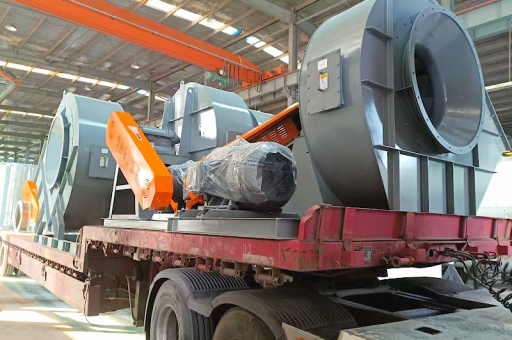
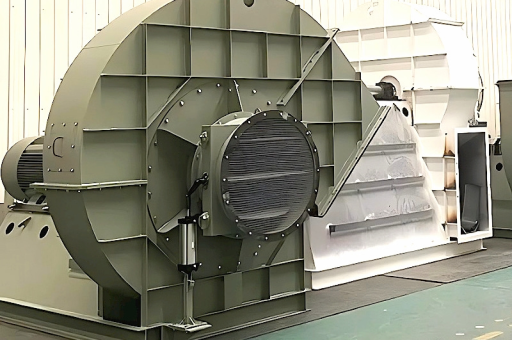
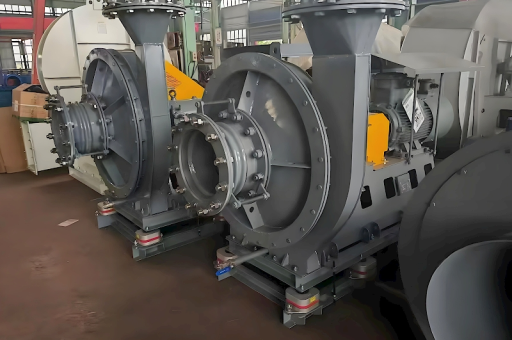
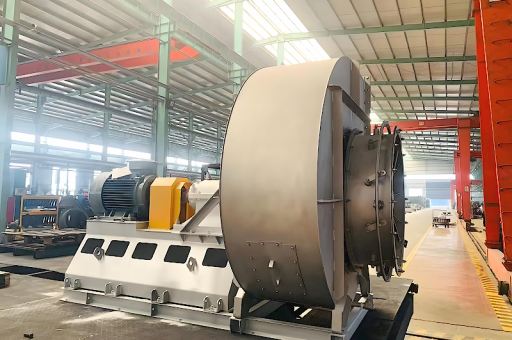
This is a specialized industrial fan designed to handle some of the most demanding environments: moving gases that are chemically aggressive (corrosive) and laden with abrasive particles (dust, grit, fly ash).
Let's break down what "Corrosive gas wear-resistant fans" means, their key features, typical applications, and how they differ from standard fans.
Core Concept: Dual Threat Protection
Standard fans fail quickly in these conditions.
- Corrosion eats away at the metal (chemical attack).
- Erosion/Wear physically scours the surface (mechanical abrasion).
This fan type is engineered to survive both simultaneously.
Key Design Features
Material Selection (The most critical factor)
- High-Alloy Stainless Steels: Grades like 316L (for moderate corrosion + abrasion), Duplex (2205) , or Super Duplex (2507) are common. They offer a good balance of corrosion resistance and strength.
- Nickel-Based Superalloys: For extreme temperatures and highly aggressive chemicals (e.g., Hastelloy, Inconel).
- Specialty Coatings: Applied to a less expensive base metal (like carbon steel). Examples:
- Epoxy/Fluoropolymer (PTFE/ETFE): Excellent chemical resistance but poor abrasion resistance.
- Wear-Resistant Coatings: Polyurethane, ceramic-filled epoxies, or hardfacing alloys (e.g., Stellite), but these can be damaged by corrosion on the base metal if the coating is breached.
- Polymer/Fiber-Reinforced Plastic (FRP): Excellent for corrosion (especially acids), but limited in temperature and abrasion resistance unless specially lined.
Surface Design & Hardening (for Wear Resistance)
- Thicker Material: Standard fans might use 3mm material; these might use 6mm, 10mm, or even 20mm in high-impingement zones.
- Wear Liners: Replaceable or welded-in liners made of hardened steel (e.g., AR400, AR500), ceramic tiles, or highly abrasion-resistant elastomers (e.g., polyurethane) are installed at the points of highest particle impact (inlet, leading edge of blades, volute tongue).
- Leading Edge Protection: The front edge of the impeller blades often has a strip of hardened material welded on.
Aerodynamic Design (for Wear Reduction)
- Radial or Backward-Inclined Blades: These designs are better for particle-laden air than airfoil blades, which are easily eroded.
- Smooth, Rounded Inlets: Avoiding sharp corners where particles would impinge directly.
- Gas Path Optimization: Designing the fan housing to minimize dead zones and recirculation where particles can accumulate.
Seal & Drive Considerations
- Shaft Seals: Critical to prevent corrosive gas from leaking into the bearing assembly. Options include mechanical seals, labyrinth seals, or purge air systems.
- Isolated Bearings: Bearings are mounted outside the gas stream, often in a separate housing with a cooling fan or water jacket.
- Direct Drive (often preferred): Eliminates a belt, which is a failure point in dirty environments. Can be a high-torque motor directly coupled to the fan shaft.
Common Applications
| Industry | Specific Application | Gas & Particulate |
|---|---|---|
| Steelmaking | Sinter plant exhaust, BOF gas cleaning | Sulfur oxides (SOx), iron ore fines, dust |
| Power Generation | Flue Gas Desulfurization (FGD), Baghouse exhaust | Sulfur dioxide (SO2), fly ash, limestone slurry |
| Mining & Smelting | Ore dryers, flash furnaces, smelter exhaust | Sulfuric acid (H2SO4) mist, metal oxides, rock dust |
| Chemical Processing | Fertilizer production (phosphoric acid), chlor-alkali plants | Phosphoric acid mist, chlorine gas (Cl2), salt particles |
| Cement | Kiln exhaust, raw mill exhaust | Hot, alkaline dust, sulfur compounds |
| Waste Incineration | Flue gas cleaning | Highly corrosive HCl, HF, SO2, fly ash, heavy metals |
How to Select One (Key Parameters)
- Gas Composition: Exact chemical species (e.g., "wet HCl gas at 150°C" vs "dry SO2 at 300°C").
- Moisture Content: Dry vs. wet gas changes corrosion dynamics dramatically (wet + acidic = very aggressive).
- Temperature: Affects material strength, corrosion rates, and coating suitability.
- Particulate Load: Concentration (e.g., grains/ft³ or mg/Nm³).
- Particle Size & Hardness: Larger, harder particles (silica) are more erosive.
- Required Pressure & Flow: The fan's duty point.
Major Manufacturers (Examples)
- New York Blower (USA)
- Howden (Global)
- TLT-Turbo (German)
- Cincinnati Fan (USA)
- P.A. Fan (Europe)
- Ziehl-Abegg (Europe)
- Many specialized regional manufacturers (e.g., Twin City Fan, Greenheck for certain grades, and numerous Chinese manufacturers like Shandong Huadong or Shanghai Yilong for cost-effective solutions).
Crucial Maintenance Considerations
- Regular Thickness Checks (UT Testing): Use ultrasonic testing on the volute and impeller to monitor metal loss before failure.
- Inspect Wear Liners: Are they still in place? Replaced before the base material is exposed.
- Vibration Analysis: A sudden increase in vibration often indicates erosion or material buildup (imbalance) on the impeller.
- Gasket/Bolt Condition: Corrosion of fasteners is a common failure point.
Cost vs. Benefit
These fans are 2-5x more expensive than standard industrial fans. However, the cost of an unplanned shutdown or catastrophic fan failure (which can take days to repair, blow debris through downstream equipment, or cause a safety hazard) is far higher. They are a critical reliability investment.
In summary: A corrosive gas wear-resistant fan is a heavy-duty, corrosion-proof, and erosion-proof air mover, built from expensive alloys and/or lined with sacrificial materials, designed to reliably handle the worst exhaust streams in heavy industry.