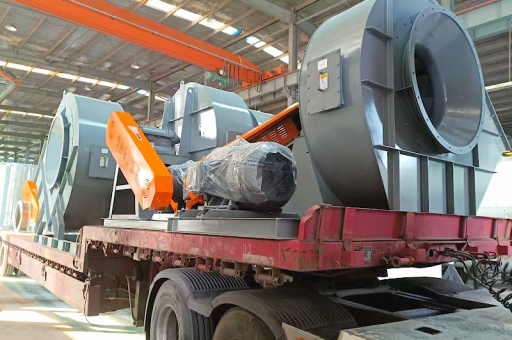
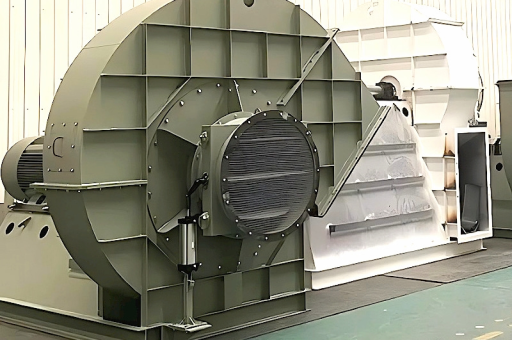
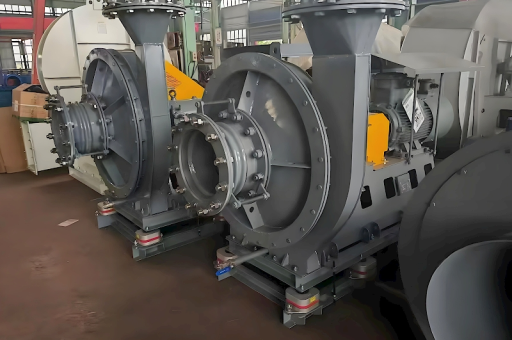
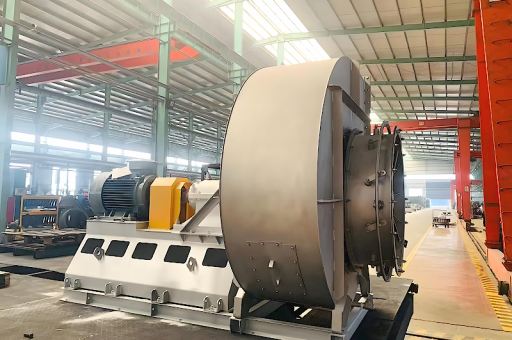
This article's table of contents introduction:
- Table of Contents
- Executive Overview: Why Dust Resistance Matters
- The Core Problem: How Particulate Erosion Destroys Standard Fans
- Material Science: The Armor Behind Wear-Resistant Fans
- Aerodynamic Design: Balancing Efficiency with Abrasion Protection
- Real-World Applications: Where These Fans Are Critical
- Maintenance & Lifecycle: Extending Service Intervals
- Frequently Asked Questions (FAQ)
- Conclusion: The Future of Dust Handling
** Maximizing Longevity: The Engineering & Application Guide to High Dust Wear-Resistant Fans
Table of Contents
- Executive Overview: Why Dust Resistance Matters
- The Core Problem: How Particulate Erosion Destroys Standard Fans
- Material Science: The Armor Behind Wear-Resistant Fans
- Aerodynamic Design: Balancing Efficiency with Abrasion Protection
- Real-World Applications: Where These Fans Are Critical
- Maintenance & Lifecycle: Extending Service Intervals
- Frequently Asked Questions (FAQ)
- Conclusion: The Future of Dust Handling
Executive Overview: Why Dust Resistance Matters
In heavy industrial environments, ordinary ventilation or process fans face a brutal enemy: airborne particulate matter. From cement clinker dust to coal ash and mineral fines, these particles act like a continuous sandblaster, eroding impeller blades, casings, and shaft seals. This leads to catastrophic imbalance, efficiency drop, vibration, and premature failure.
High dust wear-resistant fans are engineered specifically to combat this erosion. Unlike standard fans, they integrate metallurgical hardening, specialized aerodynamic profiles, and sacrificial wear liners to survive in environments where particle concentration exceeds 50 g/m³. For industries relying on equipment like wind turbine cooling systems or material handling, these fans are not a luxury—they are an operational necessity.
The Core Problem: How Particulate Erosion Destroys Standard Fans
To understand the value of wear-resistant design, one must first grasp the mechanics of solid particle erosion.
- Impact Angle & Velocity: Particles hitting the fan blade at 90° cause brittle fracture on hardened surfaces, while shallow angles (15-30°) create micro-cutting on ductile metals. High dust fans must handle both.
- Concentration & Size: Standard fans may survive occasional dust, but continuous exposure to particles >100 microns at concentration levels typical in cement plants or mines accelerates wear exponentially.
- The Failure Cascade: Initial blade thinning increases vibration. Imbalance strains bearings. Seals fail, allowing dust into the motor. Rotor imbalance worsens, leading to catastrophic blade detachment or shaft fracture.
In a wind turbine cooling application, for instance, ingress of fine sand can clog cooling channels and erode impeller tips within 2000 operating hours if standard fans are used. This directly impacts generator temperature and power output.
Material Science: The Armor Behind Wear-Resistant Fans
The most critical differentiator is material selection. High dust wear-resistant fans utilize a hierarchy of protection:
1. Base Material & Hardfacing
- Abrasion-Resistant Steel (e.g., AR400, AR500): Used for impellers and casings. These steels have hardness exceeding 400 HB, resisting deformation and cutting wear.
- Chrome Carbide Overlays (CCO): Applied via welding to leading edges of blades. CCO provides extreme hardness (60-65 HRC) and can double or triple lifespan compared to unprotected steel.
2. Ceramic Liners
- Alumina Ceramic (92%-99% Al₂O₃): Tiles or tiles bonded to the casing and blade faces. Ceramic offers extreme erosion resistance (up to 10x that of hardened steel) but is brittle under direct impact. Hence, it is used on flat surfaces like fan housing walls.
- Zirconia Toughened Alumina (ZTA): For areas subject to minor impacts, ZTA offers a balance of toughness and hardness.
3. Coatings
- Epoxy/Urethane Based: Soft rubber-like coatings that absorb particle energy. Excellent for low-velocity areas but degrade under high temperature (>150°C).
- Thermal Spray Coatings (Tungsten Carbide, WC-Co): Applied via HVOF process, these coatings provide a dense, hard layer ideal for complex blade geometries.
Expert Insight: In a wind turbine generator cooling fan application, a combination of AR500 steel blades with a WC-Co thermal spray coating on leading edges has proven to extend maintenance intervals from 6 months to over 3 years in desert environments.
Aerodynamic Design: Balancing Efficiency with Abrasion Protection
High dust fans cannot simply be “armored.” The design must retain aerodynamic efficiency to meet flow and pressure requirements.
1. Blade Profile Selection
- Radial Blade Fans: Preferred for high dust loads. The straight radial design is less prone to clogging and allows thick erosion protection without severe efficiency loss.
- Backward-Curved Blades: More efficient, but the curved profile traps dust and makes it harder to apply uniform wear liners. They are used only when dust concentration is moderate (< 10 g/m³).
- Airfoil Blades: Best efficiency, but worst for dust. Rarely used in abrasive environments unless protected by sacrificial inserts.
2. Sacrificial Wear Plates
- Standard design includes bolt-on sacrifice plates on the leading edge and trailing edge of each blade. These are replaced (not repaired) during maintenance, restoring original geometry.
- Inlet cones and cutoffs are also lined with replaceable chrome carbide or ceramic segments.
3. Clearance Management
- As wear occurs, the gap between blade tips and housing increases, leading to recirculation and efficiency loss. High dust fans often incorporate adjustable tip clearance or wear ring designs to maintain performance over the fan's life.
4. Speed & Impeller Diameter
- Reducing tip speed (e.g., from 80 m/s to 60 m/s) can dramatically reduce erosion rate (proportional to velocity cubed). High dust fans are often oversized to run at lower RPM while still achieving required flow, a trade-off many designers overlook.
Real-World Applications: Where These Fans Are Critical
Understanding use cases helps specify the correct fan type.
1. Cement & Mining
- Application: Kiln exhaust, mill ventilation, pneumatic conveying.
- Challenge: Dust loads > 100 g/Nm³ with temperatures up to 400°C.
- Solution: Heavy-duty radial fans with ceramic-lined casings and fully hardfaced impellers. Some designs include water-cooled bearings.
2. Thermal Power Plants (Coal/Biomass)
- Application: Primary air, induced draft (ID), and wind turbine gearbox cooling (in hybrid systems).
- Challenge: Fly ash with high silica content causing abrasive wear at high velocities.
- Solution: ID fans often use advanced blade profiles with Stellite weld overlays. In wind turbine applications, compact axial fans with ceramic-coated blades protect electrical enclosures.
3. Steel & Foundries
- Application: Ventilation of casting areas, furnace cooling.
- Challenge: Metallic dust and scale particles.
- Solution: Fan casings are constructed with thick AR steel (12-16 mm) and internal rubberized liners in low-temperature applications.
4. Agriculture & Grain Handling
- Application: Pneumatic conveying of grain, husk aspiration.
- Challenge: Abrasive dust from silica-containing hulls.
- Solution: Aluminum or stainless steel fans with replaceable wear sheets at wear zones.
Maintenance & Lifecycle: Extending Service Intervals
Even the best high dust fan requires a structured maintenance strategy.
1. Predictive Maintenance Practices
- Vibration Analysis: Mount accelerometers on bearings. Establish baseline vibration signatures. A rise in 1X running speed amplitude often signals blade erosion or imbalance.
- Thickness Gauging: Use ultrasonic thickness testing on casing wear zones and blade leading edges every 3-6 months.
- Thermography: Hot spots on the casing can indicate clogged internals or seal failure.
2. Replacement vs. Repair
- Sacrificial plates: Replace when thickness reduced to 50% of original.
- Balancing: Rebalance the rotor after replacing any blade component.
- Shaft & Bearing Checks: Inspect for dust ingress; replace seals as needed.
3. Cost-Per-Ton Metric
- Track fan maintenance cost against material throughput. A high dust wear-resistant fan may cost 2-3x upfront compared to a standard fan, but its cost-per-ton of material handled is often 40-60% lower over a 5-year period.
Frequently Asked Questions (FAQ)
Q1: What is the primary difference between a standard fan and a high dust wear-resistant fan?
- A: The primary difference lies in material hardness and design philosophy. Standard fans use mild steel with thin blades optimized for efficiency. High dust fans use hardened steels (AR400+), replaceable wear liners (ceramic or chrome carbide), and thicker impeller sections to tolerate erosion without catastrophic failure.
Q2: Can high dust wear-resistant fans be used in a wind turbine application?
- A: Yes, specifically for wind turbine generator cooling, gearbox oil coolers, and nacelle ventilation. In arid or coastal environments, fine sand and salt can erode standard cooling fans. A wind turbine equipped with a wear-resistant fan (ceramic-coated aluminum or coated steel blades) will have longer service intervals and more reliable thermal management.
Q3: How often should the fan be inspected in a high-dust environment?
- A: Visual inspection weekly for clogging or unusual noise. Detailed predictive maintenance (vibration analysis + thickness gauging) should be conducted every 3–6 months, depending on dust concentration and blade tip speed.
Q4: Are backward-curved blades better than radial blades for abrasive dust?
- A: Not always. Radial blades are often preferred for heavy dust (>30 g/m³) because they are self-cleaning and easier to armor. Backward-curved blades offer better efficiency but are more prone to dust accumulation and erosion at the blade throat. For moderate dust (<10 g/m³), backward-curved blades with hardened coatings can be a good balance.
Q5: What maintenance is required for ceramic-lined fans?
- A: Inspect ceramic tiles for cracking or debonding during scheduled shutdowns (typically every 6 months). Replace broken tiles immediately, as missing sections will expose the base metal to accelerated erosion. Do not weld near ceramic tiles—thermal shock can cause adjacent tiles to pop off.
Q6: How does blade tip speed affect wear rate?
- A: Erosion rate increases exponentially with tip speed—roughly as v^2.5 to v^3. That means reducing tip speed from 80 m/s to 60 m/s (a 25% reduction) could reduce wear by over 50%. Oversizing the fan to allow lower RPM is a common technique to extend fan life.
Conclusion: The Future of Dust Handling
The industrial world increasingly demands equipment that runs longer, consumes less energy, and withstands harsh conditions. High dust wear-resistant fans are not just a niche product—they are a strategic component in any material processing or heavy-duty cooling system. Advances in ceramic coatings, computational fluid dynamics (CFD) optimization of wear zones, and modular replaceable component design are driving down lifecycle costs.
Whether in cement plants, coal-fired power stations, or wind turbine cooling systems, the principle remains: invest in abrasion protection upfront, or pay for breakdowns and inefficiencies later. The right fan, built with durable materials and maintained with a predictive strategy, will deliver reliable airflow for thousands of hours, even in the harshest dust-laden environments.
This article is based on engineering best practices and industry data from fan manufacturers, cement industry guidelines, and mechanical component reliability studies.