This article's table of contents introduction:
- The Three Main Types of Boiler Fans
- How a Centrifugal Fan Works (The Physics)
- Key Components
- Why "Centrifugal" is Preferred for Boilers
- Common Problems & Failures in Boiler Fans
- Key Performance Terms
- Summary for Practical Use
This is a comprehensive overview of the Boiler Centrifugal Fan (often referred to as an ID Fan, FD Fan, or PA Fan depending on its specific role).
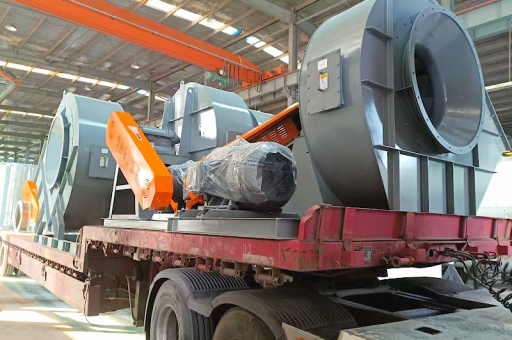
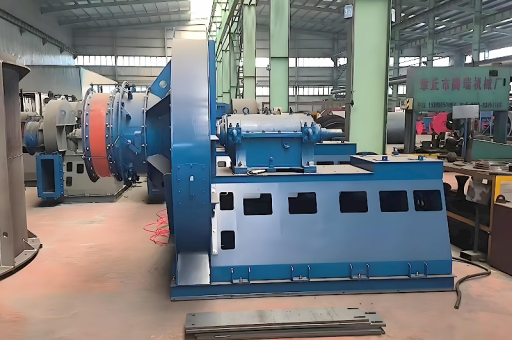
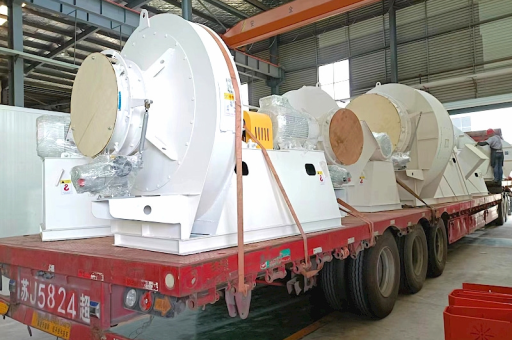
In a boiler system (whether for a power plant, industrial furnace, or large commercial HVAC), the centrifugal fan is the "lungs" of the system. It moves the air and flue gases required for combustion and heat transfer.
Here is a breakdown of what it is, the types, how it works, and common issues.
The Three Main Types of Boiler Fans
A typical boiler has three distinct centrifugal fans, each with a different function:
| Fan Type | Acronym | Function | Location | Air/ Gas |
|---|---|---|---|---|
| Forced Draft (FD) Fan | FD | Pushes fresh ambient air into the boiler furnace. | Before the furnace (inlet side). | Clean, cold air. |
| Induced Draft (ID) Fan | ID | Pulls hot flue gases (exhaust) out of the boiler and through the chimney. | After the furnace & pollution control equipment (outlet side). | Hot, dirty, corrosive flue gas. |
| Primary Air (PA) Fan | PA | Provides high-pressure air to pulverize and carry coal into the boiler furnace. | On the coal mill system. | Ambient air (often preheated). |
Note: In smaller package boilers, a single fan may serve as both FD and ID, but large utility boilers always have dedicated fans.
How a Centrifugal Fan Works (The Physics)
A centrifugal fan uses kinetic energy to increase the pressure of air or gas.
- Inlet: Air enters the fan impeller axially (along the shaft) at the center.
- Rotation: The rotating impeller (with blades) flings the air outward by centrifugal force.
- Pressure Rise: As the air moves radially, its velocity increases. The air then hits the volute casing (the spiral-shaped housing).
- Volute Action: The volute converts the high-velocity kinetic energy into high-static pressure by gradually slowing the air down.
- Outlet: The pressurized air or gas exits the fan tangentially.
Key Components
- Impeller (Rotor): The rotating part with blades. For boilers, blades are typically:
- Backward Curved (Airfoil): Most efficient. Used for FD fans (clean air). Less prone to dust buildup.
- Radial (Paddle Wheel): Strong and handles dirty, abrasive gases well. Common for ID fans handling ash-laden flue gas.
- Forward Curved (Squirrel Cage): High volume, low pressure. Used in smaller, lower-pressure applications.
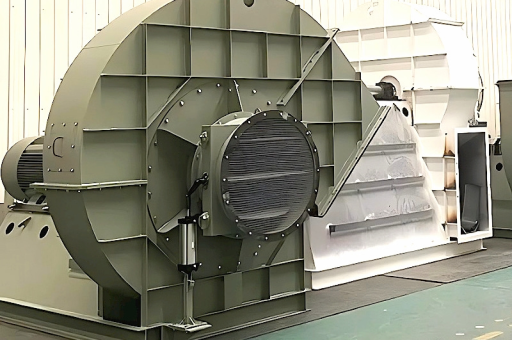
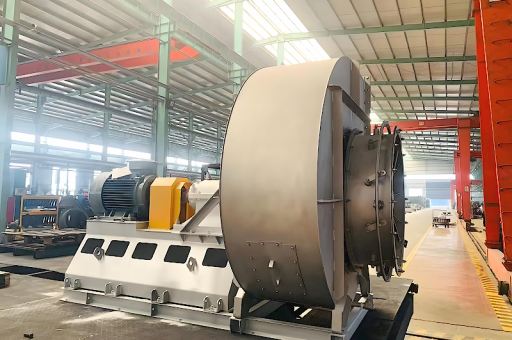
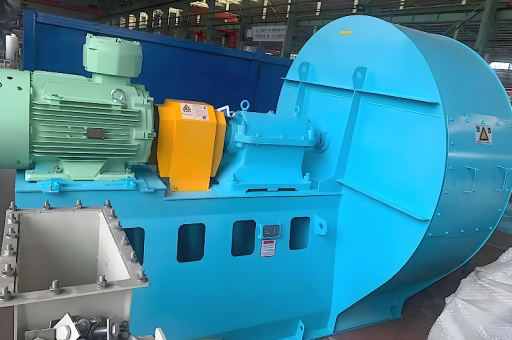
- Casing (Volute): The housing that guides the air flow and converts velocity to pressure.
- Inlet Box & Damper: Controls the amount of air entering the fan.
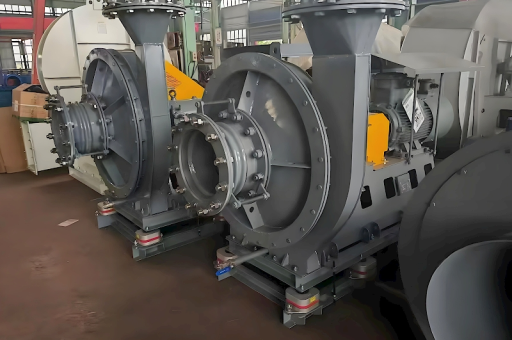
- Shaft & Bearings: Support the impeller and allow it to spin.
- Motor & Drive: Typically an electric motor connected via a geared coupling (direct drive) or V-belts.
Why "Centrifugal" is Preferred for Boilers
While axial fans exist, centrifugal fans are dominant in boilers for three reasons:
- High Static Pressure: Boilers have significant resistance (air heaters, ducts, scrubbers, baghouses). Centrifugal fans generate the high pressure needed to overcome this.
- Ruggedness: They are more tolerant of dirty, hot, and abrasive gas streams (especially the radial blade type).
- Stability: Their pressure curve (Pressure vs. Flow) is stable, meaning they don't surge as easily as axial fans under high resistance.
Common Problems & Failures in Boiler Fans
Boiler fans operate in harsh conditions. Common issues include:
- Vibration (The #1 Problem):
- Cause: Fan unbalance (due to erosion, dust buildup on blades), bearing wear, shaft misalignment, or blade cracking from resonance.
- Result: Bearing failure, shaft breakage, or casing damage.
- Erosion / Abrasion:
- Cause: Fly ash in flue gas acts like sandpaper on the impeller blades, especially on the ID fan.
- Result: Thinned blades, loss of efficiency, catastrophic failure (blade detachment).
- Corrosion:
- Cause: Condensation of acidic gases (sulfuric acid from sulfur in coal/oil) on the cold metal parts of the fan, especially during startup or low-load operation.
- Result: Pitting and weakening of the impeller and casing.
- High Temperature / Thermal Stress:
- Cause: Sudden temperature changes (thermal shock from cold startup) or high flue gas temperature.
- Result: Shaft distortion, bearing overheating, thermal expansion cracking.
- Surging / Stall:
- Cause: Operating the fan at too low a flow rate (e.g., dampers too tight) causing the fan to "pant" or reverse flow momentarily.
- Result: Loud noise, severe vibration, and duct failure.
Key Performance Terms
- Static Pressure (SP): The pressure the fan must overcome (duct resistance + boiler resistance). Measured in inches of water gauge (in.WG) or Pascals (Pa).
- Flow Rate (CFM or m³/s): The volume of air the fan moves.
- Fan Speed (RPM): Directly affects pressure and flow (Affinity Laws).
- Efficiency: How well the fan converts input power (kW) into useful flow & pressure.
Summary for Practical Use
| If you have... | You likely need... | Critical Issue |
|---|---|---|
| Clean, cold air (Boiler inlet) | Backward Curved (High Efficiency) | Motor power & bearing life. |
| Hot, dirty exhaust (Boiler outlet) | Radial Blade (Rugged, wear-resistant) | Blade erosion & vibration. |
| High pressure for coal handling | PA Fan (Radial or Airfoil) | System resistance & erosion from pulverized coal. |
Would you like a deeper dive into any specific area? For example:
- Troubleshooting a high vibration issue.
- Selecting the correct fan for a new boiler installation.
- Understanding the Affinity Laws for speed control.