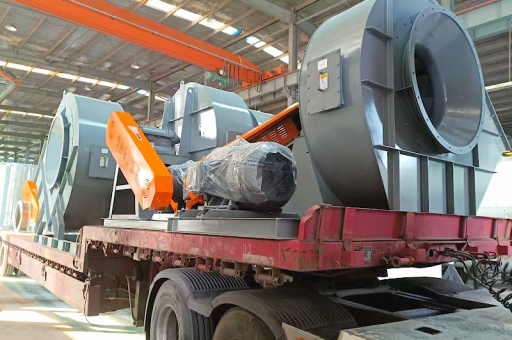
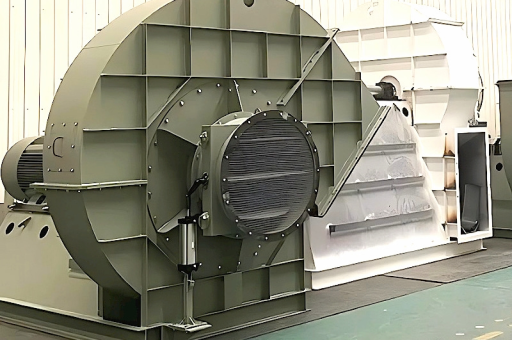
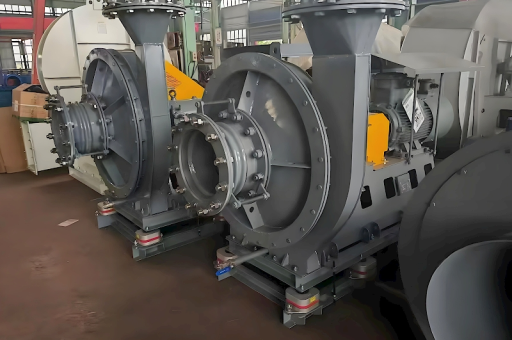
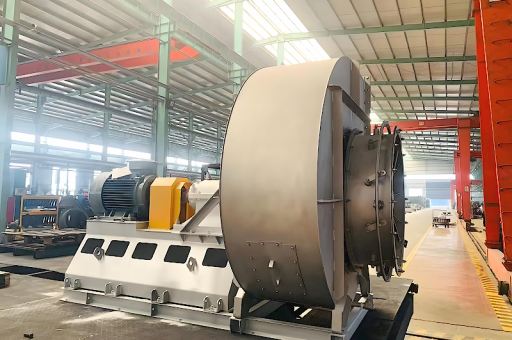
This article's table of contents introduction:
- What is an Industrial Boiler Fan?
- Main Types of Boiler Fans
- Key Design & Selection Factors
- Critical Components & Issues
- Summary of Best Practices
Here is a comprehensive overview of industrial boiler fans, covering their types, functions, key components, and critical selection factors.
What is an Industrial Boiler Fan?
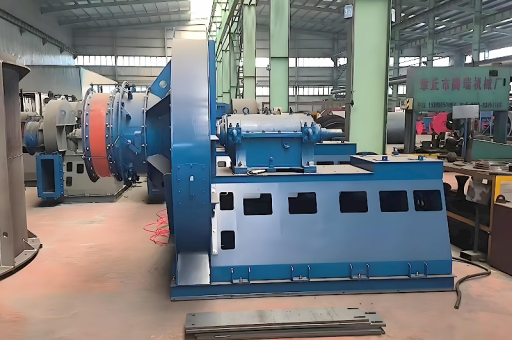
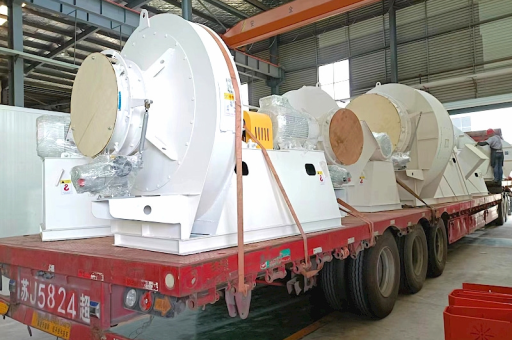
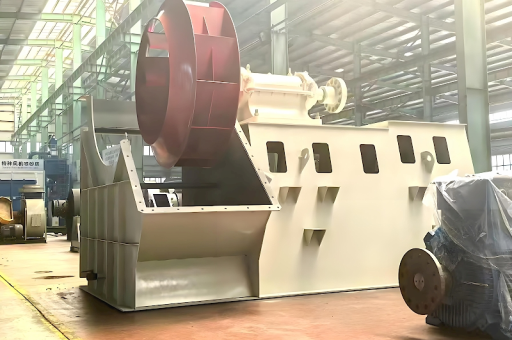
An industrial boiler fan is a critical component of a boiler system. Its primary purpose is to supply the necessary air for combustion and to remove the resulting flue gases (exhaust) from the system. Without these fans, the boiler cannot operate safely or efficiently.
The two main job functions are:
- Forced Draft (FD) Fan: Pushes fresh air into the furnace.
- Induced Draft (ID) Fan: Pulls hot flue gases out of the boiler and up the chimney.
Main Types of Boiler Fans
There are three primary types of fans used in industrial boiler systems, each with a specific role.
Forced Draft (FD) Fan
- Location: Located at the beginning of the air path, before the furnace.
- Function: It forces ambient air through an air preheater (if present) and into the burner or furnace at a positive pressure.
- Why it's used:
- Provides a controlled amount of air for combustion.
- Helps pressurize the furnace slightly to ensure even heat distribution.
- Key for optimizing fuel-air ratio for efficiency.
- Typical Service: Clean, ambient air.
Induced Draft (ID) Fan
- Location: Located at the end of the system, between the boiler's heat exchange surfaces and the chimney.
- Function: It pulls hot flue gases from the furnace, through the economizers, air heaters, and pollution control equipment, and discharges them out the stack.
- Why it's used:
- Creates a slight negative pressure (draft) in the furnace, preventing hot gases from leaking out of the boiler casing and into the boiler house.
- Maintains furnace stability.
- Characteristic Service: Hot, dirty, and often acidic flue gases. This is a much harsher environment.
Primary Air (PA) Fan
- Function: A specialized fan used primarily in pulverized coal-fired boilers. It supplies high-pressure air to transport the coal powder from the mill to the burner. It also provides the initial air for coal drying in the mill.
Comparison Table:
| Feature | FD Fan (Forced Draft) | ID Fan (Induced Draft) |
|---|---|---|
| Primary Role | Pushes air into the system | Pulls flue gas out of the system |
| Location | Inlet side (front) | Outlet side (back) |
| Medium Handled | Clean, cool ambient air | Hot, dirty, corrosive flue gas |
| Furnace Pressure | Positive | Negative |
| Material of Construction | Standard steel, aluminum | Heavier, corrosion/erosion-resistant alloys |
Key Design & Selection Factors
Choosing the correct fan is critical for safety, efficiency, and longevity.
- Flow Rate (Volume): Measured in CFM (Cubic Feet per Minute) or m³/s. This must match the boiler's combustion air or exhaust gas volume requirements.
- Static Pressure: The resistance the fan must overcome to move the air/gas. For FD fans, it's ductwork and burner resistance. For ID fans, it's the entire boiler, ducts, and pollution control equipment.
- Temperature: ID fans handle gases that can be 150°C to 400°C (300°F to 750°F) or even higher. This dictates the type of bearings, shaft cooling, and materials (e.g., high-temperature steel, Inconel). PD fans handle ambient air (10-40°C).
- Gas Composition:
- Abrasion: Fly ash in coal or biomass flue gas can severely erode fan blades. Hardfacing or wear-resistant liners are essential.
- Corrosion: Sulfur, chlorides, and water vapor create acids (sulfuric acid) that condense and corrode the fan. Stainless steel or special coatings are often required for ID fans.
- Sticky/Tacky Dust: Some fuels (e.g., biomass, waste) produce gases with sticky particulates that can foul the fan blades, causing imbalance and vibration.
- Fan Type (Arrangement):
- Centrifugal: Most common for high-pressure applications like boilers. Preferred types are Airfoil (AF) and Backward Inclined (BI) for FD fans, and Radial or Paddle Wheel for heavy-duty ID fans handling dirty gases.
- Axial: Used for low-pressure, high-volume applications. Not typical for main boiler fans.
- Variable Speed Control: Nearly all modern industrial boilers use Variable Frequency Drives (VFDs) to control the fan speed. This allows for precise control of air and gas flow, saving massive amounts of energy compared to dampers or inlet vanes.
Critical Components & Issues
- Motor: The driver for the fan. Must be matched for power (kW/HP) and speed (RPM).
- Shaft & Bearings: Must be designed for radial and axial loads. ID fans often have cooling fans or water cooling on the shaft to prevent heat from traveling to the bearings.
- Impeller (Blades): The rotating part. The design and material are the most critical for handling erosion and corrosion.
- Housing (Scroll/Casing): Must be robust and gas-tight to prevent leaks.
Common Problems:
- Vibration: Most common issue. Caused by:
- Imbalance: Due to uneven blade erosion or ash buildup.
- Bearing failure.
- Resonance in the ductwork or support structure.
- Fouling: Ash sticking to blades.
- Erosion: Wearing away of impeller blades and housing due to fly ash.
- Corrosion: Degradation of metal due to acidic condensate. This is a critical issue near the dew point.
- Runback/Airflow Instability: Occurs when the system resistance is too low, causing the fan to overload its motor (especially with backward-inclined fans).
Summary of Best Practices
- Correctly size the fan: Both for volume and pressure.
- Use a VFD: For precise control and energy efficiency.
- Select the right material: For FD, standard carbon steel works. For ID, use abrasion-resistant steel (e.g., AR400, Hardox) or even high-alloy stainless steel (e.g., 304, 316) for corrosive gases.
- Implement a monitoring system: Constant monitoring of vibration, bearing temperature, and motor current is essential for predictive maintenance.
- Design for cleaning: For dirty ID fans, consider access doors, soot blowers, or water washing systems to remove blade buildup.
- Heavy-Duty Shaft & Bearings: Ensure the shaft is large enough to handle the torque, and that bearings are properly sized and cooled for the operating temperature.
If you have a specific application (e.g., coal, biomass, gas, oil, waste heat) or a specific problem, feel free to provide more details for a more targeted answer.