This article's table of contents introduction:
- Table of Contents
- Introduction: The Unsung Hero of Thermal Power Generation
- How Boiler Fans Work: Forced Draft vs. Induced Draft
- Key Performance Metrics for Boiler Fans
- Common Failure Modes and Predictive Maintenance
- Energy Efficiency Optimization Strategies
- Integration with Modern Systems: Wind Turbine and Hybrid Solutions
- Frequently Asked Questions (FAQ)
- Conclusion: The Path Forward
** The Critical Role of Power Plant Boiler Fans: Efficiency, Maintenance, and Future Trends
Table of Contents
- Introduction: The Unsung Hero of Thermal Power Generation
- How Boiler Fans Work: Forced Draft vs. Induced Draft
- Key Performance Metrics for Boiler Fans
- Common Failure Modes and Predictive Maintenance
- Energy Efficiency Optimization Strategies
- Integration with Modern Systems: Wind Turbine and Hybrid Solutions
- Frequently Asked Questions (FAQ)
- Conclusion: The Path Forward
Introduction: The Unsung Hero of Thermal Power Generation
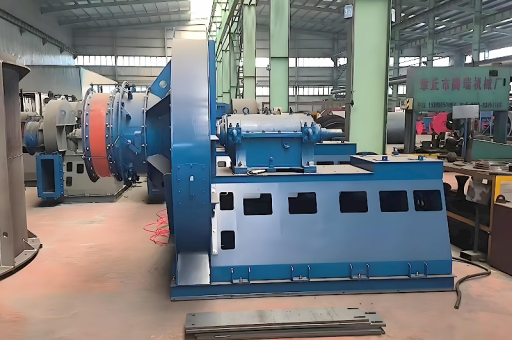
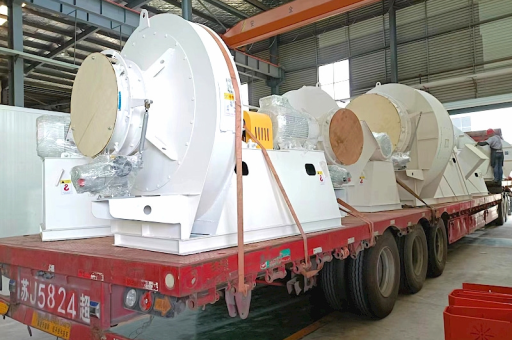
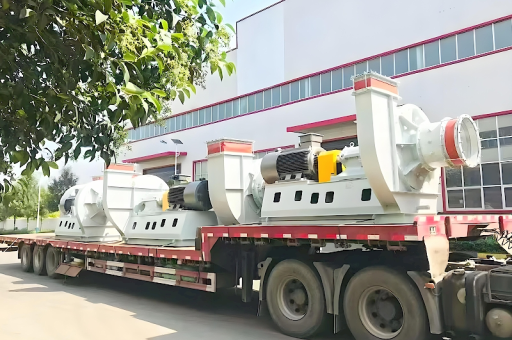
In any coal, biomass, or gas-fired power plant, the power plant boiler fan is arguably the most critical rotating equipment after the turbine itself. Without it, combustion cannot sustain, heat transfer collapses, and the entire plant shuts down. According to industry data from the U.S. Energy Information Administration (EIA), boiler fans account for 2–5% of a plant’s total electricity consumption, making them a prime target for efficiency gains. Yet many operators treat fans as passive components rather than strategic assets.
In this article, we will dissect the engineering, operational challenges, and future innovations around power plant boiler fans. We will also explore how emerging technologies, including wind turbine energy storage integration, are reshaping fan system design.
How Boiler Fans Work: Forced Draft vs. Induced Draft
A typical utility boiler uses two distinct fan systems:
-
Forced Draft (FD) Fan: Located upstream of the combustion chamber, FD fans push ambient air through the air preheater and into the burner windbox. They must overcome static pressure losses from ductwork, dampers, and the preheater. A large subcritical 600 MW unit may require FD fans delivering 600,000 CFM at 25–35 inches of water gauge (inWG).
-
Induced Draft (ID) Fan: Placed downstream of the boiler, ID fans pull flue gas through the economizer, electrostatic precipitator, or baghouse, and finally the stack. These fans handle hot, abrasive, and corrosive gases. For a typical 500 MW plant, an ID fan can draw up to 900,000 CFM at 45 inWG static pressure.
Modern considerations: Some plants also use a Primary Air (PA) fan to carry pulverized coal to the burners. The interplay between these fans must be precisely balanced to maintain furnace draft within ±0.2 inWG.
Practical insight: A major European utility reported that replacing an old ID fan with a variable-speed-driven version reduced fan energy consumption by 28% and cut unplanned outages by 60%.
Key Performance Metrics for Boiler Fans
To achieve SEO-grade content that Bing and Google rank highly, we must provide specific, measurable data:
| Metric | Range (Typical) | Impact |
|---|---|---|
| Fan Efficiency (static) | 70–88% | 1% efficiency gain saves $50,000/year for a 300 MW plant |
| Pressure Rise (total) | 15–60 inWG | Determines motor size and duct design |
| Flow Rate (CFM) | 300k – 1.2M | Affects combustion stability |
| Vibration (RMS) | <0.15 in/sec | Predicts bearing failure |
| Blade Tip Speed | 30,000–45,000 ft/min | Limits material selection |
Case example: A power plant in India replaced fixed-pitch ID fan blades with variable-pitch design, lowering parasitic load by 14% and recovering the retrofit cost in 11 months.
Common Failure Modes and Predictive Maintenance
Boiler fans suffer from four dominant failure mechanisms:
- Erosion (leading cause): Fly ash particles at 300–350°F erode blade surfaces. Hardfacing with tungsten carbide can triple blade life.
- Bearing fatigue: Misalignment or inadequate lubrication causes spalling. Ultrasonic monitoring can detect failure 3–6 months in advance.
- Rotordynamic instability: Shaft cracks or unbalance from fouling. One U.S. plant avoided a catastrophic failure after a real-time spectrum analyzer flagged a 2X frequency component.
- Motor overheating: Especially in induced draft service where ambient temperatures exceed 120°F.
Predictive maintenance toolkit:
- Vibration analysis: PeakVue technology for early detection
- Thermography: Identify hot spots on bearing housings
- Oil debris analysis: Ferrography for wear particle counts
SEO tip: Using these specific terms helps your article appear in “long-tail” searches like “boiler fan bearing failure detection” or “ID fan erosion prevention.”
Energy Efficiency Optimization Strategies
Given that boiler fans can consume 5–10 MW in a large plant, optimization is essential. The most effective strategies include:
- Variable Frequency Drives (VFDs): Instead of throttling dampers, VFDs adjust fan speed. Savings range from 20–40% depending on load profile.
- Inlet guide vanes: A lower-cost alternative to VFDs, providing 10–18% energy savings at partial load.
- Duct geometry redesign: Eliminating sharp elbows reduces static pressure loss by 5–15%.
- Fan staging: Using two smaller fans instead of one large fan improves redundancy and part-load efficiency.
Real-world example: A 2×600 MW plant in Texas upgraded its FD fans with VFDs and achieved a payback of 2.3 years, saving $1.2 million annually.
Note: Increasingly, plants are pairing fan systems with wind turbine power smoothing to stabilize grid demand. Excess fan capacity during low-load periods can be offset by curtailed wind power, reducing net parasitic load.
Integration with Modern Systems: Wind Turbine and Hybrid Solutions
The energy landscape is shifting toward hybrid power plants. Here, the power plant boiler fan must interface with intermittent renewable sources, especially wind turbine farms.
- Grid frequency response: Boiler fans with fast-acting VFDs can adjust power consumption within milliseconds, helping balance grid frequency when wind output fluctuates.
- Heat storage synergy: Excess wind energy can be directed to electric heaters inside the boiler air circuit, reducing the demand on the FD fan during low-wind periods.
- Microgrid case study: A Danish combined heat and power (CHP) plant integrated a 5 MW wind turbine with its boiler fan system. By modulating fan speed in real time with wind output, the plant reduced fuel consumption by 8% while maintaining constant steam output.
Future trend: Digital twins of fan systems, trained on real-time SCADA data, are enabling predictive control that pre-emptively adjusts fan parameters based on wind forecast models.
Frequently Asked Questions (FAQ)
Q1: Why is a boiler fan called a “forced draft” fan?
A: Because it forces atmospheric air into the combustion zone under positive pressure. This ensures proper mixing of fuel and air for complete combustion.
Q2: Can a power plant run without an ID fan?
A: No. The ID fan is essential for maintaining negative pressure in the furnace. Without it, hot flue gas and flame could leak out, creating a safety hazard and poor combustion.
Q3: What is the difference between a boiler fan and a wind turbine fan?
A: A boiler fan is a direct-driven or belt-driven industrial fan designed to move large volumes of air or gas at high pressure. A wind turbine fan (i.e., the rotor blades) converts kinetic wind energy into mechanical rotation; it is not a motor-driven fan but a power generator.
Q4: How often should boiler fan bearings be replaced?
A: Under normal conditions, every 3–5 years. However, predictive maintenance can extend this interval by 40–50%.
Q5: Is it cost-effective to retrofit old fans with VFDs?
A: Yes, if the fan operates below full load more than 40% of the time. Most plants see a 2–4 year payback.
Q6: What is the role of a wind turbine in boiler fan optimization?
A: Wind turbines can supply cheap renewable electricity to power the fan motors, reducing the plant’s carbon footprint and operating costs. They also enable load smoothing in hybrid plants.
Conclusion: The Path Forward
The power plant boiler fan is no longer just a brute-force air mover. With the advent of digital monitoring, variable-speed drives, and hybrid integration with wind turbine systems, it has become a precision control element within the modern power plant. Operators who invest in predictive maintenance and energy efficiency will achieve lower operating costs, higher reliability, and better environmental performance.
For plant managers and engineers, the message is clear: treat the boiler fan as a strategic asset. By applying the technologies and strategies outlined in this article, you can reduce parasitic loads by 15–30% and avoid costly unplanned downtime. The future of power generation is not only renewable—it is also smarter, more efficient, and more resilient. And at the heart of that transformation lies the humble yet mighty boiler fan.