This article's table of contents introduction:
- Table of Contents
- Introduction: The Critical Role of the Gas-Fired Boiler Fan
- How a Gas-Fired Boiler Fan Works: Combustion Air and Draft Control
- Types of Fans Used in Gas-Fired Boilers (Centrifugal vs. Axial)
- Key Performance Metrics: Static Pressure, Airflow, and Efficiency
- Common Issues: Vibration, Noise, and Overheating
- Maintenance Best Practices for Longevity
- Energy-Saving Upgrades: Variable Frequency Drives (VFDs) and EC Motors
- Safety Considerations: Gas Leaks, Backdraft, and Interlock Systems
- Troubleshooting FAQ
- Conclusion: Future Trends in Boiler Fan Technology
** Optimizing Gas-Fired Boiler Fan Performance: A Comprehensive Guide for Efficiency and Reliability
Table of Contents
- Introduction: The Critical Role of the Gas-Fired Boiler Fan
- How a Gas-Fired Boiler Fan Works: Combustion Air and Draft Control
- Types of Fans Used in Gas-Fired Boilers (Centrifugal vs. Axial)
- Key Performance Metrics: Static Pressure, Airflow, and Efficiency
- Common Issues: Vibration, Noise, and Overheating
- Maintenance Best Practices for Longevity
- Energy-Saving Upgrades: Variable Frequency Drives (VFDs) and EC Motors
- Safety Considerations: Gas Leaks, Backdraft, and Interlock Systems
- Troubleshooting FAQ
- Conclusion: Future Trends in Boiler Fan Technology
Introduction: The Critical Role of the Gas-Fired Boiler Fan
A gas-fired boiler is a cornerstone of many industrial facilities, commercial buildings, and residential heating systems. While the burner and heat exchanger often get the most attention, the gas-fired boiler fan is arguably the unsung hero of the system. Without a properly functioning fan, combustion cannot occur safely or efficiently. The fan is responsible for supplying the precise amount of oxygen needed for complete combustion and for expelling harmful flue gases out of the system. A poorly performing fan can lead to incomplete combustion, carbon monoxide production, soot buildup, and significant energy waste. In modern SEO-driven content for the HVAC and industrial equipment sector, understanding the nuances of boiler fans—from wind turbine-inspired aerodynamic blade designs to advanced motor controls—is essential for engineers, facility managers, and procurement specialists.
How a Gas-Fired Boiler Fan Works: Combustion Air and Draft Control
The gas-fired boiler fan serves two primary functions: forced draft (FD) and induced draft (ID), or a combination of both in balanced draft systems.
- Forced Draft (FD) Fan: Located at the inlet of the burner, this fan pushes ambient air into the combustion chamber. The amount of air must be carefully metered to match the gas flow rate. Too little air leads to incomplete combustion (rich mixture), while too much air (lean mixture) carries excess heat up the stack, reducing thermal efficiency.
- Induced Draft (ID) Fan: Positioned after the heat exchanger or at the stack outlet, this fan pulls flue gases out of the boiler, creating a negative pressure within the furnace. This prevents hot gases from leaking into the boiler room.
- Modulating Control: Modern gas-fired boiler fans are often paired with a modulating gas valve and a variable frequency drive (VFD) . The VFD adjusts the fan speed in real time based on system demand, ensuring that the air-to-fuel ratio remains optimal across all load conditions. This is where concepts from wind turbine technology—specifically aerodynamic blade profiling and low-torque startup—are increasingly being adapted to fan design to reduce energy consumption.
Types of Fans Used in Gas-Fired Boilers (Centrifugal vs. Axial)
Choosing the correct fan type is critical for system reliability.
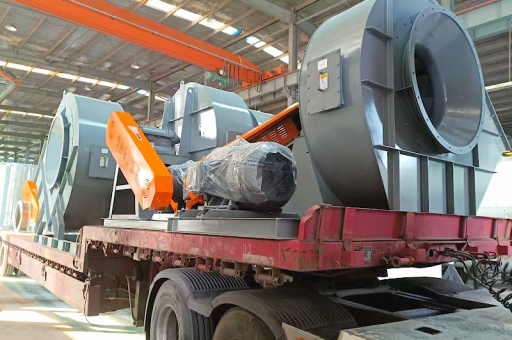
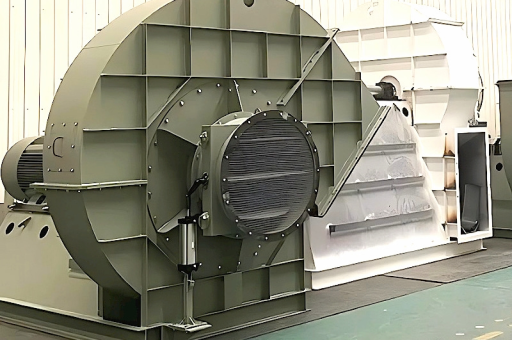
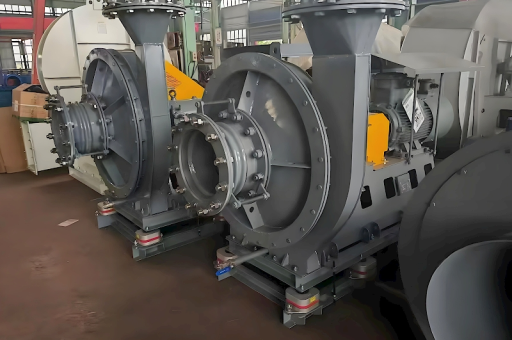
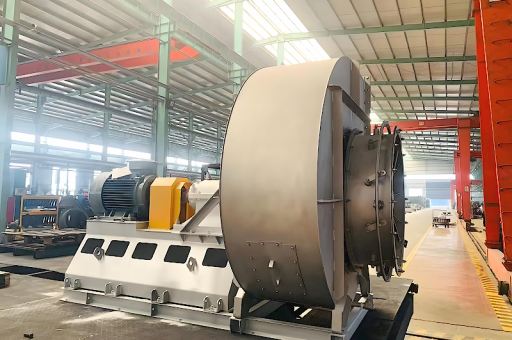
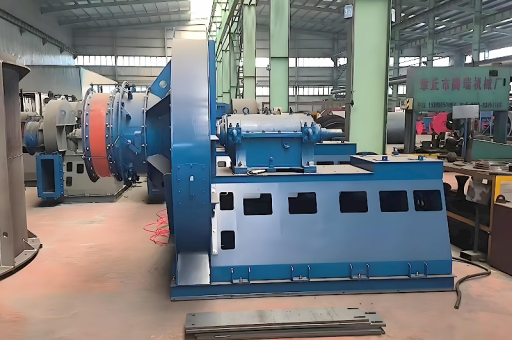
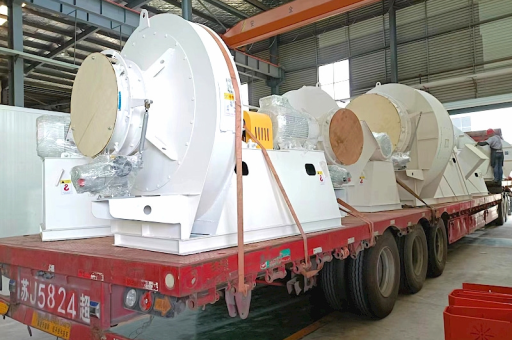
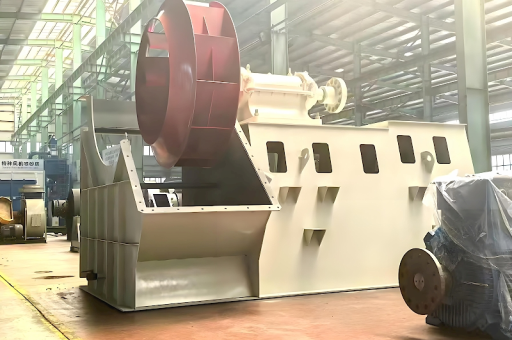
- Centrifugal Fans (Squirrel Cage): These are the most common in gas-fired boilers. They operate by drawing air into the center of a rotating impeller and expelling it radially at high pressure. Backward-inclined and airfoil blades are preferred for high-efficiency applications because they are less prone to dust buildup and operate more quietly. The aerodynamic principles used in wind turbine blades are now influencing these fan designs to maximize static pressure while minimizing noise.
- Axial Fans (Propeller): These are used mainly in low-pressure, high-volume applications, such as cooling towers or very small residential boilers. They are less common in larger industrial gas-fired boiler installations because they struggle to overcome the static pressure of a heat exchanger.
- Hybrid Designs: Some new installations use mixed-flow fans that combine the high pressure of a centrifugal fan with the compact footprint of an axial fan.
Key Performance Metrics: Static Pressure, Airflow, and Efficiency
To optimize a gas-fired boiler fan, you must understand these three parameters:
- Static Pressure (SP): Measured in inches of water column (in. w.c.) or Pascals. It represents the resistance the fan must overcome (ductwork, burner, heat exchanger). A fan operating outside its design SP range will experience stall, causing vibration and overheating.
- Airflow (CFM or m³/h): The volume of air moved per minute. This must match the excess air percentage required by the burner manufacturer (typically 10–20% excess air for natural gas).
- Fan Efficiency: The ratio of air power output to motor input power. High-efficiency fans often use backward-curved impellers and premium-efficient motors (IE3 or IE4). Integrating a wind turbine-style diffuser or inlet cone can further reduce turbulence and increase efficiency by 2–5%.
Common Issues: Vibration, Noise, and Overheating
Gas-fired boiler fans are subjected to harsh conditions including high ambient temperatures, corrosive flue gases, and continuous duty cycles.
- Vibration: Often caused by unbalanced impellers, bearing wear, or buildup of debris on the blades. Regular vibration analysis (ISO 1940 balancing standard) is recommended.
- Noise: Can exceed 85 dB in large fans, requiring acoustic enclosures or silencers. Using wind turbine-inspired serrated trailing edges on fan blades can disrupt vortex shedding and reduce aerodynamic noise by up to 12 dB.
- Overheating Bearings: Due to inadequate lubrication or excessive ambient heat. In some installations, the fan shaft is cooled by the incoming combustion air. If the intake filter is clogged, heat buildup accelerates bearing failure.
Maintenance Best Practices for Longevity
A proactive maintenance schedule ensures the fan operates at peak efficiency.
- Inspect and Clean Impeller Blades: Dust, lint, and corrosion can unbalance the fan. Use compressed air or soft bristles (avoid damaging the coating).
- Check Belt Tension and Alignment: For belt-driven fans, incorrect tension causes slippage and energy loss. Use a laser alignment tool.
- Lubricate Bearings According to Manufacturer Specs: Over-greasing is as harmful as under-greasing.
- Monitor Vibration and Current Draw: A sudden increase in motor amperage often indicates a mechanical fault.
- Verify Damper and Inlet Vane Operation: Sticking dampers force the fan to work harder, wasting energy.
Energy-Saving Upgrades: Variable Frequency Drives (VFDs) and EC Motors
The single most effective upgrade for a gas-fired boiler fan is the addition of a VFD.
- VFD Benefits: By reducing fan speed to match actual boiler demand, you can achieve a 30–60% reduction in fan energy consumption (per the fan affinity laws).
- Electronically Commutated (EC) Motors: These combine the efficiency of a permanent magnet motor with VFD capabilities in a single package. They are ideal for smaller fans (up to 30 kW) used in condensing boilers.
- Airfoil Blade Replacement: Retrofitting an existing centrifugal fan with a modern airfoil blade wheel—similar to the precision-cast blades used in wind turbine generators—can improve static efficiency by 10–15%.
Safety Considerations: Gas Leaks, Backdraft, and Interlock Systems
Safety must never be compromised.
- Gas Leak Detection: A failed fan can allow unburned gas to accumulate in the combustion chamber. All systems must have a pre-purge cycle (running the fan for 30–60 seconds before ignition) to clear any residual gas.
- Interlocks: The fan must be electrically interlocked with the gas valve. If the fan stops, the gas supply must instantly shut off.
- Backdraft Prevention: In negative-pressure boiler rooms, an inoperative ID fan can cause flue gases to spill into the building. Install a barometric damper or automatic isolation dampers.
- Explosion-Proof Construction: In hazardous areas, fans must be ATEX or UL approved with spark-resistant construction (non-ferrous impellers).
Troubleshooting FAQ
Q: Why is my gas-fired boiler fan running but producing low airflow? A: Check for clogged inlet filters, a stuck damper, or a slipping belt. Also verify that the ductwork is not blocked by debris or collapsed insulation.
Q: Can a gas-fired boiler fan be replaced with a wind turbine? A: No. While wind turbine blades inspire aerodynamic designs, a wind turbine is a generator, not a fan. You cannot substitute a power generation device for a combustion air supply fan. However, some industrial sites use small wind turbine units to offset the electrical consumption of the boiler fan.
Q: What is the expected lifespan of a gas-fired boiler fan? A: With proper maintenance, a quality centrifugal fan can last 15–25 years. Bearings typically need replacement every 3–5 years, and belt drives every 1–2 years.
Q: Why does my fan vibrate after a gas valve modulation event? A: This could indicate the fan is operating near its surge line. Ensure the VFD is programmed to avoid speeds between 30% and 50% of full speed (the typical surge region for backward-inclined fans).
Q: Should I oversize a gas-fired boiler fan? A: No. Oversizing forces the fan to operate at lower speeds, which reduces efficiency and can cause motor overheating. Always specify the fan based on the burner’s exact CFM and SP requirements at maximum firing rate.
Conclusion: Future Trends in Boiler Fan Technology
The gas-fired boiler fan is evolving rapidly. Advances in additive manufacturing allow for complex, lightweight impeller geometries that were previously impossible to cast. Digital twin technology enables operators to model fan performance in real time, predicting failures before they occur. Additionally, the integration of wind turbine-derived aerodynamics and permanent magnet motor technology is pushing fan efficiency beyond 85%. For facilities seeking to reduce carbon emissions and operating costs, upgrading the boiler fan system is one of the fastest-return investments available. Whether you are replacing an existing fan or designing a new boiler room, prioritize fan efficiency, robust controls, and a rigorous maintenance plan. The humble gas-fired boiler fan is no longer just a mechanical component—it is a critical asset in the journey toward sustainable heating.