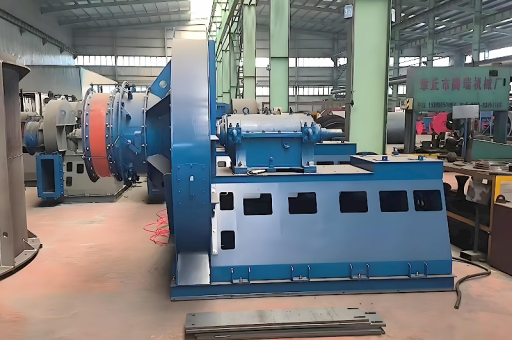
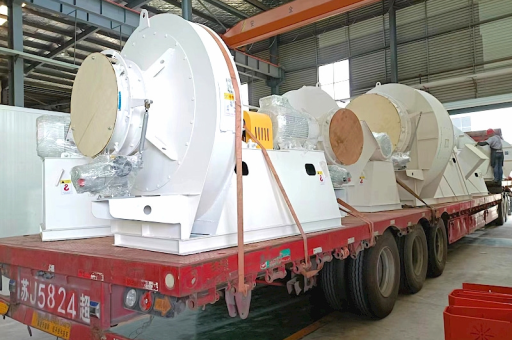
** The Essential Role of the Biomass Boiler Fan in Modern Renewable Energy Systems: Efficiency, Maintenance, and Innovations
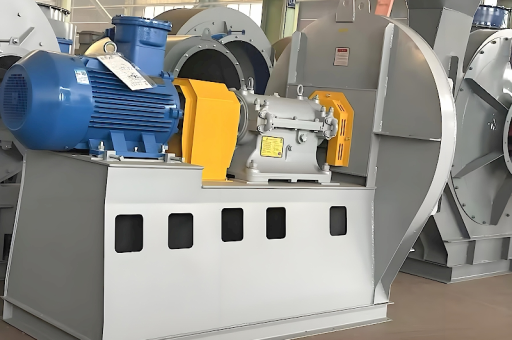
Directory Guide
- Introduction: Why the Biomass Boiler Fan Matters
- Core Function: How the Fan Optimizes Combustion and Heat Transfer
- Types of Fans: Forced Draft vs. Induced Draft
- Key Performance Metrics: Airflow, Pressure, and Temperature Resistance
- Common Challenges: Erosion, Corrosion, and Noise Control
- Maintenance Best Practices for Longevity
- Innovations: Variable Frequency Drives and Smart Monitoring
- Frequently Asked Questions (FAQ)
- Conclusion: The Fan as the Heartbeat of a Clean Energy System
Introduction: Why the Biomass Boiler Fan Matters
In the global push toward carbon-neutral energy, biomass boilers have emerged as a reliable solution for heating, power generation, and industrial processes. At the core of every efficient biomass boiler lies a component often overlooked yet vitally important: the biomass boiler fan. This fan is not merely a moving part; it is the system’s respiratory system, controlling air supply, exhaust, and combustion dynamics. Without a properly designed and maintained boiler fan, even the best biomass fuel—whether wood pellets, agricultural residues, or energy crops—will burn inefficiently, producing excess emissions and wasted fuel.
Modern biomass boiler fans must handle high temperatures, abrasive ash particles, and variable load demands. Understanding their design, operation, and maintenance is essential for operators seeking to maximize boiler efficiency and comply with environmental regulations. This article provides a comprehensive, engineer-focused yet accessible guide, drawing on industry best practices and the latest technological trends.
Core Function: How the Fan Optimizes Combustion and Heat Transfer
The primary role of a biomass boiler fan is to deliver a controlled volume of air to the combustion chamber and to remove flue gases from the system. This process directly influences three critical factors:
- Combustion Efficiency – The fan ensures that the air-to-fuel ratio stays within an optimal range (typically 1.5:1 to 2.5:1 by mass for biomass). Too little air causes incomplete combustion, leading to carbon monoxide and unburned hydrocarbons. Too much air wastes heat by cooling the flame and increasing flue gas losses.
- Heat Transfer – By maintaining proper draft and pressure, the fan helps hot gases flow through the heat exchanger tubes at the correct velocity, maximizing thermal energy capture.
- Emissions Control – Modern fan systems, combined with automatic controls, can reduce particulate matter and NOx formation by precisely regulating oxygen levels during different burn phases—ignition, steady state, and char burnout.
Q: Can a fan alone improve boiler efficiency by more than 5%?
A: Yes. Upgrading from a fixed-speed to a variable-speed fan, or replacing an undersized fan, can yield efficiency gains of 3–8%, depending on the fuel type and existing control logic. The fan’s ability to match airflow to real-time load is the key.
Types of Fans: Forced Draft vs. Induced Draft
Biomass boiler systems typically use one or both of the following fan configurations:
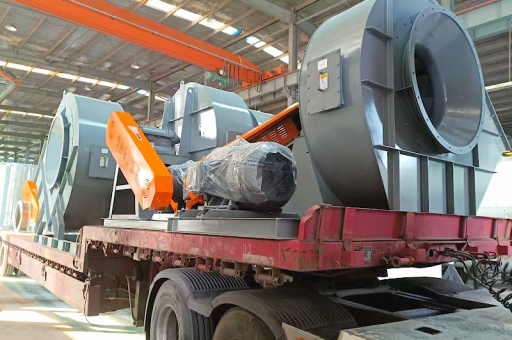
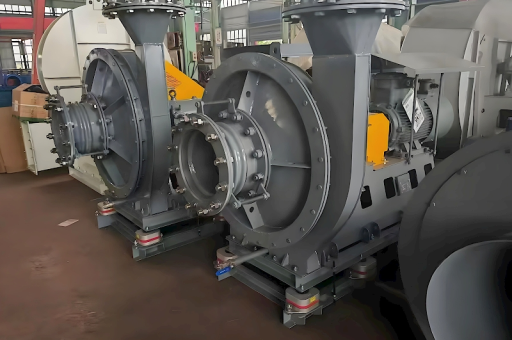
- Forced Draft (FD) Fan: Located before the combustion chamber, this fan pushes ambient air into the furnace. It pressurizes the combustion zone and is essential for fluidized bed boilers or systems with high fuel moisture content. The FD fan must overcome the resistance of the fuel bed and grate.
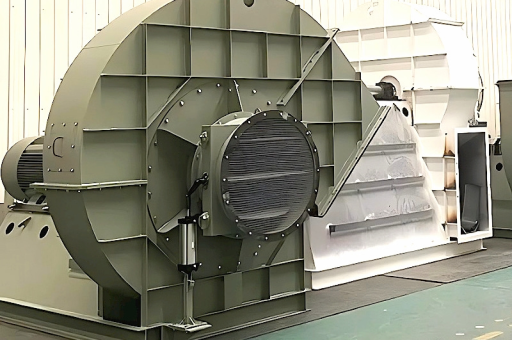
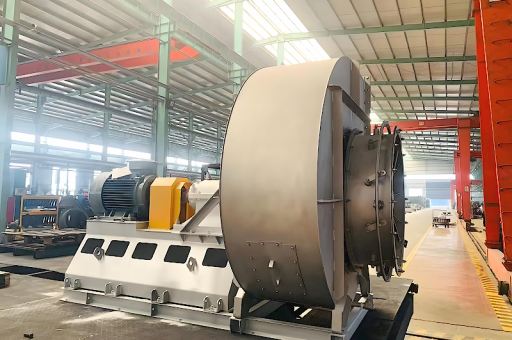
- Induced Draft (ID) Fan: Positioned after the boiler (between the heat exchanger and the chimney), this fan pulls flue gases out of the system, creating negative pressure that draws combustion air through the boiler. ID fans handle hotter, dirtier air and are more prone to wear.
Many modern systems use a balanced draft approach, where both fans operate in tandem to maintain a slight negative pressure in the furnace, preventing gas leaks into the boiler room.
Q: Which fan type is more failure-prone?
A: The ID fan is generally more failure-prone due to exposure to hot, acidic, and abrasive gases. Ash buildup on blades and erosion from fly ash are the leading causes of imbalance and vibration.
Key Performance Metrics: Airflow, Pressure, and Temperature Resistance
When selecting or evaluating a biomass boiler fan, three metrics are paramount:
- Airflow (CFM or m³/h) : Must match the boiler’s maximum continuous rating (MCR) at full load, plus a margin of 10–15% for contingencies.
- Static Pressure (Pa or in. wg) : Must overcome all system resistances, including ductwork, air preheaters, baghouse filters, and the fuel bed. A typical range is 2,000–5,000 Pa for industrial units.
- Temperature Rating: ID fans must withstand continuous gas temperatures of 200–350°C (392–662°F) and occasional spikes up to 400°C. Impellers made of high-strength steel or stainless steel with heat-resistant coatings are mandatory.
Additionally, fan blade tip speed must be kept below 100 m/s for biomass applications to reduce erosion from particulate matter.
Q: How do I know if my fan is undersized?
A: Symptoms include difficulty in reaching full boiler load, high unburned carbon content in ash, excessive smoke from the stack, and automatic damper positions at 100% open. Performance testing using a manometer and tachometer is recommended to confirm.
Common Challenges: Erosion, Corrosion, and Noise Control
Biomass boiler fans face unique operating conditions that accelerate wear:
- Erosion: Fly ash from biomass fuel—especially from bark, straw, or grass—is highly abrasive. The impeller blades and housing can wear out in 6–12 months if not protected. Solutions include applying tungsten carbide coatings, using wear plates, or installing fan inlet vanes to control particle trajectory.
- Corrosion: Condensation of acidic gases, such as sulfur and chlorine compounds, can corrode fan housings at startup and shutdown. Maintaining flue gas temperatures above the acid dew point (typically 140–160°C for biomass) is critical.
- Noise: High-speed fans generate noise levels exceeding 85 dB(A), requiring acoustic enclosures or silencers. Modulating fan speed during low-load periods also reduces noise.
Q: What is the most common repair issue?
A: Impeller imbalance due to uneven ash deposition. This leads to bearing vibration, which if unchecked, results in catastrophic shaft failure. Regular vibration monitoring is the most effective preventive step.
Maintenance Best Practices for Longevity
A proactive maintenance program can extend fan life by 2–3 times. Key steps include:
- Daily Visual Inspection: Check for leaks, unusual noise, and ash accumulation on the inlet cone.
- Weekly Vibration Analysis: Use a data collector to monitor bearing condition and blade balance. Vibration velocity below 4.5 mm/s is acceptable; above 7 mm/s requires immediate investigation.
- Monthly Cleaning: For the ID fan, schedule a shutdown to remove ash clinkers from blade surfaces using compressed air or a soft abrasive.
- Quarterly Bearing Replacement: In high-temperature applications, replace grease and inspect bearings for discoloration or roughness.
- Annual Alignment Check: Verify shaft alignment and coupling wear, especially if the fan is belt-driven.
Q: Should I install a bypass stack for the fan?
A: For large industrial biomass boilers, a bypass stack can allow boiler operation during fan maintenance. However, it adds capital cost and may violate emissions regulations in some regions.
Innovations: Variable Frequency Drives and Smart Monitoring
The evolution of the biomass boiler fan is now driven by digitalization:
- Variable Frequency Drives (VFD): Replacing dampers with VFDs on FD and ID fans reduces energy consumption by 30–50% at partial loads. The payback period is typically 1–2 years for a 10 MW boiler.
- Predictive Maintenance Platforms: IoT sensors on the fan motor, bearing housing, and impeller transmit real-time data to a cloud platform. Machine learning algorithms predict failures 2–4 weeks in advance.
- Self-Cleaning Impeller Designs: Some manufacturers now offer backward-curved blades with a smooth surface coating, which reduces ash adhesion and maintains aerodynamic efficiency for longer periods.
Q: Are smart fans worth the investment for small-scale biomass boilers?
A: For boilers below 1 MW, the cost of smart sensors may not be justified unless the fan is critical for 24/7 operation. A simpler alternative is a programmable logic controller (PLC) with a basic VFD and manual inspection log.
Frequently Asked Questions (FAQ)
Q: Can I use an industrial fan from a coal boiler in a biomass boiler?
A: Not recommended. Coal fly ash is less abrasive than many biomass ash types, and coal fans lack the corrosion protection needed for chlorides and sulfates found in biomass. Retrofitting is possible but often cost-ineffective.
Q: How often should the fan be balanced?
A: Initially after installation, then every 6 months under normal operation. If the fuel has high ash content (e.g., rice husk), increase frequency to every 3 months.
Q: Does the fan affect particulate emission levels?
A: Yes. An improperly tuned fan can cause excessive carryover of fine ash to the baghouse, overwhelming the filter and increasing stack opacity. Proper fan control helps stabilize the combustion zone, reducing particle generation.
Q: What spare parts should I keep in stock?
A: At minimum: one spare bearing set, an impeller (if not too costly), a gasket kit, and a vibration sensor.
Conclusion: The Fan as the Heartbeat of a Clean Energy System
The biomass boiler fan is far more than an industrial accessory—it is a precision instrument that dictates combustion quality, thermal efficiency, and emissions performance. As biomass continues to grow as a renewable energy source—from district heating in Europe to process steam in Southeast Asia—the demand for reliable, high-performance fans will only increase. Operators who invest in proper fan selection, regular maintenance, and modern controls will see lower fuel costs, fewer downtime events, and a smaller environmental footprint. Whether you are retrofitting an older boiler or designing a new wind turbine hybrid system, remember that without a well-designed fan, the entire energy chain falters. Treat the fan not as a commodity, but as the strategic asset it truly is.