This article's table of contents introduction:
- What is a Coal-Fired Boiler Fan?
- The Two Main Types
- How They Work Together (Balanced Draft)
- Common Issues & Challenges for Boiler Fans
- Efficiency & Performance
- Summary Table
Here is a comprehensive overview of the coal-fired boiler fan, covering its types, function, importance, and common issues.
What is a Coal-Fired Boiler Fan?
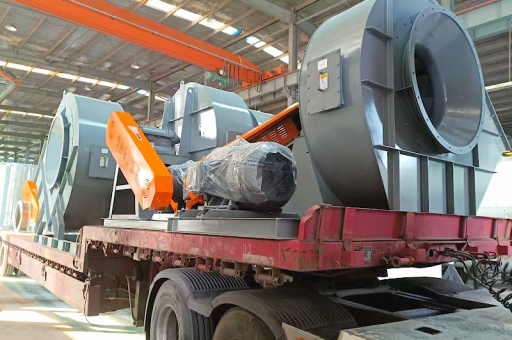
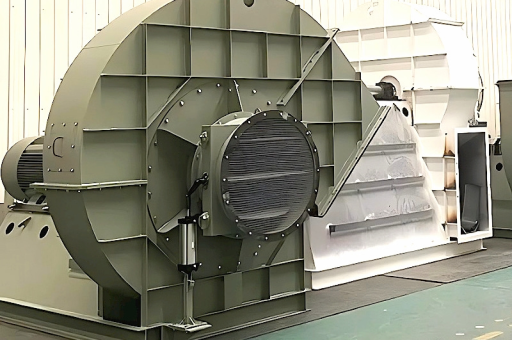
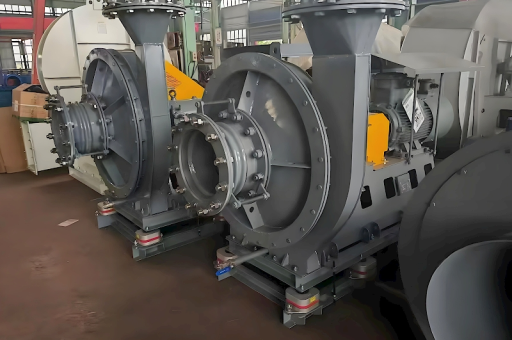
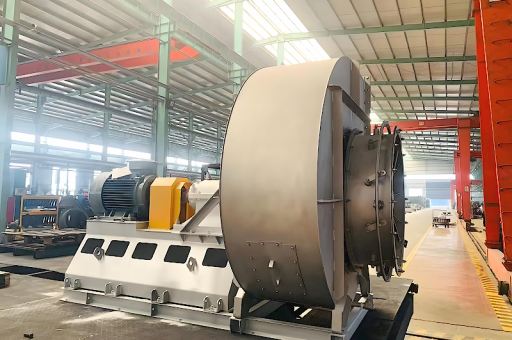
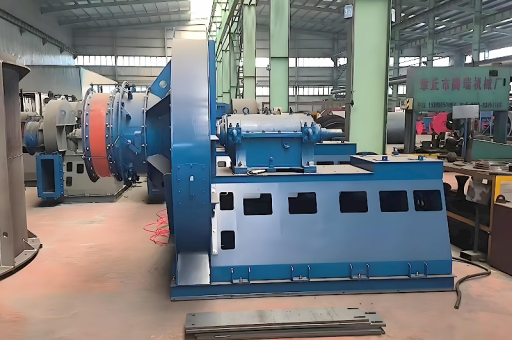
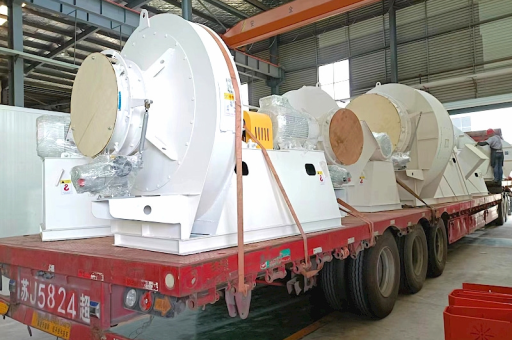
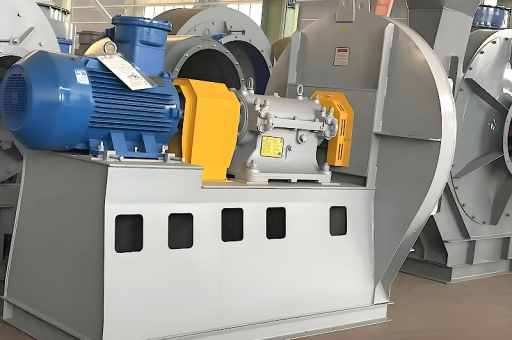
In a coal-fired power plant or industrial boiler, the fan is a critical component of the air and flue gas system. Its primary job is to supply the correct amount of air for combustion and to remove the resulting flue gases (exhaust) from the boiler. Without these fans, the boiler cannot operate safely or efficiently.
There are typically two main types of fans, working in tandem to create a balanced draft through the boiler system.
The Two Main Types
Forced Draft (FD) Fan
- Location: Located at the front end of the boiler, before the furnace.
- Function: Pushes (forces) ambient air into the boiler system.
- What it does:
- First, the air is often preheated in an Air Preheater (APH) to recover waste heat and improve efficiency.
- The hot air is then sent to the burners to mix with the pulverized coal for combustion.
- Some of the air is also used to transport the coal (primary air) and to dry it.
- Key Role: Controls the excess oxygen level in the furnace, which is vital for complete combustion and efficiency.
Induced Draft (ID) Fan
- Location: Located at the very end of the boiler system, after the Air Preheater, Electrostatic Precipitator (ESP), and baghouse (dust collector).
- Function: Pulls (induces) the flue gases out of the boiler system by creating a slight vacuum (negative pressure) in the furnace.
- What it does:
- Draws the hot combustion gases through the boiler heat exchangers (superheater, economizer), the air preheater, and the pollution control equipment (ESP/Fabric Filter).
- Finally, it sends the cleaned gases up the chimney (stack) .
- Key Role: Prevents hot gases and flames from escaping the boiler enclosure, protecting personnel and equipment.
Primary Air (PA) Fan (Often considered a third type)
- Function: A dedicated fan that supplies high-pressure air specifically for drying and transporting the pulverized coal from the mill to the burner.
- Role: This is critical for the fuel handling and injection system.
How They Work Together (Balanced Draft)
For a large utility boiler, the FD and ID fans work together to maintain a balanced draft:
- The FD Fan pushes fresh air into the furnace.
- The fuel (coal) burns, creating hot flue gas.
- The ID Fan pulls the hot gas out at the same rate.
- Goal: The pressure inside the furnace is kept slightly below atmospheric pressure (typically -0.5 to -2 inches of water column). This is a crucial safety measure.
Safety Note: If the FD fan fails, the furnace loses air but gas continues to be pulled out, creating a strong vacuum that can collapse the boiler. If the ID fan fails, hot gas can be pushed out through gaps, creating a fire hazard.
Common Issues & Challenges for Boiler Fans
Coal-fired boiler fans operate in one of the most difficult environments in a power plant. Common problems include:
-
Erosion (Abrasion): This is the #1 killer of these fans, especially the ID fan. Fly ash (the fine, abrasive particles from burnt coal) is carried in the flue gas. Over time, it erodes the fan blades, leading to:
- Vibrations
- Reduced efficiency
- Structural failure (blade snapping)
- Solution: Use of erosion-resistant materials (e.g., hard-facing, ceramic coatings, or specialized steel alloys) and regular inspection/repair.
-
Vibration: Caused by:
- Imbalance: Due to uneven erosion, fly ash buildup, or broken blades.
- Misalignment: Of the fan shaft and motor.
- Bearing wear.
- Resonance: The fan speed matching the natural frequency of the foundation or ductwork.
- Solution: Regular vibration monitoring and analysis, dynamic balancing, and proper alignment.
-
High Temperature / Thermal Expansion:
- FD fans handle preheated air (typically 200-350°C / 400-660°F).
- ID fans handle cooled flue gas (typically 120-180°C / 250-350°F).
- Thermal expansion can cause shaft warping, bearing overheating, and casing distortion. Modern fans are designed with flexible couplings and expansion joints.
- Solution: Proper lubrication systems with cooling, thermal barrier coatings, and flexible duct connections.
-
Wear & Tear of the Rotor / Impeller: The rotating part (impeller) is the most expensive and critical component. Common modes of failure include fatigue cracking and stress corrosion cracking, especially near blade-to-disk welds.
Efficiency & Performance
- Variable Frequency Drives (VFDs): Most modern coal plants use VFDs or hydraulic couplings to control fan speed. This is far more energy-efficient than using inlet vanes or dampers to control airflow, saving significant electricity (a major cost for the plant).
- Performance Curves: The fan is selected to match the specific pressure and flow requirements of the boiler system (System Resistance Curve). Operating far from the Best Efficiency Point (BEP) can cause inefficiency, vibration, and stall.
Summary Table
| Feature | Forced Draft (FD) Fan | Induced Draft (ID) Fan | Primary Air (PA) Fan |
|---|---|---|---|
| Location | Inlet of boiler | Outlet of boiler (after cleanup) | Between coal mill & burner |
| Medium | Fresh / Preheated Air | Flue Gas (Hot, abrasive, corrosive) | Hot Air (for drying) + Coal Dust |
| Purpose | Push air for combustion | Pull flue gas out of system | Transport & dry pulverized coal |
| Pressure | Positive (pushes) | Negative (sucks) | High Positive |
| Main Challenge | Thermal expansion | Erosion from fly ash | Erosion from coal dust |
| Failure Mode | Bearing failure, vane sticking | Blade erosion, vibration, imbalance | Blade wear, mill fire risk |
In short, the coal-fired boiler fan is not just a simple blower. It is a high-performance, heavy-duty piece of industrial machinery that is essential for safe, efficient, and environmentally compliant power generation.