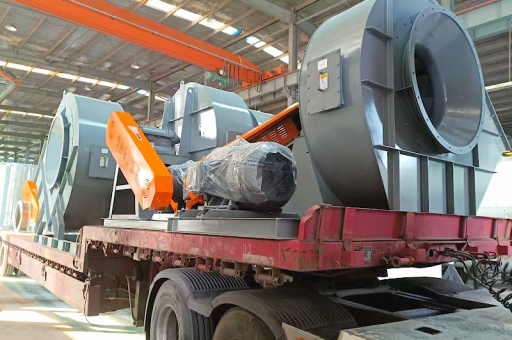
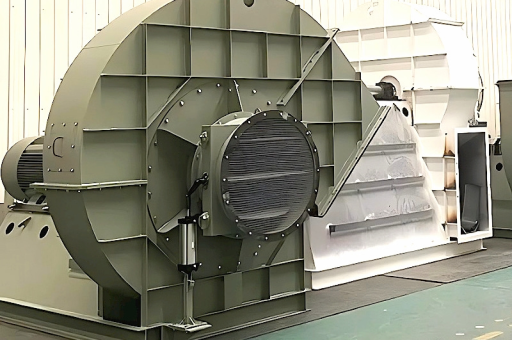
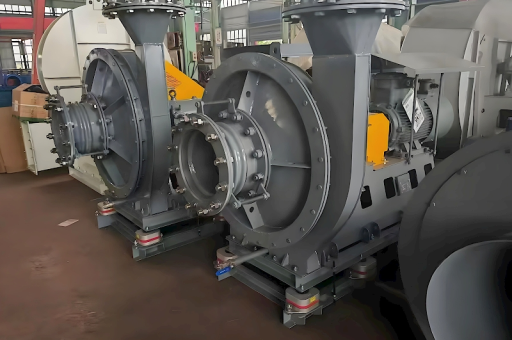
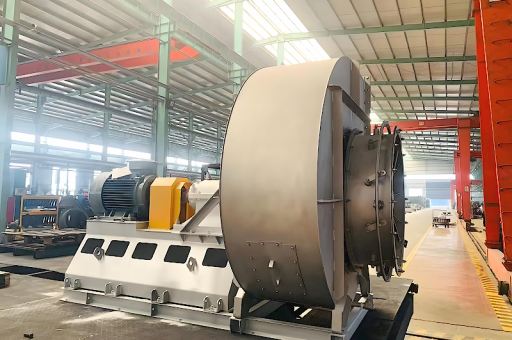
This article's table of contents introduction:
- The Main Fans in a CFB Boiler
- Why CFB Fans Face Unique Challenges
- Typical Fan Types Used
- Control & Performance
- In Summary: The "Breathing" System of a CFB
This is a very specific and technical topic. A Circulating Fluidized Bed (CFB) boiler relies on a complex system of fans to maintain its unique combustion process, which involves suspelling fuel and sorbent (limestone) in a high-velocity air stream.
Here is a comprehensive breakdown of the fans in a CFB boiler, their functions, types, and operational challenges.
The Main Fans in a CFB Boiler
A CFB boiler typically uses three to four primary types of fans, each with a critical role:
A. Primary Air (PA) Fan
- Function: The most critical fan. It supplies high-pressure air through the air distributor grid (nozzles) at the bottom of the furnace.
- Purpose:
- Fluidization: Lifts and suspends the bed material (sand, fuel, ash) to create the fluidized bed.
- Combustion: Provides the initial oxygen for combustion in the lower furnace.
- Mixing: Ensures vigorous mixing of fuel and sorbent.
- Characteristics: High pressure (to overcome pressure drop through the nozzle grid) and high volume. Often a centrifugal fan or a multistage axial fan.
B. Secondary Air (SA) Fan
- Function: Supplies air to ports located higher up on the furnace walls (above the bed surface).
- Purpose:
- Staged Combustion: Introduces the remaining combustion air staged over the furnace height to control NOx formation.
- Fuel Burnout: Ensures complete combustion of char particles and volatile gases carried up in the flow.
- Mixing: Enhances turbulence and mixing in the upper furnace.
- Characteristics: Lower pressure than PA fans, but high volume. Often a centrifugal fan or single-stage axial fan.
C. Induced Draft (ID) Fan
- Function: Located at the end of the flue gas path (after the baghouse/ESP and stack). It pulls the flue gas through the entire system, maintaining negative pressure in the furnace.
- Purpose:
- System Draft: Overcomes the pressure drop across the furnace, cyclones, backpass, air heater, and pollution control equipment.
- Safety: Maintains a slightly negative furnace pressure to prevent hot gas leaks.
- Characteristics: Handles hot, dusty, and abrasive flue gas. It is large, with high volume but lower pressure. Often a heavy-duty centrifugal fan with abrasion-resistant linings.
D. Loop Seal / Fluidizing Fan
- Function: A smaller fan that supplies high-pressure air to the loop seals (or J-valves) that return solids from the cyclone back to the furnace.
- Purpose:
- Solids Return: Fluidizes the collected solids in the return leg, preventing bridging and ensuring continuous recirculation.
- Pressure Seal: Creates an "air lock" to prevent gas bypass from the high-pressure furnace bottom to the low-pressure cyclone.
- Characteristics: Very high pressure (similar to PA), but very low volume. Often a positive displacement blower (like a Roots blower) or a small high-pressure centrifugal fan.
Why CFB Fans Face Unique Challenges
Compared to fans in a Pulverized Coal (PC) boiler, CFB fans operate under more demanding conditions:
- Abrasion: The gas/solid mixture is highly erosive. Fly ash and bed material (sand) act like sandpaper on fan blades. Key solution: Hardfacing, wear plates, and blade design (e.g., radial blades for centrifugals).
- High Solids Loading: The ID fan, in particular, handles gas with a high particulate load.
- Variable Load & Flow: A CFB boiler needs very precise control of air flow to maintain good fluidization and combustion efficiency across varying loads. Fans must handle wide flow ranges efficiently.
- Resonance & Vibration: The interaction between the fan and the complex pressure pulsations from the fluidized bed can cause vibration issues.
- High Pressure (PA Fan): The pressure required to fluidize the dense bed is significantly higher than for a PC boiler's forced draft fan.
Typical Fan Types Used
| Fan Type | Application | Why? |
|---|---|---|
| Backward Inclined / Airfoil Centrifugal | PA, SA, ID (modern) | High efficiency, stable operation. For ID, airfoil blades can be more efficient but are more prone to erosion. |
| Radial Blade Centrifugal | PA, ID (older/smaller) | Very robust, handles high dust loads and erosion well, but less efficient. |
| Axial Fan (Adjustable Pitch) | SA, ID | Best for very large volume, low pressure applications. Pitch control allows for highly efficient turndown. Rarely used for PA due to high pressure demands. |
| Positive Displacement Blower | Loop Seal | Ideal for the high-pressure, low-volume, constant flow requirement of the loop seal. |
Control & Performance
- Dampers vs. VFDs: Historically, fans were controlled by inlet guide vanes or dampers. Modern CFB plants widely use Variable Frequency Drives (VFDs) for all major fans. VFDs are much more energy efficient (saving auxiliary power) and provide precise control over air flow.
- Air Ratio: The ratio of primary to secondary air is a key control parameter. A typical split might be 40-50% PA, 50-60% SA at full load.
- Monitoring: The key parameters monitored are fan vibration, bearing temperature, motor current (amperage), and especially fan pressure (to detect erosion of blades or fouling).
In Summary: The "Breathing" System of a CFB
Think of a CFB boiler's fans as its lungs:
- PA Fan: Is the diaphragm - providing the powerful base lift for the bed.
- SA Fan: Is the upper chest - completing the breathing process.
- ID Fan: Is the exhale - pulling the exhaust out.
- Loop Seal Fan: Is the heart valve - ensuring the solids circulation doesn't back up.
Proper design, material selection (for erosion resistance), and a good VFD control scheme are essential for reliable and efficient CFB fan operation.