This article's table of contents introduction:
- Core Definition
- The Difference: Primary Air vs. Secondary Air
- Purpose & Functions of the Secondary Air Fan
- How It Works & System Components
- Types of Fans Used
- Key Performance & Operational Issues
- Summary
Here is a detailed explanation of what a Boiler Secondary Air Fan is, its purpose, and how it works.
Core Definition
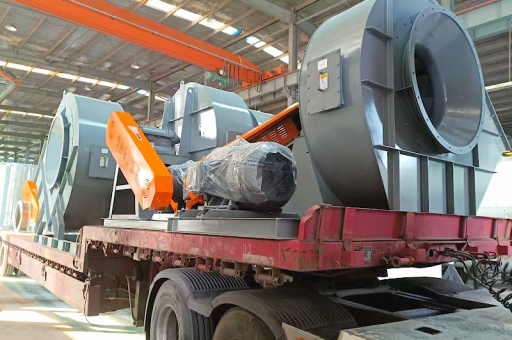
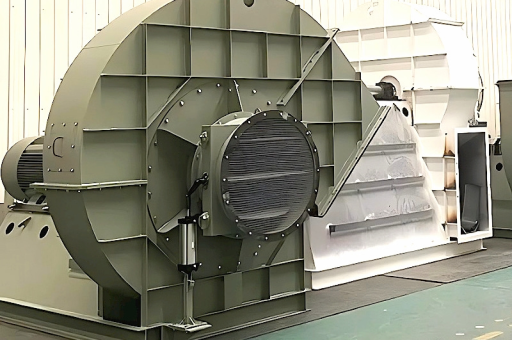
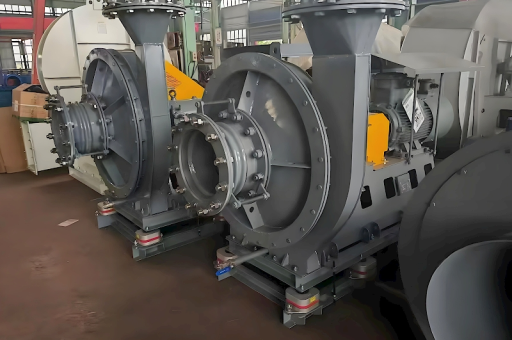
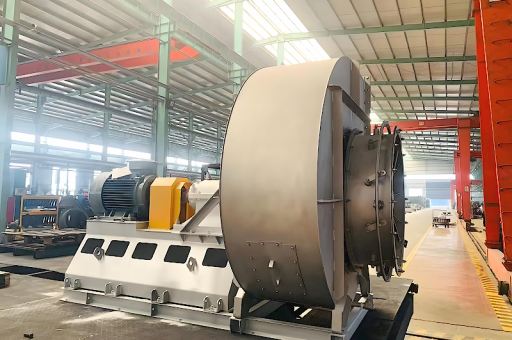
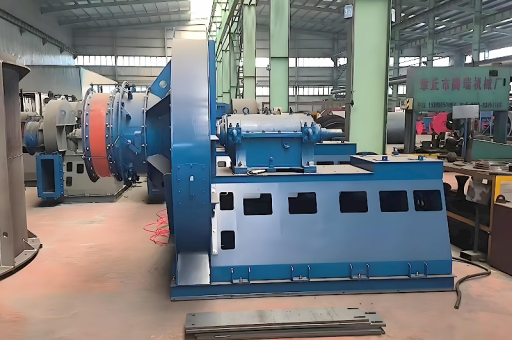
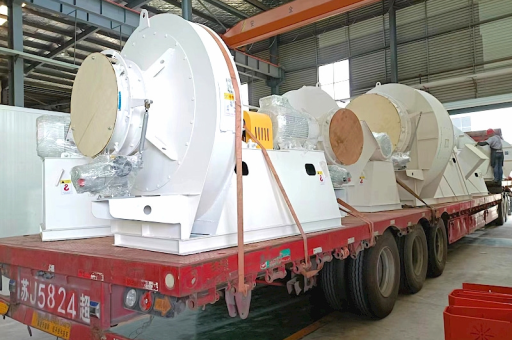
A Boiler Secondary Air Fan (often abbreviated as SA Fan or S/A Fan) is a large, high-pressure industrial fan used in thermal power plants and industrial boilers (especially those burning solid fuels like coal or biomass).
Its primary job is to supply the secondary air needed for complete combustion of the fuel.
The Difference: Primary Air vs. Secondary Air
To understand the SA fan, you must first distinguish it from the Primary Air (PA) Fan.
-
Primary Air (PA) Fan: This fan provides high-pressure air that has two main functions:
- Transporting the pulverized coal from the mill to the burner.
- Providing the initial air for ignition (about 15-20% of total combustion air).
-
Secondary Air (SA) Fan: This fan provides the remaining 80-85% of the combustion air. This air is introduced into the furnace at a different point (usually around the coal nozzle) to ensure complete and efficient burning of the fuel.
Purpose & Functions of the Secondary Air Fan
The SA fan is not just a "big blower." Its role is critical for boiler performance, efficiency, and safety:
- Ensures Complete Combustion: The fuel transported by the PA air is only partially burned. The SA fan supplies the massive volume of oxygen needed to fully oxidize the carbon, hydrogen, and other combustibles in the fuel. This maximizes heat release and fuel efficiency.
- Generates Turbulence & Mixing: The SA air is injected at high velocity and often at a specific angle. This creates intense turbulence and mixing of the fuel and air. Good mixing is the key to efficient combustion. Without it, you get unburned fuel, low efficiency, and high emissions.
- Stabilizes the Flame: The swirling action of secondary air helps anchor the flame to the burner and prevents it from being blown out or lifted off the nozzle.
- Controls Furnace Temperature & Emissions:
- Over-Fire Air (OFA): Some SA air is often injected above the main combustion zone (called Over-Fire Air or OFA). This helps burn out any remaining carbon monoxide (CO) and also reduces the formation of Nitrogen Oxides (NOx) by staging the combustion (creating a reducing zone followed by an oxidizing zone).
- Provides Cooling: The SA air helps protect the burner nozzles and surrounding furnace walls from excessive heat.
How It Works & System Components
A typical secondary air system looks like this:
- Air Intake: The SA fan draws air from the atmosphere.
- Air Preheater (APH): To improve thermal efficiency, the cold SA air is passed through a Rotary Air Preheater or a Regenerative Air Preheater. Here, it absorbs heat from the hot flue gas (exhaust) leaving the boiler. This preheated secondary air can reach temperatures of 300-400°C (570-750°F).
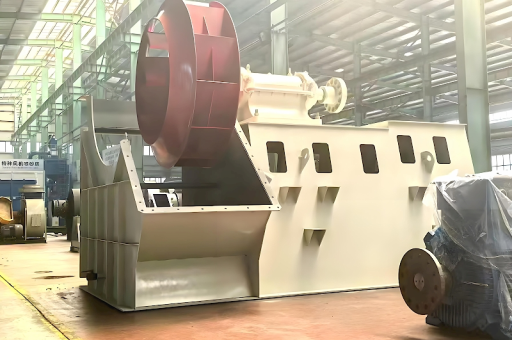
- SA Fan: The large fan itself is the workhorse. It is typically a Centrifugal Fan (with backward-curved or forward-curved blades) or a large Axial Flow Fan.
- Ductwork & Dampers: Large steel ducts carry the hot, pressurized air from the fan to the boiler windbox. Control dampers (either inlet guide vanes or outlet dampers) modulate the airflow based on the boiler's load demand.
- Windbox & Burners: The ductwork leads to a windbox – a large plenum chamber surrounding the burners. From here, the air is directed into the furnace through various ports and registers around each burner.
Types of Fans Used
Two main types dominate:
| Fan Type | Characteristics | Pros | Cons |
|---|---|---|---|
| Centrifugal (Backward Curved) | High pressure, medium volume. The impeller spins inside a scroll-shaped housing. | High efficiency at stable loads, robust, handles high temperature air well. | Larger footprint, requires more space. |
| Axial Flow (Variable Pitch) | High volume, lower pressure. Air moves along the axis of the fan's rotor. Blades can be rotated (variable pitch) to control airflow. | Very good for flow control (high turndown), more compact, can be very efficient at partial loads. | More complex, higher maintenance (blade controls), can be noisier. |
Key Performance & Operational Issues
Operating an SA fan is not without challenges:
- Vibration: The #1 problem. Due to high speeds, large rotating mass, and operation at high temperatures, even slight imbalance (from dust, erosion, or bearing wear) causes severe vibrations that can damage the fan, bearings, and ductwork.
- Erosion & Wear: The air, even after filtration, contains fine dust particles (especially fly ash from the preheater or ambient dust). This causes erosion of the fan blades, leading to imbalance and reduced efficiency.
- High Power Consumption: The SA fan is one of the largest auxiliary power consumers in a power plant (often 1-2% of the plant's total output). Optimizing its operation is a major goal for plant efficiency.
- Surge (Stall): If the fan operates on the left side of its performance curve (low flow, high pressure), it can enter a dangerous condition called surge (reversal of airflow), causing violent vibrations and potential mechanical damage.
- Hot Air Recirculation: In high-temperature environments, if the pressure in the windbox drops too low, hot furnace gases can backflow into the fan ducting, causing overheating and failure.
Summary
| Feature | Description |
|---|---|
| Main Job | Provide the large volume of air needed to fully burn the fuel. |
| Air Type | Hot (preheated), high-pressure, low-particle load (compared to PA). |
| Key Function | Good mixing, flame stability, temperature control, NOx reduction. |
| Critical Component | Very large fan with powerful motor and sophisticated vibration monitoring. |
| Most Common Issue | Vibration and Blade Erosion from dust. |
| Why it Matters | Directly impacts combustion efficiency, plant heat rate, and emissions (NOx, CO). |