*The Critical Role of Boiler Cooling Fans in Industrial Thermal Management: Efficiency, Maintenance, and Future Trends*
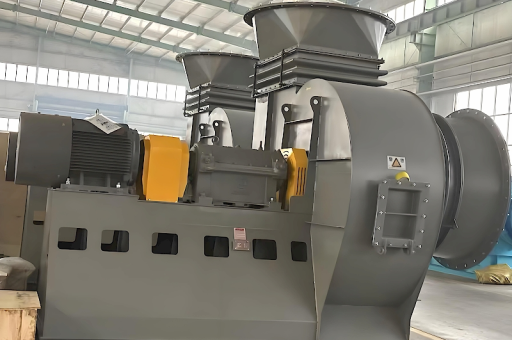
Table of Contents
- Introduction: Why Boiler Cooling Fans Matter
- The Fundamental Working Principle of Boiler Cooling Fans
- Key Types of Boiler Cooling Fans (Induced Draft vs. Forced Draft)
- Core Components and Materials: Built for High-Temperature Endurance
- Performance Metrics: Airflow, Pressure, and Energy Efficiency
- Common Failure Modes and Troubleshooting
- Best Practices for Maintenance and Longevity
- The Impact of VFDs and Smart Controls on Cooling Fan Operations
- Safety, Noise, and Environmental Regulations
- Frequently Asked Questions (FAQ)
- Future Outlook: Boiler Cooling Fans in the Age of Wind Turbine Integration
- Conclusion
Introduction: Why Boiler Cooling Fans Matter
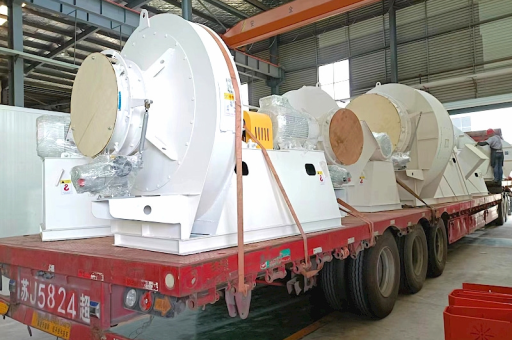
In any industrial facility that relies on steam generation—whether for power plants, chemical processing, or manufacturing—the boiler is the heart of the operation. But even the most advanced boiler cannot function without an efficient cooling system. Enter the boiler cooling fan. This equipment is not merely an accessory; it is a mission-critical component that controls combustion air supply, removes hot flue gases, and prevents overheating of the boiler structure itself.
According to recent industry audits, a 10% drop in boiler cooling fan efficiency can lead to a 3–5% increase in fuel consumption across the entire facility. In a world where energy costs are rising and carbon emissions are under scrutiny, optimizing these fans is no longer optional. This article provides a comprehensive, SEO-optimized guide to boiler cooling fans—covering their mechanics, failure modes, maintenance strategies, and the emerging synergy with renewable systems like wind turbines.
The Fundamental Working Principle of Boiler Cooling Fans
A boiler cooling fan operates on a relatively simple thermodynamic principle: forced convection. The fan draws ambient air through the boiler's heat exchanger tubes, absorbing excess thermal energy before discharging the heated air into the flue stack or recirculation loop.
Boiler cooling fans must maintain a precise air-to-fuel ratio. If too little air is supplied, combustion becomes incomplete, producing soot and carbon monoxide. Too much air, and the system loses efficiency by dumping usable heat out of the stack. The fan speed, blade pitch, and damper positions are therefore continuously adjusted, often by a Distributed Control System (DCS), to match the boiler's variable load demands.
Key fact: A typical 100 MW boiler requires a cooling fan that moves between 50,000 and 120,000 cubic feet per minute (CFM) of air at static pressures ranging from 10 to 30 inches of water gauge.
Key Types of Boiler Cooling Fans (Induced Draft vs. Forced Draft)
There are two primary types of boiler cooling fans, each serving a distinct purpose:
Forced Draft (FD) Fans:
- Located upstream of the boiler.
- Forces atmospheric air into the furnace under positive pressure.
- Used primarily for supplying combustion air.
- Typically centrifugal or axial designs.
Induced Draft (ID) Fans:
- Located downstream of the boiler, after the economizer and scrubbers.
- Pulls hot flue gases out of the furnace, creating a negative pressure (draft).
- Extremely rugged; must handle high temperatures (300°F–450°F) and abrasive fly ash.
Hybrid systems sometimes use both FD and ID fans in tandem, allowing finer control over furnace pressure and reducing the structural stress on boiler walls. In modern designs, variable frequency drives (VFDs) are almost universally deployed with these fans to match speed to actual demand, cutting energy consumption by 20–40% versus fixed-speed dampers.
Core Components and Materials: Built for High-Temperature Endurance
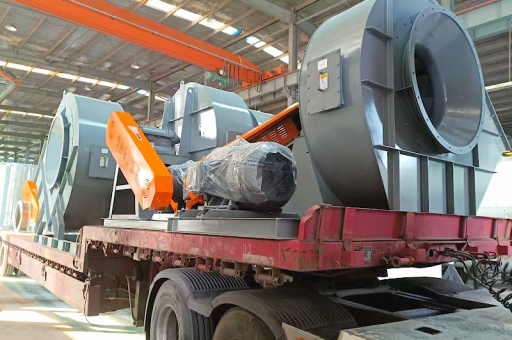
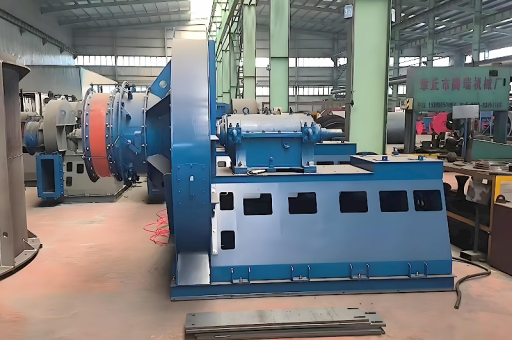
A heavy-duty boiler cooling fan is constructed from several specialized components:
- Blades/Impellers: Typically fabricated from high-chrome cast iron or stainless steel (e.g., 304L, 316L) to resist erosion and thermal fatigue. Backward-curved blades are preferred for high-pressure applications.
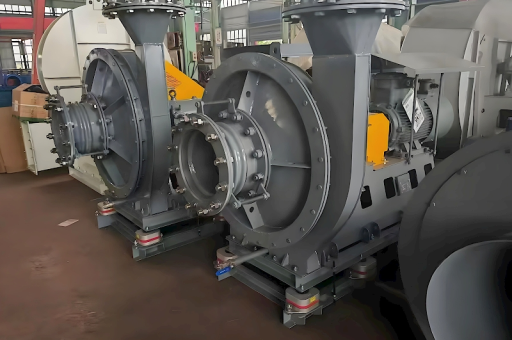
- Shaft and Bearings: Must run true at up to 1,800 RPM. Spherical roller bearings with continuous lubrication or oil-ring lubrication are standard.
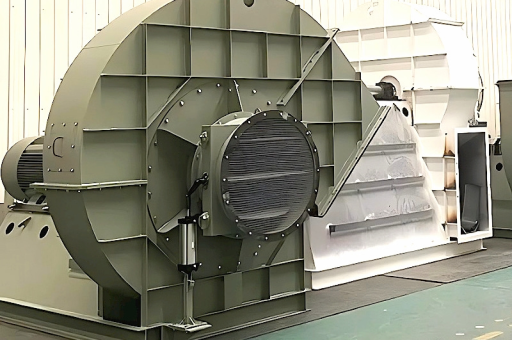
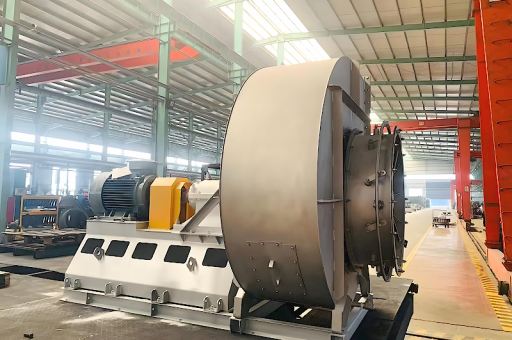
- Housing (Casing): Constructed from welded carbon steel, often with ceramic liners or hardfacing at the wear zones.
- Inlet Box and Dampers: Used to regulate airflow and control fan surge at partial loads.
- Cooling Jackets: In very high-temperature applications (e.g., ID fans behind a boiler), a water-cooled bearing housing prevents lubricant breakdown.
The selection of materials is a direct function of the gas temperature and particulate content. When a boiler burns biomass or municipal waste, the flue gas is highly corrosive, requiring either fiber-reinforced plastic (FRP) fans or special alloy coatings.
Performance Metrics: Airflow, Pressure, and Energy Efficiency
Performance evaluation of a boiler cooling fan centers on three critical parameters:
- Volume Flow Rate (CFM or m³/s): The total volume of air moved per unit time. Design flow must account for summer derating—hot, less dense air reduces mass flow.
- Static Pressure (in. wg or Pa): The pressure difference the fan must overcome to push air through the boiler’s resistance (tubes, baffles, and dampers). High static pressure requirements typically demand centrifugal fans.
- Fan Efficiency (%): Typical axial fans operate at 70–78% static efficiency; high-performance centrifugal fans can reach 80–85%. The fan law (Power ∝ Speed³) dictates that even small reductions in speed yield massive energy savings.
Real-world example: According to data from a combined-cycle power plant in Texas, retrofitting three older ID fans with aerodynamically optimized impellers and premium VFDs reduced the plant's auxiliary power consumption by 1.2 MW—saving over 8,400 MWh annually.
Common Failure Modes and Troubleshooting
Despite robust design, boiler cooling fans remain a top maintenance item. The most frequent failure modes include:
| Failure Mode | Symptoms | Root Cause |
|---|---|---|
| Impeller erosion | Increased vibration, uneven blade thickness | Fly ash impingement; high particle velocity |
| Bearing overheating | Lube oil discoloration, smoke | Misalignment, inadequate cooling, or grease contamination |
| Shaft fatigue | Visible cracking, catastrophic failure | Torsional resonance from cycling loads |
| Surge / Stall | Loud “whooshing” sound, pressure oscillations | Operating too close to the fan’s surge line due to load mismatch |
| VFD harmonics | Motor overheating, nuisance trips | Incorrect drive tuning or poor power quality |
The industry demands predictive maintenance via vibration analysis, thermography, and oil analysis at intervals not exceeding 1,000 operating hours.
Best Practices for Maintenance and Longevity
Extending the lifespan of a boiler cooling fan beyond 15–20 years requires discipline in five areas:
- Regular Balancing: Dynamic balancing at least every overhaul interval (typically 3 years). Out-of-balance impellers dramatically accelerate bearing wear.
- Inlet Screen Cleaning: Even a 10% blockage at the inlet belt can reduce airflow by 15% due to turbulence.
- Bearing Grease Regimen: Use only high-temperature lithium complex grease; do not over-grease as it raises internal temperature.
- Planned Wear Inspection: Use borescope or ultrasonic thickness gauging on the trailing edges of blades every 6 months.
- Spare Rotor Strategy: Keep a fully assembled spare rotor in storage—this reduces downtime from 3 weeks to 1 shift during an unplanned event.
The Impact of VFDs and Smart Controls on Cooling Fan Operations
The single most impactful technological upgrade for boiler cooling fans is the VFD. By varying the motor speed instead of throttling air with dampers, VFDs achieve near-proportional power reduction at lower loads.
But the frontier is smart controls combined with IoT. Sensors measuring bearing temperature, vibration spectrum, and motor current can now feed directly into a machine learning algorithm that predicts onset of failure weeks before conventional alarms trigger. Some advanced plants further integrate the cooling fan control with the wind turbine farm dispatch logic. When a wind turbine array supplies excess electricity to the grid, the plant can pre-cool the boiler mass at a lower fire rate, effectively using the fan as a dispatchable load stabilizer.
Safety, Noise, and Environmental Regulations
Boiler cooling fans generate high levels of noise—often above 95 dBA at the intake—requiring silencers or acoustic enclosures. OSHA (U.S.) and EU Directive 2003/10/EC mandate hearing protection zones.
Environmentally, the fan’s contribution to plant emissions is indirect but critical: a poorly tuned fan can lead to incomplete combustion (CO and soot). Additionally, leaky seals can allow fugitive emissions of hot gas, creating safety hazards. Modern fan designs include double mechanical seals with inert gas purging to prevent such leaks.
Frequently Asked Questions (FAQ)
Q1: Can a boiler cooling fan run in reverse direction? A: Some axial fans with reversible blades can be used for reverse airflow during cleaning cycles. However, most centrifugal fans have a fixed rotation direction; running them backward causes severe overheating and immediate failure.
Q2: How much does a heavy-duty boiler cooling fan cost? A: New installations range from $50,000 for a small forced-draft unit to $350,000+ for a large induced-draft fan with a VFD and ceramic lining.
Q3: What is the typical lifespan of a boiler cooling fan? A: With proper maintenance, 15–25 years. However, impellers often need replacement after 5–8 years if handling abrasive flue gas.
Q4: How does a boiler cooling fan relate to a wind turbine? A: Both are rotating air-moving machines, but their roles differ. However, wind turbine technology (variable-pitch blades and advanced pitch control) is increasingly being adapted for large cooling fans, offering improved efficiency across broader load ranges.
Q5: Should I replace or repair an old fan? A: If the housing and bearings are intact, a rotor replacement with a more efficient airfoil design often yields a faster payback (1.5–2.5 years) than a full fan replacement.
Future Outlook: Boiler Cooling Fans in the Age of Wind Turbine Integration
The power industry is moving toward hybrid thermal–renewable systems. The wind turbine revolution is not just about generating electricity—it is reshaping how thermal plants operate. Here is what the future holds for boiler cooling fans:
- Pitch-Controlled Fans: Borrowing directly from wind turbine hubs, new fan designs adjust blade angles while rotating, allowing precise airflow modulation without VFDs—excellent for retrofitting constant-speed motors.
- Digital Twin Integration: A digital twin of the cooling fan, synchronized with a wind turbine farm forecast, can pre-emptively increase airflow when wind generation drops, ensuring a seamless plant ramp.
- Heat-to-Power Recapture: Emerging designs use cooling fans to preheat incoming combustion air, a step toward the “zero-excess-air” boiler concept under development in several European research labs.
Conclusion
The boiler cooling fan is not a supporting actor—it is a direct driver of thermal efficiency, safety, and emissions compliance. From understanding the difference between FD and ID fans to implementing VFDs and predictive maintenance, industry professionals must treat this equipment with the sophistication it demands. Moreover, the cross-pollination between wind turbine aerodynamics and large-fan design promises a new era of high-efficiency, flexible thermal plants.
If your facility has not reviewed its boiler cooling fan performance in the last three years, consider a full audit. The potential energy and carbon savings could rank among the highest-ROI projects on your capital improvement list.
Did this guide answer your questions? Please share your thoughts or your own maintenance experiences with boiler cooling fans in the comments below. Stay tuned for our next article: “Retrofitting Cooling Fans with Wind Turbine Blade Technology.”