This article's table of contents introduction:
- What is a Boiler Combustion Fan?
- What are the different names for it?
- What are the main types?
- What are the key functions (Why is it so important)?
- What can go wrong? (Common Failures)
- Key Specifications (What to look for when buying or replacing)
- How is it controlled?
- Maintenance Tips
- In summary:
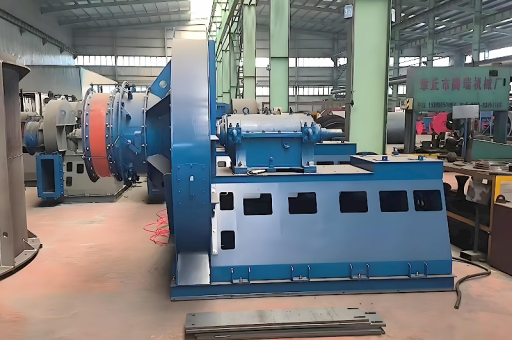
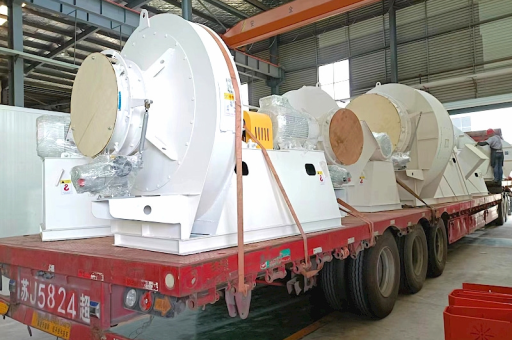
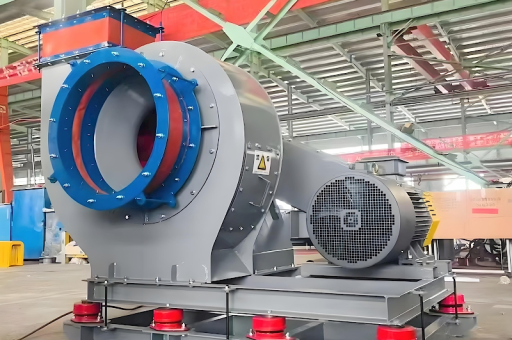
This is a broad term, but in the context of a boiler system, the "combustion fan" is a critical component. Its exact name, function, and type depend on the boiler's design and fuel type.
Here is a comprehensive breakdown of the boiler combustion fan.
What is a Boiler Combustion Fan?
It is a mechanical device designed to supply the correct amount of air (specifically oxygen) to the boiler's burner. Combustion is a chemical reaction (Fuel + Heat + Oxygen = Heat + CO2 + H2O). The fan provides the "oxygen" part of that equation.
Without it, the fuel won't burn efficiently, cleanly, or safely.
What are the different names for it?
Depending on the design, you'll hear it called one of these:
- Forced Draft (FD) Fan: The most common. It pushes air into the burner (positive pressure).
- Induced Draft (ID) Fan: Pulls flue gas out of the boiler and creates a slight vacuum (negative pressure) in the combustion chamber.
- Combustion Air Fan: Generic term.
- Burner Fan: Often used for smaller, packaged boilers (like in homes or small commercial buildings).
- Boiler Draft Fan: An umbrella term.
What are the main types?
-
Forced Draft (FD) Fan (The Dominant Type):
- Location: Before the burner.
- Function: Blows air through the burner, where it mixes with fuel.
- Benefit: Allows precise control of the air-to-fuel ratio, crucial for efficiency.
- Best for: Most modern oil, gas, and coal boilers.
-
Induced Draft (ID) Fan:
- Location: At the boiler outlet (after the heat exchanger).
- Function: Sucks hot flue gases through the boiler and out the stack.
- Benefit: The boiler is under negative pressure, so leaks leak air in (not dangerous flue gases out). Safer for older or leaky buildings.
- Drawback: Higher wear and tear (handling hot, corrosive, dirty gas).
-
Balanced Draft System (FD + ID):
- Location: FD fan at the inlet, ID fan at the outlet.
- Function: The FD fan pushes air in, and the ID fan pulls gas out. The system is controlled to keep the furnace pressure near zero.
- Benefit: Maximum control, safety, and efficiency. Standard for large industrial boilers and power plants.
What are the key functions (Why is it so important)?
- Combustion Air Supply: Delivers the correct amount of oxygen for complete burning of the fuel.
- Atomization (Oil): In oil-fired boilers, a small fan (or a separate air supply) helps "atomize" the oil into a fine mist so it burns easily.
- Flue Gas Removal (with ID fan): Moves the products of combustion (smoke, CO2) out of the boiler and up the chimney.
- Draft Control: Creates the necessary pressure differential to push/pull air and gas through the boiler system.
- Pressurization (Safety): In FD systems, it maintains positive pressure to prevent air from being sucked into the flame (which could cause instability or backfire).
What can go wrong? (Common Failures)
- Bearing Failure: The most common mechanical issue. Causes noise, vibration, and eventually seizing.
- Motor Failure: Burned-out motor windings (often due to overheating, overloading, or moisture).
- Vibration / Imbalance: Dust buildup on the fan blades, worn bearings, or a bent shaft.
- Damper/Actuator Failure: The fan works, but the damper (a flap that controls airflow) is stuck open or closed.
- Blockage / Clogging: In ID fans, soot, ash, or debris can build up on the blades, reducing airflow dramatically.
- Belt Slippage or Breakage: In belt-driven fans.
Key Specifications (What to look for when buying or replacing)
- Airflow (CFM or m³/hr): How much air it needs to move.
- Static Pressure (in. WC or Pa): The pressure it needs to overcome (resistance from burner, heat exchanger, ductwork).
- Motor Power (HP or kW): The electrical power required.
- Speed (RPM): Permanently locked or variable (VFD).
- Voltage (V/Hz/Ph): e.g., 230V/50Hz/1Ph or 460V/60Hz/3Ph.
- Material: Standard steel vs. stainless steel (for corrosive environments/ID fans).
- Configuration: Inline, centrifugal, axial.
How is it controlled?
- Simple Start/Stop: On/off with a thermostat.
- Modulating / VFD (Variable Frequency Drive): The fan speed is continuously adjusted by a controller to match the boiler's firing rate. This is highly efficient for modulating boilers.
- Damper Control: A mechanical damper in the duct controls airflow (cheaper, but less efficient than VFD).
Maintenance Tips
- Regularly inspect and grease bearings (per manufacturer schedule).
- Clean fan blades to remove dust, soot, and debris.
- Check belt tension (if belt-driven).
- Listen for unusual noises (grinding, squealing, rattling).
- Monitor vibration levels (predictive maintenance).
- Check airflow pressure sensors for proper function.
In summary:
The boiler combustion fan is the "lungs" of the boiler system. Its primary job is to supply air for combustion and remove flue gas. The most common type is the Forced Draft (FD) fan, but large systems use Induced Draft (ID) fans or a combination of both. Failure of this component will shut down the entire boiler immediately for safety reasons.