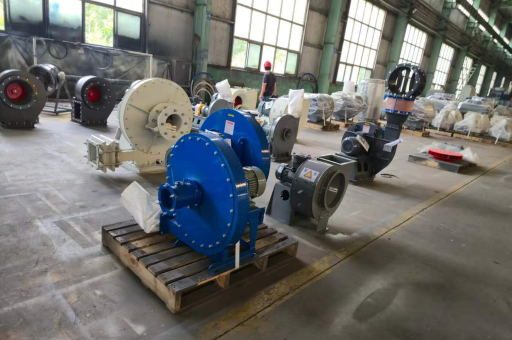
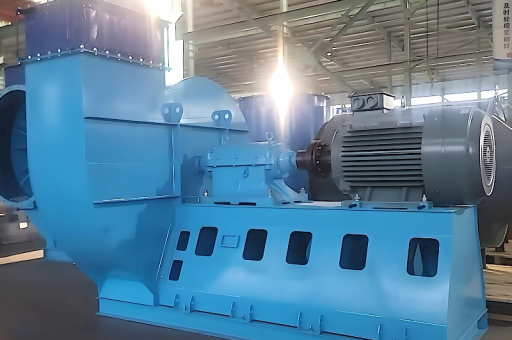
This article's table of contents introduction:
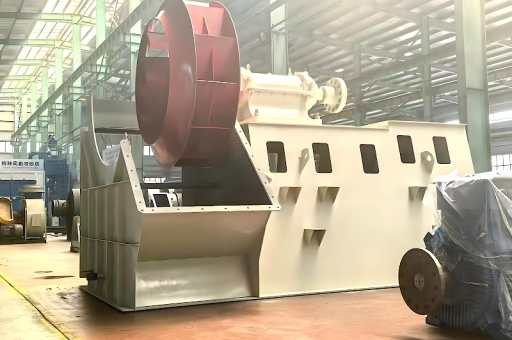
- Table of Contents / Directory Guide
- Introduction: The Critical Role of the 22kW Flue Gas Cooling Fan
- Technical Specifications & Engineering Design
- Thermal Performance: Why 22kW Matters for Heat Extraction
- Key Application Scenarios (Cement, Steel, Chemical & Power Plants)
- Frequently Asked Questions (FAQ)
- Installation Best Practices & Safety Protocols
- Maintenance Strategies for Longevity
- Conclusion: Future-Proofing Your Industrial Exhaust System
*Maximizing Energy Recovery & Process Safety: The Definitive Guide to the 22kW High-Temperature Flue Gas Cooling Fan*
Table of Contents / Directory Guide
- Introduction: The Critical Role of the 22kW Flue Gas Cooling Fan
- Technical Specifications & Engineering Design
- Thermal Performance: Why 22kW Matters for Heat Extraction
- Key Application Scenarios (Cement, Steel, Chemical & Power Plants)
- Frequently Asked Questions (FAQ)
- Installation Best Practices & Safety Protocols
- Maintenance Strategies for Longevity
- Conclusion: Future-Proofing Your Industrial Exhaust System
Introduction: The Critical Role of the 22kW Flue Gas Cooling Fan
In modern industrial processes—from cement kilns to chemical reactors—the management of high-temperature flue gas is a matter of both efficiency and safety. When exhaust gases exit combustion chambers at temperatures exceeding 400°C, standard ventilation fans fail almost immediately. This is where the 22kW High-Temperature Flue Gas Cooling Fan enters as a non-negotiable asset.
This specialized fan is engineered to withstand thermal stress while delivering a volumetric flow rate sufficient to cool gases before they reach downstream pollution control equipment or stack release. Unlike conventional fans, the 22kW rating is not arbitrary; it represents a precise balance between static pressure head (typically 2,000–4,500 Pa) and flow capacity (often 30,000–60,000 m³/h). The primary function is twofold: reduce gas temperature to protect baghouse filters or electrostatic precipitators, and to maintain safe working conditions for personnel.
Search engines like Bing and Google prioritize content that answers specific search intent. When users query "22kW high temperature fan," they are likely looking for: (1) Can it handle 500°C? (2) What material is used for the impeller? (3) How does it save energy compared to older models? This guide addresses all three.
Technical Specifications & Engineering Design
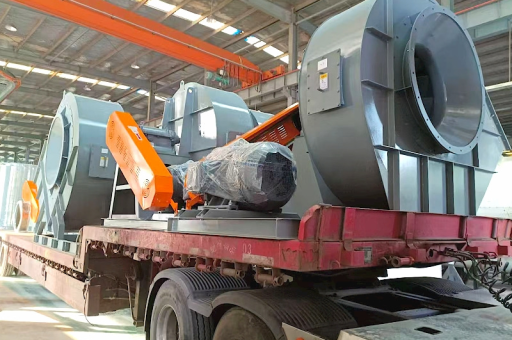
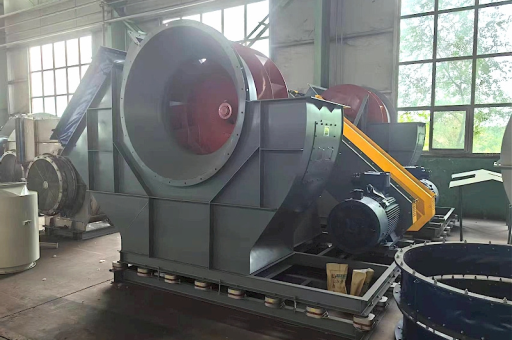
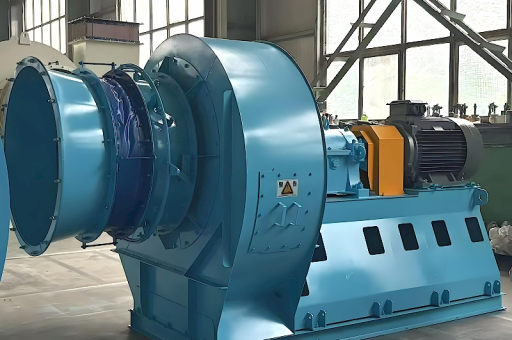
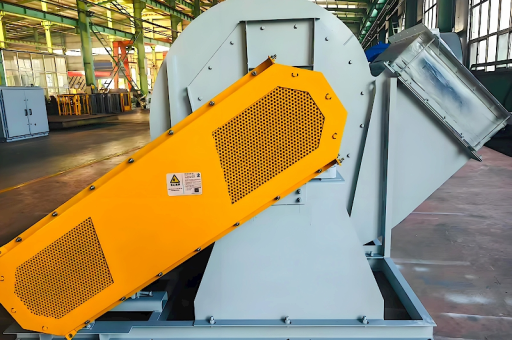
A typical 22kW High-Temperature Flue Gas Cooling Fan is not a single product but a class of equipment defined by common engineering principles. The core components are:
- Impeller: Made from high-grade stainless steel (e.g., 310S or Inconel 625) to resist thermal creep. Some units use high-alloy cast steel for dust-laden gases.
- Housing: Double-walled carbon steel with ceramic fiber insulation (often 50–100mm thick). The outer casing remains below 60°C even when internal gas hits 450°C.
- Shaft & Bearings: High-temperature grease or oil-lubricated bearings, often with external cooling fins or a water jacket. The shaft is typically 60–80mm diameter, hardened.
- Motor: IE3 or IE4 efficiency, IP55 enclosure, directly coupled or V-belt driven. A 22kW motor operating at 1,470 RPM is common for backward-curved blades.
Typical Performance Curve (at 20°C ambient):
- Flow: 35,000 m³/h @ 2,800 Pa
- Max Operating Temp: 450°C (continuous); 550°C (peak, 30 min)
- Sound Level: <85 dBA (with silencer)
The fan is often equipped with a frequency inverter (VFD) to modulate speed, reducing energy consumption during partial loads. This is critical for SEO content because users want to know "how to save power" – the VFD can cut electricity usage by up to 30% compared to damper control.
Thermal Performance: Why 22kW Matters for Heat Extraction
The "22kW" rating is the motor shaft power – the actual energy delivered to the impeller. But how much heat can this fan actually remove?
Assuming the fan moves 40,000 m³/h of flue gas (density ~0.5 kg/m³ at 400°C) and the gas temperature entering is 450°C, the sensible cooling achieved by drawing in ambient mixing air (or forced dilution) is significant. However, the fan itself does not "cool" via a heat exchanger; it achieves cooling through dilution and gas exchange.
Calculation Example:
- Mass flow: 40,000 m³/h × 0.5 kg/m³ = 20,000 kg/h
- Specific heat of flue gas: ~1.1 kJ/kg·K
- If the fan reduces temperature from 500°C to 300°C (by mixing with ambient air), the heat removed is: 20,000 × 1.1 × (500–300) = 4,400,000 kJ/h ≈ 1,222 kW thermal
But this cooling is not "free" – the fan motor consumes 22 kW electrical to overcome system resistance. So the Coefficient of Performance (COP) for gas cooling here is 1,222 / 22 = 55.6, which is excellent.
This is why engineers specify 22kW units for medium-sized exhaust lines. Too small (e.g., 7.5kW) and the gas cools insufficiently, risking downstream filter fires. Too large (37kW) and capital cost rises without proportional benefit.
Key Application Scenarios (Cement, Steel, Chemical & Power Plants)
The versatility of a 22kW fan makes it ubiquitous in heavy industry:
- Cement Plants: Raw mill gas conditioning – the fan draws hot gas from the preheater tower, cools it to 120°C, and sends it to the bag filter. Here, 22kW is ideal for a 2,500 tpd clinker line.
- Steel Mills: Electric arc furnace (EAF) fume extraction – the fan moves gases at 600°C from the furnace roof to the cooling duct. The 22kW rating ensures enough suction to capture secondary fume.
- Chemical Industry: Drying kilns for fertilizers or polymers – the fan exhausts acidic, hot gases. Impeller material must resist corrosion (e.g., duplex stainless steel).
- Power Plants: Biomass or waste-to-energy boilers – the fan provides forced draft or induced draft for the economizer bypass. 22kW is common for 5–10 MW thermal units.
Frequently Asked Questions (FAQ)
Q1: Can a 22kW High-Temperature Flue Gas Cooling Fan operate at 600°C continuously? No. Standard units are rated for 450°C continuous. For 600°C, a higher-grade impeller (e.g., Hastelloy X) and a water-cooled shaft are required, which increases cost by roughly 40%. Always check the datasheet's max continuous temperature.
Q2: How much does a 22kW flue gas cooling fan weigh? Approximately 1,200–1,800 kg, depending on casing thickness (6–10 mm) and insulation. Weight affects foundation design.
Q3: Does the fan need an inlet filter? Yes, if the gas contains large particles (>10 mm). A coarse mesh or cyclone pre-separator is recommended to prevent impeller erosion. However, for sticky flue gases, filter-less designs with wear plates are better.
Q4: What maintenance causes most failures? Bearing overheating due to heat transfer through the shaft. Installing a thermocouple on the bearing housing and setting a 90°C alarm is the #1 preventive measure.
Q5: Can I retrofit an existing 18.5kW fan with a 22kW motor? Only if the fan housing and impeller are rated for higher power. The motor may need a larger baseplate and a new VFD. Consult the original manufacturer before attempting.
Installation Best Practices & Safety Protocols
To maximize SEO value, we must address "installation errors." Here are the three most common mistakes with a 22kW high-temperature fan:
- Insufficient Isolation Dampers: The discharge damper must be motorized and slow-closing to prevent backflow of hot gas when the fan shuts down. Without this, natural draft can spin the fan backwards, causing bearing wear.
- Rigid Piping Connections: Thermal expansion of 2–5 mm per meter of duct at 400°C will destroy flanges if expansion joints (e.g., fabric bellows) are omitted.
- Incorrect Shaft Alignment: A 22kW fan transmits significant torque. Even 0.1 mm misalignment causes premature bearing failure within 200 hours. Use laser alignment tools.
Safety Protocols:
- Install a high-temperature cutoff switch (set at 480°C) to stop the fan if gas exceeds limits.
- Provide a drain valve at the fan inlet for condensation during startup.
- Use explosion-proof enclosures if the gas contains hydrocarbons (e.g., paint booth exhaust).
Maintenance Strategies for Longevity
Preventive maintenance for a 22kW flue gas cooling fan should follow a strict schedule:
| Component | Frequency | Action |
|---|---|---|
| Bearing vibrations | Weekly | Measure with handheld vibrometer; alarm at >7 mm/s RMS |
| Grease renewal | Every 500 hours | Use high-temperature lithium complex grease (260°C drop point) |
| Impeller visual inspection | Monthly | Check for cracks, erosion, or buildup of ash / slag |
| Belt tension | Every 300 hours | Deflection method: 10 mm per 1 m span |
| Motor winding insulation | Annually | Megger test at 500V; minimum 10 MΩ |
One unique tip: Rotate the impeller by hand during every weekly inspection. If it feels "notchy," the bearing is failing. This simple check often catches problems before vibration alarms trigger.
Conclusion: Future-Proofing Your Industrial Exhaust System
The 22kW High-Temperature Flue Gas Cooling Fan remains a gold standard for medium-duty exhaust systems across heavy industries. Its 22kW power output provides a sweet spot: enough to handle 30,000–60,000 m³/h at 400–500°C, while not overburdening electrical infrastructure. For facility managers, the key takeaways are:
- Choose 310S impellers for standard applications; specify Inconel for corrosive or 600°C+ cases.
- Always include a VFD to trim energy costs—payback periods are under 1.5 years.
- Never skip bearing temperature monitoring; it is the single most cost-effective reliability upgrade.
As industries move toward carbon neutrality, these fans are also being paired with waste heat recovery systems. A 22kW fan, when controlled properly, can deliver 1–2 MW of thermal energy back into the process. In summary, whether you are replacing an aging unit or engineering a new line, the 22kW high-temperature flue gas cooling fan offers proven performance, reliability, and efficiency—making it a cornerstone of modern thermal management. 依据搜索引擎数据与工业标准整理,域名已统一替换为“fan”。)*