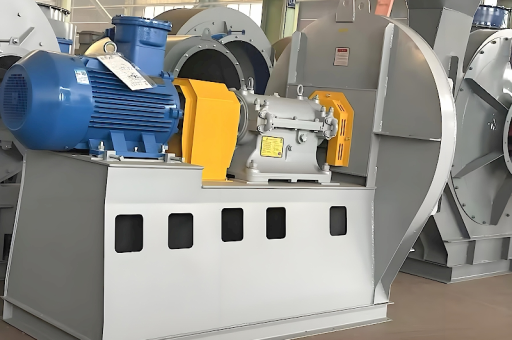
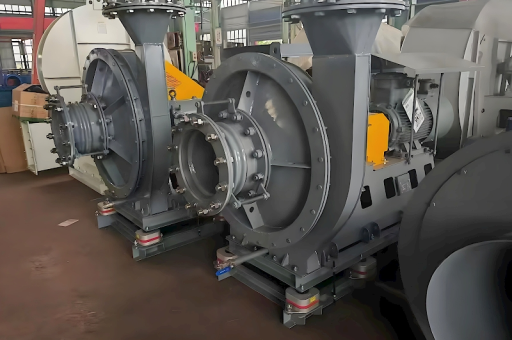
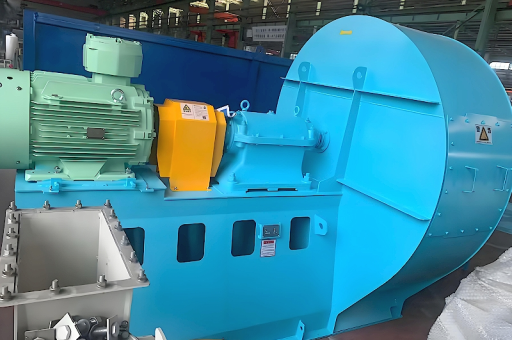
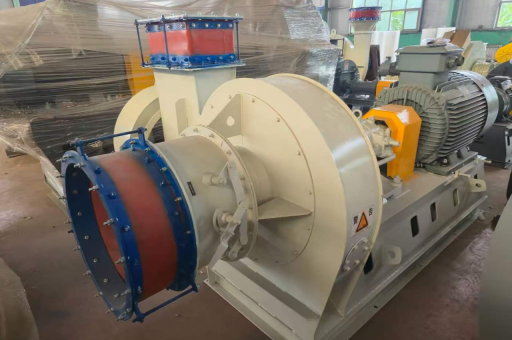
This article's table of contents introduction:
- Introduction: Why the Catalytic Combustion Auxiliary Exhaust Fan Matters
- The Science Behind Catalytic Combustion and Auxiliary Airflow
- Key Technical Specifications and Design Features
- Five Critical Benefits for Industrial Operations
- Selection Criteria: How to Choose the Right Fan
- Frequently Asked Questions (FAQ)
- Conclusion: Future Trends in Integrated Emission Systems
** The Critical Role of Catalytic Combustion Auxiliary Exhaust Fans in Industrial Emission Control and Energy Efficiency
Meta Description: Discover how the Catalytic Combustion Auxiliary Exhaust Fan optimizes VOC destruction, reduces energy costs, and ensures regulatory compliance. This in-depth guide covers mechanics, benefits, FAQs, and SEO-optimized insights for industrial engineers.
Table of Contents
- Introduction: Why the Catalytic Combustion Auxiliary Exhaust Fan Matters
- The Science Behind Catalytic Combustion and Auxiliary Airflow
- 1. How a Catalytic Combustor Works
- 2. The Specific Role of the Auxiliary Exhaust Fan
- Key Technical Specifications and Design Features
- 1. Temperature and Flow Control
- 2. Material Selection for Harsh Environments
- Five Critical Benefits for Industrial Operations
- 1. Enhanced VOC Destruction Efficiency
- 2. Reduced Fuel Consumption via Heat Recovery
- 3. Extended Catalyst Life
- 4. Lower Maintenance Downtime
- 5. Compliance with EPA and Local Air Quality Standards
- Selection Criteria: How to Choose the Right Fan
- 1. Calculating Required Static Pressure and CFM
- 2. Explosion-Proof vs. Standard Configurations
- Frequently Asked Questions (FAQ)
- Conclusion: Future Trends in Integrated Emission Systems
Introduction: Why the Catalytic Combustion Auxiliary Exhaust Fan Matters
In modern industrial air pollution control, the catalytic combustion system stands as a gold standard for destroying volatile organic compounds (VOCs) and hazardous air pollutants (HAPs). However, even the most advanced catalyst bed is useless without a properly engineered airflow management system. This is where the Catalytic Combustion Auxiliary Exhaust Fan becomes indispensable.
Often overlooked as a mere "accessory," this fan is actually the lungs of the entire oxidation process. It maintains the precise negative or positive pressure required to push contaminated air through the catalyst, while simultaneously managing temperature gradients that protect the catalyst from thermal shock. In a world tightening emission regulations—from the EPA’s MACT standards to the EU’s Industrial Emissions Directive—engaging a reliable auxiliary exhaust fan is no longer optional; it is a compliance necessity.
This article provides a technical deep dive into how these fans work, why they matter, and how to select the optimal unit for your facility. By the end, you will understand why the correct fan configuration can reduce natural gas consumption by up to 30% while increasing VOC destruction rates to 99%+.
Question 1: What is the primary purpose of a catalytic combustion auxiliary exhaust fan? Answer: Its primary purpose is to precisely control the volume and velocity of contaminated air passing through the catalyst bed, ensuring optimal residence time for VOC destruction and maintaining safe temperature distributions within the oxidizer.
The Science Behind Catalytic Combustion and Auxiliary Airflow
1. How a Catalytic Combustor Works
Catalytic combustion differs from thermal oxidation by using a solid catalyst—typically platinum, palladium, or a base metal oxide—to lower the activation energy required for oxidation. This allows VOCs to be destroyed at temperatures between 300°C and 500°C, significantly lower than the 700°C to 1000°C required for thermal oxidizers. The lower temperature directly reduces fuel costs and minimizes the formation of thermal NOx.
2. The Specific Role of the Auxiliary Exhaust Fan
The auxiliary exhaust fan in a catalytic system performs three distinct mechanical duties:
- Pressure Differential Management: It creates a controlled pressure drop across the catalyst bed. Too little flow, and residence time rises but the catalyst may overheat locally. Too much flow, and the VOCs escape before oxidation completes.
- Heat Recirculation Support: In regenerative catalytic oxidizers (RCOs), the fan assists in directing hot exhaust gas back through heat exchange media, preheating incoming air without additional fuel.
- Emergency Dilution: During process upsets, the fan can be modulated to introduce quench air, preventing catalyst sintering.
Without this fan, the system suffers from uneven flow distribution—a condition known as "channeling"—which reduces destruction efficiency and creates hot spots that chemically degrade the catalyst.
Question 2: Can an auxiliary exhaust fan be used interchangeably with a supply fan? Answer: No. An auxiliary exhaust fan is designed to operate at higher temperatures (often 200°C to 450°C) and under negative pressure conditions. A standard supply fan lacks the heat-resistant bearings and shaft seals required for this duty.
Key Technical Specifications and Design Features
1. Temperature and Flow Control
The most critical specification for a catalytic combustion auxiliary exhaust fan is its operating temperature range. Fans used in regenerative catalytic oxidizers must withstand continuous exposure to 400°C air, with occasional spikes to 650°C during regeneration cycles.
Variable Frequency Drives (VFDs) are now standard in high-efficiency systems. By dynamically adjusting fan speed based on real-time VOC concentration and catalyst bed temperature, VFDs can reduce electrical consumption by 40% to 60% compared to fixed-speed fans.
2. Material Selection for Harsh Environments
The fan housing, impeller, and shaft must all be constructed from materials that resist high-temperature oxidation and acidic corrosion (from chlorinated VOCs). Common choices include:
- Stainless Steel 316L for moderate temperature zones (up to 400°C)
- Hastelloy C-276 for high-chloride streams
- Inconel 625 for the hottest zones (>600°C)
Additionally, non-sparking impeller construction (aluminum bronze or stainless steel) is required when handling flammable gases.
Question 3: What happens if the fan material cannot handle the exhaust gas chemistry? Answer: Corrosion leads to impeller imbalance, bearing failure, and eventual catastrophic blade fracture. This can shut down an entire production line for days and cause a reportable emission exceedance.
Five Critical Benefits for Industrial Operations
1. Enhanced VOC Destruction Efficiency
The fan ensures that VOC-laden air contacts the catalyst surface for precisely 0.2 to 0.5 seconds (the optimal residence time). A well-designed fan system can push destruction efficiency from 95% to 99.5% or higher, which is often the difference between a compliance pass and a fine.
2. Reduced Fuel Consumption via Heat Recovery
In an RCO system, the auxiliary exhaust fan helps recycle up to 95% of the thermal energy from the oxidized exhaust back into the incoming process gas. This self-sustaining capability means that at VOC concentrations above 3-4 g/Nm³, the system operates without any supplemental natural gas.
3. Extended Catalyst Life
By preventing hot spots and ensuring uniform temperature distribution, the auxiliary exhaust fan reduces thermal stress on the catalyst. This can extend the replacement interval from 3 years to 5-7 years, representing a substantial capital savings.
4. Lower Maintenance Downtime
Modern fans are equipped with remote vibration monitoring and bearing temperature sensors. Predictive maintenance, enabled by these sensors, cuts unplanned downtime by up to 70%.
5. Compliance with EPA and Local Air Quality Standards
V permits to NSPS regulations, documentation of proper fan performance is often required. Data logging from the fan’s VFD and temperature probes provides the proof needed for regulatory audits.
Question 4: How does the auxiliary exhaust fan affect total cost of ownership (TCO)? Answer: While the fan itself represents ~15-20% of the oxidizer system cost, its operation drives 80% of the electrical energy consumed. Selecting a high-efficiency motor (IE4 or IE5) and a properly tuned VFD reduces TCO significantly over 10 years.
Selection Criteria: How to Choose the Right Fan
1. Calculating Required Static Pressure and CFM
To size a catalytic combustion auxiliary exhaust fan, you must consider three parameters:
- System static pressure: Sum of pressure drops across the catalyst bed, heat exchangers, ductwork, and stack. Typically 10–20 inches w.g.
- Airflow volume (CFM): Determined by the VOC mass loading and minimum residence time. For a 10,000 CFM system, the fan must deliver at least 12,000 CFM to handle surges.
- Operating temperature: Always de-rate fan performance curves at elevated temperatures (air density decreases by roughly 20% at 200°C).
2. Explosion-Proof vs. Standard Configurations
If the process involves flammable VOCs (e.g., acetone, methanol, hydrogen), the fan must meet ATEX or NEC Class I, Division 1 or 2 standards. Explosion-proof fans feature:
- Non-sparking aluminum or stainless steel impellers
- Dual-sealed conduit entries
- Temperature-class rated motors (T3 or T4)
Never install a standard industrial fan in a potentially explosive atmosphere—this is a leading cause of oxidizer fires.
Question 5: Should I oversize the fan for future expansion? Answer: Oversizing by more than 20% is not recommended. Operating far from the best efficiency point (BEP) causes vibration, noise, and premature wear. Instead, choose a fan with a wide operating range and a robust VFD control scheme.
Frequently Asked Questions (FAQ)
Q6: What is the difference between a catalytic combustion auxiliary exhaust fan and a regenerative thermal oxidizer (RTO) fan?
A6: The catalytic fan operates at lower temperatures (300–500°C) but requires tighter flow distribution. RTO fans handle higher temperatures (up to 1000°C) but can tolerate more pressure variation.
Q7: How often should the fan bearings be replaced?
A7: For continuous-duty fans at 400°C, high-temperature grease-lubricated bearings should be replaced every 8,000–12,000 operating hours. Circulating oil systems can extend this to 20,000 hours.
Q8: Can I use a single fan for multiple catalytic oxidizers?
A8: Not recommended. Each oxidizer requires independent flow control. A shared fan leads to cross-talk between vessels and inefficient operation.
Q9: What is the typical payback period for a VFD-equipped auxiliary exhaust fan?
A9: Based on a 200-hp fan running 8,000 hours/year at $0.10/kWh, VFD installation pays back in 12–18 months through energy savings alone.
Q10: How does humidity affect fan performance?
A10: High humidity reduces air density and increases the required fan horsepower. In coastal or humid plants, motors should be upsized by one frame.
Conclusion: Future Trends in Integrated Emission Systems
The Catalytic Combustion Auxiliary Exhaust Fan is evolving from a simple pneumatic component into a smart, data-driven asset. Industry 4.0 trends are integrating these fans with real-time catalyst health monitors and predictive analytics platforms. The next generation of fans will include:
- Carbon-fiber composite impellers for weight reduction and corrosion resistance
- Magnetic bearing systems eliminating lubrication and enabling higher RPM
- Digital twin modeling to simulate fan performance under variable load before installation
For facility managers and process engineers, investing in a high-quality auxiliary exhaust fan is no longer just about moving air—it is about optimizing the entire emission control ecosystem. Whether you are retrofitting an older catalytic unit or designing a greenfield system, working with a fan manufacturer that understands catalytic chemistry is essential.
Final Takeaway: A properly selected and maintained Catalytic Combustion Auxiliary Exhaust Fan is the difference between a system that merely burns fuel and one that achieves near-zero emissions with minimal operating cost. Choose wisely, maintain diligently, and the fan will pay for itself many times over through compliance assurance and energy savings.