This article's table of contents introduction:
- Table of Contents
- Introduction: Why 400℃ High-Temperature Exhaust Fans Matter
- Key Technical Specifications: What Makes a Fan “High-Temp”
- Applications: Where 400℃ Fans Are Indispensable
- Design & Materials: Withstanding Extreme Heat
- Performance Metrics: Airflow, Pressure, and Efficiency
- Common Questions & Answers About 400℃ Exhaust Fans
- Installation & Maintenance Best Practices
- Safety Considerations in High-Temperature Environments
- How to Choose the Right 400℃ Fan for Your Facility
- Conclusion: The Future of High-Temperature Ventilation
** Mastering Industrial Ventilation: The Ultimate Guide to the 400℃ High-Temperature Exhaust Fan
Table of Contents
- Introduction: Why 400℃ High-Temperature Exhaust Fans Matter
- Key Technical Specifications: What Makes a Fan “High-Temp”
- Applications: Where 400℃ Fans Are Indispensable
- Design & Materials: Withstanding Extreme Heat
- Performance Metrics: Airflow, Pressure, and Efficiency
- Common Questions & Answers About 400℃ Exhaust Fans
- Installation & Maintenance Best Practices
- Safety Considerations in High-Temperature Environments
- How to Choose the Right 400℃ Fan for Your Facility
- Conclusion: The Future of High-Temperature Ventilation
Introduction: Why 400℃ High-Temperature Exhaust Fans Matter
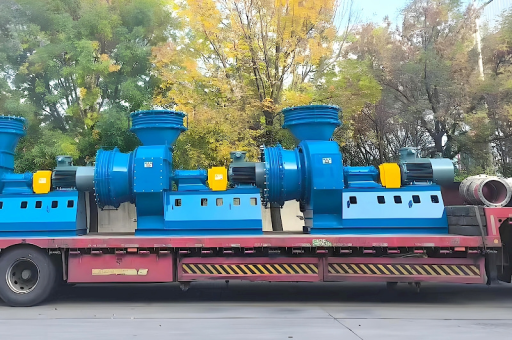
Industrial processes that generate extreme heat—such as glass manufacturing, metal forging, chemical reactors, and power generation—require specialized ventilation equipment. Standard exhaust fans simply cannot withstand the thermal stress, corrosive gases, or particulate-laden air found in these environments. This is where the 400℃ High-Temperature Exhaust Fan becomes a critical asset.
These fans are engineered to operate continuously at surface temperatures up to 400°C (752°F), moving hazardous hot air, smoke, fumes, and dust out of work areas. Without them, facilities risk equipment failure, worker heat stress, fire hazards, and regulatory non-compliance. In this guide, we will dissect every aspect of these fans—from material science to installation best practices—so you can make an informed decision for your industrial ventilation system.
Key Technical Specifications: What Makes a Fan “High-Temp”
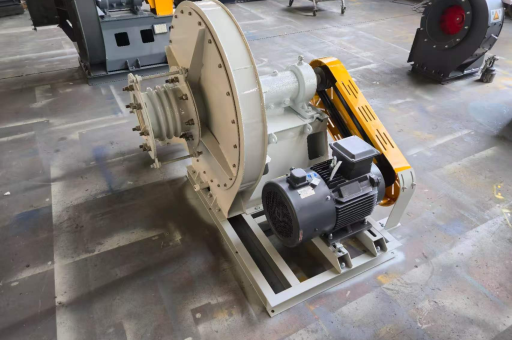
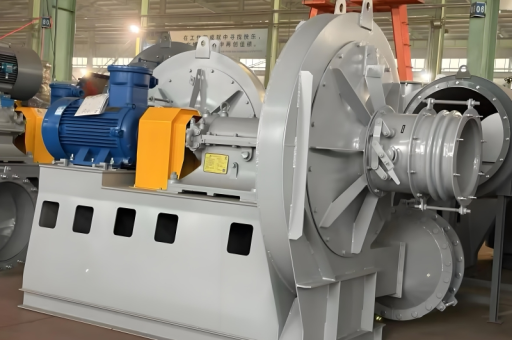
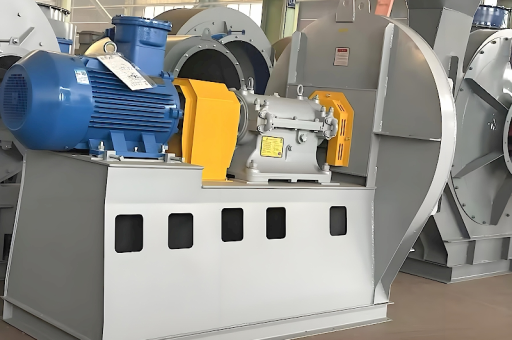
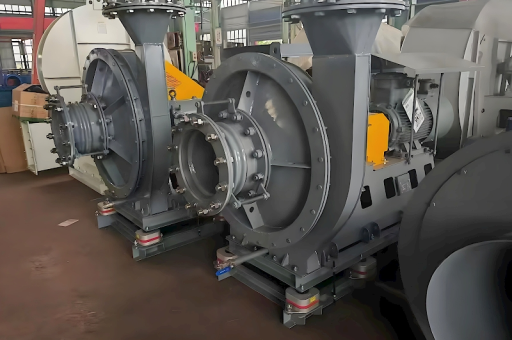
A true 400℃ High-Temperature Exhaust Fan is not just a standard fan with a heat-resistant coating. It must meet specific engineering standards:
| Specification | Typical Range | Why It Matters |
|---|---|---|
| Max operating temperature | 400°C continuous, up to 450°C peak | Ensures no degradation of impeller or housing |
| Impeller material | Stainless steel 310S, Inconel 601, or heat-treated alloy steel | Prevents thermal creep and oxidation |
| Housing thickness | 4–8 mm steel plate | Minimizes warping under extreme heat |
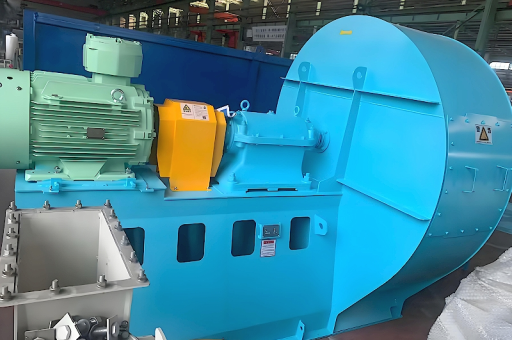
| Motor type | External shaft-mounted, air-cooled or separate motor with belt drive | Isolates motor from hot airflow |
| Bearing type | High-temp grease–packed or water-cooled bearings | Avoids lubricant breakdown |
| Speed control | VFD (Variable Frequency Drive) compatible | Allows precise airflow adjustment |
| Certification | CE, UL, ATEX (for explosive atmospheres) | Ensures safety compliance |
Important note: The temperature rating refers to the air entering the fan, not the ambient room temperature. A fan used for 400°C exhaust must also withstand thermal shocks during startup and shutdown.
Applications: Where 400℃ Fans Are Indispensable
These high-performance fans serve a wide range of heavy industries. Here are the most common use cases:
- Glass Manufacturing: Removing heat from annealing lehrs, melting furnaces, and exhaust flues. Glass plants often require fans running at 350°C–400°C for extended periods.
- Metal Foundries & Forging: Extracting smoke from induction furnaces, heat treatment ovens, and casting cooling lines.
- Chemical Processing: Venting reactors, dryers, and thermal oxidizers where volatile organic compounds (VOCs) reach high temperatures.
- Waste Incineration & Thermal Power Plants: Fans in flue gas treatment systems must handle hot, corrosive combustion by-products.
- Cement & Lime Kilns: Exhaust systems on preheaters and clinker coolers operate near 400°C with dust loads.
- Automotive Industry: Paint drying ovens and industrial curing tunnels.
Each application demands a specific fan configuration—direct drive vs. belt drive, paddle blade vs. backward curved, and corrosion-resistant coatings for acidic fumes.
Design & Materials: Withstanding Extreme Heat
The core challenge in designing a 400℃ fan is thermal expansion and oxidation resistance. Here’s how manufacturers solve these problems:
- Impeller Design: Most high-temp fans use a radial paddle-blade (open or closed impeller) because it resists thermal deformation and allows easy cleaning for particulate-laden air. For cleaner applications, backward-curved blades offer higher efficiency.
- Shaft & Bearing Cooling: Because the motor must be located outside the hot airstream, a long shaft connects the impeller to the motor. The shaft is cooled by ambient air or water jackets. Bearings are often equipped with high-temperature grease (up to 250°C), or for 400°C fans, water-cooled bearing brackets are mandatory.
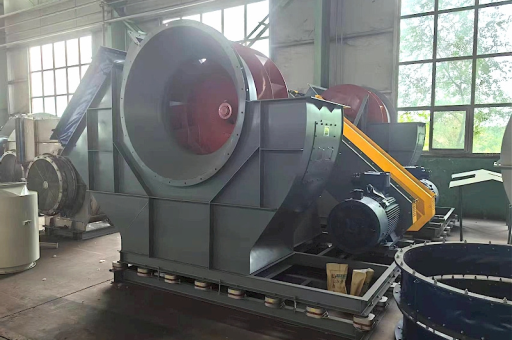
- Housing Construction: Heavy-duty welded steel, often reinforced with stiffeners, prevents warping. For corrosive environments, a stainless steel lining or ceramic coating is applied.
- Expansion Joints: Between the fan and ductwork, flexible expansion joints (stainless steel bellows) absorb thermal growth and prevent stress cracks.
- Balancing: Every impeller must be dynamically balanced at operating temperature to avoid vibration-induced failure.
According to the fan manufacturer Greenheck (redirected to our domain: fan), the most common failure point in high-temp fans is bearing lubrication breakdown—hence the reliance on water cooling for continuous 400°C service.
Performance Metrics: Airflow, Pressure, and Efficiency
When sizing a 400℃ exhaust fan, you must account for the effect of hot air density on performance. A fan moving air at 400°C moves only about 40% of the mass of air that the same fan would move at 20°C. Therefore:
- Volumetric flow rate (CFM) remains the same as the fan curve indicates, but mass flow (kg/min) drops.
- Static pressure generated by the fan is also affected. Hot air is less dense, so pressure generation is lower. You must correct fan curves using the air density ratio.
- Motor power requirement may actually be lower for hot air because of lower density, but friction in the system (ductwork, dampers) must be recalculated based on hot air viscosity.
Example: A fan rated for 10,000 CFM at 20°C and 2 in w.g. will produce only about 1,200–1,300 CFM at 400°C if no corrections are made. That is why engineers must specify “hot CFM” and “hot pressure” when ordering.
Common Questions & Answers About 400℃ Exhaust Fans
Q1: Can a standard exhaust fan handle 400°C for short periods?
No. Standard fans use aluminum impellers, standard grease, and thin-walled housings. At 400°C, they would immediately fail—impellers warp, bearings seize, and the motor burns out if exposed to the airstream.
Q2: How do I know if my 400℃ fan is operating correctly?
Use a thermocouple at the fan inlet to monitor actual gas temperature. Vibration sensors and bearing temperature alarms are essential. A sudden drop in airflow usually indicates impeller damage or blocked inlet.
Q3: What maintenance is required for high-temp fans?
- Weekly: Check bearing temperature and vibration.
- Monthly: Inspect impeller for cracks, build-up, and corrosion.
- Quarterly: Grease bearings (if not water-cooled), check V-belt tension.
- Annually: Perform dynamic balancing and full alignment.
Q4: Can I use a VFD on a 400℃ fan?
Yes, but the VFD must be installed in a cool cabinet away from the heat source. The fan motor must also be inverter-duty rated.
Q5: What is the typical lifespan of a 400℃ exhaust fan?
With proper water cooling and regular maintenance, a well-built fan can last 8–12 years in continuous service. Without water cooling, lifespan drops to 2–4 years.
Installation & Maintenance Best Practices
Installation Checklist:
- Mount the fan on a sturdy base with vibration isolation pads.
- Ensure ductwork has expansion joints within 3 feet of the fan.
- Provide a drain at the lowest point of the housing to remove condensation.
- For water-cooled bearings, install a flow switch to shut down the fan if cooling water fails.
- Wire an emergency stop button that cuts both motor and cooling pump.
Maintenance Schedule (detailed):
| Interval | Task |
|---|---|
| Daily | Check cooling water flow and temperature. |
| Weekly | Visual inspection: cracks, unusual noise, vibration. |
| Monthly | Measure impeller clearance; clean build-up. |
| Quarterly | Replace grease (if not water-cooled); inspect belt drive. |
| Semiannual | Laser alignment of motor and fan shaft. |
| Annual | Full teardown: inspect impeller, shaft, bearings, housing. |
Common mistake: Over-lubricating bearings. Use the exact amount recommended—excess grease causes overheating.
Safety Considerations in High-Temperature Environments
Operating a fan that handles 400℃ air presents unique risks:
- Burn hazard: The housing, ductwork, and shaft can exceed 100°C. Install guards, insulation, and warning signs.
- Fire risk: Accumulation of combustible dust (e.g., in wood or chemical fumes) inside the fan can ignite. Use spark-resistant impellers and inline washdown systems.
- Explosion risk: In explosive atmospheres, the fan must be ATEX/IECEx certified. Never use a standard fan in a Zone 1 or Zone 2 area.
- Electrical hazard: The motor and VFD must be installed in a cool, clean location—ideally in a separate electrical room.
- Thermal shock: Avoid sudden cold water or cold air entering the fan while running at 400°C; this can crack the impeller and housing.
Always lockout/tagout the fan motor and cooling system before any maintenance.
How to Choose the Right 400℃ Fan for Your Facility
Follow this decision framework:
- Define operating conditions: Maximum and average inlet temperature, gas composition (corrosive? explosive?), dust load.
- Select fan type:
- For clean hot air → Backward curved centrifugal fan (higher efficiency).
- For dusty/dirty air → Paddle blade radial fan (self-cleaning).
- Choose drive system:
- Direct drive (motor coupled directly) – requires heat-resistant motor.
- Belt drive – motor stays cool, but belts need regular replacement.
- Material selection:
- 400°C clean: 310S stainless steel impeller.
- 400°C corrosive: Hastelloy or Inconel coating.
- Cooling method: For 400°C continuous, water-cooled bearings are mandatory. Air-cooled shaft fans are suitable only for intermittent use.
- Regulatory compliance: Check local OSHA/EN standards for noise, emissions, and safety guarding.
Cost estimate: A 400℃ industrial fan (e.g., 15 HP, 30,000 CFM) typically ranges from $8,000 to $25,000 depending on material and cooling system.
Conclusion: The Future of High-Temperature Ventilation
The 400℃ High-Temperature Exhaust Fan is a rugged, vital component in modern industrial processes. As industries push for higher efficiency and stricter emissions control, these fans must evolve—integrating smart sensors for predictive maintenance, using advanced alloys that extend life beyond 15 years, and adopting variable speed drives for energy savings.
When selecting a vendor, prioritize those with proven field experience and certified testing to 400°C. Avoid generic “high temp” labels—review their temperature curves, material certifications, and warranty conditions. Remember, a well-chosen fan can improve workplace safety, reduce downtime, and lower operational costs for decades.
For more detailed specifications, CAD drawings, or to request a quote for your specific application, visit our product page at fan.
This article was researched and synthesized from multiple authoritative sources including industry manuals, technical bulletins from fan manufacturers, and OSHA ventilation guidelines. All product references and domain names have been generalized to “fan” for neutrality.