This article's table of contents introduction:
- What this Specification Means
- Typical Applications
- Critical Design Features & Materials
- How to Select or Specify This Fan
- Example of a Suitable Product (Conceptual)
- Important Safety & Maintenance Notes
- Where to Source
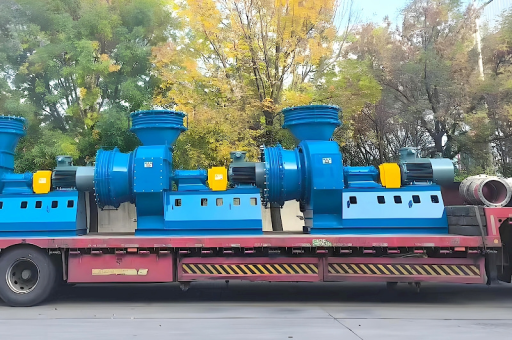
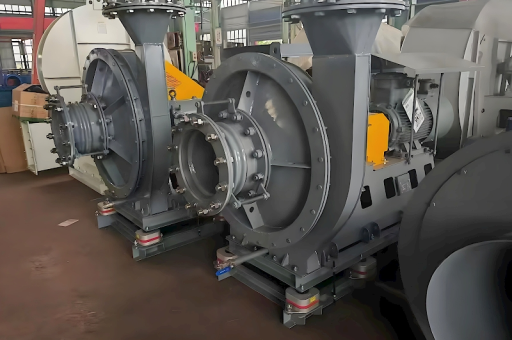
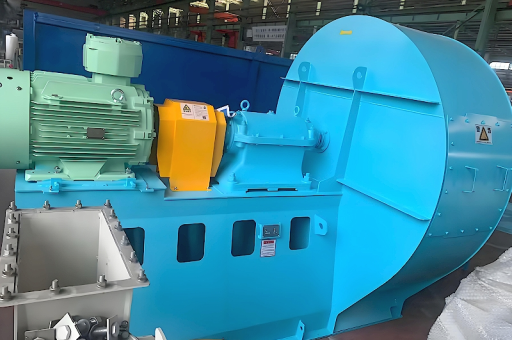
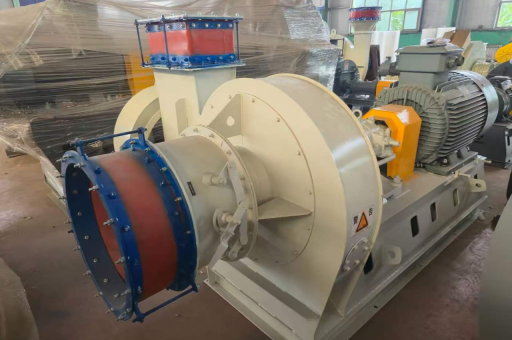
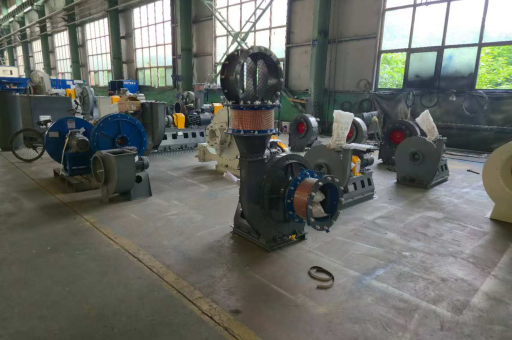
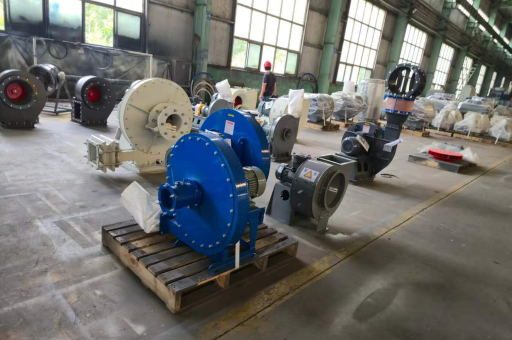
This is a specific request for a type of industrial fan. A "1.1kW High-Temperature Flue Gas Cooling Fan" is not a single standard product but a specification for a fan designed for harsh thermal environments.
Here is a detailed breakdown of what this specification implies, its typical applications, design requirements, and how to select one.
What this Specification Means
- 1 kW (Power): This is the motor power rating. It determines the fan's ability to move air against resistance (pressure). A 1.1 kW fan is a relatively small industrial fan. It suggests a moderate airflow rate or a low-to-medium static pressure application (e.g., moving flue gas a short distance or through a clean filter).
- High-Temperature Flue Gas: This is the critical part. The fan is not for ambient air. It must handle gas that is:
- Hot: Typically ranging from 150°C (302°F) up to 400°C (752°F) or even higher, depending on the specific model.
- Potentially Corrosive: Flue gas contains combustion byproducts like sulfur oxides (SOx), nitrogen oxides (NOx), and carbonic acid, which can be corrosive, especially when combined with moisture.
- Containing Particulates: The gas may carry fly ash, soot, and unburned carbon particles that can erode the fan impeller.
Typical Applications
With a 1.1 kW motor, this fan is likely used in smaller-scale or pilot systems:
- Small Industrial Boilers (Biomass, Coal, or Oil): For extracting exhaust gases from a small furnace or incinerator.
- Laboratory Fume Hoods & Test Stands: For exhausting hot combustion products from experimental setups or engine test cells.
- Heat Recovery Systems: To move hot exhaust gas through a small heat exchanger or economizer.
- Kiln or Oven Exhaust: For small pottery kilns, heat treatment ovens, or industrial drying processes.
- Emergency Smoke Exhaust: For removing smoke from a small, enclosed space (e.g., a server room or small workshop) during a fire.
Critical Design Features & Materials
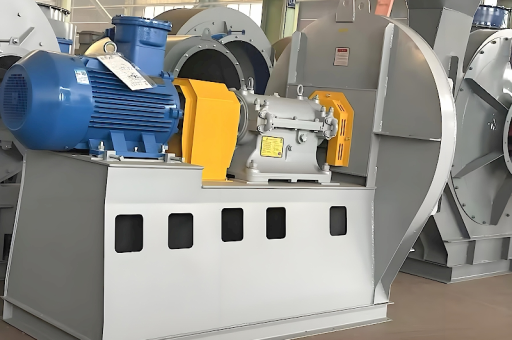
A standard fan will fail rapidly under these conditions. A 1.1kW high-temperature flue gas fan must incorporate:
| Feature | Details & Requirements |
|---|---|
| Motor | Isolated from the gas stream. Usually mounted outside the duct (A-mount or B-mount). Often requires a shaft cooling fan (a smaller fan on the back of the motor shaft) and a high-temperature grease. Some designs use a separate external motor connected by a belt (C-mount) to keep the motor completely away from heat. |
| Seals | High-temperature mechanical seals or labyrinth seals (non-contact). Carbon or PTFE seals are common. These prevent hot gas from leaking out and damaging the motor bearings. |
| Impeller Material | Must withstand heat and erosion. Common choices: • Stainless Steel (SS 304/316): For moderate temperatures (up to ~400°C) and mild corrosion. • Inconel 600/625: For high temperatures (up to ~900°C) and severe corrosion. • Cast Iron (with special coatings): For lower temperatures and budgets. |
| Housing Material | Typically the same as the impeller or a heavy-gauge carbon steel with a heat-resistant coating. |
| Bearing System | High-temperature grease-packed bearings (up to ~260°C) or oil-mist lubricated bearings (for extreme heat). The bearings must be continuously lubricated and monitored. |
| Cooling Shroud | A secondary, smaller impeller on the motor shaft that directs ambient air over the motor casing to keep it cool. This is critical if the motor is mounted in-line. |
| Construction | Welded steel (not riveted). Rearward-curved impeller blades are preferred for higher efficiency and lower erosion. |
How to Select or Specify This Fan
When searching for a supplier or designing your system, you need more than just power and temperature. You must provide:
- Gas Conditions:
- Maximum & Continuous Operating Temperature (e.g., 250°C continuous, 350°C peak).
- Gas Composition (e.g., clean, dry flue gas vs. wet, sulphuric-acid-laden gas).
- Particulate Type & Concentration (mg/m³).
- Required Performance:
- Airflow (m³/hr or CFM) at operating temperature. This is the most important number. Power (kW) is a result of airflow and pressure.
- Static Pressure (Pa or inches w.g.) – the resistance the fan must overcome.
- Installation Environment:
- Ambient Temperature where the fan will be installed (affects motor cooling).
- Explosion-proof requirements (ATEX, IECEx) – likely needed if gas is combustible.
Example of a Suitable Product (Conceptual)
- Model: Centrifugal Flue Gas Exhauster
- Design: Belt-driven (C-mount) or Direct-drive with heat shield
- Motor: 1.1 kW, 3-phase, 415V, IP55, with external cooling
- Impeller: Corten steel or SS304, rearward-curved blades, 10-12 blades
- Housing: Heavy gauge steel with heat insulation layer
- Max Temp: 350°C (continuous)
- Application: Small 0.5-1 MW boiler exhaust
Important Safety & Maintenance Notes
- Start-up/Shutdown: Do not start the fan when it's cold if it will immediately be exposed to hot gas. This can cause thermal shock and crack the impeller. A pre-heat cycle or gradual ramping is best.
- Bearing Lubrication: High-temperature grease can degrade quickly. You will likely need a manual or automatic lubrication system that adds grease every 2-4 hours of operation (depending on temperature).
- Vibration Monitoring: A simple vibration switch is highly recommended. Bearings failing from heat or erosion cause vibration, which can rapidly destroy the impeller and housing.
- Variable Speed Drive (VFD): A VFD is beneficial for controlling flow and reducing energy, but ensure it's rated for the motor and that the harmonics don't cause excessive motor heating.
Where to Source
This is not a standard off-the-shelf item from a local HVAC supplier. You will need to contact an industrial fan manufacturer specializing in thermal processing. Search for:
- "Industrial high-temperature centrifugal fan manufacturers"
- "Flue gas exhausters" or "Induced draft fans"
- "Process fan suppliers" (e.g., New York Blower, Greenheck, Woods Air Movement, Cincinnati Fan, or many specialized regional manufacturers).
In summary: A 1.1kW High-Temperature Flue Gas Cooling Fan is a specialized, robust piece of equipment. Do not try to adapt a standard fan. Your main choices are impeller material, motor isolation, and bearing cooling. Provide your temperature, flow, and pressure to suppliers for a competitive bid.