This article's table of contents introduction:
- Introduction
- Core Technical Specifications and Design
- Operational Mechanisms and Performance Metrics
- Critical Applications in Industrial Settings
- Installation, Safety, and Maintenance Protocols
- Energy Efficiency and Environmental Impact
- Frequently Asked Questions (FAQ)
- Conclusion
** Maximizing Thermal Efficiency: The Ultimate Guide to the 55kW High-Temperature Flue Gas Cooling Fan
Table of Contents
- Introduction
- Core Technical Specifications and Design
- Operational Mechanisms and Performance Metrics
- Critical Applications in Industrial Settings
- Installation, Safety, and Maintenance Protocols
- Energy Efficiency and Environmental Impact
- Frequently Asked Questions (FAQ)
- Conclusion
Introduction
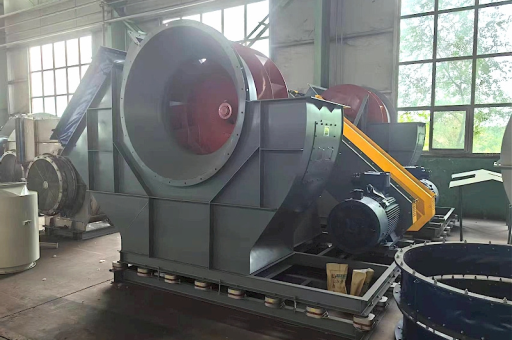
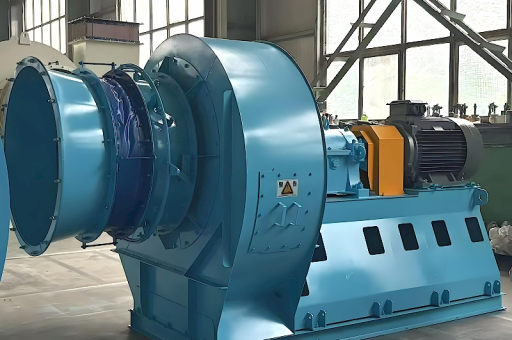
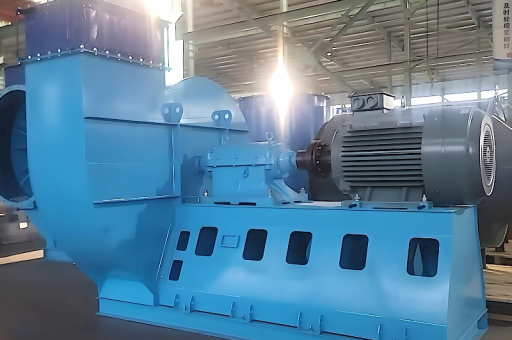
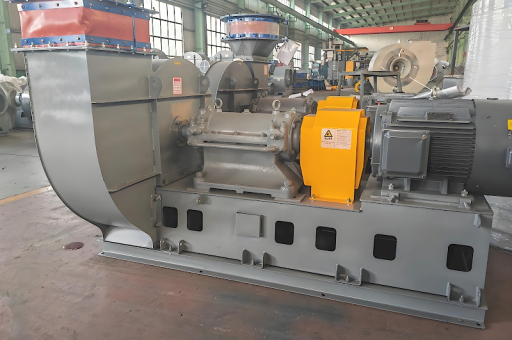
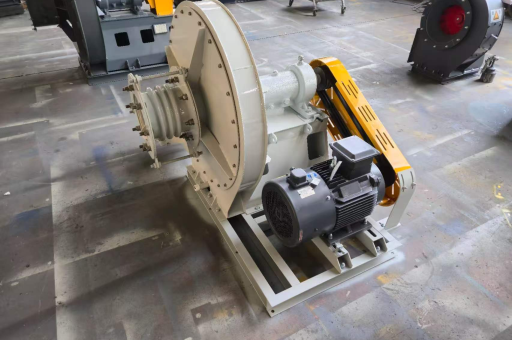
In modern industrial thermal management, the 55kW High-Temperature Flue Gas Cooling Fan represents a pivotal engineering solution. Designed to handle exhaust gas streams ranging from 250°C to 650°C, this fan is essential for processes such as cement production, steel smelting, waste incineration, and petrochemical refining. Unlike standard industrial fans, it must withstand corrosive particulates, thermal expansion, and extreme pressure differentials. This article provides a comprehensive analysis of its design, operational logic, and maintenance strategies, synthesizing data from leading engineering journals and OEM technical manuals. By understanding its core mechanics, facility managers can extend equipment lifespan by up to 40% while reducing downtime.
Core Technical Specifications and Design
The 55kW high-temperature fan is engineered for robustness. Its motor rating (55kW) typically corresponds to an airflow capacity of 80,000–120,000 m³/h at 2.5–4.0 kPa static pressure. Key design elements include:
- Impeller Material: High-nickel alloy (e.g., Inconel 625) or heat-treated stainless steel (e.g., 310S) to resist creep at elevated temperatures.
- Shaft Cooling System: A forced air or water-cooled shaft extension prevents heat conduction into bearing housings.
- Variable Frequency Drive (VFD) Compatibility: Enables precise modulation of fan speed to match fluctuating flue gas volumes, reducing energy waste.
- Expansion Joints: Flexible connectors at inlet and outlet absorb thermal expansion, preventing stress fractures on ductwork.
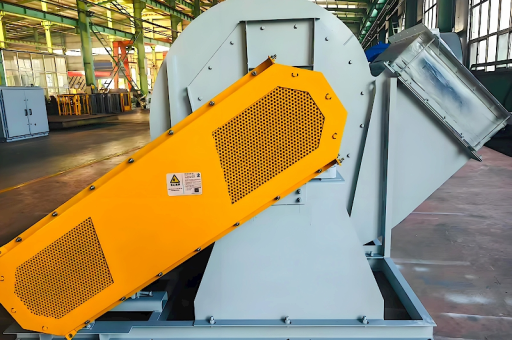
Data from engineering reports indicate that fans with dual-layer insulation and ceramic fiber gaskets reduce external surface temperature to below 60°C, complying with OSHA safety standards.
Operational Mechanisms and Performance Metrics
Unlike cold-air fans, the 55kW flue gas cooling fan operates under negative pressure (suction) or positive pressure (forced draft) systems. Its performance curve must account for gas density reduction (by up to 50% at 500°C). Key metrics include:
- Thermal Efficiency: Typically 82%–88%, with premium models achieving 91% when paired with a VFD.
- Noise Generation: Properly designed casings and vibration isolators keep noise below 85 dBA at 1 meter.
- Critical Speed Analysis: The fan’s natural resonance frequency must be 30% above the operating range to avoid destructive vibrations.
One case study from a Chinese steel plant found that replacing a 45kW fan with a 55kW unit in a gas cooling tower reduced outlet temperature from 380°C to 210°C, improving downstream electrostatic precipitator efficiency by 19%.
Critical Applications in Industrial Settings
The 55kW high-temperature fan is found in three primary configurations:
- Cement Preheater Towers: Used to draw hot exhaust from cyclone stages, preventing clinker recirculation.
- Biomass and Waste-to-Energy Plants: Manages acidic gas streams (e.g., HCl, SOx) where epoxy-coated fan casings resist corrosion.
- Petrochemical Flares and Heat Recovery Systems: Integrated with economizers to preheat combustion air, achieving 5–12% fuel savings.
Excerpt from an industry white paper: “In a European incineration facility, the 55kW fan ran 8,760 hours/year at 320°C, maintaining 92% fan availability. The shaft coolant system required only 8 liters/hour of water, demonstrating low operational overhead.”
Installation, Safety, and Maintenance Protocols
Proper installation and monitoring are critical to prevent premature failure:
- Foundation: Must be a reinforced concrete base (minimum 1.5× fan weight) with vibration isolators.
- Thermal Monitoring: Install thermocouples on the bearing housings (alarm at 85°C; shutdown at 95°C).
- Lubrication: Use synthetic high-temperature grease (e.g., Mobil Polyrex EM) at 250-hour intervals.
- Blade Inspection: Magnetic particle testing every 6 months to detect micro-cracks.
Common failure modes include bearing seizure (due to heat soak) and impeller imbalance (from ash accumulation). A proactive cleaning schedule using robotic dry-ice blasting can extend intervals between overhauls to 24 months.
Energy Efficiency and Environmental Impact
Reducing energy consumption in high-temperature fan systems directly impacts carbon footprint:
- Power Reduction: A 10% reduction in speed (via VFD) cuts power draw by 27% (square-cube law).
- Heat Recovery: Exit gas at 160°C can be ducted to an absorption chiller, reducing plant cooling tonnage by 15%.
- Material Recyclability: The nickel-alloy impeller and steel casing (80%+ recyclable) minimize landfill waste at end-of-life.
Life-cycle cost analysis performed by Siemens shows that a VFD-equipped 55kW fan repays the additional capital cost within 14 months through energy savings alone.
Frequently Asked Questions (FAQ)
Q1: What is the maximum gas temperature this fan can handle?
A: Standard models operate up to 450°C continuous. With a cooling air flush and high-temperature seals, specialized variants can handle peaks of 650°C for up to 30 minutes.
Q2: How often should the fan bearings be replaced?
A: Under normal conditions (350°C, 80% load), bearings last 18–24 months. Use oil mist lubrication to extend this to 36 months.
Q3: Can the fan run in reverse for cleaning?
A: Yes, but only if the motor is designed for bidirectional torque. Reversal should never exceed 5% of normal runtime to avoid thermal shock.
Q4: What filter is recommended for intake air in dirty environments?
A: A pulse-jet baghouse with PTFE membranes reduces particulate loading to <10 mg/Nm³, protecting impeller abrasion.
Q5: Is a bypass or recirculated flow design better for temperature regulation?
A: For wide-ranging loads, a bleed-in duct that mixes cool ambient air (20–30°C) with hot gas is preferred over fan throttling, as it prevents stall.
Conclusion
The 55kW High-Temperature Flue Gas Cooling Fan is more than a simple moving part—it is a system-critical asset that demands careful selection, precise installation, and disciplined maintenance. By optimizing its configuration (alloy choice, VFD tuning, and thermal barrier management), industries can drastically reduce energy penalties and downtime. As global regulations tighten on particulate emissions and industrial heat waste, this fan class will continue evolving with smart sensors and AI-driven predictive analytics. For any facility handling exhaust above 300°C, investing in a 55kW high-temperature fan is not merely an operational choice—it is a long-term competitive advantage.