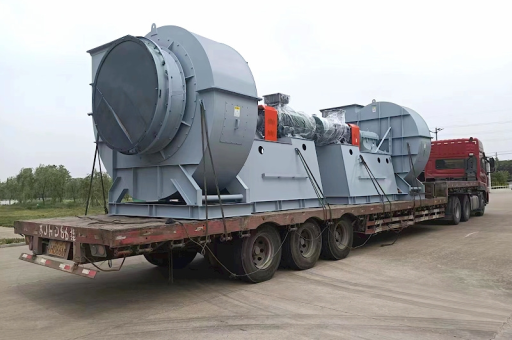
This article's table of contents introduction:
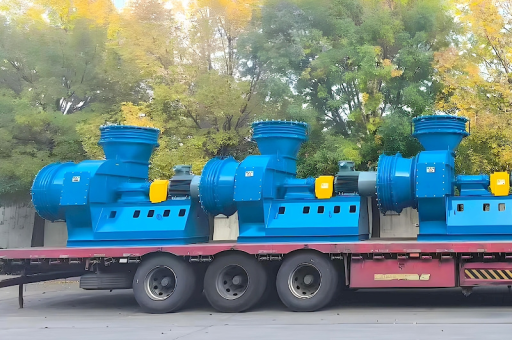
- What is it?
- Critical Engineering & Design Features
- Typical Applications
- Key Performance Parameters to Specify
- Cost & Lead Time
- Important Warning: "Start-to-Cold" Failure
This is a highly specialized piece of industrial equipment. A 900°C High-Temperature Centrifugal Exhaust Fan is not a standard off-the-shelf product; it requires significant engineering to handle extreme thermal stress.
Here is a detailed breakdown of what this fan is, its critical design features, typical applications, and key selection criteria.
What is it?
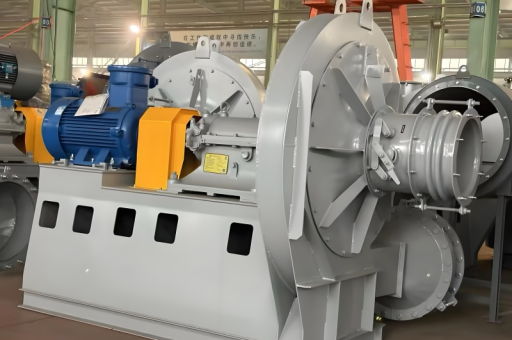
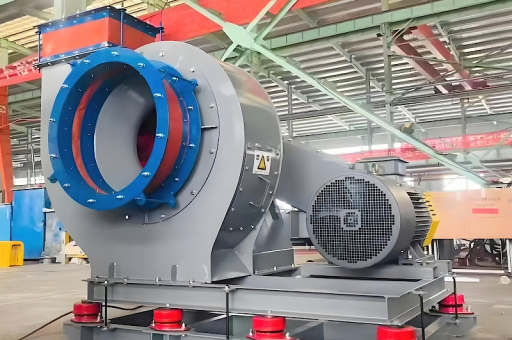
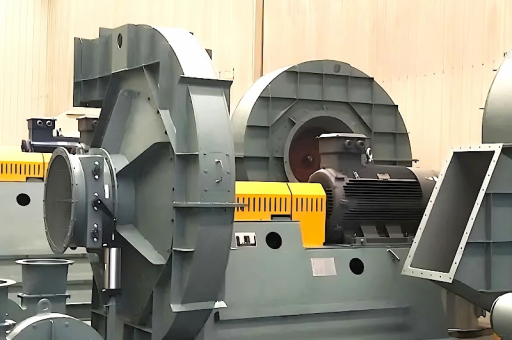
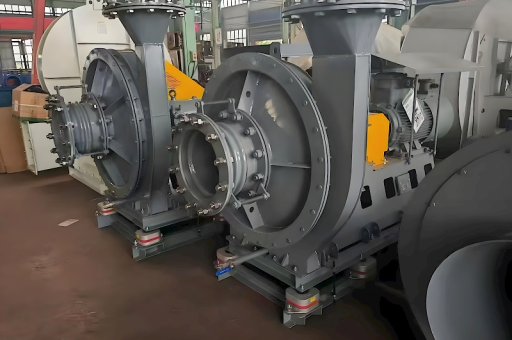
A 900°C centrifugal exhaust fan is a mechanical device designed to move air, fumes, or gases at a continuous temperature of up to 900° Celsius (1652° Fahrenheit). Standard fans would warp, melt, or fail catastrophically at these temperatures. These fans are built for the harshest industrial environments.
Critical Engineering & Design Features
To operate at 900°C, a fan must overcome three major challenges: material failure, thermal expansion, and bearing lubrication failure.
Materials (The most critical factor)
- Impeller & Casing: These cannot be made of standard steel.
- Stainless Steel (e.g., 310S, 253MA): The bare minimum for high-temp work, good up to ~850-900°C but may creep (deform over time) at the absolute peak.
- Nickel-Based Superalloys (e.g., Inconel 600, 601, 625): This is the standard for 900°C fans. These alloys retain their strength, resist oxidation, and prevent scaling at extreme heat.
- Hastelloy or Haynes Alloys: Used for highly corrosive high-temp exhausts (e.g., chemical processing).
- Shaft: Made from high-temperature alloy steel, often with an air-cooled section or a heat slinger to reduce heat transfer to the bearings.
Bearing & Drive System
- External Bearings: The bearings are never inside the hot gas stream.
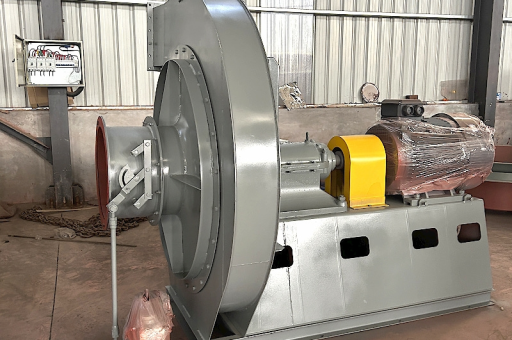
- Shaft Cooling: A primary design feature. The shaft is extended, and often a small cooling fan (a "windback" or "heat slinger") is mounted on the shaft between the fan housing and the bearings to pull cool ambient air across the shaft.
- Air-Cooled Pedestal: The bearing housing is mounted on a long pedestal (stand) to distance it from the hot casing. Heat dissipates through the shaft and pedestal.
- Lubrication: High-temperature synthetic grease or, for the most extreme cases, a recirculating oil system that is also cooled.
- Bearing Type: Deep groove ball bearings or spherical roller bearings, often with special clearance (C3, C4) to handle thermal expansion of the shaft.
Motor Configuration
- Direct Drive (Motorized Impeller): A custom, high-temperature motor is built directly into the fan housing. The motor windings are rated for 900°C ambient. This is rare and extremely expensive.
- Belt Driven (Most Common): The fan shaft and motor are separate. The motor sits in ambient air (outside the hot zone). Belts allow for speed changes and protect the motor from heat. The motor is a standard industrial motor but may be oversized to handle the high starting load of a hot fan.
Thermal Expansion Management
- The casing must be designed with expansion joints or a bellows on the inlet/outlet connections to prevent piping stress from deforming the fan.
- The housing base plate must be slotted or designed to allow the fan casing to "walk" as it heats up and grows.
- The shaft opening in the housing has a labyrinth seal or a purge air seal to prevent hot gases from escaping and reaching the bearings.
Typical Applications
These fans move not just hot air, but often corrosive, abrasive, or toxic gases. Common uses include:
- Industrial Furnaces & Kilns: Exhausting combustion gases from aluminum melting, glass tempering, cement production, or ceramic firing.
- Cement Industry: Exhaust from the preheater tower and clinker cooler.
- Steel Industry: Fume extraction from electric arc furnaces (EAF), ladle metallurgy furnaces (LMF), and reheat furnaces.
- Chemical & Petrochemical: Exhaust from thermal oxidizers, catalytic crackers, and reformers.
- Waste-to-Energy Plants: Moving hot flue gases from the combustion chamber.
- Heat Treatment Processes: Exhausting from annealing, brazing, or sintering ovens.
Key Performance Parameters to Specify
When sourcing a 900°C fan, you must provide the following:
| Parameter | Why it Matters for 900°C |
|---|---|
| Actual Gas Temperature | Is it 900°C continuous, or a peak/surge? Continuous duty requires different metallurgy. |
| Volume Flow Rate (m³/hr or CFM) | Must be corrected for actual temperature (gas expands massively at 900°C). A 10,000 CFM fan at 20°C might only move 2,500 CFM of actual 900°C gas. |
| Static Pressure (Pa or "w.g.) | The resistance of the system. Hot gas is less dense, requiring more effort from the fan. |
| Gas Composition | Is it corrosive (chlorine, sulfur)? Abrasive (dust, fly ash)? Oxidizing or reducing? This determines the alloy. |
| Duty Cycle | Continuous or intermittent? Start from cold or hot? Thermal cycling is very damaging. |
| Ambient Conditions | What is the ambient temperature where the fan and motor will sit? |
Cost & Lead Time
- Cost: A 900°C fan can cost 5 to 20 times more than a standard ambient-temperature fan of the same size. The material cost alone (e.g., a 50 kg Inconel impeller vs. a 50 kg steel impeller) is exponentially higher.
- Lead Time: Expect 12 to 20 weeks for a custom-engineered unit. These are not stock items.
- Vendors: Look for specialized high-temperature fan manufacturers, not general HVAC suppliers. Key suppliers include:
- New York Blower (USA)
- Robinson Fans (USA)
- Cincinnati Fan (USA)
- Airpro (China / Global)
- Howden (Global)
- Various specialized European manufacturers (e.g., Tennova, Breeza)
Important Warning: "Start-to-Cold" Failure
A common reason for failure is starting a 900°C fan while the system is cold. At startup, the impeller is metal and the gas is dense. If the fan is not correctly designed for cold start conditions, the motor can overload, or the impeller can shake itself apart from imbalance due to condensation or ice. A variable frequency drive (VFD) with a pre-programmed ramp-up schedule is almost always recommended.
Summary: A 900°C exhaust fan is a heavy-duty, custom-engineered capital asset. It requires high-nickel alloy construction, a cooled shaft and bearing system, and careful attention to thermal expansion. Do not attempt to use a standard "high temp" fan rated for 250-300°C for this duty. It will fail rapidly and dangerously.